
Categories
paternalism too much government

Doom, Still Pending

Has our ‘wife, mother, and daughter’ betrayed us?

In late March, Dr. Rochelle Walensky, the head of the CDC, went off-script (her words), reflecting on what she called her “recurring feeling” of “impending doom.”

COVID case numbers were up. “We have so much to look forward to, so much promise and potential of where we are and so much reason for hope,” she said. “But right now I’m scared.”

You might think this is no way to lead a country in a crisis — after all, she had just been given the top job at the Centers for Disease Control. 

“I’m speaking today not necessarily as your CDC director,” she pressed on National Public Radio, “not only as your CDC director but as a wife, as a mother, as a daughter to ask you to just please hold on a little while longer.”

Last Monday, Dr. Walensky “first signed off on changing her agency’s mask guidance,” The Washington Post reported, only to continue “to defend the CDC’s sweeping guidance that Americans wear masks in public, including in a Senate hearing Tuesday,” before Thursday’s announcement that the vaccinated don’t need to go about wearing masks, indoors or outdoors, for their own sake or others’.

The policy lurch leaves us in some weird territory. If the vaccinated may go about un-masked, then the unvaccinated should remain masked — yet it remains illegal (courtesy of HIPAA regulations) for businesses to ask about our medical records. Which implies, for want of enforcement, the controversial (and unwanted) “vaccine passport” idea. 

Further, many who have endured the disease claim immunity. Others who have had COVID, like Dr. Jordan Peterson, took the jab because they were told their immune levels were too low.

But “the science” on that is far from settled.

Thankfully, the CDC is not really in the regulation business. And increasingly Americans on all sides are ignoring Walensky, Fauci and Co.

This is Common Sense. I’m Paul Jacob.


PDF for printing

See all recent commentary
(simplified and organized)
See recent popular posts

Categories
free trade & free markets national politics & policies subsidy

Unemployed or Misemployed?

“Now Hiring” signs are up everywhere, especially on the windows of restaurants and other retail businesses.

But those signs aren’t disappearing.

Lots of jobs are left open.

No takers.

Week after week.

The job recovery that President Joseph Robinette Biden Jr. says he has placed his fabled “laser-like focus” upon, has been disappointing, to use the words of Washington Post columnist Catherine Rampell.

Oops, make that “extremely disappointing.”

“Economists and analysts had been expecting around a million jobs to be added on net in April,” Rampell wrote last week, “given the rising share of vaccinated Americans and relaxation of restrictions on business. Instead, employers created a measly 266,000 positions, the Bureau of Labor Statistics reported Friday. Job growth for March was revised downward, too.”

This didn’t come out of nowhere, as another Washington Post columnist made clear a few weeks ago. “Many employers, especially restaurants and small retail businesses, are having a hard time finding workers,” explained Henry Olsen. “This is likely the result of trends in covid-19 vaccinations and the generous unemployment benefits that were expanded due to the pandemic.”

Normally when talking about employment and unemployment, we are tempted to put on our economist caps and talk about supply and demand, marginal productivity, monetary policy, etc. But most commentators seem to be honing in on the ultra-obvious: pay people to stay home, they tend to stay home.

Indeed, thinking of the generous unemployment benefits which the U.S. Congress has bestowed upon the country as “stimulus,” we should realize that paying people to stay at home is like hiring them for the cushiest job imaginable. No worker shortage, as many suggest, but malinvestment in the wrong “jobs.”

And thus the opposite of “stimulus.”

This is Common Sense. I’m Paul Jacob.


PDF for printing

Photo by greychr

See all recent commentary
(simplified and organized)
See recent popular posts

Categories
general freedom too much government

Diners’ Rebellion

Italy was hit hard by COVID-19, and harder by the lockdowns. 

The lockdown idea — with which we are more than familiar in America — rests upon the notion that the best way to fight a new contagion is to rob it of hosts, and the best way to do that is to enforce anti-social edicts, forbidding normal human interaction thereby (the rationale goes) limiting spread of the disease. 

But Italians are not, say, Scandinavians. While folks up north (and in much of America) tend to maintain a more extensive baseline social distance, by custom enforcing a fairly wide personal space, in Italy folks tend to be much more hands-on, requiring close human contact for everyday happiness. So even had lockdowns worked, they would have been traumatic. But lockdown results have been dubious at best.

So Italians are rebelling.

Specifically, restaurateurs.

And their patrons.

“Thousands of restaurants have opened in Italy in defiance of the country’s strict Chinese coronavirus lockdown regulations,” we read at Breitbart. “The mass civil disobedience campaign —  launched under the hashtag #IoApro (#IOpen) — has seen as many as 50,000 restaurants opening despite evening curfew restrictions.”

My favorite video has diners in Bologna shouting police out of an illegally open restaurant with chants of “Libertà!”

News outfits in America do not appear to be giving much attention to the anti-lockdown movement in Italy — or elsewhere in Europe. It is almost as if the story does not fit The Narrative, which (do I have this right?) has Europeans more accepting of government paternalism, leaving Americans as the more uncooperative, unruly individualists to be controlled by a browbeating press.

But lockdown protests here are nothing like that in Europe.

Makes me a bit sad for America, actually.

This is Common Sense. I’m Paul Jacob.


PDF for printing

See all recent commentary
(simplified and organized)
See recent popular posts
Categories
general freedom too much government

The Saddest Thanksgiving

We are social animals. We need human interaction, not just interaction with our “screens.”

So, no wonder suicide is a rising problem during the lockdowns.

Jon Miltimore, writing at FEE, focuses on one country known for its suicide-tolerant culture: Japan. “Suicide Claimed More Lives in October Than 10 Months of COVID-19 in Japan, Report Shows.” Though the island nation had seen lowering levels of suicides for years, the lockdowns to prevent the spread of the Wuhan contagion have apparently reversed the trend.

“The 2,153 suicides reported last month are about 600 more than the previous year, CBS reports, with the largest gains coming in women, who saw an 80 percent surge in suicide,” Miltimore informs.

Though these United States do not publish timely stats, reports from specific locales suggest that suicide is rising in America, too.

And this is not surprising.

If one were to “follow the science” — or sciences, in this case sociology, social psychology, etc.  — one would have predicted such an effect. The “social distancing” model for pandemic mitigation is the perfect recipe for inducing suicidal ideations in social animals like ourselves.

Most at-risk are those with depression problems already, orother social trauma — or “merely” have trouble making friends. Government-mandated distancing just makes it harder for those who really need to make connections, but have trouble doing so.

Add on the holidays — a traditional time for familial bonding and social conviviality, but really tough for those alienated from same — and we are in for a bumpy sociality crisis.

Lockdowns are anti-social. This holiday season, reasonable, usually-healthy people might want to reach out, repeatedly (if only “virtually”), to those who need what many states now prohibit: human contact.

For humanity’s sake. For our friends’ sake.

This is Common Sense. Paul Jacob.


PDF for printing

See all recent commentary
(simplified and organized)
See recent popular posts
Categories
too much government

For a New Normalcy

Science writer Ronald Bailey argues that the best path to “a New Normal” can be found by rolling out home COVID-19 tests. But notes they are illegal.

Bailey’s November piece in Reason magazine informs us that “biotech startup E25Bio, diagnostics maker OraSure, and the 3M Co., are working on and could quickly deploy rapid at-home COVID-19 diagnostic tests.”

These tests work, he says, “by detecting, within minutes, the presence of coronavirus proteins using specific antibodies embedded on a paper test strip coated with nasal swab samples or saliva. Somewhat like at-home pregnancy tests, the antigen tests change color or reveal lines if COVID-19 proteins are recognized.”

So why not go ahead with these antigen tests? Well, the Food and Drug Administration doesn’t allow it. Bailey quotes a Harvard epidemiologist: “Until the regulatory landscape changes, those companies have no reason to bring a product to market.”

Regulatory blocking and kludge are just one reason this is not possible.

But if you — or for that matter, Mr. Bailey — think that this problem can just be solved with a Trumpian executive order or a quick legislative fix, there are reasons for doubt.

Our whole system is government-rigged. And, as Ludwig von Mises made clear in Bureaucracy, clunky slowness is not just a bug of such systems. It’s the feature

And it’s a bad feature. 

It’s why many of us oppose regulation by bureaucracy and prefer a rule of law and competition within markets to supply the regulation that businesses need.

Which suggests to me that the best way back to normalcy is not through a quick government fix but by nixing government fixes more broadly.

This is Common Sense. I’m Paul Jacob.


PDF for printing

Photo by Marco Verch

See all recent commentary
(simplified and organized)
See recent popular posts
Categories
Accountability initiative, referendum, and recall

Instead of Kidnapping

Regarding the lockdowns, I said in the last episode of my podcast, “we’ve kind of accepted the Chinese model.” 

You know: extreme; cruel; totalitarian. 

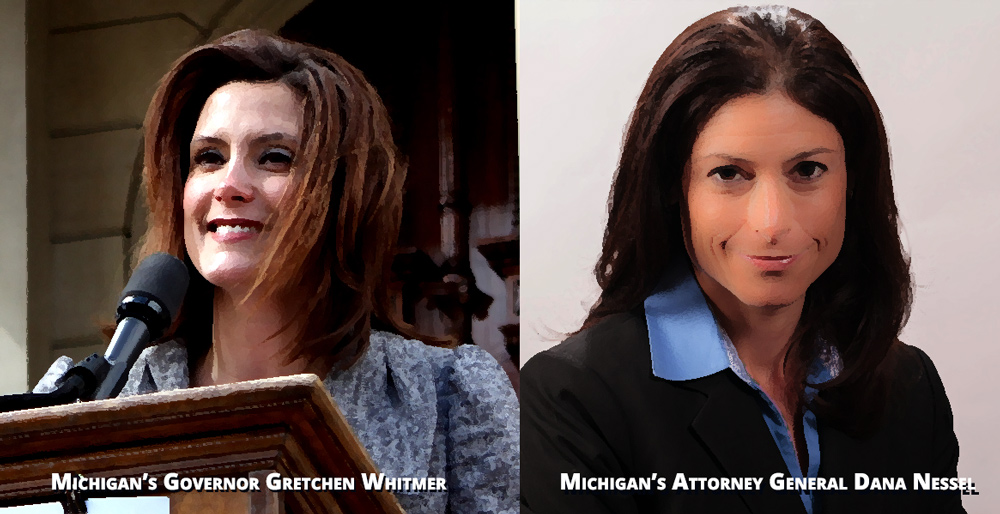
And few officials in these United States seem more “Chinazi” than Michigan’s Governor Gretchen Whitmer and her Attorney General Dana Nessel. 

Their authoritarian behavior has inspired quite a bit of anger, and even, it appears, plotting for a kidnapping.

Fortunately for citizens who voted these two lockdowners into office, insurrection is not necessary to re-establish a rule of law. Let mlive.com explain: “Earlier this month, the Michigan Supreme Court ruled that a 1945 state law Whitmer used to sign executive orders during the extended COVID-19 state of emergency was unconstitutional. The court said Whitmer did not have the authority to continue a state of emergency without the support of the Legislature, essentially ending her orders signed past April 30.”

Yet the AG has decided to enforce Whitmer’s unconstitutional edicts, nonetheless.

The political backlash is now quite legal and above-board, for the state’s Board of State Canvassers has approved petition language to recall Nessel.

On the petitions, which will be circulated on Election Day, the explanation for the recall will read as follows: “Dana Nessel, on Thursday, August 6, 2020, Announced plans ramping up efforts to enforce Gov. Gretchen Whitmer’s Executive Order 2020-148.”

The petition has been spurred by Albion, Michigan, resident Chad Baase. He is incensed, as he should be, that Nessel “violated her oath of office by enforcing an executive order which violated the Michigan constitution, therefore she violated the constitution.”

 “She needs to be held accountable,” Baase insists, and it’s great that he has found a peaceful way in democracy’s ultimate recourse: the recall vote.

This is Common Sense. I’m Paul Jacob.


PDF for printing

See all recent commentary
(simplified and organized)
See recent popular posts
Categories
general freedom national politics & policies

For WHO the Toll

When the World Health Organization did an about-face, last week, advising against the lockdowns that have constituted the most-touted and most common extreme pandemic response around the world, many wondered: what could the WHO be up to?

David Nabarro, the organization’s special envoy for Covid-19, explains that lockdowns are useful only to buy time “to reorganize, regroup, rebalance” health care resources, and that we are obviously not in such emergency conditions now.

J.D. Tuccille, writing at Reason, provided us with the most astute news angle from the WHO’s apparent turnabout: “At long last, months into the pandemic, the debates over the proper response to COVID-19 have begun.”

We can hope so, anyway. Enough with bullying by government edict or inane “follow the science” rhetoric!

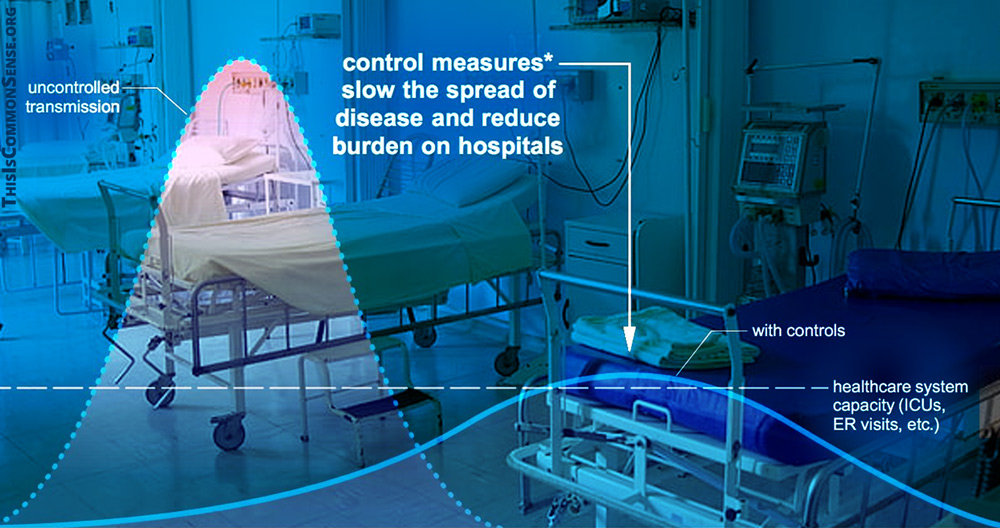
But what the WHO’s new clue should highlight is how we got here. The lockdowns were first offered as a way to do precisely what Mr. Nabarro said, buy time to reorganize medical resources so as not to induce chaos — you know, “flatten the curve.”

It did not take long, however, before a very different rationale for harsh “mitigation efforts” became the rule: buy time for a vaccine.

This plan was strenuously argued against by a trio of doctors in their eyebrow-raising “Great Barrington Declaration.” Continuing the lockdowns until a vaccine emerges “will cause irreparable damage, with the underprivileged disproportionately harmed.”

The lockdown obsession may misdirect our attention from actual treatments for the disease — which President Trump has touted from the beginning. Indeed, Trump’s quick exit from his own bout with the malady may serve as an effective reminder that our options are not limited to (a) quivering in sequestration till vaccinations roll out or (b) mass death.

There is hope.

This is Common Sense. I’m Paul Jacob.


PDF for printing

See all recent commentary
(simplified and organized)
See recent popular posts
Categories
too much government

The Really Slow Fast COVID-19 Test

A rapid test for COVID-19 that you could perform in homes, workplaces, and classrooms would be less accurate than the best slower tests. But even somewhat accurate fast tests would help many to cope with the disease more effectively.

If necessary, asymptomatic persons who test positive could be retested by another method while staying isolated. If test-takers have already exhibited COVID-like symptoms (but also bad-cold-like symptoms), a quick positive result means that they could more quickly start appropriate treatment.

An easy, rapid test would be a godsend in situations where it is advisable for people to be retested continually.

In late August, Abbott Labs announced that production of a credit-card-sized, “$5, 15-minute, easy-to-use” test is being increased “to 50 million tests a month.” The U.S. has approved its mass-scale use.

Hooray! Another positive development in efforts to cope with a scourge that is not the Black Death but not just-the-flu either.

Not so fast. 

Great as far as it goes, but as FEE writer James Anthony notes, this is only one approval of one test produced by one company. And the test can be performed only at “point-of-care” sites able to flourish special regulatory approval. So not at every workplace, classroom, or home. 

Yet, according to Abbott, the test delivers results “in just 15 minutes with no instrumentation.” 

Sounds like mere lay persons like you and me would have to . . . follow instructions. 

Like governments should follow ours . . . and get out of the way.

This is Common Sense. I’m Paul Jacob.


PDF for printing

See all recent commentary
(simplified and organized)
See recent popular posts

Categories
folly general freedom responsibility

Bath Tub Fails

“Barely one in 1,000 Britons has died from coronavirus,” states Tim Harford, in U.K.’s Daily Mail, “and yet the economy is in cardiac arrest, Government debt has run into hundreds of billions and many parents are terrified of sending their children to school.”

Trying to put the pandemic in context with actual numbers, to assess realistic risk, Harford goes on to argue that “given the current low risk of infection, combined with the low risk from the disease, a 30-year-old is far more at risk from riding a motorbike, going skiing or horse-riding — let alone sky-diving, rock-climbing or scuba-diving — than from the virus.”

He makes the startling claim that a trek outside, with possible SARS-CoV-2 exposure, “is not much more serious than taking regular baths over a year.”

Harford makes many attempts not to minimize the danger, and assuage Brits’ past and present concerns, thus acknowledging that they weren’t exactly crazy, but in the end the situation is like this: “The prospect of bathtime tragedies has never shut the country down.”

People die of risky activities every day, and not just on slippery porcelain: we risk our lives on asphalt, staircases, and in the air. Yet we go on, plunging ahead.

Brave people, we?

Not now. The worldwide government response has been, with a few notable exceptions — Sweden and South Dakota, to name the two most famous for bucking panic and lockdowns and mask-wearing mandates — a pitch to people’s fears.

Maybe in Britain thought leaders and statesmen have praised valor and fortitude as well as caution and individual responsibility. But in America, calls to courage have been few and far between.

Hey: I just noticed something, “panic” is contained within the word “pandemic”!

This is Common Sense. I’m Paul Jacob. 


PDF for printing

See all recent commentary
(simplified and organized)
See recent popular posts

Categories
general freedom ideological culture responsibility

Racism as Health Crisis?

How can you tell when people really care? 

It is not when they mouth the right platitudes.

Or advance a carefully crafted political agenda.

What counts more? Something practical.

Michigan’s Governor Gretchen Whitmer cracked down further with COVID-related health care mitigation efforts this week. One stands out: on Wednesday she “declared racism a public health crisis, ordered implicit bias training for all state employees, and,” reports Paul Egan of the Detroit Free Press, “created a state advisory council to focus on issues affecting Black people in Michigan.”

“We have a lot of work to do to eliminate the systemic racism that Black Americans have experienced for generations,” the governor said.

Whitmer noted that black Michiganders are four times more likely to die from COVID-19 than white Michiganders — because, well, you probably do not need to read deeply into her communiqués or watch USA Today’s helpful video. The arguments are familiar.

And not completely without merit.

But notice what she did not say.

She did not advise darker-skinned people to take Vitamin D supplements and go outside and soak in more rays than they might, otherwise.

Vitamin D deficiency has been repeatedly linked as a co-factor for the development of severe COVID-19.

Race, not racism, may be what’s most relevant. Or, as the president might say, “it is what it is”: white skin more efficiently absorbs solar radiation to produce Vitamin D than higher-melaninned skin, an adaptation for northern climes where solar radiation is less intense than in the tropics.*

While this is certainly not the only factor in susceptibility to the virus’s worst effects, and it is still unproven — a word to the wise.

From the caring.

Not the politicians.

This is Common Sense. I’m Paul Jacob.


* “According to a CDC study published in 2006,” offered the Arizona Republic, “21% of non-Hispanic white people are at risk of having inadequate levels of vitamin D, versus 73% of Black people and 42% of Hispanic people.”

PDF for printing

See all recent commentary
(simplified and organized)
See recent popular posts