Categories
free trade & free markets general freedom ideological culture

Milei Defends Capitalism

Capitalism is better than socialism.

The new libertarian president of Argentina, Javier Milei, recently explained the virtues of the free market to attendees of the annual World Economic Forum in Davos, Switzerland.

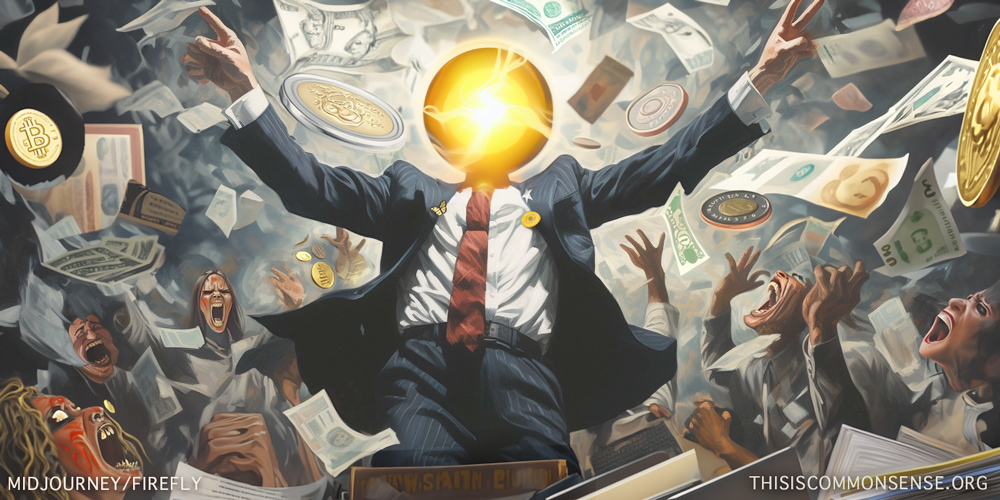
Milei said that capitalism generates “an explosion of wealth,” that capitalism and the industrial revolution “lifted 90 percent of the world’s population out of poverty,” that a free market society is both practical and just.

“Far from being the cause of our problems, free enterprise capitalism as an economic system is the only tool we have to end hunger, poverty, and destitution across the planet. The empirical evidence is unquestionable.”

As its answer to the practicality and justice of a capitalist social system, the left proposes the injustice of “social justice,” according to which “capitalism is bad because it is individualistic” and “collectivism is good because it is altruistic.”

Collectivism hobbles the entrepreneur and “makes it impossible for him to produce better goods and offer better services at a better price.” Which only impoverishes us. This is neither practical nor moral.

The West is in danger because it is allowing capitalism to be destroyed. We need to remember why we need it.

Will any of the dignitaries who heard Milei’s talk learn its lessons? Maybe not if they’re like WEF’s founder, Klaus Schwab, who looks at the international predations of the Chinese Communist Party and sees a “responsible, responsive” state.

But maybe a few others will. And then a few more.

This is Common Sense. I’m Paul Jacob.


PDF for printing

Illustration created with Midjourney and Firefly

See all recent commentary
(simplified and organized)
See recent popular posts

Categories
free trade & free markets moral hazard

Is It Still Capitalism?

Is it still capitalism if the capital is guaranteed?

“The U.S. government will guarantee all customer funds in Silicon Valley Bank (SVB) after a series of bad decisions and a run on deposits led to the bank’s collapse,” explains Elizabeth Nolan Brown in Reason

Technically, the bank isn’t being bailed out. Its customers are. And that’s a lot more popular than bailing out banks directly. There are more bank customers who vote than bankers who vote — though there is probably more political donations from banks directly seeking banking policy “correctives” than bank customers doing the same. That’s almost apodictically true.

The most bizarre element? While the FDIC, the federal agency that insures depositors of this and similar banks, is designed to guarantee depositors’ capital up to a certain limited amount ($250,000, more or less), the regulatory triumvirate of Treasury Secretary Janet Yellen, Federal Reserve Board Chair Jerome Powell, and FDIC Chair Martin Gruenberg declare that “all depositors of this institution will be made whole.” 

All.

Even the super-rich.

The key concept, here, is moral hazard — “The decision creates bad incentives for financial institutions and their customers” is how Ms. Brown puts it. We’ve been through all of this before. Is there really any question? The answers are in.

So, to the opening, Is it still capitalism if the capital is guaranteed? — if even Prince Harry’s fortune will be guaranteed — the answer is No.

Sorta. 

It’s a special kind of capitalism. State-​dominated capitalism; Neo-​mercantilism; f***-ism. Use whichever term.

As we contemplate a profit-​and-​loss system without loss, and how the losses will be made up within the financial system, just remember that the federal government playing the role of Savior is not itself costless, and … its debt keeps growing. And the Ultimate Result of all this still looms.

Immoral hazard.

This is Common Sense. I’m Paul Jacob.


PDF for printing

Illustration created with PicFinder​.ai

See all recent commentary
(simplified and organized)
See recent popular posts

Categories
free trade & free markets general freedom too much government

Detonators in Place

You must place explosives a certain way when demolishing a building to avoid damaging surrounding structures. But if you just want to destroy, you can forget about such precautions.

Could this be the perspective of those demanding national rent control?

They forget — or ignore — the destruction of living space inflicted by incentive-​incinerating rent controls in places like New York City and Santa Monica.

Rick Moran perceives that President Biden is making a “first move toward a radical national rent control law,” telling agencies to find ways to stop rent increases. Biden is doing so at the behest of 50 congressional communists who have implored him to take executive action to save tenants from rising rents.

According to their letter, “rent is too high and millions of people across this country are struggling to stay stably housed as a result.” Meanwhile, landlords are “increasing the rent for their own profit …”

Profit? In a market economy? 

Rising rents! Caused by … ?

But if you just want to “solve the problem” and have been trained to be heedless of the destruction regulation can cause, you needn’t think about cause and effect — who did what and how and why. In the interventionist mentality, when oil or food or housing prices zoom upwards, only one cause is possible, and it has nothing to do with politics and policies already in place.

Even if the government’s central banks have been zanily pumping up the supply of money and credit while city and state bureaus have been going all-​out to hamper and halt production.

That single cause, they contend, can only be the grasping, grabbing, profit-​seeking capitalists. You know. The bums who make their riches (when they do) by supplying us with what we need.

This is Common Sense. I’m Paul Jacob.


PDF for printing

Illustration created with Midjourney

See all recent commentary
(simplified and organized)
See recent popular posts

Categories
porkbarrel politics subsidy too much government

Up-​to-​Date in Kansas City?

Eight-​hundred million bucks. 

That’s the investment that “Meta” — the umbrella outfit that owns Facebook, Instagram and WhatsApp — has agreed to invest in a patch of land in Kansas City’s Northland. The plan is to build a data center at an 882-​acred development site. 

“Political leaders who gathered at Union Station heralded the news as a major development for Kansas City and the state.” This private investment “would far surpass the scale of recent projects in the region … said Missouri Gov. Mike Parson,” The Kansas City Star relates.

But there’s more.

“Meta spokeswoman Melanie Roe said the company could invest as much as $40 billion at the site in land acquisition, construction, and development of a larger data center.” This is to be a “long term partnership.”

Make that a Big Business/​Big Government partnership. The biggest ever, perhaps.

The Kansas City Council had unanimously approved a development plan for the site last April, with data centers there enabled to access to more than $8 billion in local tax incentives. “Incentive watchdog group Good Jobs First says such an incentive award would be the largest ever in American history,” The Kansas City Star explains.

Take it as a word of caution. This is not laissez faire capitalism. This is not “the free market.” It is favoritism. It unites big business and big government.

And even as an investment in future taxes — which is the ostensible justification for the subsidies — the data complex is slated to employ about a hundred workers.

Politicians don’t make the best investors. But they do make easy marks for big corporations.

This is Common Sense. I’m Paul Jacob.


PDF for printing

See all recent commentary
(simplified and organized)
See recent popular posts

Categories
ideological culture

Papitalism

In his new encyclical, “Fratelli Tutti,” Pope Francis continues his attacks upon capitalism.

“The marketplace, by itself, cannot resolve every problem, however much we are asked to believe this dogma of neoliberal faith.” Capitalism “does not resolve the inequality that gives rise to new forms of violence. . . . The fragility of world systems in the face of the pandemic has demonstrated that not everything can be resolved by market freedom.”

What caused the inequality? Nature? Predation? Production? Inequality caused by theft and serfdom is a problem; inequality caused by production and freedom is not.

The pain of lockdowns (whether justified or not) is inflicted by massive restrictions on capitalism. And it turns out these government programs — pandemic “mitigation efforts” — will likely hit poor countries the hardest, causing (as the UN fears) mass starvation.

The pope cannot blame capitalism for that inequality!

Also, which champions of capitalism contend that capitalism resolves (instantly?) “every” problem? 

Capitalism is the socio-​economic system characterized by freedom of production and exchange and by respect for property rights. It enables us to earn a living and make plans without worrying that we will be continuously robbed and our plans continuously derailed by governments. A free society shouldn’t pretend it can fix every problem, but it provides many incentives and opportunities to solve, or at least cope with, the problems of life. When free, we can speak and act as we judge best. 

And learn from our mistakes.

It would be a grave mistake to think that capitalism must be blamed for natural inequality, or for government actions to shut down production and commerce in order (we are told) to fight a virus. 

This is Common Sense. I’m Paul Jacob.


PDF for printing

Photo of Pope Francis by Catholic Church England

See all recent commentary
(simplified and organized)
See recent popular posts
Categories
general freedom ideological culture Popular

Slavery Is Not Free-​Market Capitalism

Tarring free-​market capitalism and limited government with the brush of slavery is old hat. What is new is that prominent journals and major media figures now shamelessly slop that brush around.

Indeed, the argument is so often made that addressing it from several angles, as I have — twice in the last few outings of Common Sense — is important. Today I make an additional point.

The fact that human beings were treated as property, to be sold and mortgaged and disposed of at will, does not make slavery “free market.” If we legalized and institutionalized the market in stolen goods, that might make those markets legally above board — but not morally

It is this moral argument against stolen goods that undergirds the case against slavery. 

Always has.

For slavery is stealing the rightful property of the people enslaved — their property in their own bodies. 

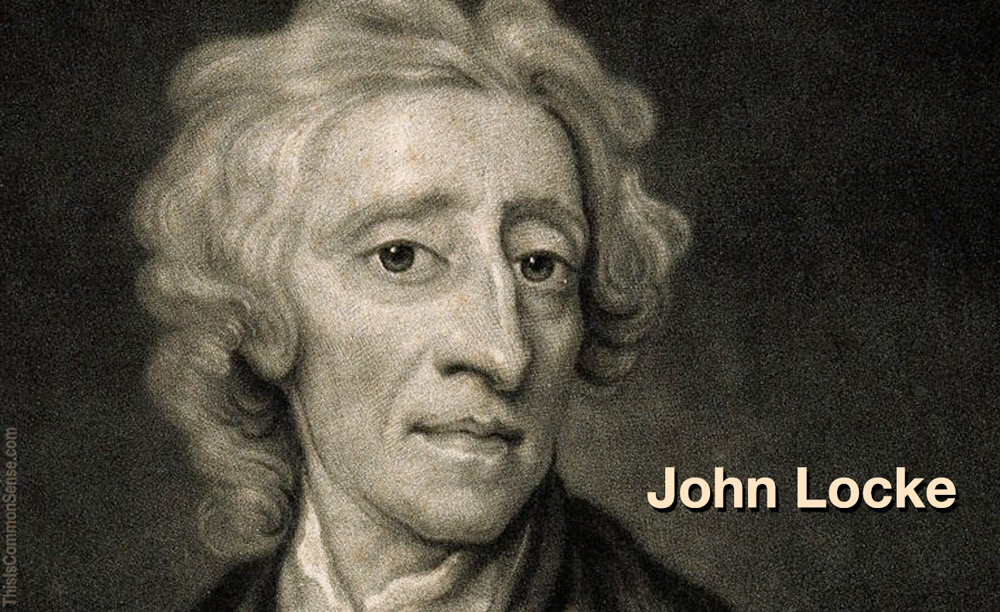
Richard Overton called this “self-​propriety” in 1646, and at about the same time John Locke, following Hugo Grotius, wrote of every man having “a property in his own Person.” This is the old liberal way to think about personal freedom when you are dealing with property: self-ownership. 

“Free market capitalism” rests on it just as slavery abridges it.

Unfortunately, there has been a successful campaign to muddy up this logic and its history. Teacher Lawrence Ludlow recently informed readers of American Thinker about the results of this indoctrination: today’s students have “somehow ‘learned’” that “slavery was isolated to the United States instead of practiced worldwide for ages” and that “Westerners were the most enthusiastic practitioners of slavery instead of being among the first to abandon it.”

Freedom is not slavery and the truth shall set us free.

This is Common Sense. I’m Paul Jacob.


See all recent commentary
(simplified and organized)
See recent popular posts


Categories
ideological culture Popular too much government

Slaves All?

A bizarre argument is gaining popularity: the United States of America not merely allowed slavery in its first hundred years, it depended upon it, grew rich by it …  and, “therefore,” not only the federal government but also its constitutional principles and even capitalism are all tainted … and … “therefore” … we must have socialism!

Why long-​dead chattel slavery requires political slavery now is hard to figure.

And no, you should not need to read George Fitzhugh’s Cannibals All! or Sociology for the South to see that socialism is slavery.*

But these days it is more common to link slavery with … freedom (this is hard even to type) in the form of free markets. 

Leftists who make this linkage are helped by some popular historians who argue that since the   antebellum South (1) grew faster, economically, than the North, (2) slavery was profitable for slaveholders, and (3) slaves became more productive in picking cotton, the “peculiar institution” was key to American success. Vincent Geloso, a visiting assistant professor of economics at Bates College, writing for the American Institute for Economic Research, ably shows that not one of these three theses hold up to scrutiny.

Most importantly, though, Geloso demonstrates that the slavery system was like all other interventionist systems, with some people (slavers) benefiting at the expense of others (slaves, of course, but also free people … through a variety of subsidies).

Geloso uses the term “deadweight loss” to make his case that slavery made America poorer.

He is certainly not wrong. But once you understand why freedom and prosperity are linked, not much economic jargon is necessary.

This is Common Sense. I’m Paul Jacob.


* This pro-​slavery southerner did argue against the very idea of liberty and free labor on the grounds that freedom is bad and socialism is good. Indeed, “Fitzhugh disliked ‘political economy’ (as economics was then called), which he saw as ‘the science of free society,’” economist Pierre Lemeiux explains, “as opposed to socialism, which is ‘the science of slavery.’” That forthright appraisal is about all that’s good in Fitzhugh.

PDF for printing

slave, ancient, Roman, Rome, chains,

Photo by Jun on flickr

See all recent commentary
(simplified and organized)
See recent popular posts


Categories
ideological culture

Not Your Mother’s How-​To Manual

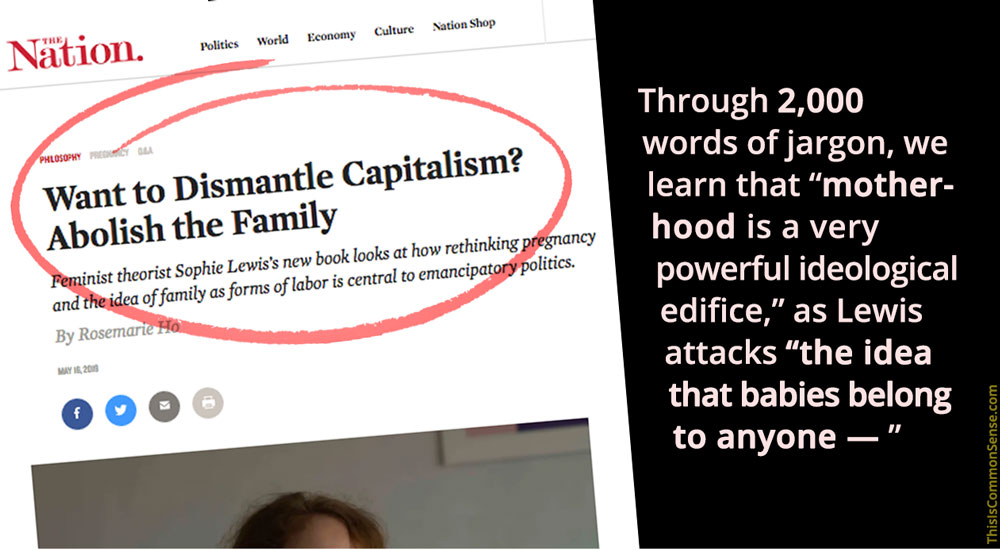
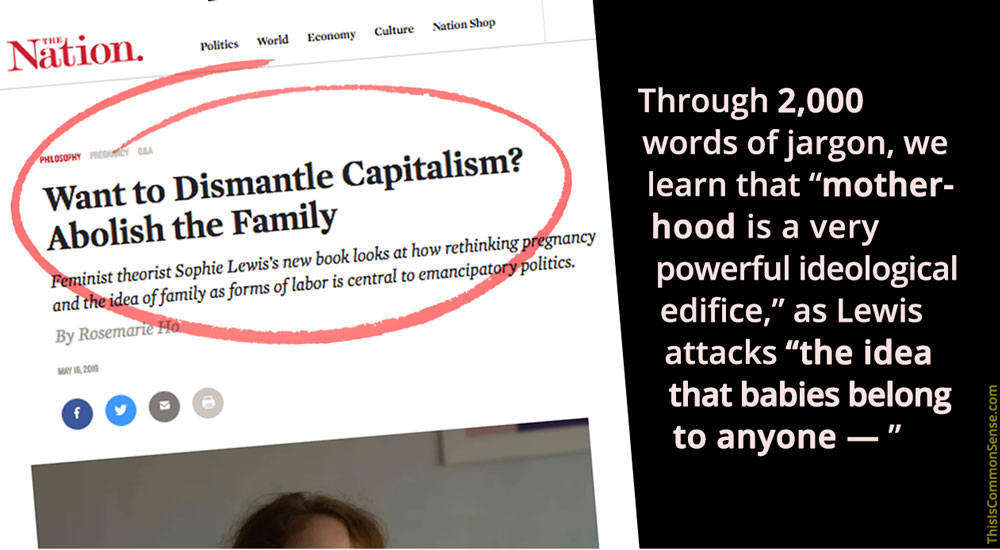
“Want to Dismantle Capitalism?” asks The Nation headline for a recent interview with feminist Sophie Lewis, immediately answering: “Abolish the Family.”

In a world of YouTube videos on how to do almost everything, apparently the progressive publication noticed something missing: There is no reliable guide for going full commie.

Rosemarie Ho prefaces her discussion with Ms. Lewis, author of “Full Surrogacy Now: Feminism Against Family,” by observing that “the most infamous demand of The Communist Manifesto is the ‘abolition of the family.’”

“The family, Marx and Engels noted, was where patriarchy and capitalism worked in tandem to produce willing, alienated workers,” writes Ho, “where women became little more than ‘instruments of production’ for the men who lorded over them.”

Ah, “little more” — how depressingly reductionist.

Ho applauds that Lewis “takes up this forgotten struggle” and “gives us an account of the material conditions — the biological and societal violence — that gestators, or people who are carrying fetuses, have to bear.”

“Mothers nurture,” acknowledges Lewis, “but they also kill and abuse their wards. That’s why it’s so valuable to denaturalize the mother-​child bond. To do anything otherwise is to devalue that work. That’s the horizon that I think opens up the space for a revolutionary politics.”

Through 2,000 words of jargon, we learn that “motherhood is a very powerful ideological edifice,” as Lewis attacks “the idea that babies belong to anyone — the idea that the product of gestational labor gets transferred as property to a set of people.” After all, she informs that we should “think about babies as made by many people.”

Gestators of the world unite! We have nothing to lose but our sanity!

Oh … and the family. 

This is Common Sense. I’m Paul Jacob.


communism, socialism, freedom, capitalism, motherhood, family,

See all recent commentary
(simplified and organized)
See recent popular posts

Categories
Accountability folly free trade & free markets general freedom moral hazard property rights responsibility too much government

Poison Is Poisonous

Venezuela’s socialist economy has been collapsing. 

No big mystery. If, out of hostility to capitalism, a society keeps destroying everything that production, trade, and prosperity depend upon, the economy suffers. The benefits of markets don’t flow no matter what.

One assault has taken the form of hyperinflation — runaway printing of currency, done in part to dissolve government debt. Many Venezuelans are resorting to barter. It’s easy to understand why. 

Or is it? A Reuters reporter says that economists say that “the central bank [of Venezuela] has not printed bills fast enough to keep up with inflation, which … reached an annual rate of almost 25,000 percent in May.”

So go faster!?

Dude. Dude. The massive expansion of Venezuela’s money supply is what’s causing massive jumps in prices. Just like any other economic good, the medium of exchange is subject to the laws of supply and demand.

Other things being equal, enormously increasing a supply of a good will enormously lower its market value or price. Money, too, has a price — in terms of the non-​monetary goods being bought. If the pre-​hyperinflation price of a dollar in terms of bread is one loaf and the post-​hyperinflation price is one bread crumb, you won’t reverse the decline by printing even more dollars or bolívars even faster.

If you’re ingesting poison, you can’t fight the effects by being poisoned more and harder. The very first thing to do is stop ingesting the poison.

This is Common Sense. I’m Paul Jacob.


PDF for printing


Categories
Accountability folly free trade & free markets general freedom ideological culture media and media people national politics & policies responsibility

Coffee in the Age of Covfefe

You might think that that coffee could not be spoiled by today’s politics, but, well, consider the Keurig line of coffee-​related products. I’m a Starbucks man, myself, but one of the great things about capitalism is that I can have my tall (or grande) latte and you can have your home-​brewed Keurig cup of java.

Enter Media Matters.

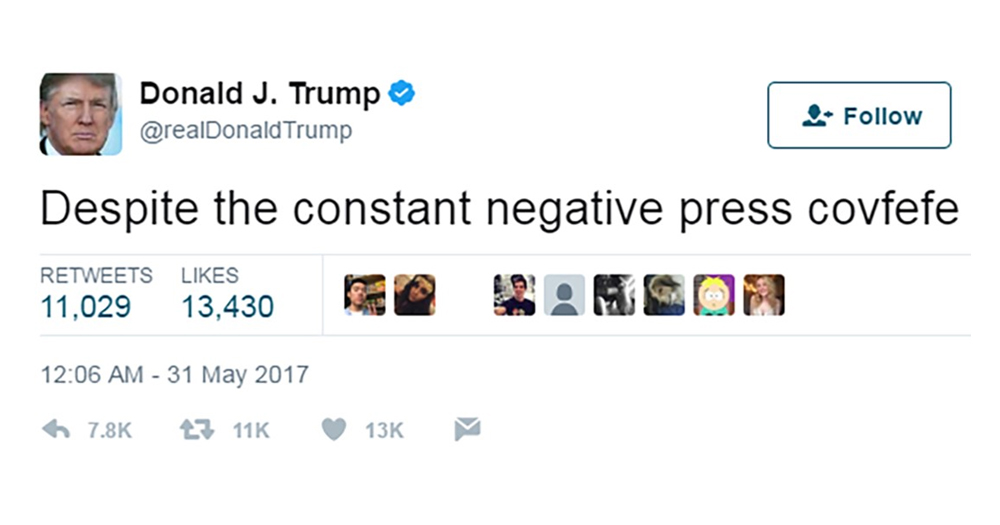
You might think of the outfit as the subject of President Trump’s enigmatic tweet of several months back … 

… which is all he wrote.

He obviously meant “negative press coverage,” but got distracted. And the typo took on a life of its own.

But Media Matters, a dirty player in the politico-​cultural wars (pretending to be a watch dog outfit), stepped in. One of Media Matter’s negative employees tweeted 

Good afternoon @Keurig. You are currently sponsoring Sean Hannity’s show. He defends child molester Roy Moore and attacks women who speak out against sexual harassment. Please reconsider.

And Keurig capitulated, pulling their ads from Hannity’s show.

Now, as far as I can tell*, Sean Hannity did not defend “child molester Roy Moore.” Understandably, Hannity’s fans struck back, not only initiating a public boycott, but made the whole thing viral by trashing the Keurig coffee makers in online videos.

This is the result of going full Alinsky.**

And there appears to be a clear bad guy here, clearer even than Roy Moore’s alleged crimes: Media Matters lied to squash Hannity for reasons having nothing to do with the Alabama Senatorial race.

Media Matters embodies “covfefe.” And the negativity has spilled out of politics and into the beauty of everyday life. Coffee.

This is Common Sense. I’m Paul Jacob.


* The YouTube recording of Hannity’s interview of Judge Moore that I listened to has been pulled, so there’s no point in linking to it. Instead, consider Ben Shapiro’s take and other non-​covfefe at The Daily Wire.

** Never go full Alinsky.


PDF for printing