Categories
tax policy too much government

California Schemin’

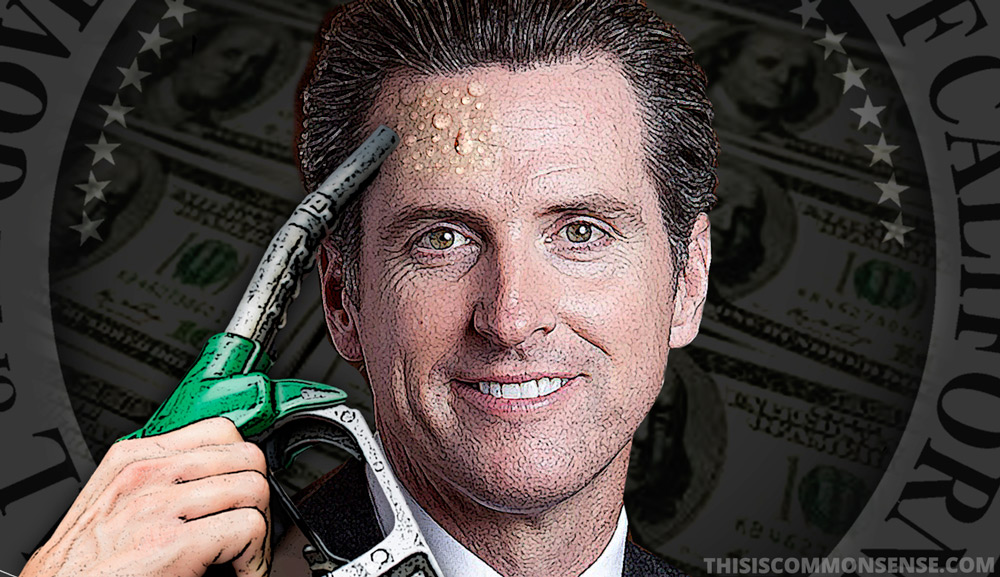
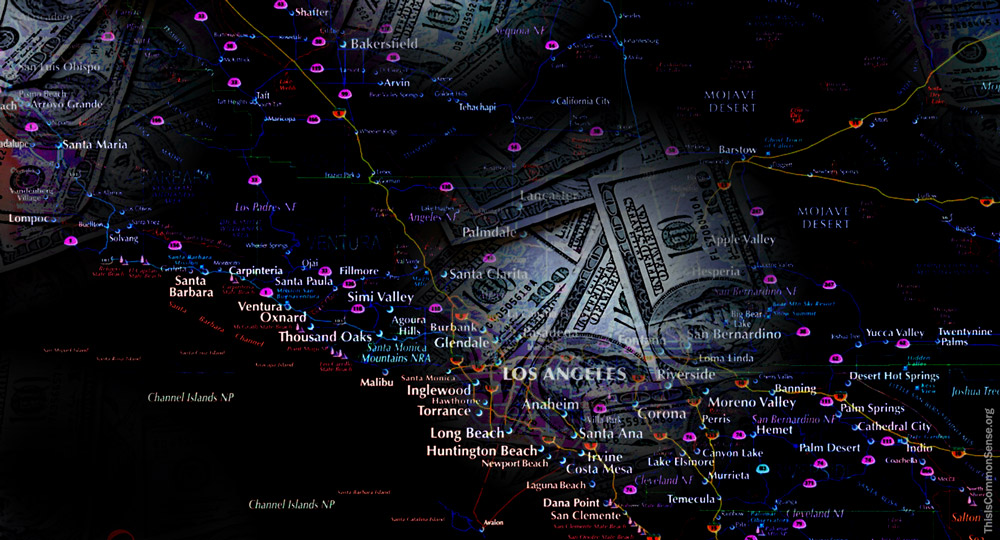
Is California a failed state? It has an electric grid problem. And a vagrancy problem. Both of which stem from the bizarre ideological blind spots of a political class “benefiting” from the state’s high legislator/citizen ratio, which insulates politicians from feedback.

Driving them power mad.

And one form of madness flowers in political greed, hubris and overreach.

“A pack of Democratic lawmakers in California are proposing a wealth tax for the state’s richest citizens, forcing them to pay more essentially just for owning a lot of stuff,” writes Scott Shackford at Reason. “They also, amazingly, want the tax to follow Californians who flee the state in response, attempting to make them continue paying taxes on wealth that’s not even in the state.”

Rob Bonta, Oakland’s Democrat in the Assembly, says the Golden State needs more gold, and he has made a startling observation. Wait for it. “Rich people have money,” Shackford summarizes, and Bonta wants to take it. To expand services.

But surely service expansion is not only not the only option, it is often the worst option. 

Take the state’s rolling blackouts. Was that caused by not enough or really bad legislation? President Trump points his finger at the Democratic-controlled Assembly: “In California, Democrats have intentionally implemented rolling blackouts — forcing Americans in the dark. Democrats are unable to keep up with energy demand,” the president tweeted on Tuesday. But the New York Post identifies as a cause not “intentionally implemented” blackouts, but “inadequate transmission and an over-reliance on renewable energy and issues with natural gas plants during high heat.”

Bad policy. Not too few “services.”

And the proposal to tax the richest Californians — or former Californians — to pay for more disastrous programs? 

Hubris and greed.

Not Common Sense. I’m Paul Jacob.


PDF for printing

See all recent commentary
(simplified and organized)
See recent popular posts
Categories
too much government

Unnatural Disaster

Just get rid of it.

The “it” is AB-5, the absurd new law attacking California freelancers. 

And those articulating the good riddance are the “151 Ph.D. Economists and Political Scientists in California” who have signed an open letter to California Governor Gavin Newsom and the state legislature.

The lawmakers who last year foisted the measure on Californians pretended that they were doing gig workers a big favor by making it impossible, in many cases, for companies to hire them for regular short-term jobs.

After the legislation passed, many independent contractors quickly lost work — lots of work. For example, Rev, which produces transcripts and captions, said goodbye to all of its freelancers based in California. Many other companies — reluctant to be prosecuted for the crime of engaging in voluntary economic relationships between consenting adults — also ended relationships with freelancers.

Apparently, the anti-gig lawmakers did not realize that losing one’s means of paying for food and rent is not that helpful. 

Tornadoes, hurricanes, and pandemics have a way of highlighting the importance of the economic and other institutions that make human survival and civilization possible. 

AB-5 is like a natural disaster in its effects . . . but not natural.

“By prohibiting the use of independent contractor drivers, health care professionals, and workers in other critical areas,” the open letter explains, “AB-5 is doing substantial, and avoidable, harm to the very people who now have the fewest resources and the worst alternatives available to them.” 

The solution is “suspend AB-5.” 

It was always the solution, the obvious solution. 

But now it is even more obvious.

This is Common Sense. I’m Paul Jacob.


PDF for printing

California, gig, economy, regulations, freelancing, labor, employment,

See all recent commentary
(simplified and organized)
See recent popular posts
Categories
general freedom too much government

Are We Graduating from Plastic?

In The Graduate (1967), the young man played by Dustin Hoffman gets advice from an elder. “Just one word: plastics.” “Exactly how do you mean, sir?” “There’s a great future in plastics.”

When the world bans all plastic in 2021, that will be the end of that market opportunity. Other components of civilization will be discontinued in 2022.

Maybe I’m being too pessimistic. After all, there’s always the black market.

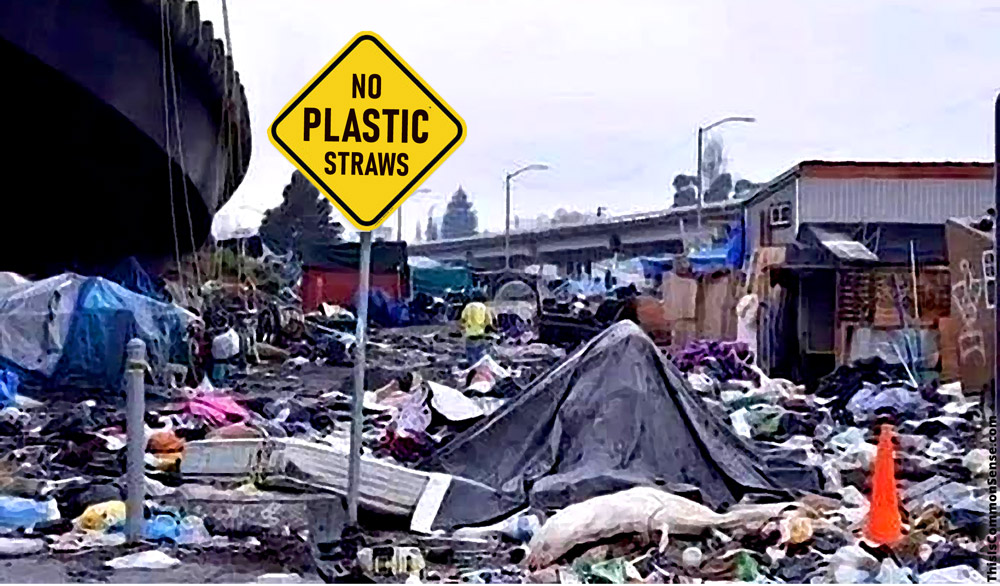
A plastic-bag ban is underway in New York City. Four states and five territories have already banned disposable plastic bags, as have countries around the world. New Yorkers are reportedly two-to-one in favor. A friend who lives there confirms this widespread resignation.

“I’m not happy about what it [plastic] does to the environment,” says one New Yorker. “But . . . what it does to my environment if I don’t have them is a nightmare.”

“This is a good thing because it’s helping the environment,” says another.

The problem of trash disposal has been solved. We use garbage cans, pickups, landfills. It’s a problem that must be continuously re-solved. Like many other problems . . . such as how to carry groceries.

We adopted plastic bags because they are much more convenient than paper. Convenience, efficiency, effectiveness: many man-made components of civilization serve these goals.

Reduction to absurdity can persuade only if the listener rejects the absurd. In 1967, the idea of banning plastic bags and plastic straws seemed, to most, absurd. Today, maybe two thirds of New Yorkers lament the inconvenience but add whaddyagonnado . . . when you gotta protect the environment?

That this measure will not protect much of anything, but merely allow activists to think well of themselves is, itself, absurd.

This is Common Sense. I’m Paul Jacob.


PDF for printing

plastic, environmentalism, California, law, prohibitions, bans,

See all recent commentary
(simplified and organized)
See recent popular posts
Categories
ideological culture political economy too much government

Ex-Californians

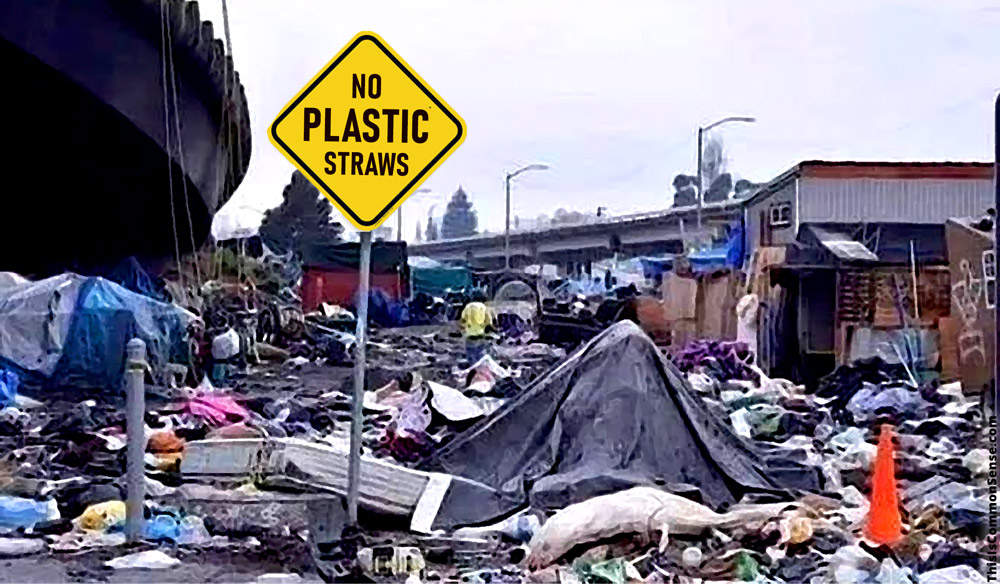
California, “the U.S. state most synonymous with all varieties of growth — vegetal, technological, and human — is at the precipice of its first-ever population decline,” writes Derek Thompson of The Atlantic. And folks in other states like Texas and Idaho are none too happy. 

You see, the Californians fleeing are finding new homes elsewhere. Especially in Texas and Idaho.

Oddly, Mr. Thompson breezes by the biggest source of anxiety: ideology. “Texas Governor Greg Abbott issued a warning on Twitter to Californians moving to his state: ‘Remember those high taxes, burdensome regulations, & socialistic agenda advanced in CA? We don’t believe in that.’ The sentiment was echoed in various warnings in Dallas newspapers about the awful ‘California-ing’ of North Texas.” Thompson quickly moves on to interrogate how real the general exodus from the Golden State is.

Which is interesting — but much more important is the main worry about all immigration: will these new citizens vote to overturn the order that attracted them in the first place?

There is certainly anecdotal evidence that this can be a real problem.

Also not mentioned in the The Atlantic squib is just how messed up California now is.

What can be done? The idea humorously floated by an Idaho politician — a “$26 billion wall to keep out people moving from the Golden State” — is just a joke.

And secession/expulsion of the 23rd state in the union is not realistic, either.

What is realistic is for non-California politicians to float in the U.S. Congress a willingness to break up the state into separate pieces, creating at least two new states. At least then, Jefferson State citizens could put up with West California émigrés. 

This is Common Sense. I’m Paul Jacob.


N.B. There are very serious political problems of representation in California that breaking up could help fix, by increasing the number of legislators and minimizing the ratio between representatives and the people they serve.

PDF for printing

Texas, California, democracy, migration, immigration,

See all recent commentary
(simplified and organized)
See recent popular posts

Categories
free trade & free markets too much government

The Anti-Worker Ism

Progressives who lean socialist used to hide their worst intentions. Now they are letting it all hang out.

There have always been overt socialists in the U.S., of course. They would sometimes protest the reluctance of fellow travelers to fully embrace socialism’s moniker. But the sentiment “Ah, screw it, let’s just admit we want to destroy everything currently in existence” seems on the ascendance. Even a few major Democratic candidates for president are on board.

Exhibit 112 is the new nationwide push to stomp the gig economy.

Especially freelancing.

This follows Exhibit 111, the recent and so far successful push to stop independent contractors from engaging in voluntary transactions in California. (Many lawsuits are underway.)

After scanning the coiled legalese of 111 — I mean AB5, California’s law — many companies decided that ending relationships with California-based freelancers was prudence with a capital P. And that rhymes with G, and that stands for Golden. Which the Golden State used to, uh, B.

Not every self-employed person has been thrown out onto the street. There are carve-outs. Actually, the only known victims are taxi drivers, cleaners, nurses, comedians, writers, editors, musicians, transcriptionists, citizen initiative petitioners, etc., etc.

The crackdown on non-9-to-5 work arrangements has also resulted in much gnashing of teeth by gig-seekers of all ideological stripes. 

Obviously, then, such massive destruction of economic freedom must be inflicted on the federal level too. So House Democrats put AB5’s gig-killing provisions into Exhibit 112, that is, into HR2474, pending legislation.

Democratic candidates for president Pete Buttigieg, Elizabeth Warren, and Bernie Sanders have endorsed the California statute, a national version, or both.

Ludwig von Mises had a word for this. He called socialism “destructionist.”

This is Common Sense. I’m Paul Jacob.


PDF for printing

California, socialism, labor, progressivism, Democrats

See all recent commentary
(simplified and organized)
See recent popular posts

Categories
initiative, referendum, and recall too much government

The Gig Is Up

Eventually, champions of government intervention, of all forms of thwarting independent judgment and killing dreams, find themselves under assault. From the public. 

And you don’t need an economics degree to grasp why. 

Initially, an intervention prevents other people from pursuing projects, getting jobs, earning a living. Then, finally, government meddling goes a step too far. Maybe lawmakers had “good intentions,” but hey! This is me now! 

Your legislation needs tweaking!

This is where we are in California’s attack on the so-called gig economy. Hatched to “protect” Uber drivers or some such nonsense, Assembly Bill 5 makes it massively harder for companies to classify freelancers as independent contractors. After it was signed into law, many companies—from blogs to transcription services—told California-based freelancers adios. 

Millions of people lost work and options.

What walks of life are affected? All. 

“California’s new gig worker law is . . . threatening all performing arts,” complains Brendan Rawson at CalMatters.org. California has “overreached.” Gotta nip-and-tuck that otherwise “worthy” bill! Use only the magic arbitrary intervention in our lives that works!

Not everybody now being hurt was previously okay with pushing other people around, of course. I’ve never been a fan. One of my missions is defending the right of citizen initiative. Well, AB5 makes it much harder and more expensive for petition campaigns to hire people for such gigs as collecting signatures for an initiative in California. 

AB5 attacks earning a living, speaking freely, associating freely, and petitioning one’s government freely. Maybe the law will be rescinded. But there’s more mischief where that came from. 

So let’s protect other people’s freedom . . . and stop the overreach before it reaches us.

This is Common Sense. I’m Paul Jacob.


PDF for printing

California, gig, freelance, law, control, interference, intervention, labor,

Photo by Dairo Cervantes

See all recent commentary
(simplified and organized)
See recent popular posts


Categories
folly Popular tax policy too much government

A Fake Mystery

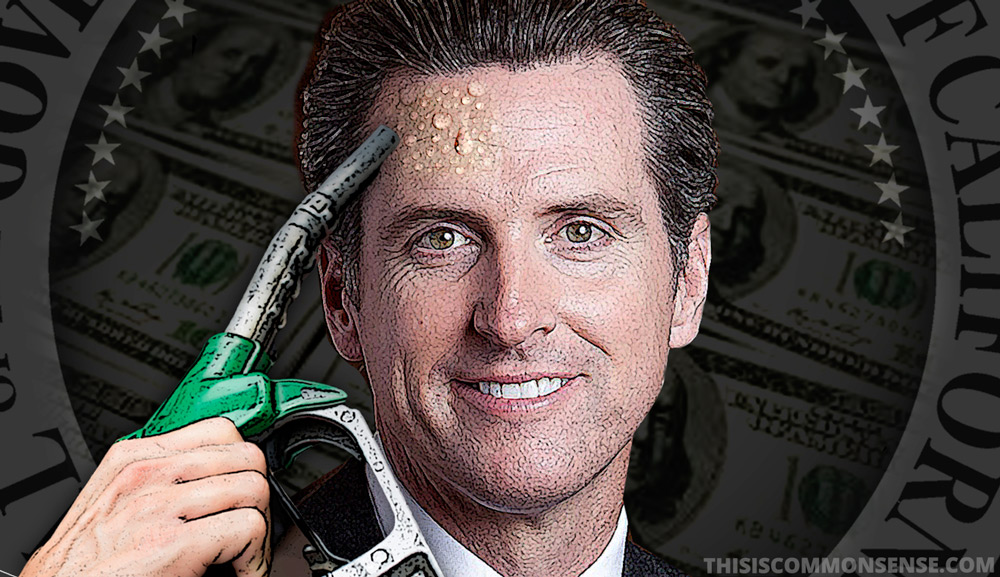
California’s new top banana is playing politics the old-fashioned way: passing the buck.

Last week Governor Gavin Newsom directed the California Energy Commission (CEC) to look into the state’s higher-than-average gasoline prices.

“Independent analysis suggests that an unaccounted-for price differential exists in California’s gas prices and that this price differential may stem in part from inappropriate industry practices,” he wrote in an official letter to the CEC.  “These are all important reasons for the Commission to help shed light on what’s going on in our gasoline market.”

Ah, shed light!

We are not talking about the bulb in your outbuilding.

Californians understandably grumble about having to pay higher taxes than elsewhere in the U.S. So Newsom pretends to suspect “inappropriate industry practices.” But what is inappropriate is Newsom’s directive to the CEC. As Christian Britschgi drolly informs us at Reason, Newsom, while lieutenant governor, had “supported a 2017 bill increasing the state’s gas taxes,” which looks like all we really need to know. Raise taxes, and businesses tend to increase prices rather than eat the extra cost. Higher gas prices are the result of higher taxes.

Duh.

But there’s more.

“When running for governor in 2018,” Britschgi explains, “he opposed a ballot initiative that would have repealed that same increase.”

So, is Newsom truly clueless of the obvious?

Hardly. And neither are “17 legislators who voted for the tax hike” who joined the governor in “wanting answers to this difficult headscratcher.” They are doing what pols usually do: deflect; misdirect; blame others . . . hoping that voters don’t pay close enough attention, or remember recent history. And busy people often do not.

Finding a bogeyman helps, too.

This is Common Sense. I’m Paul Jacob.


PDF for printing

Gavin Newsom, Governor, California, gas, tax, prices, folly,

See all recent commentary
(simplified and organized)
See recent popular posts

Categories
free trade & free markets too much government

Retreat to Atlanta

“California is the place you oughta be” — or so sang Jerry Scoggins for The Beverly Hillbillies. That may still hold true, if you are an oil millionaire retiring to a pleasant climate.

But if you are trying to make your fortune, the direction is outbound.

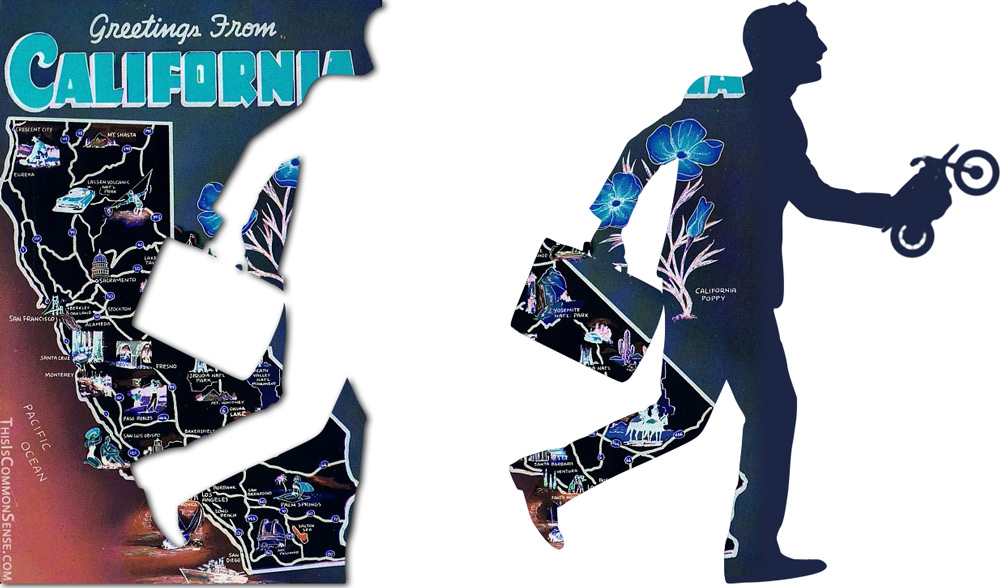
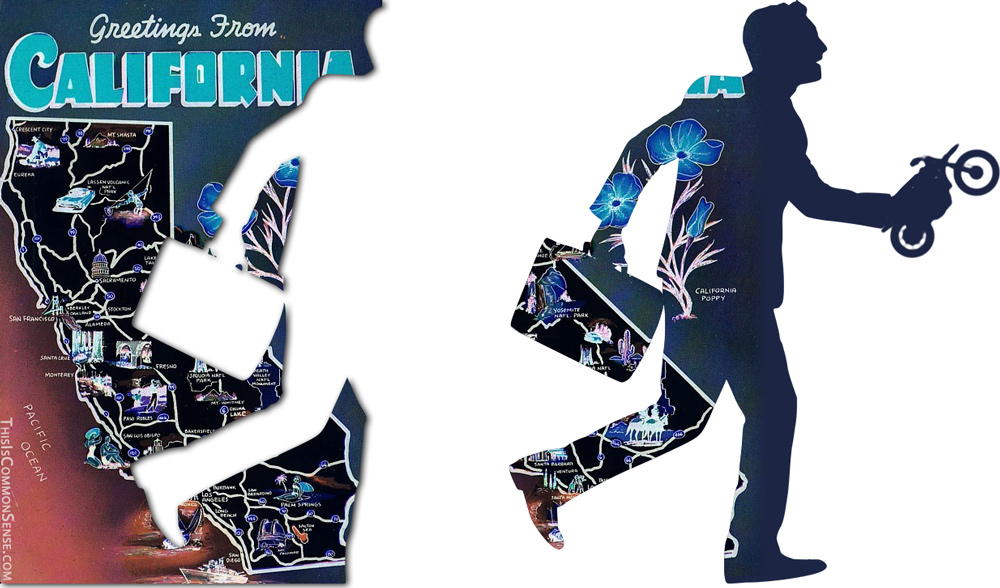
Take, for example, the case of Yamaha Motor USA.

The company’s big bike sales — motorcycles 500cc and up — went way down during the last dozen months, 19 percent. And since Yamaha’s operations are in California, hits to revenue like that intersect alarmingly with ongoing hits to the cost of doing business. 

Which explains the decision to move the company to “just outside of Atlanta, Georgia,” as reported by Jensen Beeler in Asphalt & Rubber.

“It should be an obvious statement that California is an expensive place to operate a business,” Beeler explains. “The state isn’t known as being a tax haven for corporations, the property values are high, which means buildings are expensive, and the standard of living for Los Angeles is one of the highest in America, which means that employees have to be paid a premium as well.”

And Beeler’s report does not even mention the state’s regulatory burden.

Problem? Southern California is “where the bulk of the motorcycle industry resides,” and Yamaha will face some difficulty being so distant from its industry’s major talent pool.* But there are a few automotive and motorcycle companies in Georgia, so Yamaha is not alone.

Indeed, if politicians continue to wreak havoc on their business sector, the Golden State bike industry will lose more than just Yamaha.

This is Common Sense. I’m Paul Jacob.


* The company will keep “a small cadre of Yamaha employees” behind in Cypress, California, focusing on testing and racing.

PDF for printing


Illustration by JGill (running silhouette from Max Pixel)


Categories
Accountability government transparency insider corruption local leaders media and media people nannyism national politics & policies political challengers Regulating Protest responsibility

Not Fine with Feinstein?

Could it be that Sen. Dianne Feinstein, Democrat of California, may not be liberal enough?

The San Francisco Democrat has ostensibly represented the Golden State in the United States Senate for the last 26 years. Before that, Feinstein spent eight years on San Francisco’s Board of Supervisors and then a decade as mayor.

Now, after 44 consecutive years as a public official, what does the 85-year-old Feinstein seek? More. That is, another six-year lease on her powerful perch in the U.S. Senate.

But the Executive Board of the California Democratic Party — Feinstein’s Party — just said, “No way!”

A whopping 65 percent of the 333-member board opted for State Sen. Kevin de León, a fellow Democrat seen as more “progressive.” Only seven percent supported endorsing Feinstein.

Keep in mind that Feinstein is already on the November ballot. She was the leading vote-getter in California’s primary last month. Yet, she received only 44 percent of the vote: a majority does favor someone else.

In February, 2,700 activists at the State Democratic Party Convention in San Diego voted 54 to 37 percent for State Sen. De León over U.S. Sen. Feinstein.

“Feinstein, who spends much of her time in Washington, has had a distant relationship with party activists for years,” noted the Los Angeles Times report.

Still, what Democratic Party activists want may not matter so much. Mrs. Feinstein enjoys tremendous name recognition and, according to the Times, has “$7 million in campaign cash socked away as of May, ten times what De León had.”

That money seems to be Sen. Feinstein’s real base of support.

This is Common Sense. I’m Paul Jacob.


PDF for printing


Categories
Accountability crime and punishment folly free trade & free markets general freedom judiciary local leaders moral hazard nannyism Second Amendment rights too much government U.S. Constitution

Ought Implies Cantifornia

“Strip away the absurdity,” writes Scott Shackford at Reason, “and it’s essentially a very technical ruling.”

Shackford is explaining a bizarre recent judgment of the California Supreme Court.

Politicians in Sacramento had, years ago, passed a gun control measure requiring gun manufacturers to “implement microstamping technology that would imprint identifying information on bullets as they were shot from semi-automatic weapons.” In 2014, Smith & Wesson announced that it would pull some guns from the California market rather than comply. Why? The technology just wasn’t ready yet.*

Since California’s Civil Code contains a section reiterating an old commonsense principle to the effect that the “law never requires impossibilities,” the National Shooting Sports Foundation sued to block the law.

But the group just lost.

The Court did say it could protect citizens from punishment, but it refused to nullify the legislation on constitutional grounds.

Unanimously.

Why do this? Apparently to protect California politicians in their ongoing social engineering schemes.

The dollar costs of trying to comply with impossible demands are huge, of course. But the biggest costs may be more subtle.

In moral philosophy, it is a truism to say that “ought implies can.” In natural law as understood long ago, an impossible law was thought not a law at all, justifiably ignored by anyone and everyone.

In a just state, flouting of maddening regulations like California’s would lead not merely to the defense of the absurdly put-upon citizen — as this court ruling still allows — but also to the nixing of the “impossible” law.

This is Common Sense. I’m Paul Jacob.


* Shackford notes that “a cynic might theorize that this is the law’s actual intent.” I wouldn’t limit that suspicion to folks given to cynicism. Pragmatists and political scientists and almost anyone else would be placing bets on that, too.

PDF for printing