Categories
First Amendment rights international affairs Internet controversy privacy

Apple to Keep Encryption

Thanks, United Kingdom.

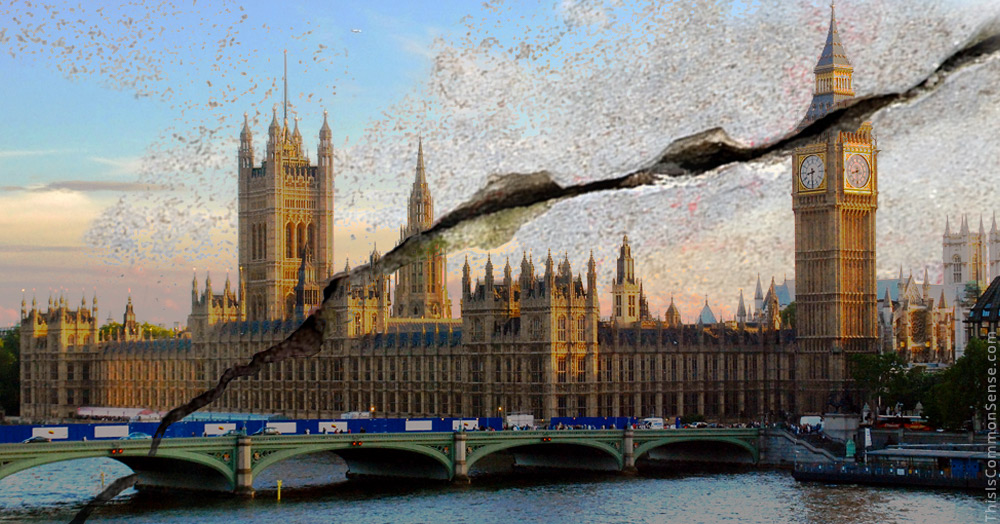
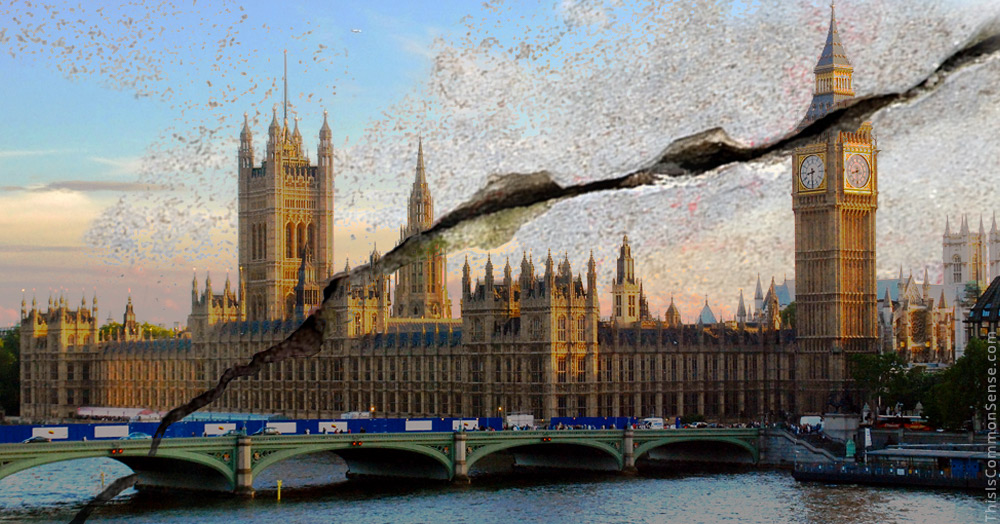
Following pressure on UK officials by the Trump administration and some congressmen, British censors have caved — the U.S. Director of National Intelligence confirmed that the UK was abandoning its demand that Apple burn a hole in its iPhone encryption.

So Apple may continue providing its flagship smartphone with robust encryption. Cyberhackers and autocratic regimes (including snoopy British officials) — who’d love a crashable gate into everyone’s private iPhone information — must now endure their extreme disappointment.

Director Tulsi Gabbard reported on X that the UK will “drop its mandate for Apple to provide a ‘back door’ that would have enabled access to the protected encrypted data of American citizens and encroached on our civil liberties.”

Such a back door would have rendered the encryption close to pointless, presenting a vulnerable target to all bad guys in addition to all “good” guys in the UK holding backdoor keys.

Under an agreement in effect since 2019, U.S. companies are obliged to comply with requests from UK officials for data relevant to criminal investigations.

The agreement prohibits surveillance of Americans. But this year British officials secretly demanded that Apple install a back door to enable the UK government to extract data from any iPhone. Yes, that’s any iPhone anywhere in the world. 

The British Government also planned to initiate these back-​door intrusions without even needing to show relevance to a UK criminal investigation, let alone provide a warrant.

How long will the reprieve last? Maybe only until we get another U.S. administration as eager to censor everything as the last one was.

This is Common Sense. I’m Paul Jacob.


PDF for printing

Illustration created with Krea and Firefly

See all recent commentary
(simplified and organized)
See recent popular posts

Categories
free trade & free markets international affairs

Sabotage or Neglect?

“It might not be sabotage,” says Member of Parliament Jonathan Reynolds. “It might be neglect.”

Reynolds serves as the United Kingdom’s Business Secretary. He’s talking about the behavior of Jungye, the Chinese owner of troubled British Steel. 

“The conscious decision not just to not order raw materials but to sell existing supplies of raw materials …” Reynolds fulminated, leading him to tell the BBC that “he doesn’t want any future Chinese involvement in British steel making.”

Over the weekend, the UK Government seized British Steel, with Reynolds explaining that “he was forced to seek emergency powers to prevent owners Jingye” from “shutting down its two blast furnaces, which would have ended primary steel production in the UK.”

“They wanted to close down steel production in Britain,” argues Nigel Farage, an MP and leader of Reform UK, “This is a big strategic decision by the CCP.”

Asked if he was accusing the Chinese owners of “lying about the numbers,” the fiery Farage replied, “Yes, absolutely,” adding, “Lying about everything.”

In a single day, Saturday, Parliament passed emergency legislation to facilitate the Business Secretary’s request. 

One opposition MP called it a “botched nationalization,” as the company is still in Chinese hands. It seems more a rescue attempt for Chinese owners who don’t want to be rescued. 

Takeaway? Maybe China isn’t such a great economic partner after all. 

Free countries are reluctantly rediscovering that we still live in a dangerous world, in which we better be able to protect ourselves and not depend on the sworn enemies of freedom. 

This is Common Sense. I’m Paul Jacob. 


PDF for printing

Illustration created with Krea and Firefly

See all recent commentary
(simplified and organized)
See recent popular posts

Categories
crime and punishment general freedom media and media people moral hazard

Porn, Video Games and British Crime

British freedom is eroding. The attack comes from two directions.

First, there is the over-​bearing police-​state style, surveillance-​everywhere government.

Second, there is the increasing violence.

Thing is, the justification for Britain’s mass surveillance, as well as for strict gun controls, was to prevent crime.

Oops.

So of course the Labour Party “shadow home secretary” Diane Abbott points an accusatory finger at porn and video games. These two influences may be “desensitising young people to vicious behaviour.”

Well, porn and video games are changing our cultures, on both sides of the pond. But in America, at least, the crime rate for the past two decades plumetted while video games and Internet porn have become ubiquitous, explicit and … admittedly, appalling.

Look elsewhere for the crime uptick.

The Brexit fiasco, with the Tory government messing up implementation of the 2016 referendum results, has surely increased, not decreased, tensions all around, as has immigration policy, the collapsing National Health system, and much more. But worst of all? The nanny state, treating citizens as childish subjects. The police arrest people for nothing more than saying mean or just edgy things online. 

If people cannot be free legally, they will take license — illegally. 

Previously, we heard about a rash of acid attacks: acid thrown in the faces of pedestrians. More recently, the headlines are about stabbings — after years of knife control, of government crackdowns on even kitchen knives.

Ms. Abbott places the primary blame for rising crime not on the above, however, but on poverty and malfunctioning education. Not mentioned? The possibility that taking away British citizens’ rights of self-​defense may have the perverse (unintended?) consequence of increasing offensive violence.

This is Common Sense. I’m Paul Jacob.


PDF for printing

Great Britain, British, England, knives, violence, freedom, surveillance,

See all recent commentary
(simplified and organized)
See recent popular posts

Categories
ideological culture incumbents local leaders media and media people political challengers too much government

The Centre Cannot Hold

The British may spell their words in funny ways, but their political problems do not seem all that foreign. Their left-​of-​center party has gone far left, Marxoid left; their right-​of-​center party has gone ultra-incompetent.

A healthy majority of Brits disapprove of both parties. So, no wonder many Brits are looking to create a new one.

A new centrist political party, no less.

Over at The Economist, the columnist writing under the name “Bagehot” (pronounced “badget”) predicts that this hope will be dashed, for at least three reasons:

First, Britain already has a centrist party, and it is not doing very well.

Second, there sure are a lot of contenders — 35 new parties have been formed just this year, including one called, with humble brag, “Sensible” — and all that competition fractionalizes the vote.

Third, the country sports the same system of vote counting and elections as America does, first-​past-​the-​post, which “is hard on startups.”

That last point is worth thinking about. In multi-​candidate races, the British-​American electoral system declares as winners those who obtain a bare plurality of votes — thus ignoring the preferences of those who vote for minor party candidates. This means that those who “waste” their votes not only hurt the candidacies they like as second-​best but also insulate the second-​best parties from those voters’ influence. So the parties become narrow-​minded and unhinged from an interested group of voters.

Bagehot thinks Britain’s centrists need to rethink, conjure up some new ideas. But what they need to do first is fix a system that prods political parties away from new ideas. 

This is Common Sense. I’m Paul Jacob.


PDF for printing


Categories
general freedom initiative, referendum, and recall national politics & policies responsibility tax policy term limits U.S. Constitution

Brexit 1776 – 2017

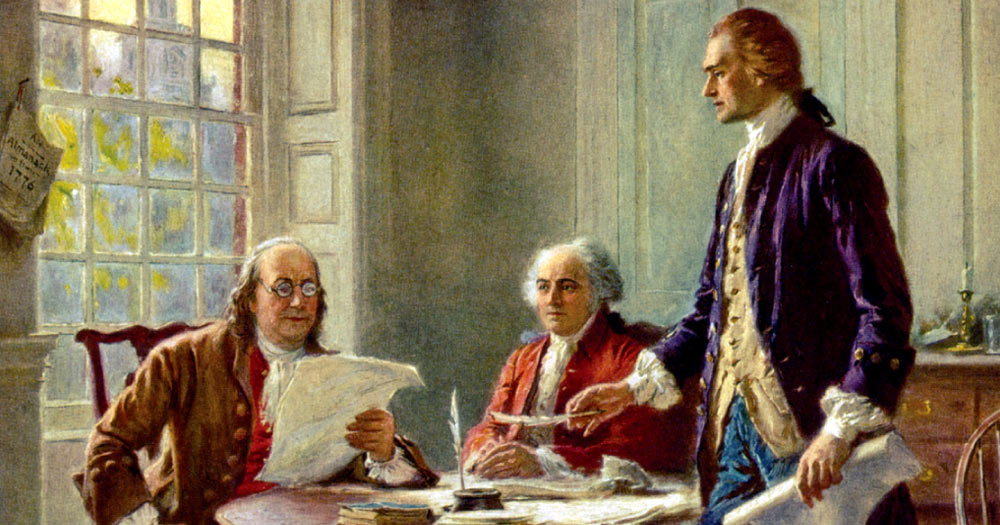
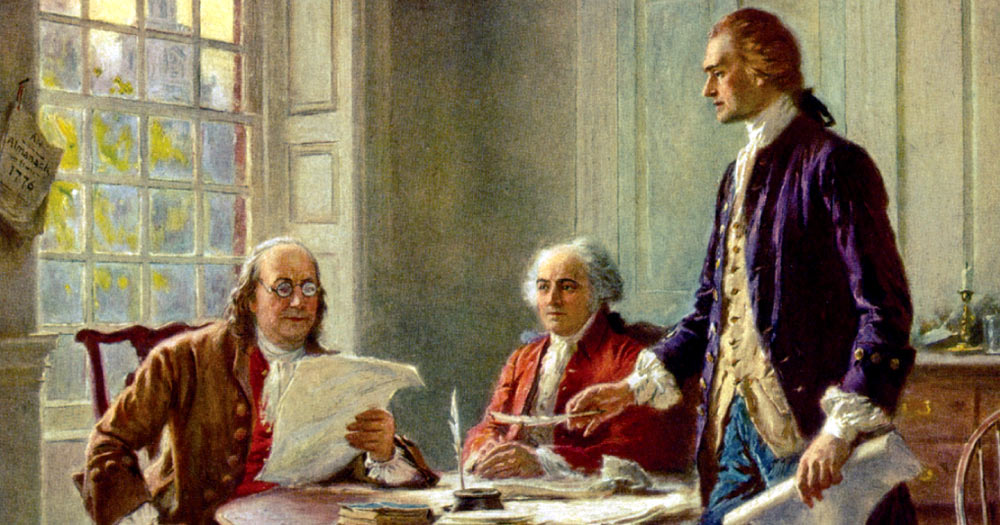
These united States* got their start, officially, on July 2, 1776. 

That’s when the Second Continental Congress voted to separate from King George’s government across the water. But it was two days later when that same Congress approved its formal Declaration, and it was the wording of that Declaration that impressed everybody — including folks back in England. 

July Fourth, not the Second, became “Independence Day.”

Today, the English are insisting on independence. Last year’s referendum to exit the European Union was a major step in throwing off the abusive relationship from Brussels and the central government there.

The Brits have every right to their “Brexit,” since, as our Congress argued so persuasively, governments “deriv[e] their just powers from the consent of the governed,” which entails that “whenever any Form of Government becomes destructive of these ends, it is the Right of the People to alter or to abolish it.”

Americans have never had more cause for fellow-​feeling with the British. Not only are they copying us, we are copying us. 

To gain anything like control over what has become a runaway central government in Washington, D.C., Americans in the states will have to continue to (in effect) nullify federal law regarding marijuana and take the lead on criminal justice reforms and improving government ethics and accountability. More work must be done, fighting for free speech and against corruption. And overbearing taxation and regulation and cronyism And insane debt accumulation.

Across the pond, it’s Brexit. Here, it’s just our continuing Revolution.

This is Common Sense. I’m Paul Jacob. 


* For just today I’ll use the odd, old capitalization, just as it was used in the Declaration of July 4, 1776.


Printable PDF


Categories
Accountability folly general freedom ideological culture moral hazard nannyism national politics & policies privacy responsibility too much government

UK Death Panel

Six days ago, the European Court of Human Rights sided against the parents of Charlie Gard, a severely ill boy, refusing to allow them to take their infant son to America where he could receive full (and privately funded) experimental treatment. The court ruled that removing the child from the hospital would cause him “significant harm” — and authorized the termination of life support.

Yesterday, this site quoted Ben Shapiro on the case. Shapiro sees this sad story as a grand demonstration of what is wrong with government-​funded and ‑managed health care: 

Bernie Sanders tweets about how nobody should be denied care because they can’t afford it? But that’s what happens all the time under socialized medicine — the difference being, it’s not about you not being able to afford it, it is about the government not being able to afford it.

Economists tell us that, in a world of scarcity, there will be rationing, willy nilly: either by price (according to consumer and producer choices) or else by government diktat. 

Last week, the European Court of Human Rights did its due diligence to ration resources — serving as a Death Panel. 

The scheduled to pull the plug on Charlie last Friday, but there’s been a last-​minute reprieve — no doubt a result of pressure from America and the Vatican.

Though the doctor who testified before the court insisted that any American medical institution would have provided the treatment he offers, the best the Gards can apparently hope for, now, is to be allowed to take Charlie home to die.

Think of it as socialized medicine in action.

This is Common Sense. I’m Paul Jacob.


Printable PDF