Categories
international affairs responsibility

The War Presidents’ Debacle

President Biden yesterday called the now somewhat* completed withdrawal of U.S., Afghan and coalition soldiers and civilians an “extraordinary success,” arguing that “no nation has ever done anything like it in all of history.”

There were a reported 120,000 people airlifted out, but with 13 U.S. soldiers killed in last week’s suicide attack at the Kabul airport, along with three British nationals and more than 160 Afghans — let’s cancel any victory lap.

Still, I’m more with Mr. Biden than with Senate Minority Leader Mitch McConnell, who made the case on Fox News Sunday with Chris Wallace that the occupation of Afghanistan was a complete success, making the pull-​out (now over) a horrendous policy mistake. 

McConnell’s case for a never-​ending “Mission Accomplished” understates the costs in blood and treasure — by trillions of dollars, in part. Just like you would expect of a deficit-​and-​debt plotter.

“America’s longest war has been by any measure a costly failure,” argues David Rothkopf in The Atlantic, adding that “Joe Biden doesn’t ‘own’ the mayhem on the ground right now.” Instead, Rothkopf blames “20 years of bad decisions by U.S. political and military leaders.”

Rothkopf errs in letting Joe “The Buck Stops Here” Biden and the generals off the hook for the withdrawal. And gifting the enemy with a vast and sophisticated arsenal.

All four Afghanistan War presidents deserve blame, along with the war establishment, in government and out.

Remember: wars that cannot be won even with military victory on the battlefield should not be fought.

This is Common Sense. I’m Paul Jacob.


* The Biden Administration continues to pledge they’ll work to get Americans left in Afghanistan out. However, in an ABC News interview a little more than a week ago, Biden had committed that, “If there’s American citizens left, we’re going to stay until we get them all out.” 

PDF for printing

See all recent commentary
(simplified and organized)
See recent popular posts
Categories
international affairs

Lack of Intelligence?

The quick collapse of the Afghan government and the takeover of the entire country by the vicious and barbaric Taliban was no intelligence failure, as Rep. Jackie Speier (D‑Calif.) ridiculously charged Sunday.

U.S. intelligence officials had informed the Biden Administration, as well as previous ones, of the inevitable consequences.

Nor is this mess in any way a failure of the US military.

It is a political failure, through-and-through. 

While the withdrawal* could have been handled far better, the big mistake was thinking — for even a nanosecond — that we could remake Afghanistan into a pillar of freedom and democracy. 

Or anything remotely close.

The U.S. has been there for two decades, our longest war, and could have stayed another hundred years … and still, when we left, this would be the result. 

As this commentary warned repeatedly.**

I have come to support U.S. alliances with free peoples, within limits … the key limit being the American people’s degree of commitment. Such alliances would be more sustainable than our current role as world policeman, better protecting freedom from the admittedly serious danger presented by China and Russia, two exceedingly bad actors. 

We can occupy unfree peoples — for example, the Afghans — perhaps forever if we are willing to expend the blood (our sons and daughters) and treasure, but neither the U.S. nor any other country has shown the capability to remake peoples or nations. 

Liberation is beautiful. But if forced, it won’t take

This is Common Sense. I’m Paul Jacob.


* The U.S. Government bears some responsibility not to get people who work with it killed. We all seem to agree on that, even if we don’t agree on other issues regarding such interventions. So why does our government facilitate the placing of a price on many people’s heads and then cut and run without taking care to protect them? This is not a demand for perfection. But how about some quick visa paperwork and the offer of flights out of Afghanistan? In fact, fill out the stupid paperwork on the flight over here. 

** In 2012, 2013, 2014, 2015, 2016, 2017, 2018, 2019, etc.

PDF for printing

See all recent commentary
(simplified and organized)
See recent popular posts

Categories
international affairs

Afghan Angst

Declaring a coming end to “the forever war,” President Joe Biden announced last week that U.S. military forces will be leaving Afghanistan by September 11th* — a four-​month-​and-​ten-​day delay from the May 1 deadline that was set for troop withdrawal by the Trump Administration last year.

“Apparently, we’re to help our adversaries ring in the anniversary of the 9 – 11 attacks, by gift-​wrapping the country and handing it right back to them,” chided Minority Leader Mitch McConnell from the Senate floor.

But wait a second … McConnell knows that negotiating for the enemy Taliban, the horrific human rights violator and sponsor of terrorism, to put down arms and join the government to share power has been the U.S. policy objective from the Obama Administration’s embrace in 2013 to the Trump Administration actually inking the agreement

Dealing the Taliban back into the political mix, after having gone to war to dislodge them, never made sense. But neither does an ad infinitum military occupation seem rational … chewing up generations of soldiers until Afghanistan miraculously metamorphoses into a sustainable democracy. Two decades of U.S. nation-​building offer no serious promise that the mission could be accomplished in another decade. 

Or two. 

Or ever.

Plus, plugging the problem in Afghanistan has not worked more broadly. “The terrorist threat has changed dramatically since we went to war in Afghanistan 20 years ago,” National Security Advisor Jake Sullivan explained. “Al-​Qaeda is in Yemen and Syria and Somalia. ISIS is across that border region in Iraq and Syria and in multiple countries in Africa.”

Policy futility is a bad thing. Recognizing it is good. 

This is Common Sense. I’m Paul Jacob.


PDF for printing

See all recent commentary
(simplified and organized)
See recent popular posts
Categories
international affairs meme Popular too much government

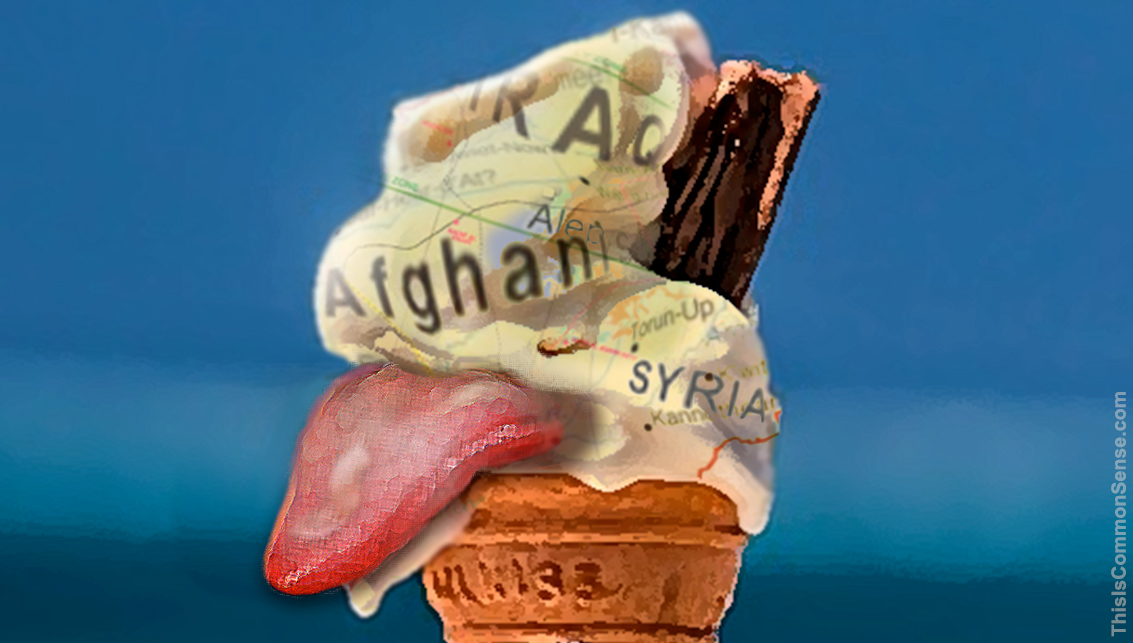
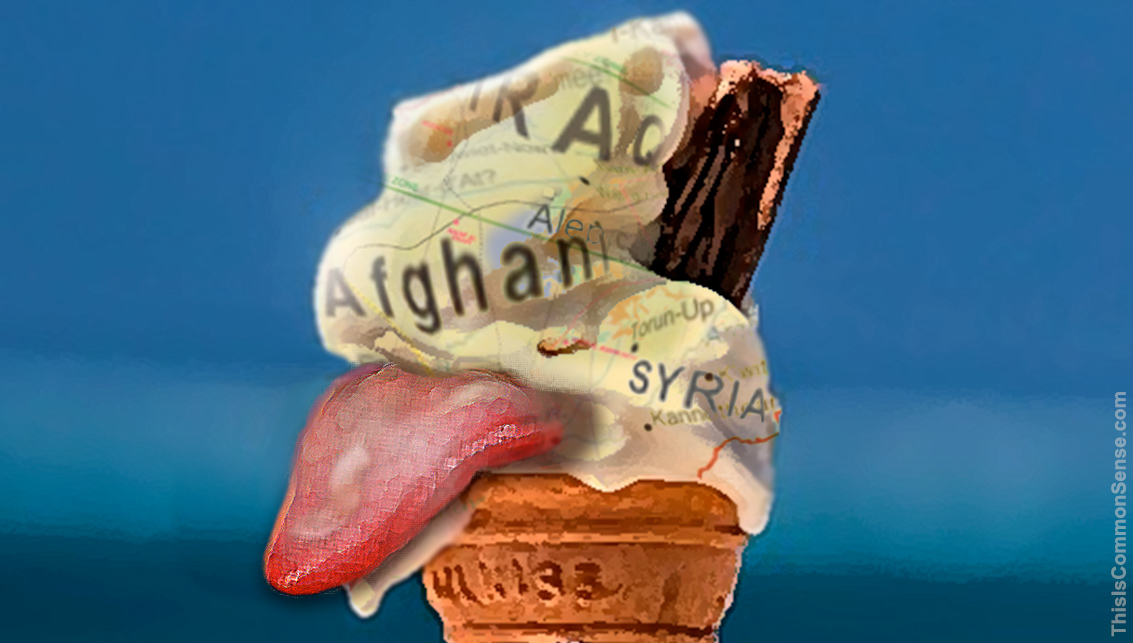
What Kind of Ice Cream Cone?

When I wrote about the Donald’s change of troop positions abroad last week, it was less than completely clear that the US President aimed to withdraw troops from Afghanistan as well as Syria. But multiple reports on the day I posted “Strategic Disengagement” make it clearer: about half of America’s 14,000 troops stationed there are scheduled to exit.

Why not all?

Well, you can see how entrenched foreign intervention is for American leaders. While most of the GOP policy establishment howled at Donald Trump’s betrayal of the cause (whatever that cause is, exactly), so, too, did many of the Democrats. And they seem awfully earnest. More earnest than one has reason to expect from the objectors to “George W. Bush’s wars.”

Even Noam Chomsky came out saying that the U.S. should stay in Syria to save the Kurds, and Howard Dean tweeted that American troops must remain in Afghanistan for the sake of women’s rights.

What we are witnessing are eternal programs that do not ever — and cannot ever — fulfill their basic purpose. No amount of occupation of Syria or Afghanistan or Iraq is going to give us what the neoconservatives promised: freedom and democracy and jubilation in the streets.

Freedom and democracy do not work that way.

There is a term for such impossible-​to-​win/​impossible-​to-​stop policy messes: “self-​licking ice cream cones.”

The term means a “self-​perpetuating system that has no purpose other than to sustain itself,” which is just standard operating procedure for domestic bureaucracies.

But in foreign military action?

Awfully cold imagery, and too comic … for tragedy.

This is Common Sense. I’m Paul Jacob.


PDF for printing

self licking ice cream, war, foreign policy, government

See all recent commentary
(simplified and organized)
See recent popular posts
Categories
Accountability ideological culture media and media people national politics & policies political challengers Popular responsibility

The Law of Unintended Trump Support

Last week, when President Donald Trump abandoned his previous policy position on getting U.S. troops out of Afghanistan in favor of continuing the establishment-​supported policy of keeping those troops there, he was very well-​received in our nation’s capital.

NeverTrumper/​neo-​con Sen. Lindsay Graham (R‑S.C.) spoke of Mr. Trump’s “smarts” and “moral courage.” 

The #NeverPraiseTrump Washington Post applauded the president’s valiant “self-​correction.”

Yet when Trump holds a view contrary to the Washington consensus his wisdom and moral bravery elicit less celebration.

Instead, we hear that The Donald is unfit to command.

“I really question his ability to be — his fitness to be — in this office,” says James Clapper, the former Director of National Intelligence.

“The president has not yet been able to demonstrate the stability,” Sen. Bob Corker (R‑Tenn.) concurred, “that he needs to demonstrate in order to be successful.”

And from the usual suspect list of television talking heads we get clinical diagnoses, talk of “erratic behavior and mental instability that place the country in grave danger.” 

Mr. Trump combines every bad personality trait imaginable, the litany runs.

But all this is for nought.

Donald Trump has been able to withstand media negativity as well as the lack of support from his own party’s insiders for one simple reason: it validates him. 

Every insider attack, every media-​fueled outrage campaign, just proves him as the ultimate outsider to a system that the long-​frustrated, increasingly angered electorate wants turned upside down.*

This is Common Sense. I’m Paul Jacob.

*This episode of Common Sense condenses my regular weekend remarks at Townhall.


PDF for printing


Categories
Accountability folly general freedom moral hazard national politics & policies

Of Course, You Know, This Means War

When Steve Bannon was booted out of the White House, my thoughts turned immediately to war. As I wrote in frustration on Friday,

Bannon’s departure probably means the slim chance that the US might withdraw from “our” open-​ended, never-​ending occupation of Afghanistan has been foreclosed. 

If we don’t win the war by ushering in a completely transformed, modernized and westernized Afghanistan, at least our children and grandchildren and great grandchildren, etc., etc., will each have. their turn.

Of course, if the fabled “Graveyard of Empires” continues to work its historic magic, maybe future generations won’t face that burden: the United States could fall … as a worldwide imperial presence. And, if our global military archipelago fails — for, say, want of wealth to throw overseas — do we have any reason to believe that our republic would bounce back?

There remains more than enough reason to work for foreign policy sanity.

Prior to his evening national address on the day of the eclipse, Trump explained what he intends to do in Afghanistan — send 4,000 more troops.

Meanwhile, Steve Bannon’s door-​slapped rump did not dissuade him from tweeting out what he intends to do “on Capitol Hills, in the media, and in corporate America”:

If there’s any confusion out there, let me clear it up: I’m leaving the White House and going to war for Trump against his opponents.…

Call this the Bugs Bunny Policy: “Of course, you know, this means war!

And considering the promises made in the President’s speech, we can amend that to “of course, this means never-​ending war.”

This is Common Sense. I’m Paul Jacob.


PDF for printing


Categories
Accountability moral hazard national politics & policies responsibility U.S. Constitution

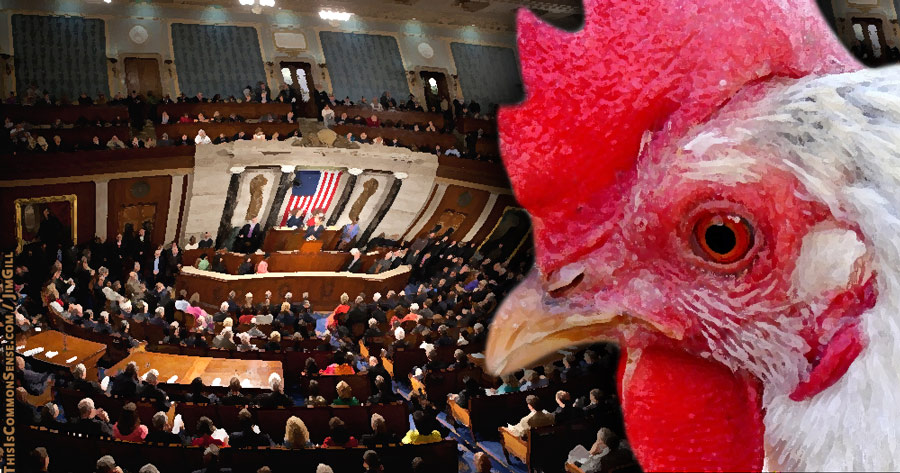
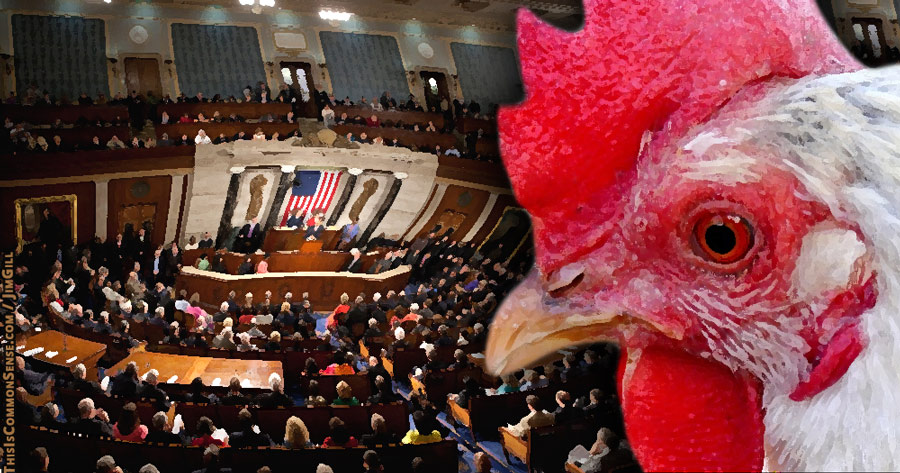
The Chicken-​Ostrich Congress

Those who work for the president must tell the POTUS hard truths — on matters of war, most of all. Citizens must also be told hard truths. After all, we are, at least theoretically, the ultimate decision-​makers … the president works for us.

That was my point yesterday.

But when it comes to life-​and-​death decisions about war and peace, there is also a congressional check on executive power.

Well, theoretically.

The big problem isn’t chicken-​hawks in Congress, but chicken-​ostriches. Bird-​brained members of Congress implant their heads deep into the sand when it comes to foreign policy. 

Where is the congressional debate over what to do in Afghanistan, our nation’s longest war? Rather than helping shape policy, Congress gladly lets the commander-​in-​chief control every aspect of foreign and military policy.

This gives the president unitary war-​making power, anathema to the original character of our Republic, but it also means precious members of Congress are never held accountable for the disasters. After all, they didn’t do anything. 

When mistakes are made or policy fails, the legislative branch can hold hearings to carp and moan and pontificate for the TV cameras. 

American citizens, on the other hand, cannot so easily dodge the consequences of unaccountable foreign policies. In addition to engaging in military action in seven countries at present, the U.S. Government has pledged to defend another 50 countries, about one-​fourth of the world.

Should more conflicts erupt, Congress won’t fight them. But our sons and daughters will. 

This is Common Sense. I’m Paul Jacob.


Printable PDF


Categories
Accountability folly moral hazard national politics & policies

Hotel Afghanistan

“You can check out any time you like, but you can never leave.”

Is Afghanistan becoming the Hotel California?

Back in 2014, Obama declared victory — well, he called it “over.” We even informed our enemies ahead of time that we were leaving, to show good manners. 

But as wars are known to do, it keeps not stopping. That is, bullets whiz by and bombs explode … and our American military hasn’t left. 

Obama feared that if we pulled out completely from the longest war in our history, the Afghan government would soon collapse and the Taliban would rush back to power. Last year the Taliban controlled more of the country than at anytime since 2001, when we first … “won.”

Now President Trump, the purported isolationist, stares at a report from military commanders on what to do. Their answer, according to the Washington Post, is to send “at least 3,000” more soldiers to Afghanistan, in addition to the 8,500 currently stationed there. And to allow US troops to engage in greater combat. 

“The plan would also increase spending on Afghanistan’s troubled government,” the Post reported. But more money won’t un-​corrupt the system.

Afghanistan expert Andrew Wilder with the U.S. Institute of Peace predicts that, “the U.S. is going to send more troops, but it’s not to achieve a forever military victory. Rather, it’s to try to bring about a negotiated end to this conflict.”

Will American soldiers be laying down their lives merely to better the odds for negotiating an improbable “good deal” with the Taliban?

This is Common Sense. I’m Paul Jacob.


Printable PDF


Categories
Accountability folly moral hazard national politics & policies

The Longest War

Is there a light at the end of the proverbial tunnel?

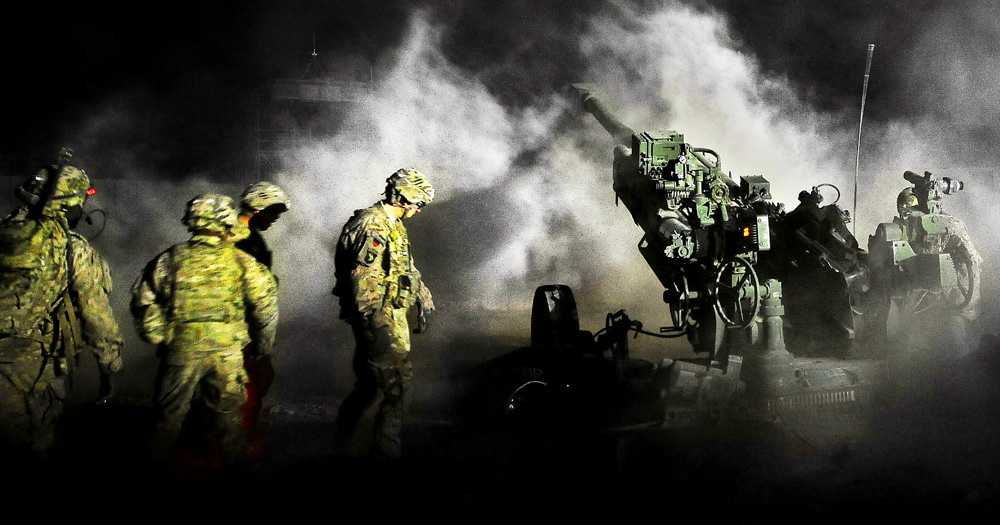
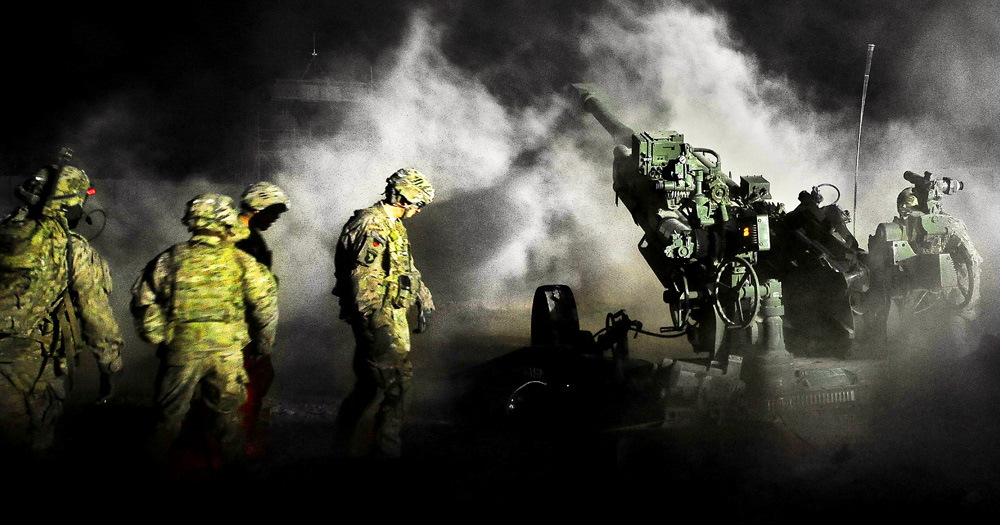
President Obama announced, Wednesday, that he would leave more troops in Afghanistan when he exits office than previously planned. Instead of cutting the current troop deployment of 10,000 down to 5,500 soldiers, Obama will now keep 8,400 “in country,” continuing our longest war.

Entering the 15th year of armed conflict and military occupation, thousands of lives lost along with hundreds of billions in treasure spent to equip and train Afghan forces and build infrastructure — and buy off warlords — recent U.N. estimates find the tyrannical Taliban controlling more actual territory in Afghanistan today than before the 2001 U.S. invasion.

Don’t blame the military. Our all-​volunteer army is the greatest fighting force on the planet. But militaries break things; building new institutions and especially new modes of thinking among a foreign population is more difficult.

No political magic exists capable of turning Afghanistan into Arizona. Not this year, not the next, a decade from now, or two decades … not even a century down the road.

We must never forget that “war is the continuation of politics by other means.”

And the politics don’t add up. There’s no credible plan to “win” in Afghanistan. All our leaders can muster is the witless maintenance of a deadly charade: nation-​building a nation that balks at being built, hoping the roof falls in on someone else later … in the other party.

Sometimes courage means recognizing reality.

Our men and women in uniform have better things to do than fight and die for decades in a no-​win war.

This is Common Sense. I’m Paul Jacob.


Printable PDF

Afghanistan, Obama, war, quagmire, illustration, photo


Photo credit: Joseph Swafford on Flickr, courtesty of DVIDSHUB


Categories
folly national politics & policies

A Tunnel with No Light

President Barack Obama pledged we’d be out of Afghanistan by 2016, but yesterday announced a “modest but meaningful extension of our presence” — keeping the 10,000 troops currently stationed there for all of 2016, and then, in perpetuity, maintaining a force five times larger than previously planned.

Why? Because, after 14 years of conflict and nation-​building, Afghanistan is still neck-​deep in violence. Last month, the Taliban briefly captured Kunduz, a city of over 250,000 people. Going forward, Obama admitted, “There will continue to be contested areas.”

The Afghan government is not self-​sustainable and nobody seems to know how many years or decades or centuries that might take to achieve.

Meanwhile, over in Syria, the U.S. cannot train more than four or five moderate soldiers after much bluster and promise — and splurging a cool $500 million.

The U.S. invaded and “regime-​changed” Iraq, helping shape a new government and national army. With all that effort — a cost of thousands of lives — once our soldiers weren’t doing the daily fighting to tamp down the bloody sectarian chasm, ISIS formed, the Iraqi army ran away and the country soon collapsed into civil war.

The Iraq Conquest put southern Iraq into Iranian orbit. How many lives was that worth?

The problem? Not military incompetence. The mission is the problem. Has any politician or military leader plausibly put forth a plan whereby our country’s intervention actually creates an improved and sustainable political order in any of these nations?

If so, let’s see it.

If not, why are our soldiers still in harm’s way?

This is Common Sense. I’m Paul Jacob.


Printable PDF

Obama, quagmire, foreign policy, Afghanistan, Syria, war, collage, photomontage, JGill, Paul Jacob, Common Sense