Categories
Thought

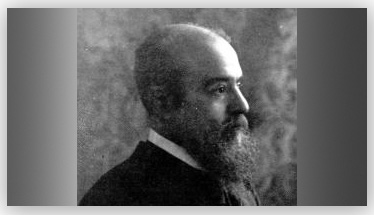
Arthur Twining Hadley

The true basis for an estimate of a nation’s wealth is to be found in the enjoyments of its members. The wealth of a community does not depend on the money value
its means for such enjoyment, nor even on their physical amount, but on their utilization.


Arthur Twining Hadley, Economics: An Account of the Relations Between Private Property and Public Welfare (1896), pp. 4-5.

Categories
Accountability general freedom government transparency responsibility too much government

The Confidence Game

Romania’s parliament has confidence in . . . itself.

Sorta. A parliamentary no-confidence vote failed, despite 161 lawmakers voting for the resolution and only eight voting with the government.

Confused? The no-confidence measure failed because the Social Democrats, controlling nearly two-thirds of the 465 seats in parliament, abstained on the measure, which required a majority of parliament to vote affirmatively.

Not a very confident vote of confidence.

The vote came after eight days of protests in Bucharest, the capital, and around the country — the largest since the 1989 fall of communism. A quarter of a million people took to the streets of Bucharest last Sunday, and half a million nationwide.*

The protests came after last week’s late night corruption decree, issued “by the cabinet, without parliamentary debate,” as Reuters reported — and “designed to decriminalize a number of graft offences, cut prison terms for others and narrow the definition of conflict-of-interest.”

“The emergency ordinance . . . effectively decriminalized some forms of corruption if the amount involved was less than $47,000,” explained the New York Times, meaning amnesty for Liviu Dragnea, the head of the ruling Social Democrat Party, and dozens of other politicians convicted of graft and corruption.

The decree was hastily rescinded, but Romanians cannot trust their government.

“It’s too late,” one protester said. “Their credibility is zero.”

“This government has offered us a perfect demonstration of what it can do during its first 30 days in office,” another quipped. “Conclusion: they must leave.”

But Prime Minister Sorin Grindeanu told fellow legislators, “I do hope that as of today we get back to work.”

Unfortunately, that’s what Romanians fear.

This is Common sense. I’m Paul Jacob.


* The same ratio of protesters to population in the U.S. would mean eight million protesters nationally.


Printable PDF


Categories
Thought

Yves Guyot

For all except the very few of extraordinary gifts, the spur of gain is not only powerful, it is indispensable.


Yves Guyot, stating what he called “the third incentive of human action,” in Where and why Public Ownership Has Failed (H. F. Baker, trans., 1914).

Categories
Today

The Twenty-Fifth

On Feb. 10, 1967, the 25th Amendment to the U.S. Constitution was ratified by Nevada, the necessary 38th state to do so. The amendment sets the process for presidential succession, and reads:

Section 1. In case of the removal of the President from office or of his death or resignation, the Vice President shall become President.

Section 2. Whenever there is a vacancy in the office of the Vice President, the President shall nominate a Vice President who shall take office upon confirmation by a majority vote of both Houses of Congress.

Section 3. Whenever the President transmits to the President pro tempore of the Senate and the Speaker of the House of Representatives his written declaration that he is unable to discharge the powers and duties of his office, and until he transmits to them a written declaration to the contrary, such powers and duties shall be discharged by the Vice President as Acting President.

Section 4. Whenever the Vice President and a majority of either the principal officers of the executive departments or of such other body as Congress may by law provide, transmit to the President pro tempore of the Senate and the Speaker of the House of Representatives their written declaration that the President is unable to discharge the powers and duties of his office, the Vice President shall immediately assume the powers and duties of the office as Acting President.

Thereafter, when the President transmits to the President pro tempore of the Senate and the Speaker of the House of Representatives his written declaration that no inability exists, he shall resume the powers and duties of his office unless the Vice President and a majority of either the principal officers of the executive department or of such other body as Congress may by law provide, transmit within four days to the President pro tempore of the Senate and the Speaker of the House of Representatives their written declaration that the President is unable to discharge the powers and duties of his office. Thereupon Congress shall decide the issue, assembling within forty-eight hours for that purpose if not in session. If the Congress, within twenty-one days after receipt of the latter written declaration, or, if Congress is not in session, within twenty-one days after Congress is required to assemble, determines by two-thirds vote of both Houses that the President is unable to discharge the powers and duties of his office, the Vice President shall continue to discharge the same as Acting President; otherwise, the President shall resume the powers and duties of his office.

Categories
folly ideological culture media and media people

The Advertising Hypocrisy Gap

“What do I tell my daughter?”

So begins the Audi advertisement millions of Americans saw last Sunday during the yearly super celebration of commercials that, sandwiched in between them, included one of the most exciting football championship games ever. 

The ad shows a father watching his young girl racing go-carts against young boys, and his thoughts continue: “Do I tell her that her grandpa’s worth more than her grandma?”

She won’t believe that. 

“That her dad is worth more than her mom?”

Not unless you want to sleep on the couch. 

“Do I tell her that despite her education, her drive, her skills, her intelligence, she will automatically be valued less than every man she ever meets?”

His daughter wins the race and dad considers, “Or maybe I’ll be able to tell her something different.”

Maybe? Maybe he’s fallen hook, line and sinker for the canard of the “gender pay gap.”

That gap is simply the median income of all men in the economy compared to the median income of all women. As the Washington Post explains, “The gender wage gap . . . can be primarily explained by differences in industry and occupation choice, hours worked, and gaps for taking time off to have children.

The Post also discloses that Audi has “just two women on its senior leadership team in the United States and no women on its global management board.” I don’t know what they’re going to tell their daughters.

But I’ve always told my daughters they can do anything they put their minds to.

And perhaps I’ll add this advice: “Don’t buy an Audi.” 

This is Common Sense. I’m Paul Jacob.


Printable PDF

Categories
Today

The Age of Tom Paine Begins

On Feb. 9, 1737, Thomas Paine was born in Thetford, England.

Paine would come to America in 1774 and by 1776 publish Common Sense, urging American independence. Later works included The Rights of Man (1792) and The Age of Reason (published in three parts in 1794, 1795, and 1807).

Paine died in 1809.

Categories
Thought

W. S. Jevons

[I]f people do not understand a true political economy, they will make a false one of their own.


W. Stanley Jevons, Political Economy (1880).

Categories
folly government transparency national politics & policies political challengers responsibility

No Innocence Abroad

After establishing, during the big Super Bowl day interview, that President Donald Trump respects Russian leader Vladimir Putin, Bill O’Reilly asked why.

After all, the Fox News star challenged, “Putin’s a killer.”*

“We’ve got a lot of killers,” Trump replied. “What, you think our country’s so innocent?”

This disturbed just about everyone. On the left, it was more evidence of Russian influence. The right recoiled at Trump doing the leftist thing, equating our moral failings with the much worse failings of others.

“I don’t think there’s any equivalency between the way that the Russians conduct themselves,” insisted Senate Majority Leader Mitch McConnell (R-Ky), “and the way the United States does.”

But is that really what Trump said? He merely pooh-poohed America’s innocence.**

And not without cause. His predecessor, after all, holds the world record (not Nobel-worthy) in drone-striking the innocent as well as the guilty in seven countries . . . none of which the U.S. has declared war upon.

But wait: if “we’ve got killers” is the new acceptable-in-public truth, then why not “we’ve got currency manipulators”?

Yes, I’m shifting focus from east of Eastern Europe onto the Far East. According to a different Fox report, “Trump accused China and Japan of currency manipulation, saying they play ‘the devaluation market and we sit there like a bunch of dummies.’”

Despite incoherent objections from Japan***, let’s not forget the obvious: the U.S. manipulates currency, too. What do you think the Federal Reserve is for?

I mention this not to rub Trump’s nose in hypocrisy. It’s to establish an estoppel principle here.

How may we object when others do that which we do ourselves?

This is Common Sense. I’m Paul Jacob.

* The Russian State is asking for an apology from O’Reilly. Not for a retraction on the grounds of truth, mind you, but an apology. O’Reilly wryly balks.

** Which certainly doesn’t absolve Vladimir Putin of guilt.

*** Yoshihide Suga, a spokesperson for the Japanese Government, insists that “the aim of monetary policies that have pulled the yen lower is to spur inflation, not devalue the currency.” Nice distinction. Thanks.


Printable PDF

Categories
Today

Delaware and Slavery

On February 8, 1865, Delaware voters rejected the Thirteenth Amendment to the U.S. Constitution, voting to continue the practice of slavery. Delaware belatedly and symbolically ratified the amendment on February 12, 1901.

Categories
Thought

Arthur Twining Hadley

The advantages of intervention on the part of a government are visible and tangible facts: The evil that results from such intervention is much more indirect and can only be appreciated after close and intensive study.


Arthur Twining Hadley, Economics: An Account of the Relations Between Private Property and Public Welfare (1896)