On this day in 1929, American William Austin Burt patents the “typographer” — a precursor to the typewriter.
Categories
Typewriter
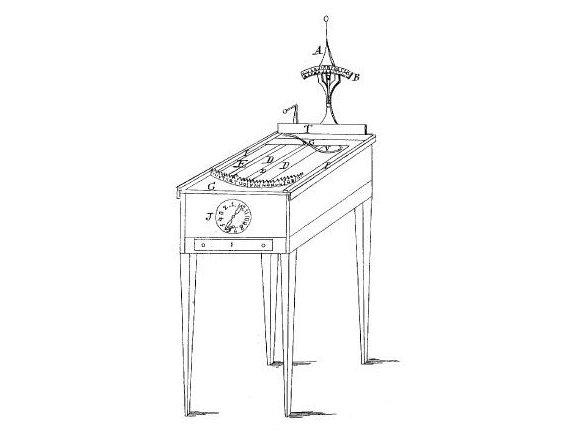
On this day in 1929, American William Austin Burt patents the “typographer” — a precursor to the typewriter.

Herbert Spencer, Principles of Ethics, Vol. 2, Part V: “Negative Beneficence” (see this page for the complete passage).
A form of selfishness occasionally displayed, and rightly condemned, is that of men who display without bounds their remarkable conversational powers. . . . One who monopolizes conversation loses more by moral reprobation than he gains by intellectual approbation.
The eruption of mob violence and ideological bullying and hooliganism on the Evergreen College campus near Washington State’s capitol is now under review. The man who unknowingly “started” it all by resisting a weirdly racist and segregationist demand from the “equity movement” students and faculty here summarizes the highlights:
https://youtu.be/qW1qR8TVOaE
Here is the full hearing:
https://youtu.be/tht3PfaP9UU
At another hearing on the matter, a rather awkward moment was reached when the interrogations got to security. This is a highly slanted editorial video with animation, comedy and satire thrown in, and may be NSFW. Still…
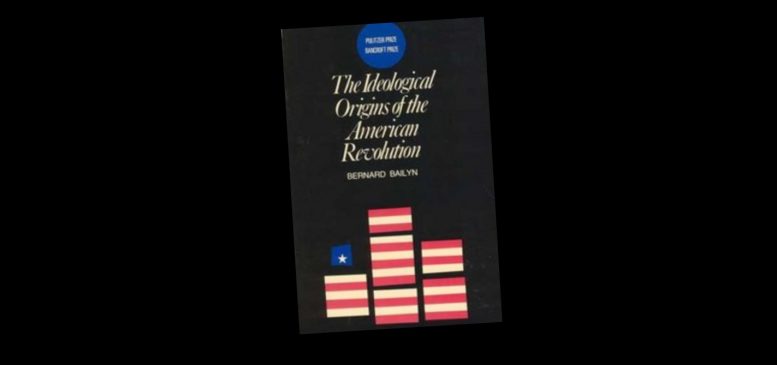
In no obvious sense was the American Revolution undertaken as a social revolution.
Bernard Bailyn, The Ideological Origins of the American Revolution, Chapter VI, THE CONTAGION OF LIBERTY, p. 302.
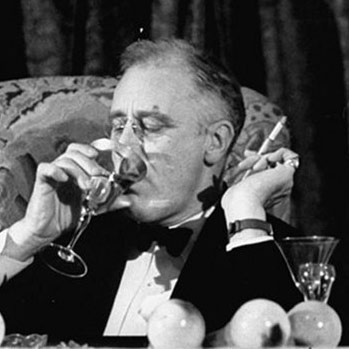
On July 22, 1937, the U.S. Senate voted down Franklin Delano Roosevelt’s court packing scheme.
“Everywhere you look, economics is despised,” writes Tom Woods in his Tuesday email letter.
You know what isn’t despised? A daily email letter.*
But I digress; back to economics.
“The gimme-free-stuff people hate it because they don’t like being told that there might be undesirable side effects from seizing other people’s things.”
Well, true enough. But turn it around: many people demand free stuff at least in part because they do not understand the bigger picture . . . which Mr. Woods ably provides in his daily podcast and on his weekly Contra Krugman podcast with economist Bob Murphy.
“Politicians hate it, because it imposes logical constraints on what political activity can accomplish.”
True, but, like many in the general public (from whence they come), politicians’ prior lack of economic knowledge also leads, in part, to their hubris.
“Even some folks in the business world hate it, because (1) they’d rather agitate for special privileges than hear the case for free markets, and (2) they’d rather have low interest rates than be warned about the causes of the business cycle.”
Yes, too true. But, again, business people are generally just people, most of whom haven’t even been exposed to something beyond boring and misleading textbook econ, if that. Mr. Woods knows that, since that’s what his mission is, exposing more folks to ideas beyond what he calls “the index card of allowable opinion.”
Well, I’m all about allowing the unallowable — if it’s right!
This is Common Sense. I’m Paul Jacob.
* Historian Woods is now doing what I’ve been doing since 1999, providing a daily common-sense thought that is short and easy-to-read and dropped into your email box every weekday. Mine goes up online at ThisIsCommonSense.com; I don’t see his on his website . . . but I do see a lot of books and podcasts!
Herbert Spencer, Principles of Ethics, Vol. 2, Part IV: “Justice” (1891), Chapter 5, “The Idea of Justice.”
Sympathy which, a generation ago, was taking the shape of justice, is relapsing into the shape of generosity; and the generosity is exercised by inflicting injustice. Daily legislation betrays little anxiety that each shall have that which belongs to him, but great anxiety that he shall have that which belongs to somebody else. For while no energy is expended in so reforming our judicial administration that everyone may obtain and enjoy all he has earned, great energy is shown in providing for him and others benefits which they have not earned. Along with that miserable laissez-faire which calmly looks on while men ruin themselves in trying to enforce by law their equitable claims, there goes activity in supplying them, at other men’s cost, with gratis novel-reading!
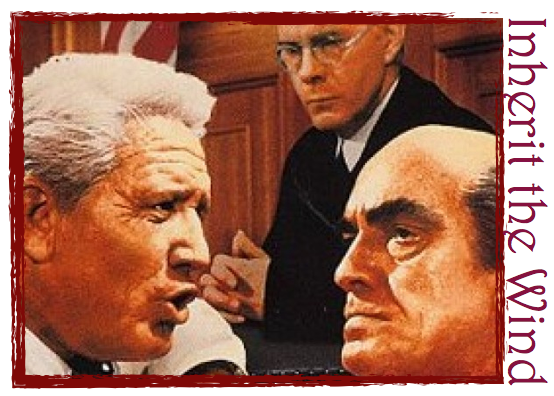
On July 21, 1925, in Dayton, Tennessee, high school biology teacher John T. Scopes was found guilty of teaching evolution in a public school classroom, and fined $100. The ambiguous legacy of the trial would continue — for decades, even to the present — to reveal the tensions inherent within a school system run by government and funded by taxpayers.
Pictured above, publicity for Inherit the Wind, a 1960 movie about the trial, but with the names changed, fictionalized. The movie starred Spencer Tracy in the Clarence Darrow (lawyer for the defense) role; Frederic March in the prosecutorial part, “Matthew Harrison Brady,” the pseudonymous name for politician William Jennings Bryan; Dick York as the defendant, Mr. Scopes; and Gene Kelly as the Baltimore journalist, a stand-in for H. L. Mencken, whose infamous coverage of the story shocked the nation almost as much as the trial itself.
At the end of the movie (spoiler) the famous prosecutor dies in the courtroom. In the historical case, Bryan died five days after the verdict. The movie was based on the 1955 play of the same name, written by Jerome Lawrence and Robert Edwin Lee, directed by Stanley Kramer. The script was adapted by Nedrick Young (originally as Nathan E. Douglas) and Harold Jacob Smith.
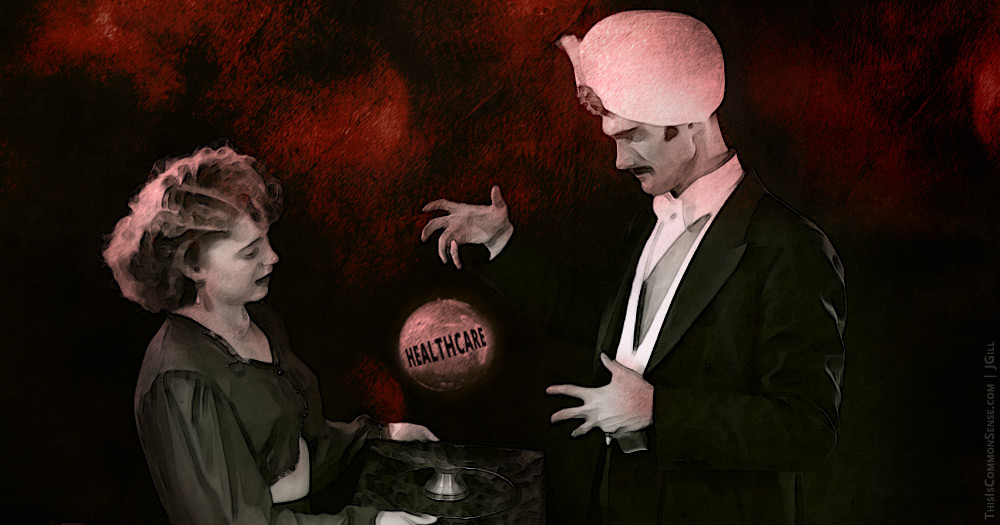
“Polling on every possible option confounds all logic,” or so writes Tiana Lowe about ObamaCare and its repeal, at National Review.
“Americans overwhelmingly dislike the individual mandate and prioritize lowering the cost of health care over all other health problems in the country,” Ms. Lowe elaborates, “but a majority of Americans do not want to roll back Obamacare’s guaranteed coverage of pre-existing conditions. Just a quarter of Americans are happy with Obamacare as-is, but a mere 12 percent favor the now-dead Senate health-care bill.”
Perceptively, she notes that the situation is as bad or worse for politicians, who want to “have their cake and eat it too.” The problem with politicians is pretty obvious: they lie because they are afraid of confronting the truth.
But it seems to me, on the evidence Lowe herself provides, Americans mostly have it right.
We want to lower costs of health care. Well, that should be the first priority. It should’ve been government’s highest priority, since government caused our predicament.
A huge supermajority is unhappy with ObamaCare, which makes sense. The Affordable Care Act is not affordable. But the Senate health-care bill was worse than ObamaCare, so folks were right to oppose it.
The only real issue? Many Americans don’t seem to understand that the “pre-existing coverage” mandate necessarily raises costs. Forcing insurance companies to pay for non-eventualities* requires them to pass those extras onto customers in general. Here is where leadership would be of help.
And where it has failed, our President most of all.
Lowe criticizes Trump for not pushing the Senate’s bill more effectively. I’m thankful for that.
This is Common Sense. I’m Paul Jacob.
* Insurers wager against unpredictable future illness or accident, not the sucker’s bet of paying for an existing predicament.
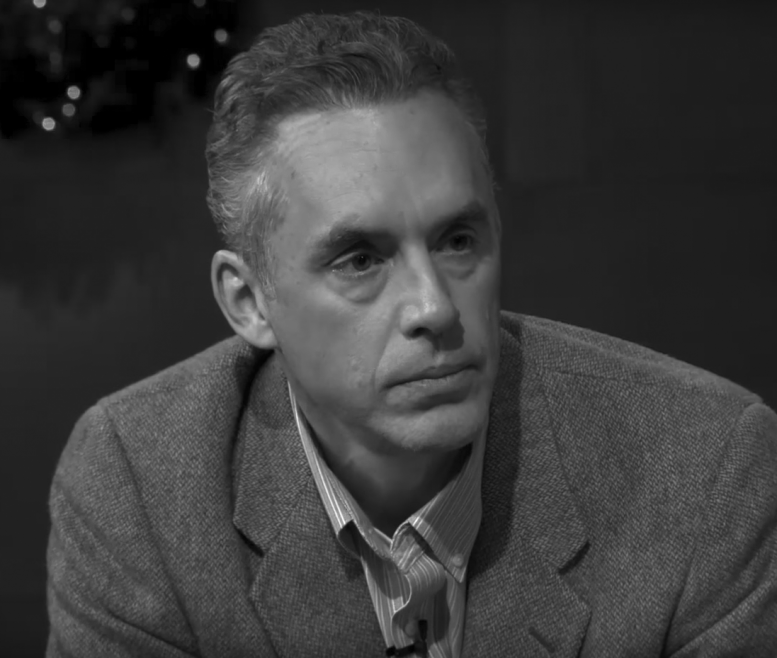
I’ve studied totalitarianism. I’ve often wondered how societies slide into The Big Lie. And I know it has something to do with sins of omission.
Jordan Peterson, on the Mark Steyn Show. The full context of this quotation regards his fracas with the University of Toronto, where he teaches, regarding his refusal to abide by the proposed law to regulate speech regarding “gendered” pronouns, many of them recently invented:
I had an interesting example of that when the U of T wrote me the first letter, because they claimed that they had received a lot of letters stating that my comments about the pronouns had contributed to an unsafe environment at the U of T, that they had received letters from people who had been threatened — these were transsexual people, hypothetically — but they didn’t at all mention that they had received hundreds of letters from people supporting me, and also a petition with several thousand signatures. . . . I’ve studied totalitarianism. I’ve often wondered how societies slide into The Big Lie. And I know it has something to do with sins of omission. And that was a really good example. Because when they wrote me the letter they didn’t say, ‘You know, we’ve received opinions on both sides of this, and we’ve come to a judicious decision’ — omitting completely to note that far more people had written in support of me than had written to criticize me. That’s institutional corruption.