“Your social systems have to be large enough so they protect you but small enough that you have a place in them.” Professor Peterson on globalism:
Categories
Big Enough, Small Enough
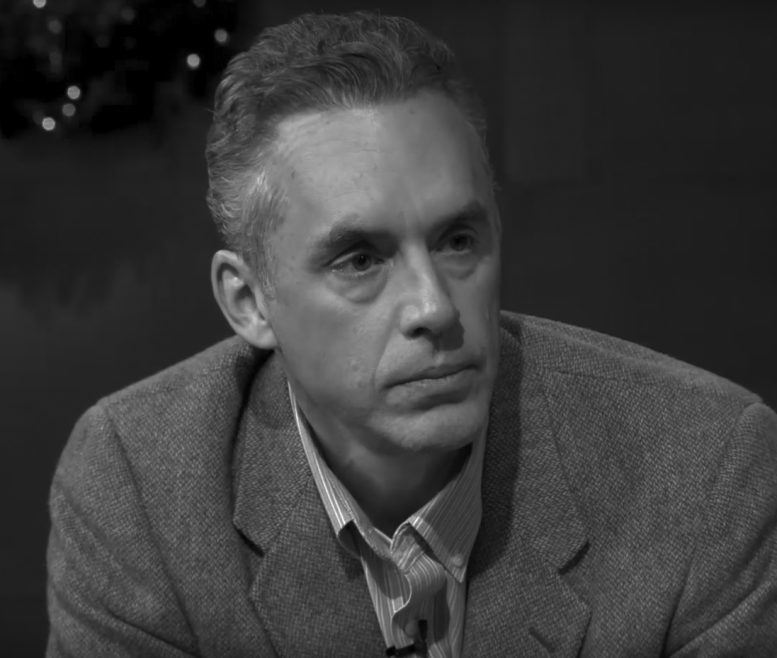
“Your social systems have to be large enough so they protect you but small enough that you have a place in them.” Professor Peterson on globalism:
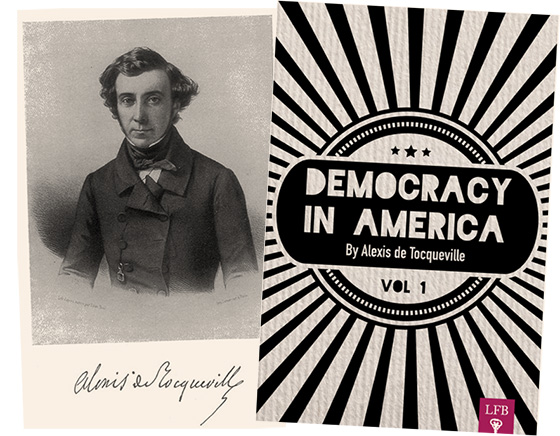
On July 29, 1805, Alexis de Tocqueville was born. His most famous book, Democracy in America (1835, 1840), quickly became a classic of social and political research and analysis, and remains the most important early book about the United States of America. He is often referred to as a founder of sociology as well as a major figure in the development of classical liberalism.

Drivers in Washington State have a new law to . . . swerve from?
“New distracted driving law starts Sunday, July 23,” the Washington State Department of Transportation (WSDOT) tweeted last week. “The law forbids,” Washingtonians were told, “virtually all use of handheld gadgets such as phones, tablets, laptop computers and gaming devices while driving.”
The idea is to prevent accidents. Though distracted driving’s danger has been contested, texting while driving certainly seems a kind of crazy.
Thankfully, it’s possible to talk “hands free.”
Which, it turns out, the new law does allow. Drivers may activate and de-activate hands-free devices (and apps) with the “minimal use of a finger.”
Eating and drinking while driving are also disallowed, but those are “secondary offenses,” which police are not allowed to pull you over for.
At this point, another meaning of “minimal use of a finger” may occur to some readers. What starts out as secondary offenses have been known to be upgraded, legally and practically, to primary offense status.
Does a shiver runs down your back?
Yet another rule! More fines!
More interactions with police.
And if all this doesn’t feel “police state-y” enough for you, there is argument in Seattle about whether pedestrians should be prohibited from “distracted walking.”
Yes, some are actually considering that.
I’m reminded of an argument against socialism: government-run enterprises tend to be run “ruthlessly and with special attention to prosecution (and overburdening) of the poor.” Why would anyone want such techniques writ society-wide, in every sector?
Meanwhile, we apparently must live and drive with more rules and more fines and more harassment.
This is Common Sense. I’m Paul Jacob.


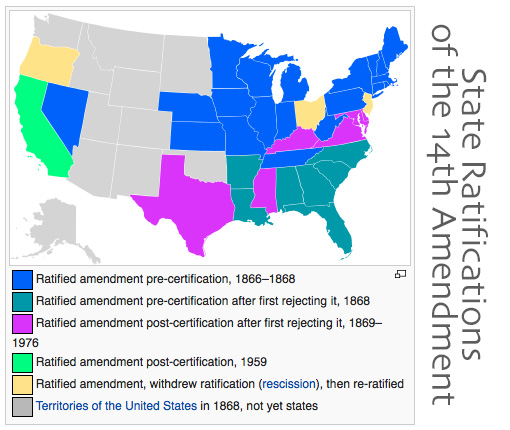
On July 28, 1868, the 14th Amendment to the Constitution of the United States was certified.
One of the chief charms of Political Economy is the open secret, that it deals not with rigidities and inflexible qualities and mathematical quantities and the unchanging laws of matter, but with the billowy play of desires and estimates and purposes and satisfactions, all of which are mental states, and all of which are subject in the general to ascertainable laws, though laws of a quite different kind from those of Mechanics. Values come and they go. Within certain limits and under certain conditions they may be anticipated and even predicted, but never with the precision of an eclipse or the result of a known chemical combination.
Arthur Latham Perry, LL.D., Principles of Political Economy (1891)

Problems can be solved. But for those lacking the merest clue how to solve a given problem . . . alternatives exist.
Books can be cooked to pretend the problem no longer exists. And perhaps to fool others.
A series of articles in the Washington Post highlights the effort to reduce the rate by which city schools suspend students for misbehavior. The good news? “D.C. Public Schools has reported a dramatic decline in suspensions at a time when school systems around the country have been under pressure to take a less punitive approach to discipline.”
Results? A whopping 40-percent decline.
The bad news?
A Post investigation found that “at least seven of the city’s 18 high schools have kicked students out of school for misbehaving without calling it a suspension and in some cases even marked them present.” In those schools, “most suspensions were not reported.”*
The Post further uncovered documentation showing that “DCPS officials knew students were being sent home without documentation at least as early as 2010.”
It brings to mind the recent scandal in Prince George’s County (Maryland) Public Schools, where a dramatic announcement that the county increased its student graduation rate faster than any other county . . . was followed by an investigation into grade tampering by school administration officials, which numerous teachers have alleged.
It is also reminscent of the systematic cheating on standardized tests in Atlanta — and across the nation.
Hiding the truth, cheating on tests, lying about results . . . not the actions of a system teaching kids a love of truth.
This is Common Sense. I’m Paul Jacob.
* Seven schools’ emails show that students spent a total of 406 days in suspension in January 2016. Officially recorded? Only 15 percent.

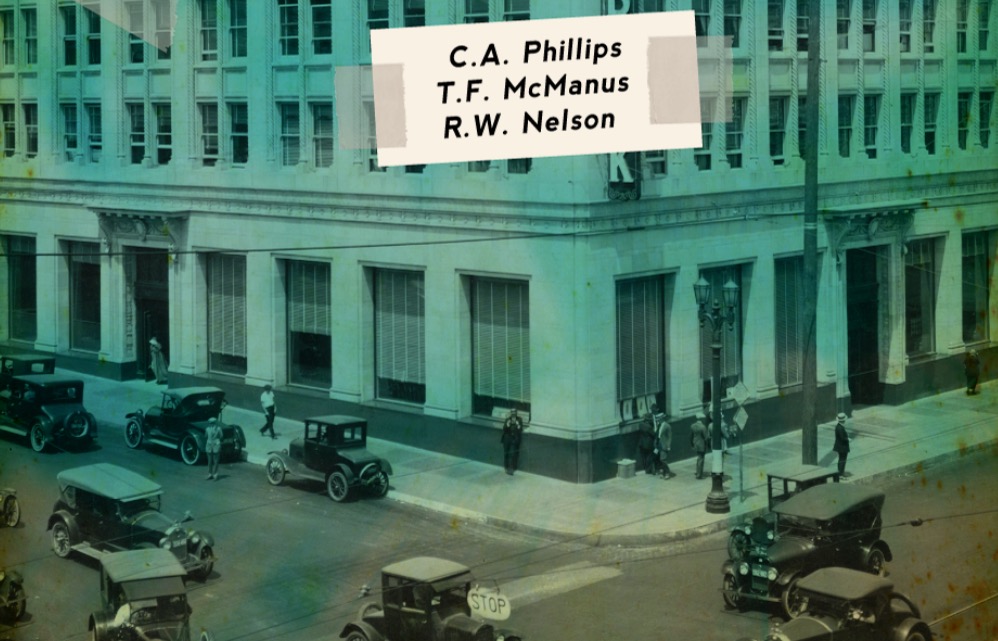
During recent years a number of pseudo-economists have indulged in much glibness about the passing of the ‘economy of scarcity’ and the arrival of the ‘economy of abundance.’ Sophistry of this sort has claimed the public ear far too long; it is high time that the speciousness of such fantastic views be clearly and definitely exposed. Attention needs to be focused on the hard elementary fact that man’s darkest curse has ever been his poverty, and that it yet is and promises to continue so for numberless generations. No economist worthy of the name, moreover, should need to be reminded that in the absence of “scarcity” there would be no system of ‘economy’ and no ‘science of economics.’
C.A. Phillips, T.F. McManus, and R.W. Nelson Banking and the Business Cycle: A Study of the Great Depression in the United States (Laissez Faire Books, 2014), originally published 1937.

July 27 births include that of Samuel Smith (1872; pictured), an American who served as a captain, major, and lieutenant colonel in the Continental Army,  and later as a politician in several capacities in the state of Maryland; Hillaire Belloc (1870), author of a classic analysis of modern political governance, The Servile State; and American singer and songwriter Bobbie Gentry (1944).
On July 27, 1694, the Bank of England received a royal charter, beginning a long history of central banking in England. Subsequent inflationary booms and deflationary busts are subsequently considered “mysterious” by people connected with the bank.
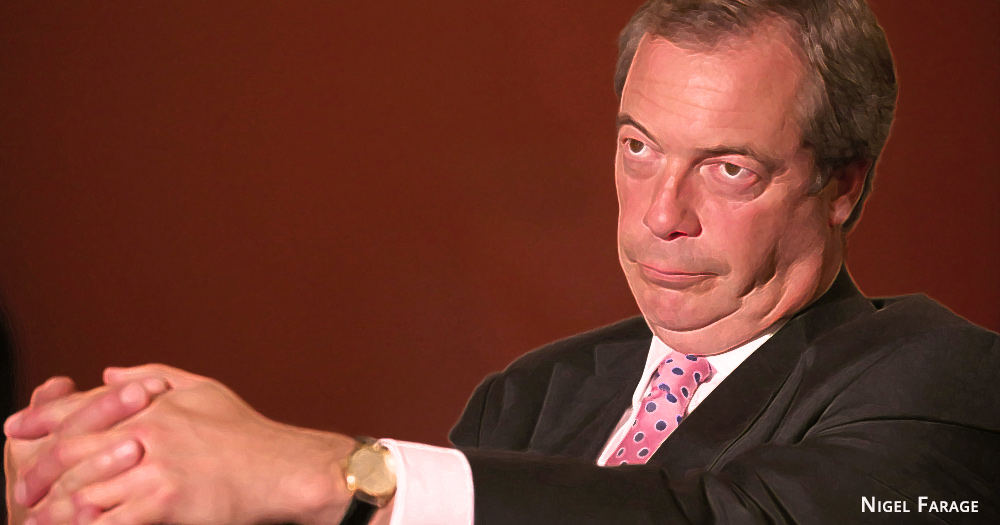
“This raises some very big libertarian questions,” said Nigel Farage yesterday.
About what?
The “rights of parents against the state.”
The outspoken Brexit supporter and former leader of the UK Independence Party was referring to Charlie Gard, the sick, dying 11-month old British baby, whose parents sought to take to the United States for an experimental medical treatment. But the hospital and the British government pooh-poohed any likelihood of success and said, “No.”
That’s when Charlie’s parents went to court, fighting for seven months for the right to simply try to save their child’s life. Now, after those months of delay, even that remote medical hope has faded away.
“Even today,” explained Farage, “the hospital and the state are saying to these poor parents, ‘Oh, no, no, Charlie can’t die at home. He’ll have to die in our hospital.’”
The judge in the case called it “absurd” to suggest that little Charlie was a “prisoner of the National Health Service.” But not free to leave the country or even the hospital, that’s precisely what this poor child has become.
“There was a case four years ago of a little kid, Ashya King, who had a brain cancer,” Farage noted. “His parents wanted him to go to Prague for a revolutionary new treatment that the doctors here said wouldn’t work. The boy went. It worked. He’s now cancer free.”
Those parents were briefly imprisoned . . . for saving their child’s life.
It appears that single-payer makes the government the single-decider.
This is Common Sense. I’m Paul Jacob.
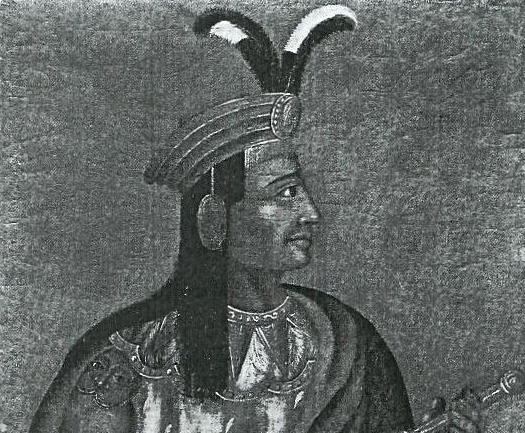
On July 26, 1533, Francisco Pizarro’s Spanish conquistadors strangled to death Atahualpa, the 13th and last emperor of the Incas, thereby ending 300 years of Inca civilization. The conquistadors were greedy and murderous, but the Inca civilization, arguably, was worse: totalitarian and radically inegalitarian. But they made great high-mountain roads. (Arguments about infrastructure promoted by Big Government continue to this very day.)
On this day in 1948, U.S. President Harry S. Truman signed Executive Order 9981 desegregating the U.S. military.