Categories
crime and punishment general freedom ideological culture moral hazard nannyism national politics & policies Second Amendment rights too much government U.S. Constitution

The Good vs. Freedom?

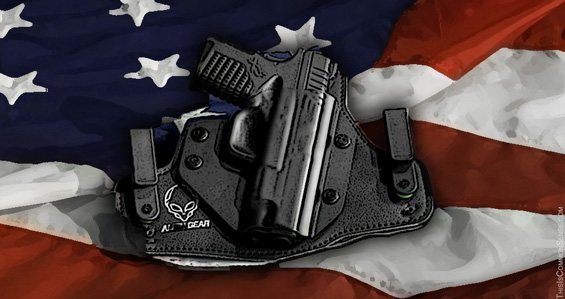
Politicians regularly argue for new “gun control” laws, even while ignoring the execution and enforcement of laws already on the books.

Exhibit A, as I wrote at Townhall.com yesterday, is the failure of the military to provide the FBI with the information that would have blocked the Sutherland Springs church shooter from getting his guns.

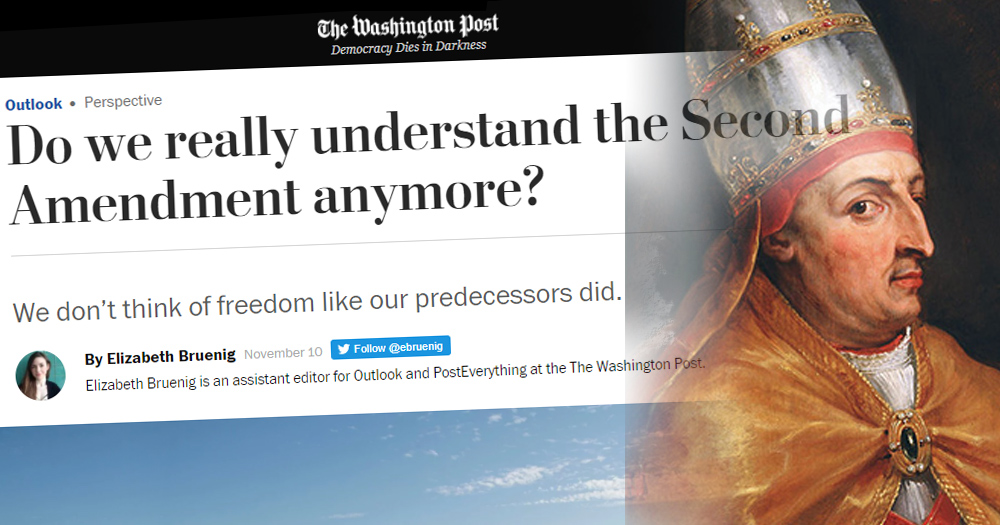
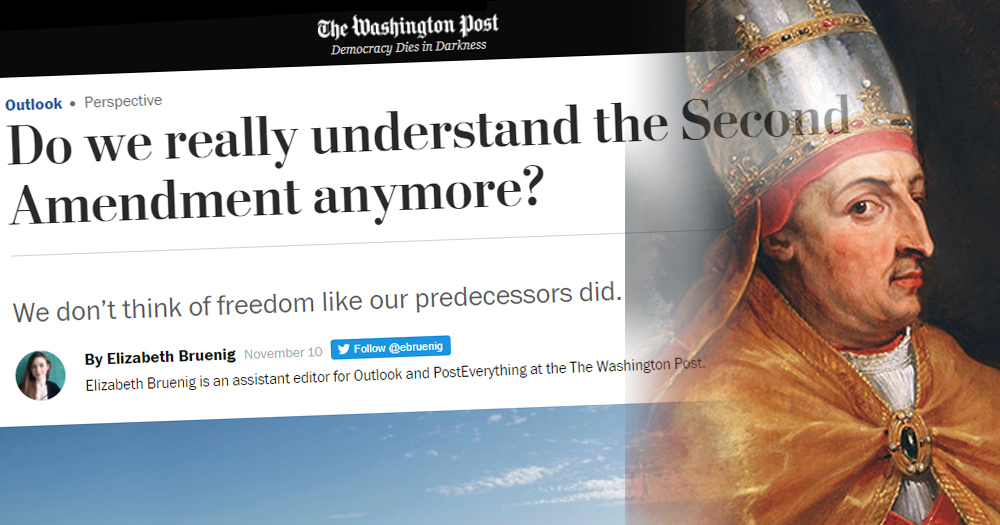
Meanwhile, in the Washington Post’s Outlook section, Elizabeth Bruenig takes a more . . . philosophical perspective. She contends that “Western thought moved from seeing freedom as a means to an end — what philosophers call ‘the good’ — to seeing freedom as an end in itself. Thanks to our liberal heritage, we regard freedom as an intrinsic good, perhaps the highest one of all. The more of it we can get, the better off we are. Right?”

Right!

But Bruenig’s answer isn’t in the affirmative.

Instead, she points to Vatican elections during the Middle Ages in which “canon law enshrined the right of eligible individuals to cast their votes. But their choices . . . could simply be overturned [by church officials]. Freedom mattered, in other words, but was always subordinate to the highest good, which could sometimes place limits on liberty.”

Ah, the Post advises us to embrace the Middle Ages . . . just so our freedom doesn’t get out-of-hand.

Bruenig also thinks that “we largely lack the framework to ask what gun ownership is for. . . .”

Huh? The Second Amendment answers that gun ownership is “necessary to the security of a free state.”

In terms of both scholarship and insight, the Founders’ constitutionalism far outshines the Post’s shiny new neo-medievalism.

This is Common Sense. I’m Paul Jacob.

PDF for printing


Categories
Thought

Anne Brontë

There is always a ‘but’ in this imperfect world.

Categories
Today

Kindness?

November 13 is World Kindness Day, which has been celebrated in various countries since 1998. It is not an official celebratory day of the U.S.A., or of the United Nations. But individuals are free to be kind this day . . . or any day, for that matter.

Categories
links

Townhall: Shooting from the Hip . . . with Blanks

What should Congress do? Legislate anew every tragedy, atrocity? Or maybe . . . something else?

Click on over to Townhall to obtain the full context. Come back here for more:

Categories
Thought

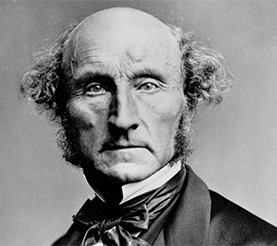
J. S. Mill

In every country, the executive is the branch of the government which wields the immediate power, and is in direct contact with the public; to it, principally, the hopes and fears of individuals are directed, and by it both the benefits, and the terrors, and prestige of government are mainly represented to the public eye. Unless, therefore, the authorities whose office it is to check the executive are backed by an effective opinion and feeling in the country, the executive has always the means of setting them aside or compelling them to subservience, and is sure to be well supported in doing so.

John Stuart Mill, Considerations on Representative Government (1862), Chapter I.
Categories
Today

Monarchy or Republic

On November 12, 1905, Norwegians established, by referendum, a monarchy — not a republic. Exactly 14 years later, to the day, Austria became a republic.

Categories
video

A Hero, in His Own Words

Last week, Sunday, a mass murdering shooter was himself shot, thereby stopped in his murderous rampage. Here is an in-depth interview with the man who confronted the killer.

Categories
Today

Eleven/Eleven/Eleven

On November 11, 1889, the State of Washington was admitted as the 42nd State of the United States.

In 1918, German officials signed an armistice agreement with the Allies in a railroad car in the forest of Compiègne, France. The fighting officially ended at 11:00 a.m. — the eleventh hour of the eleventh day of the eleventh month. The war officially ended with the signing of the Treaty of Versailles on June 28, 1919.

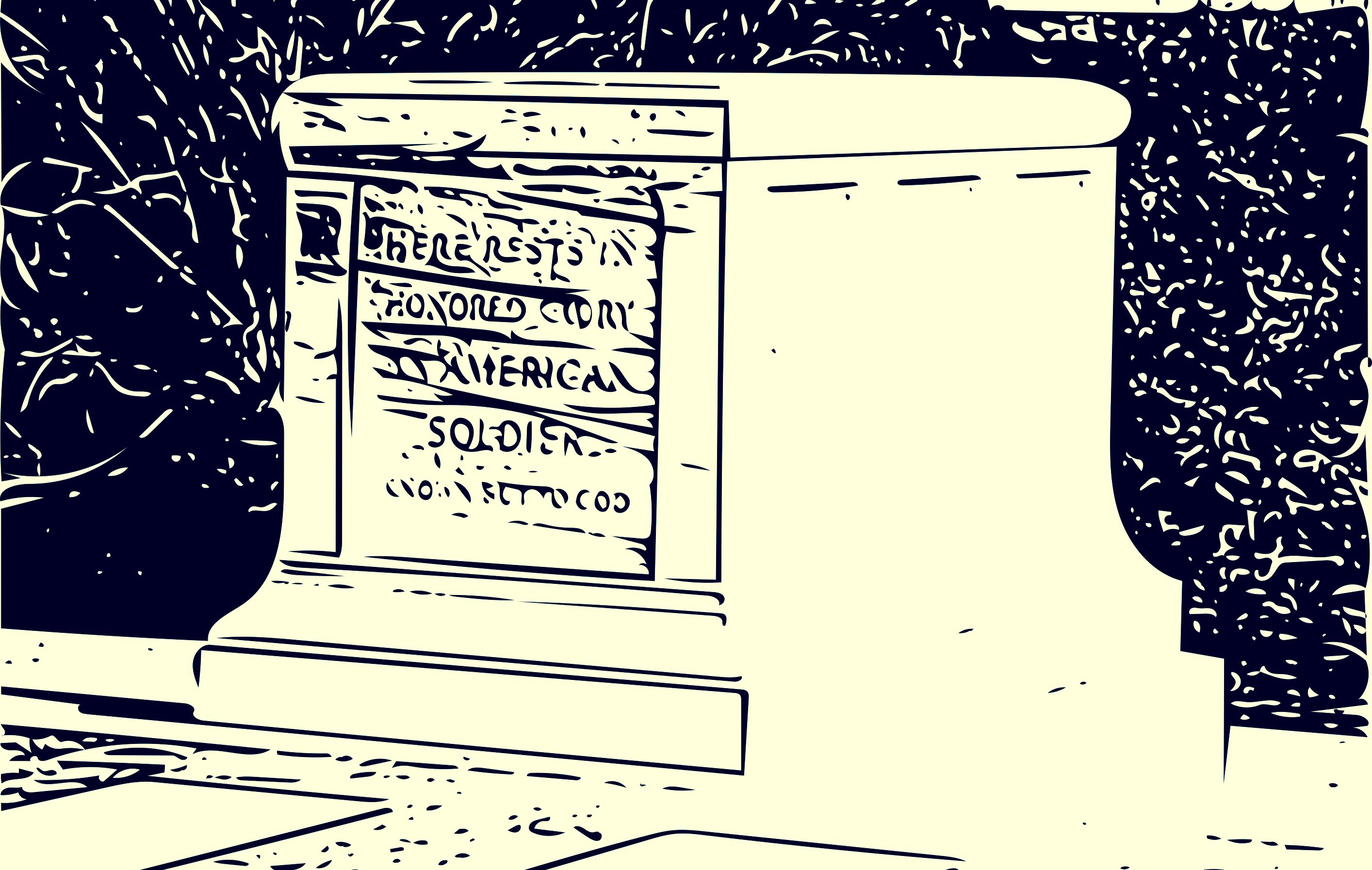
In 1921 on this date, U.S. President Warren G. Harding dedicated the Tomb of the Unknowns at Arlington National Cemetery.

Categories
general freedom ideological culture media and media people moral hazard national politics & policies too much government

To Anachronism in Heaven

Symbols sure seem important in politics and government. I love the Statue of Liberty. Others may cherish the Lincoln Memorial and Mount Rushmore more. I’ve even heard people wax poetic on the images we find on our coinage.

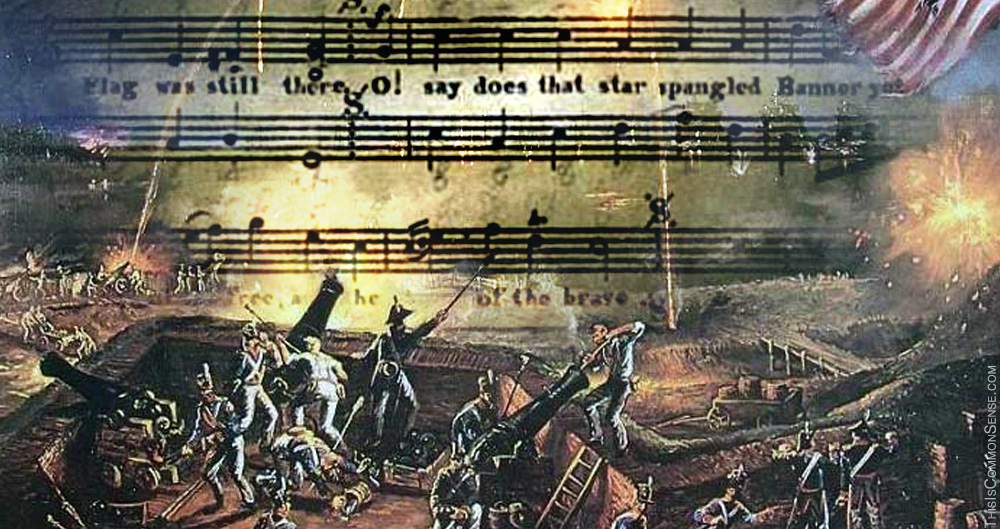
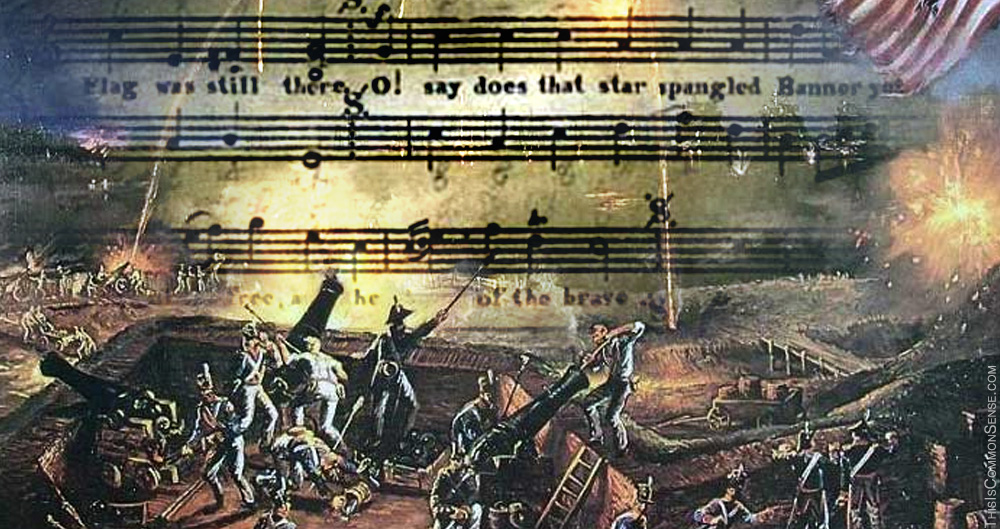
But what about “The Star-Spangled Banner”? The lyrics are not general at all, but instead an exultation about a moment of victory in a very bad war that our union almost lost way back in 1814.

The melody leaps all over the place, making it difficult to sing.

But its words are what stick in some peoples’ craws.

No, not the florid, old-fashioned* phrasings. What bothers some people is all the violence . . . and a mention of the word “slave.”

Now, if the song were about slavery, or even mentioned the enslaved ancestors of current Americans, I’d side with the California branch of the NAACP, which wants to junk the old warhorse.

But the offending line does not seem to be what these activists say it is, one of “the most racist, pro-slavery, anti-black songs in the American lexicon.” The words refer, instead, to British sailors and soldiers:

No refuge could save the hireling and slave

From the terror of flight, or the gloom of the grave. . . .

The phrase “hirelings and slaves” means “mercenaries and conscripts.” Wednesday, on Fox, Tucker Carlson grilled a cheerful advocate of the NAACP position, whose main point was “unity.” He doesn’t think the anthem promotes “unity.”

But what would? Doesn’t taking on the anthem constitute just another divisive salvo in the culture wars?

We’ve bigger problems.

This is Common Sense. I’m Paul Jacob.

 

* The tune is by John Stafford Smith, who wrote it for the Anacreontic Society. Because the original version is usually called “To Anacreon in Heaven,” and because the phrasings of Francis Scott Key’s originally titled “In Defense of Fort McHenry” are “old-fashioned” and arguably “anachronistic,” we have the title of this Common Sense outing.


PDF for printing


Categories
Thought

Lord Acton

Freedom degenerates unless it has to struggle in its own defence.