Categories
Today

Term Limits and the Selma March

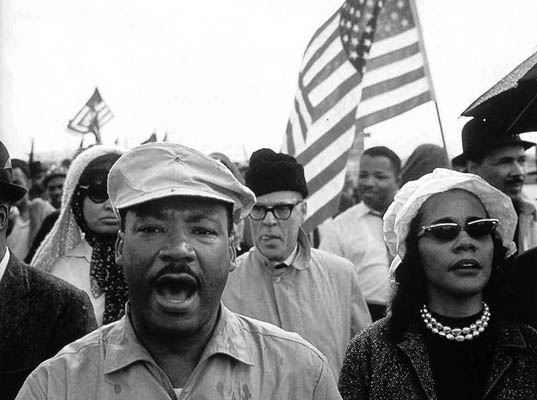
On March 21, 1965, Dr. Martin Luther King, Jr. led 3,200 people on the start of the third and finally successful civil rights march from Selma to Montgomery, Alabama.

Nearly two decades earlier, the Twenty-second Amendment (Amendment XXII) of the United States Constitution, passed Congress. The date was March 21, 1947. The amendment, ratified on February 27, 1951, set a term limit for election and overall time of service to the office of President of the United States. This was an obvious reaction to Franklin Delano Roosevelt’s more than three terms in office.

The first section of the amendment reads as follows:

No person shall be elected to the office of the President more than twice, and no person who has held the office of President, or acted as President, for more than two years of a term to which some other person was elected President shall be elected to the office of the President more than once. But this Article shall not apply to any person holding the office of President, when this Article was proposed by the Congress, and shall not prevent any person who may be holding the office of President, or acting as President, during the term within which this Article becomes operative from holding the office of President or acting as President during the remainder of such term.


Categories
crime and punishment general freedom media and media people moral hazard too much government

Governments Gone Wilding

I was late to the story, and had a hard time finding information on the anti-white violence in South Africa — farm families raped, pillaged, slaughtered, beheaded.

And I wasn’t at all aware of the “land reform” that South Africa’s Congress is voting on, the explicit aim of which is to expropriate white farmers without compensation.

Every day, I read through The Washington Post but noticed no articles there. Or elsewhere — until a fleeting Facebook post sent me to Lauren Southern’s video documentary, “Farmlands.”

The Wall Street Journal did cover the farm expropriation story — on its editorial pages. “No country ever became rich through its government’s seizure of private property (exhibit A: the Soviet Union), but politicians in South Africa want to give it another go.”

Zimbabwe on repeat.

Worse yet, it is being argued for on racial grounds, and some of its proponents are notoriously . . . genocidal?

Quartz takes a different approach, in an article charmingly titled “South Africa’s much needed land debate is being turned into an international racist rant.” The Leftwing publication appears to be gearing up to defend mass theft as “land reform,” heedless of its long, violent, destructive history.

Meanwhile, Ms. Southern, the “gonzo journalist” who detailed the ongoing race-based murder spree in South Africa* that Quartz failed to mention, found herself detained in Calais, France, prevented from entering Britain. Why? In part for “being racist.”

Southern had once engaged in a stunt pitching the provocation that “Allah is a gay god” — to seek reactions from people after a major news source produced an article claiming Jesus was gay.

Islam is a religion, not a race, of course, but it’s racial collectivism that still unhinges minds.

To what extent? Socialist expropriation, at least.

This is Common Sense. I’m Paul Jacob.


* “According to the best available statistics,” the BBC relates, “farm murders are at their highest level since 2010-11.”


PDF for printing


Categories
Today

Uncle Tom’s Cabin

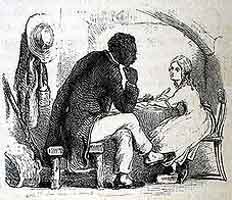
On March 20, 1852, Harriet Beecher Stowe’s anti-slavery novel Uncle Tom’s Cabin was published.

Categories
Thought

Herbert Spencer

A stronger affection to be displayed by child for parent in later life, must be established by a closer intimacy between parent and child in early life. . . . When the minds of children are no longer stunted and deformed by the mechanical lessons of stupid teachers — when instruction, instead of giving mutual pain gives mutual pleasure, by ministering in proper order to faculties which are eager to appropriate fit conceptions presented in fit forms — when among adults wide-spread knowledge is joined with rational ideas of teaching, at the same time that in the young there is an easy unfolding of the mind such as is even now shown by exceptional facility of acquisition — when the earlier stages of education passed through in the domestic circle have come to yield, as they will in ways scarcely dreamed of at present, daily occasions for the strengthening of sympathy, intellectual and moral, then will the latter days of life be smoothed by a greater filial care, reciprocating the greater parental care bestowed in earlier life.

Categories
ballot access initiative, referendum, and recall local leaders political challengers Regulating Protest too much government

New-Fangled Vote Counting

Call me old-fashioned, but when you go to the pols to cast your vote on a ballot measure, your Yes vote should count for yes and your No vote for no.

And if you choose not to vote, your non-vote should count for neither yes nor no.

That’s just common sense. Right?

Well, meet its antithesis: Proposal 97, now being considered by Florida’s powerful Constitution Revision Commission (CRC).* Proposal 97 would count all those who do not cast a vote for or against a ballot measure as a No vote against it.

To pass a constitutional amendment in the Sunshine State already requires a supermajority vote of at least 60 percent of those who do cast a vote on the measure. Under Proposal 97, counting all those not voting on it as No votes, that percentage would necessarily go even higher. If 10 percent don’t vote, Yes would have to come in at 67 percent to win.

This is minority rule . . . with an extra perverse twist.

The supermajority requirement encourages big money interests to spend heavily against ballot initiatives — even when the issues have clear majority support — because if they can manage to lose by less than 20 points (60–40 percent), they win. Now all opponents need do is poison the water with the nastiest campaigning imaginable, causing more voters to throw up their hands or pinch their noses and avoid the issue . . .

. . . thus, being counted as voting No.

Don’t abstain. Stop Proposal 97. Tell them NO here.

This is Common Sense. I’m Paul Jacob.


* How powerful is the CRC? Every 20 years it meets with the awesome authority to refer constitutional amendments directly to the ballot — as many as it wishes and the amendments can be packaged to include several different subjects. No other state has a similar body. Of the 37 commission members, the governor appoints 15, the Senate president and the House speaker each appoint nine, the chief justice of the state supreme court appoints three and the attorney general is an automatic member.


PDF for printing


Categories
Today

House of Lords

On March 19, 1649, England’s House of Commons passed an act abolishing the House of Lords, declaring it “useless and dangerous to the people of England.”

This was during Oliver Cromwell’s rule as Lord Protector, after the execution of Charles I. The House of Lords did not again meet until the Convention Parliament of 1660, under the Restoration of the monarchy.

Categories
Thought

Harriet Beecher Stowe

What makes saintliness in my view, as distinguished from ordinary goodness, is a certain quality of magnanimity and greatness of soul that brings life within the circle of the heroic.

Categories
general freedom meme

Equality vs. Freedom

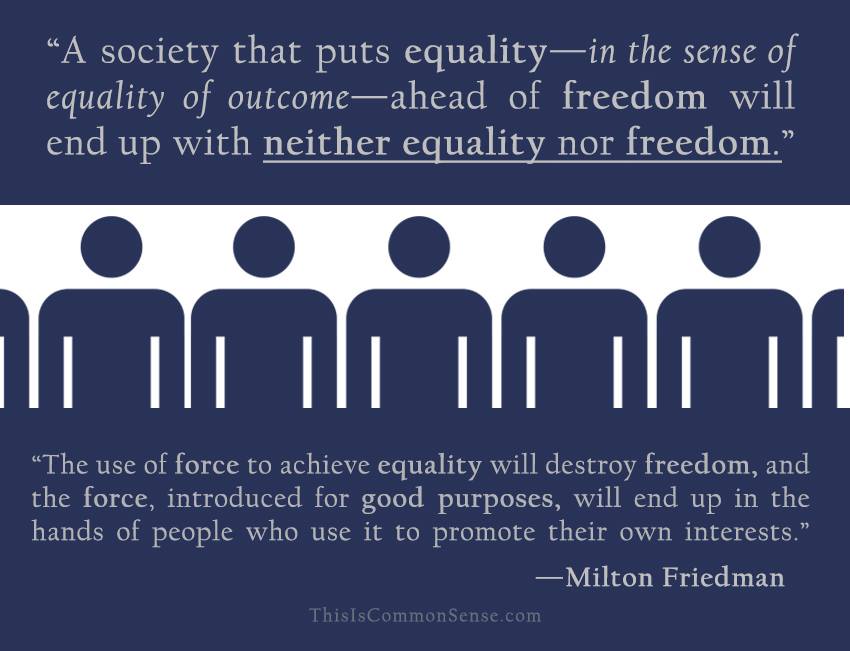
“A society that puts equality—in the sense of equality of outcome—ahead of freedom will end up with neither equality nor freedom. The use of force to achieve equality will destroy freedom, and the force, introduced for good purposes, will end up in the hands of people who use it to promote their own interests.”

—Milton and Rose Friedman, Free to Choose, p. 148.


Categories
links

Townhall: Career, No Career (A Tale of Two Pols)

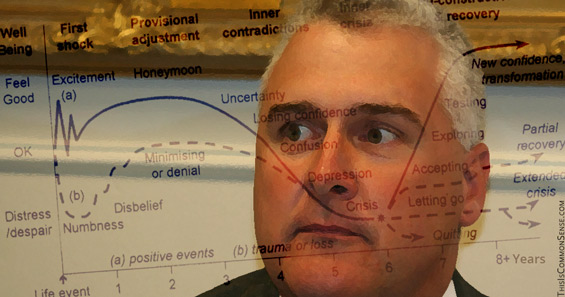
What does it take to make a difference in politics? Is the thirteenth year the magic number, or does time in office guarantee nothing but corruption?

Click on over to Townhall. Come back here for more information and perspective.

Learning Curve Pol

This column will appear on this site on Tuesday, March 20.

Categories
Today

Hawaii

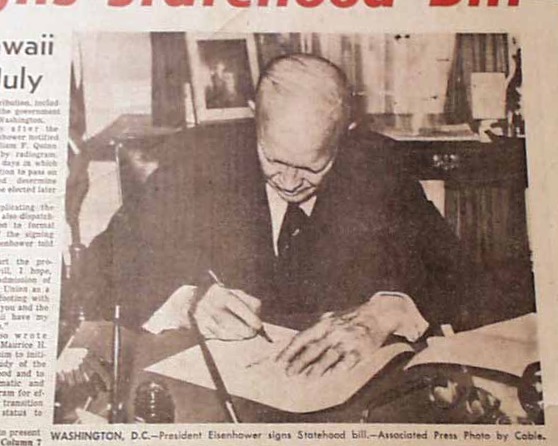
On March 18, 1959, President Dwight D. Eisenhower signed a bill enabling Hawaii to become the 50th state in the Union. The official day of statehood was set for (and became) August 21 of that year.

The statehood signing occurred exactly 85 years after The Kingdom of Hawaii formalized its treaty with the U. S. establishing exclusive trading rights.