Ezra Levant and Andrew Klavan chat about anti-family indoctrination:
Categories
“The Family Makes Us Free”

Ezra Levant and Andrew Klavan chat about anti-family indoctrination:

We have seen that the militant type of social structure is based on the principle of compulsory co-operation, while the industrial type of social structure is based on the principle of voluntary co-operation. Now it is clear that plurality of wives, whether the wives are captured in war or purchased from their fathers regardless of their own wills, implies domestic rule of the compulsory type: the husband is tyrant and the wives are slaves. Conversely, the establishment of monogamy where fewer women are taken in war and fewer men lost in war, is accompanied by increased value of the individual woman; who, even when purchased, is therefore likely to be better treated. And when, with further advance, some power of choice is acquired by the woman, there is an approach to the voluntary co-operation which characterizes this marital relation in its highest form. The domestic despotism which polygyny involves, is congruous with the political despotism proper to predominant militancy; and the diminishing political coercion which naturally follows development of the industrial type, is congruous with the diminishing domestic coercion which naturally follows the accompanying development of monogamy.
Herbert Spencer, Principles of Sociology, Vol. I, Part III: Domestic Institutions, Chapter IX: “The Family” (1898).

April 17 marks the 1937 birth of Ronald Hamowy, Canadian historian, who first came to international prominence for his writings in the short-lived New Individualist Review. Hamowy died in 2012.

On March 17, 1780, General George Washington granted the Continental Army a holiday “as an act of solidarity with the Irish in their fight for independence.”
On March 17, 1941, the U.S. Selective Service held its first lottery for the draft, in preparation for World War II. (Image, above, from the Morning Oregonian, from that year.)

I love a good protest.
My first was in Mrs. Grubb’s third grade class, after a substitute teacher gave us a ton of math homework. During recess we organized and delivered a written statement announcing a student strike against doing the math.
Believe it or not, the assignment was withdrawn, called an April Fools joke . . . but boy did we catch hell when Mrs. Grubb returned.
This week, with the school walkouts across the country to protest “gun violence” and demand “gun control,” some older kids finally got in the game. I may disagree with their public policy shibboleths and disdain their tone, but I would defend to the . . .
Well, you know.
The problem isn’t students or protests. It is the partisan government school system. The system’s taxpayer-paid agents — teachers, administrators — believe they can support student protest movements for changing laws they want changed, but block and punish protests on issues they do not favor.
And, especially, bring the hammer down on anyone who dares notice the double standard out loud.
Rocklin High School teacher, Julianne Benzel, “has been placed on paid administrative leave due to several complaints from parents and students involving the teacher’s communications regarding today’s student-led civic engagement activities,” the California school district said in a statement.
Benzel told CBS in Sacramento that she did not discourage her students from joining the protest — er, I mean, civic engagement activity. But in class, she did raise the issue of whether the school administration would similarly allow (much less facilitate, dare we say, encourage) student protests against abortion, instead of guns.
Let’s protest what we can actually change: public schools engaging in partisan political activity.
This is Common Sense. I’m Paul Jacob.

Herbert Spencer, “From Freedom to Bondage,” Introduction to Thomas Mackay, ed., A Plea for Liberty (1891).
A fundamental error pervading the thinking of nearly all parties, political and social, is that evils admit of immediate and radical remedies. ‘If you will but do this, the mischief will be prevented.’ ‘Adopt my plan and the suffering will disappear.’ ‘The corruption will unquestionably be cured by enforcing this measure.’ Everywhere one meets with beliefs, expressed or implied, of these kinds. They are all ill-founded. It is possible to remove causes which intensify the evils; it is possible to change the evils from one form into another; and it is possible, and very common, to exacerbate the evils by the efforts made to prevent them; but anything like immediate cure is impossible.
On March 16, 1995, the state of Mississippi formally ratified the Thirteenth Amendment, becoming the last state of the Union to approve the abolition of slavery. The Thirteenth Amendment had been officially ratified in 1865, one hundred thirty years earlier.
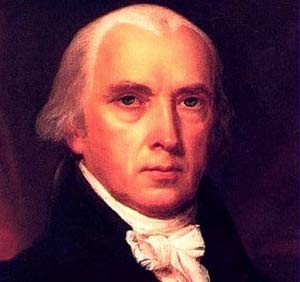
James Madison, fourth President of the United States and “Father of the Constitution,” was born on this date in 1751.

“Let me make something very clear,” Nick Freitas stated unequivocally. “I don’t have a political career.”
Freitas, a Republican member of Virginia’s House of Delegates announcing his candidacy for the United States Senate, was responding to advice that running against incumbent Sen. Tim Kaine “could hurt [his] political career.”
It’s music to my ears. And to Matt Kibbe’s. The leader of Free the People calls Freitas “the most interesting liberty Republican you’ve never heard of.”
Yet, in Virginia’s conservative networks, Freitas has made quite a name for himself, defending the Second Amendment and fighting Medicaid expansion in a one-seat GOP-majority House.
“You can’t fix everything through government force and coercion,” he explained to Kibbe. “If the path we’re going down, which is just ‘let us manage the federal government as it continues to expand, as it continues to increase debt,’ that’s just not a Republican Party I’m interested in.”
Del. Freitas added that the American people seem similarly uninterested.
Perhaps he is simply telling us what we want to hear. He wouldn’t be the first bait-and-switch politician. But Freitas isn’t exactly playing for the bleachers by naming Calvin Coolidge rather than Ronald Reagan as “the best president of the 20th century.”
And he talks about individual liberty, which, he explains, is “based off the premise that I have a right to pursue happiness in accordance of what my definition of happiness is, so far as it doesn’t infringe on your right to do the same thing.”
He had me with “I don’t have a political career.”
This is Common Sense. I’m Paul Jacob.


Some gain there must be, so this I decree: each time you gain your heart’s desire, your heart will reach for something higher.
March 15 was “the Ides of March” in the Roman calendar. On that date in 44 BC, Julius Caesar, Dictator of the Roman Republic, was stabbed to death by a handful of prominent senators.
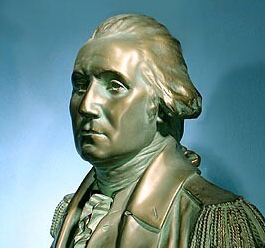
On the same date in 1783, General George Washington eloquently entreated his officers not to support the Newburgh Conspiracy. His plea was successful and the threatened coup d’état never took place.