Categories
Thought

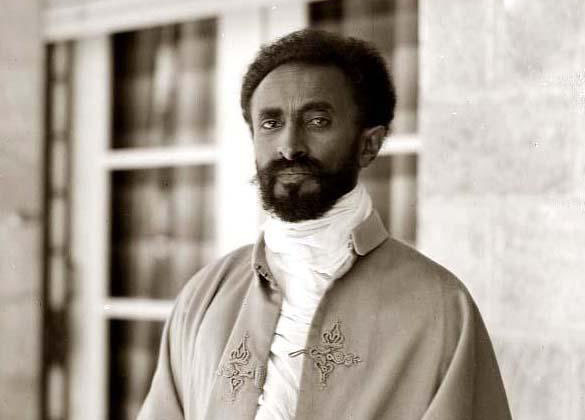
Haile Selassie

The progress of science can be said to be harmful to religion only in so far as it is used for evil aims and not because it claims a priority over religion in its revelation to man. It is important that spiritual advancement must keep pace with material advancement. When this comes to be realized man’s journey toward higher and more lasting values will show more marked progress while the evil in him recedes into the background. Knowing that material and spiritual progress are essential to man, we must ceaselessly work for the equal attainment of both. Only then shall we be able to acquire that absolute inner calm so necessary to our well-being.
It is only when a people strike an even balance between scientific progress and spiritual and moral advancement that it can be said to possess a wholly perfect and complete personality and not a lopsided one.

Categories
Common Sense Popular

The Cattle Are Restless

“There is one law for man,” goes an ancient saying, “another for cattle.”

Moo.

Glenn Reynolds, writing in USA Today, sees this principle in operation now, where the ruling class gets away with a whole heckuva lot while the rest of us do not: “Freedom from consequences: It’s the defining consequence of our modern titles of nobility.”

Reynolds cites Charles W. Cooke for the “titles of nobility” angle. Cooke, who hails from Britain but was recently inducted into American citizenship, has objected to the “grotesque’ American tradition of continuing to use a person’s former title in government service long after the officeholder has left the post.

“Throughout the 2012 election, Mitt Romney was referred to as ‘Governor Romney,’ though he had not been in public office for six years,” Cooke wrote. “One can only ask, ‘Why?’ America being a nation of laws and not men, political power is not held in perpetuity, and there is supposed to be no permanent political class.”

“Americans do not have rulers, they have employees,” Cooke asserted.

If you are like me, you have probably made this point umpteen times in the last few decades.

Reynolds goes on to make the obvious corollary: our public servants do not behave like our “employees.” They behave like our rulers.

Their class privilege is now deep into our law — even if some doctrines, like absolute immunity, were just invented by judges to protect prosecutors and . . . judges.

Maybe the first step to upend this would be to balk at ceremony. Our exes Jimmy Carter, the two George Bushes, Bill Clinton and Barack Obama should not be addressed as “President X.”

“Mister” will do.

This is Common Sense. I’m Paul Jacob.


PDF for printing


Original photo by Beverly


Categories
Today

Seneca Falls

On July 19, 1848, a two-day Women’s Rights Convention opened in Seneca Falls, New York.

Categories
Thought

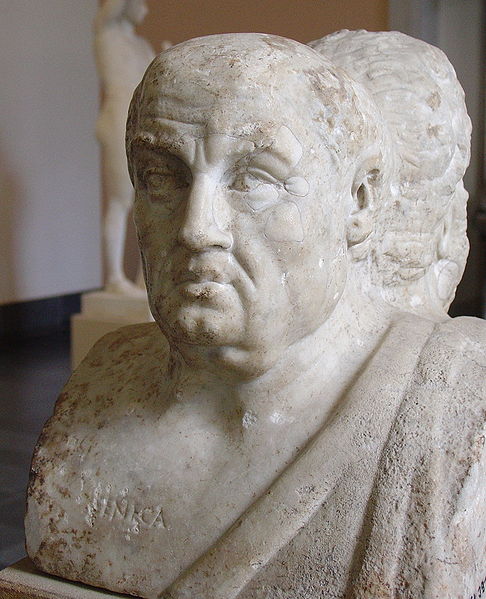
Seneca

While we are postponing, life speeds by. Nothing is ours except time.

Categories
Common Sense

The Not-Saint Timothy

Some people believe that aggression is physical force and nothing else. From this they derive the notion that only physical violence should be prosecuted — or, more generally, retaliated against with force.

But it is obvious that some invasions of private property or personal space, with malice and anger and alarming unhinged-ness, are aggressive.

And should be prosecuted in law.

Take the current case of Timothy Trybus, who is testing a further point of law that especially concerns those of us strongly motivated to focus on initiated force.*

“It is pretty clear,” writes Jacob Sullum in Reason, that the man “broke the law when he harassed Mia Irizarry for wearing a T-shirt featuring the Puerto Rican flag at a park in Chicago last month.”

Mr. Trybus was drunk, and he “got in her face,” so to speak, challenging her in a not-unusual nationalistic/pseudo-patriotic/jingoistic fashion that seems old-fashioned and up-to-date Trumpian:

  • “Why are you wearing that?”
  • “This is America!”
  • “If you’re an American citizen, you should not be wearing that shirt in America.”

Puerto Rico may not be a state, but . . . the proper reaction might have been to challenge the not-Saint Timothy to a bit of patriotic one-upmanship: “How can you be so un-American as to object to an American commonwealth flag?”

He’s now being prosecuted for a hate crime as well as assault. Though he may never have touched the woman, his aggressiveness is legally regarded as a threat of force.

Understandably. But if the hate crime thing sticks, will antifa and other obvious anti-American thugs be given that extra legal consideration in similar situations?

This is Common Sense. I’m Paul Jacob.


* Which, I confess, I like to think of as “all civilized people.” But I may be optimistic. Reducing violence is an almost universal desire, and the question of who started violence is nearly universal. But the focus is, well, in our times called “libertarian.”

PDF for printing


Photo from Max Pixel


Categories
Thought

Herbert Spencer

The fact disclosed by a survey of the past that majorities have usually been wrong, must not blind us to the complementary fact that majorities have usually not been entirely wrong.

Categories
Today

Secret Ballot

On July 18, 1872, Queen Victoria gave her “Royal Assent” to the Ballot Act, which established secret voting in Great Britain. The bill had been introduced by Prime Minister William Ewart Gladstone — one of the queen’s least favorite prime ministers.

Categories
Accountability general freedom government transparency incumbents insider corruption local leaders moral hazard national politics & policies term limits

“Dorky” Doesn’t Define It

“Term limits,” said Daniel McCarthy, editor of The Modern Age, in a recent podcast conversation with historian Tom Woods, “was one of the dorkiest ideas of the 1994 so-called Newt Gingrich revolution.”

He characterized it as not having really gone anywhere.

Huh?

Granted, Congress is still not term-limited. But Americans in 15 states — including California, Colorado, Florida, Michigan, and Ohio, and representing 37 percent of the nation’s population — do enjoy term-limited state legislatures.*

And it sure wasn’t Newt Gingrich’s idea. Gingrich opposed it.

McCarthy repeats the old chestnut that what term limitation “winds up doing is actually weakening Congress and congresspeople in particular — relative to their own staff, who stay in Congress and become sort of experts and learn how to manipulate their congressman, and also relative to the executive branch who have people rotate in from time to time.”

Nifty theory — one very popular with politicians, who know that voters fear unelected influences on legislation.

The reality, however, is that Congress, designed by the Constitution’s framers to be both most powerful and closest to the people‚ is, today, the weakest branch.

And legislators are not term limited.

Ditch the “manipulation theory”; adopt a “collaboration theory”: legislators with Methuselah-long careers learn, sans “rotation in office,” to feather their own nests and those of the interest groups that fund their re-elections (and insider trading schemes).

Term limits remain popular with normal Americans because voters intuitively grasp the reality of such everyday corruption, which is directly tied to Congress having sloughed off so much constitutional responsibility.

We need term limits to restore a Congress sold out by professional politicians.

This is Common Sense. I’m Paul Jacob.


* Nine of the ten largest cities in America likewise have termed-limited their elected officeholders. For more information, see the links to the column from which this episode of Common Sense is condensed.

PDF for printing



Categories
Thought

Immanuel Kant

The problem of establishing a perfect civic constitution is dependent upon the problem of a lawful external relation among states and cannot be solved without a solution of the latter problem.

Categories
Accountability government transparency insider corruption local leaders media and media people nannyism national politics & policies political challengers Regulating Protest responsibility

Not Fine with Feinstein?

Could it be that Sen. Dianne Feinstein, Democrat of California, may not be liberal enough?

The San Francisco Democrat has ostensibly represented the Golden State in the United States Senate for the last 26 years. Before that, Feinstein spent eight years on San Francisco’s Board of Supervisors and then a decade as mayor.

Now, after 44 consecutive years as a public official, what does the 85-year-old Feinstein seek? More. That is, another six-year lease on her powerful perch in the U.S. Senate.

But the Executive Board of the California Democratic Party — Feinstein’s Party — just said, “No way!”

A whopping 65 percent of the 333-member board opted for State Sen. Kevin de León, a fellow Democrat seen as more “progressive.” Only seven percent supported endorsing Feinstein.

Keep in mind that Feinstein is already on the November ballot. She was the leading vote-getter in California’s primary last month. Yet, she received only 44 percent of the vote: a majority does favor someone else.

In February, 2,700 activists at the State Democratic Party Convention in San Diego voted 54 to 37 percent for State Sen. De León over U.S. Sen. Feinstein.

“Feinstein, who spends much of her time in Washington, has had a distant relationship with party activists for years,” noted the Los Angeles Times report.

Still, what Democratic Party activists want may not matter so much. Mrs. Feinstein enjoys tremendous name recognition and, according to the Times, has “$7 million in campaign cash socked away as of May, ten times what De León had.”

That money seems to be Sen. Feinstein’s real base of support.

This is Common Sense. I’m Paul Jacob.


PDF for printing