On Feb. 14, 278 A.D., Valentine, a priest in Rome during the reign of Emperor Claudius II, was executed. In order to facilitate the raising of an army for his unpopular military campaigns, the emperor outlawed all marriages and engagements. Valentine defied Claudius’s order and continued to perform marriages for young lovers in secret. Once discovered, Valentine was arrested and condemned by the Prefect of Rome to be beaten to death with clubs and to have his head cut off. The sentence was carried out on February 14. Valentine was named a saint by the Roman Catholic Church after his death.
Though February 14th is celebrated as “St. Valentine’s Day,” in today’s vernacular, the 14th of February, 278, was, ahem, “not his day.”
“VOTE LIKE YOU,” read the Election Day sign from last November, pictured above Dan Balz’s Sunday Washington Postcolumn about identity politics.
The implication is clear: one should vote for the candidate with the same skin color, of the same race as your own.
Uh, really?
We do want our elected officials to be “like us.” But in terms of values. Not pigment.
Race is completely meaningless in judging a prospective candidate. I want my candidate to think like me, not win the Paul Jacob Lookalike Contest.
On the other hand, those seeking a new cultural revolution — like the Chinese Cultural Revolution, but based on racial and gender and sexual orientation grievances — think it’s fine to push race-based voting, so long as you aren’t pushing whites and . . . it helps Democrats.
The latest real “culprit” in Hillary Clinton’s 2016 defeat appears to be a lack of enthusiasm and turnout among black voters. Black turnout dropped eight percent from 2012, when President Obama was running for re-election as the first black president, to 2016, when Hillary Clinton, a white woman, was the Democratic standard-bearer.
Balz looked at the 2018 gubernatorial races in Florida and Georgia, where Democrats Andrew Gillum and Stacey Abrams, respectively, both African American, lost but performed far better than Democrats have in recent years in those states in such races.
“Would a white candidate have done better?” he asked.
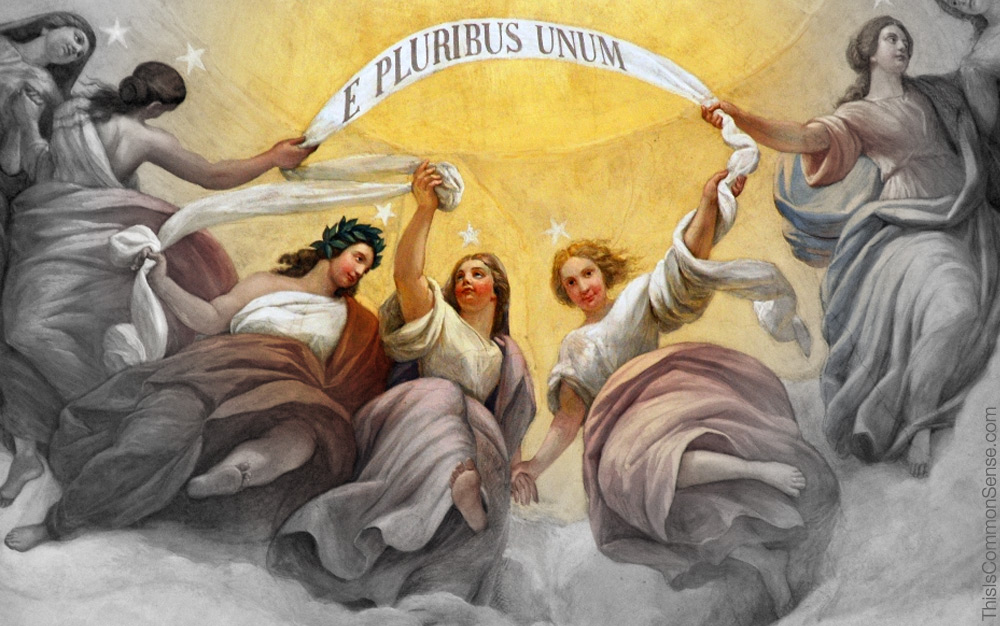
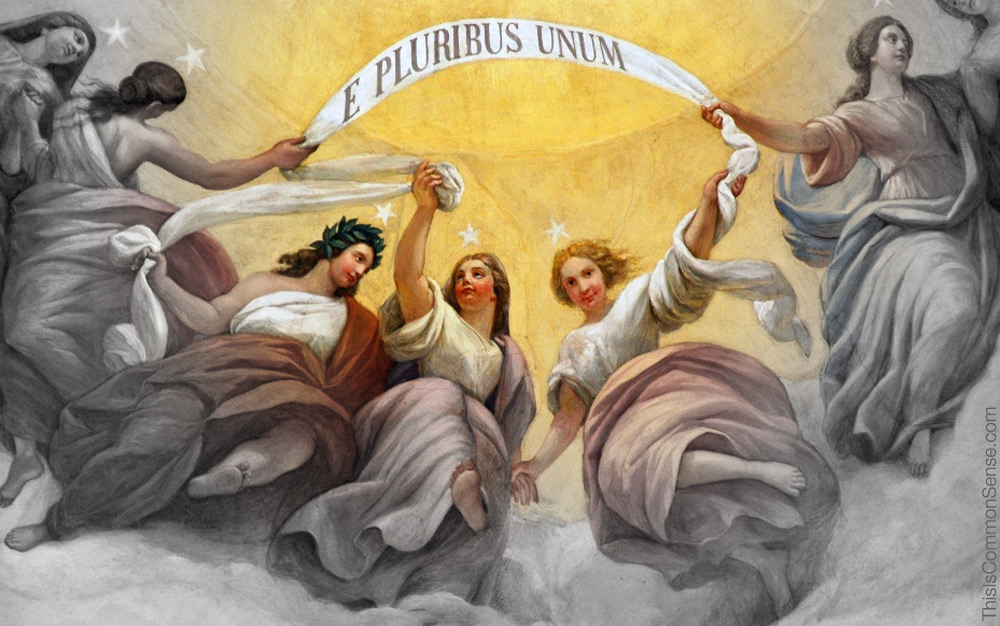
Perhaps not. But the whole approach stinks. Identity politics is openly the politics of division. Surely “e pluribus unum” must not be replaced with “ex uno plures.”
This is Common Sense. I’m Paul Jacob.
N.B. For the Latin, which is not straightforward, see Google Translate.
One who would influence the masses must have recourse to the art of advertisement. The clamour of puffery is to-day requisite even for an intellectual movement.
On Feb. 13, 1633, Italian philosopher, astronomer and mathematician Galileo Galilei arrived in Rome to face charges of heresy for advocating Polish astronomer Nicolaus Copernicus’s theory that the Earth revolves around the Sun. In April, Galileo pled guilty before the Roman Inquisition in exchange for a lighter sentence. Put under house arrest indefinitely by Pope Urban VIII, Galileo spent the rest of his life at his villa in Arcetri, near Florence, dying in 1642.
“One of the great myths in official Washington,” writes pollster and pundit Scott Rasmussen at Ballotpedia.org, “is that voters hate Congress but love their own representative.”
Working for term limits, boy have I heard this assertion a lot.
Oh, voters do hate Congress; this we know. Less than one in eight Americans approve of the job being done (or not) by Congress, according to a brand newThe Economist/YouGov poll.
The remaining question, however, is whether we really like our own congressperson. The correct answer appears to be: Not so much.
A recent ScottRasmussen.com national survey, conducted Feb. 1-2, 2019, found that less than one in four voters, only 23 percent, “actually think their own representative is the best person for the job.” A far larger percentage, 38 percent, believe “others in the District are more qualified.”
It is certainly possible, of course, that folks could think there is someone better than their sitting congressperson and, nonetheless, still love their Rep.
Though, doesn’t “love” seem like way too strong a word?
The notion that we are consumed with amorous urges toward our own federal representative is evidenced only by the high re-election rate for incumbent congressmen. But those rates are more likely the result of the powerful advantages of incumbency.
Not gleeful adoration of “our” career politicians.
There is one way to test our level of devotion: Let us vote on term limits and see what happens.
It would lead to a new question: Where did our love go?
[A]ll Value resides in the mind. But people have come to regard Value as an absolute Quality inherent in Things: and the confusion of ideas is the source of bad reasoning. Value is founded on estimation.
Henry Dunning Macleod, Elements of Economics, Volume 1 (1881), p. 118. Relating the leading principles of Étienne Bonnot de Condillac’s Le commerce et le gouvernement, considérés relativement l’un à l’autre: Ouvrage élémentaire, Macleod explains the main idea of modern economics, mutual benefit in exchange:
On Feb. 12, 1986, Soviet human rights activist Anatoly Scharansky was released after spending eight years in Soviet prisons and labor camps. The amnesty deal was arranged at a summit meeting between Soviet leader Mikhail Gorbachev and President Ronald Reagan. Scharansky had been imprisoned for his campaign to win emigration rights for Russian Jews — who had been forbidden to practice Judaism in the USSR.
On Feb. 12, 1909, the National Association for the Advancement of Colored People (NAACP) was founded.
On Feb. 12, 1593, approximately 3,000 Korean defenders led by General Kwon Yul successfully repelled more than 30,000 invading Japanese forces in the Siege of Haengju.
Last week’s anti-socialist moment was not limited to the president’s promise that America would never go socialist, as I noted this weekend there was also Panera Bread’s abandonment of its quasi-charitable Panera Cares (“pay-what-you-want”) fast food chain.
Isn’t that a bit of a strange connection? Socialism is not charity. It’s bad because it is force through and through, not because it seeks to help people.
Well, note that while Panera’s notion was the same as many socialists’, to help the poor. Panera’s method was to cajole, or “nudge,” the better-off to pay enough more to cover the costs of paying less.
Kinda like ObamaCare, but without the force.
And without the force, it failed.
What Panera management discovered is that not only is it very hard to get the message across, it is almost impossible to set up coherent incentives to successfully alter consumer behavior.
Getting incentives right is something that plagues all sorts of socialistic experiments, voluntary or coercive, within a capitalist society.
Take Finland’s recent experiment with a Universal Basic Income (UBI).
The idea of that nation’s centrist party was to take care of the unemployed beneficiaries’ basic needs so they could get back to work.
Well, those who received the basic income were happy enough receiving the moolah. Sure. But “there was no evidence from the first year of the experiment,” a report in Huffington Post admits, “that the scheme incentivized work.” Despite that, socialists in England are pushing for the UBI.
Socialism doesn’t work, and socialists would rather not work — except to advance socialism.
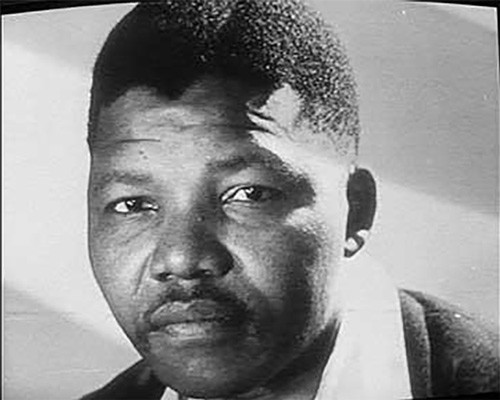
On Feb. 11, 1990, after 27 years in prison, Nelson Mandela was released by South African authorities.
Mandela had joined the African National Congress (ANC) in 1944, becoming deputy national president of the group in 1952. Arrested for treason in 1961, he was acquitted — but then arrested again in 1962 for illegally leaving the country. Convicted and sentenced to five years at Robben Island Prison, he was put on trial again in 1964 on charges of sabotage. He was convicted and sentenced to life in prison along with several other ANC leaders.
In 1989, F.W. de Klerk became South African president and began dismantling apartheid. De Klerk lifted the ban on the ANC, suspended executions, and in February 1990 ordered the release of Nelson Mandela.
Mandela subsequently led the ANC in negotiating an end to apartheid and the establishment of a multiracial government. In 1993, Mandela and de Klerk were jointly awarded the Nobel Peace Prize. One year later, the ANC won the country’s first free elections, and Mandela was elected South Africa’s president.