Socialism depends for its increasing support upon widespread ignorance of economic reality. That it keeps creeping back into politics may not seem strange. What may seem strange is that a major business enterprise would also not understand that reality. But that appears to be the case. More at Townhall. And yet more below:
The Blazereported on its “Panera Cares” experiment going “belly-up.”
But for the full comedy, try NPR’s Planet Money podcast.
For the Pareto-Schmoller tale, you could read Vilfredo Pareto’s Mind and Society. Or just check out this blogpost.
For why socialism cannot work like socialists say it can work, you might try Ludwig von Mises’ classicSocialism: An Economic and Sociological Analysis. (Pareto wrote a two-volume work of a similar nature, but it has never been translated into English!)
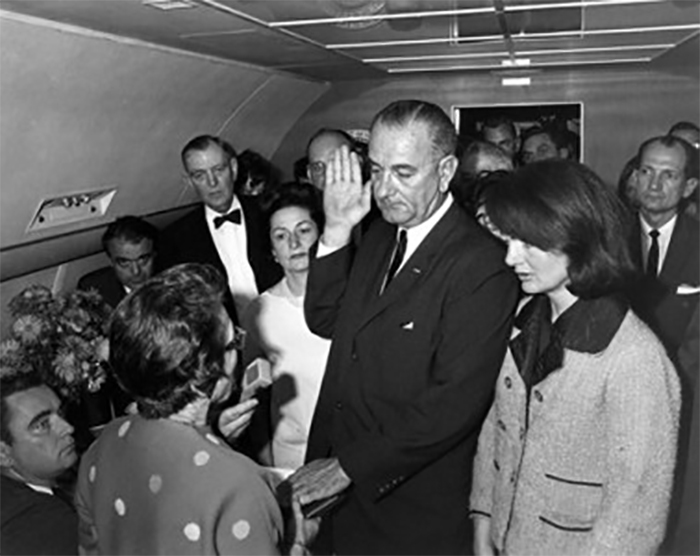
On Feb. 10, 1967, the 25th Amendment to the U.S. Constitution was ratified by Nevada, the necessary 38th state to do so. The amendment sets the process for presidential succession, and reads:
Section 1. In case of the removal of the President from office or of his death or resignation, the Vice President shall become President.
Section 2. Whenever there is a vacancy in the office of the Vice President, the President shall nominate a Vice President who shall take office upon confirmation by a majority vote of both Houses of Congress.
Section 3. Whenever the President transmits to the President pro tempore of the Senate and the Speaker of the House of Representatives his written declaration that he is unable to discharge the powers and duties of his office, and until he transmits to them a written declaration to the contrary, such powers and duties shall be discharged by the Vice President as Acting President.
Section 4. Whenever the Vice President and a majority of either the principal officers of the executive departments or of such other body as Congress may by law provide, transmit to the President pro tempore of the Senate and the Speaker of the House of Representatives their written declaration that the President is unable to discharge the powers and duties of his office, the Vice President shall immediately assume the powers and duties of the office as Acting President.
Thereafter, when the President transmits to the President pro tempore of the Senate and the Speaker of the House of Representatives his written declaration that no inability exists, he shall resume the powers and duties of his office unless the Vice President and a majority of either the principal officers of the executive department or of such other body as Congress may by law provide, transmit within four days to the President pro tempore of the Senate and the Speaker of the House of Representatives their written declaration that the President is unable to discharge the powers and duties of his office. Thereupon Congress shall decide the issue, assembling within forty-eight hours for that purpose if not in session. If the Congress, within twenty-one days after receipt of the latter written declaration, or, if Congress is not in session, within twenty-one days after Congress is required to assemble, determines by two-thirds vote of both Houses that the President is unable to discharge the powers and duties of his office, the Vice President shall continue to discharge the same as Acting President; otherwise, the President shall resume the powers and duties of his office.
On Feb. 9, 1737, Thomas Paine was born in Thetford, England.
Paine would come to America in 1774 and by 1776 publish Common Sense, urging American independence. Later works included The Rights of Man (1792) and The Age of Reason (published in three parts in 1794, 1795, and 1807).
It has been a big week for socialism — or, rather, anti-socialism.
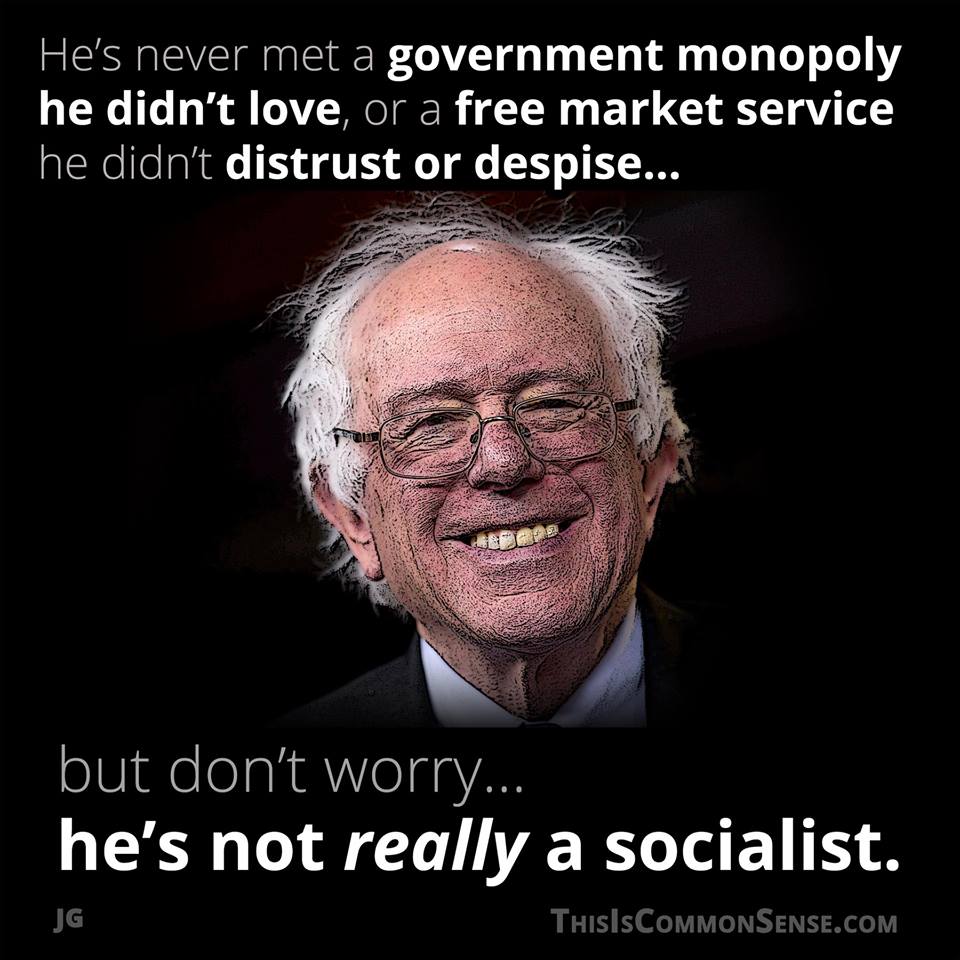
The high point was probably President Trump’s State of the Union Address, in which he opposed not only the murderous, ruinous regime in Venezuela, but also the rising tide of socialism in the Democratic Congress — with Senator Sourface, er, Bernie Sanders, trying not to explode as he heard that taboo word “free” applied to America . . . not goodies.
Meanwhile, Panera Bread announced, The Blazereports, that it is closing “its last pay-what-you-can restaurant, located in Boston, on Feb. 15.”
“Panera Cares” was, it appears, “initially created to serve food to low-income people nine years ago in 2010,” but sure seemed to be itching to prove a sort of post-capitalist point. The company’s founder, Ron Shaich, said that “the program’s aim was a ‘test of humanity.’”
More like a test of gullibility.
No branch of the “experiment” ever ran in the black. Like experiments in society-wide socialism, it relied upon subsidy to carry on — but unlike in socialism, Panera could not force people to cough up the dough needed to keep it going.
Once upon a time, the great economist Vilfredo Pareto, during a lecture, was repeatedly interrupted by one Gustav von Schmoller, who denied that economists had discovered any enduring principles, especially ones that would undermine his beloved socialism. So Pareto dressed down as a bum and approached Schmoller on the streets, inquiring about a restaurant that served meals for free. When Schmoller told him that there were only cheap, but no free meals, at restaurants, Pareto stood up with the ultimate gotcha:
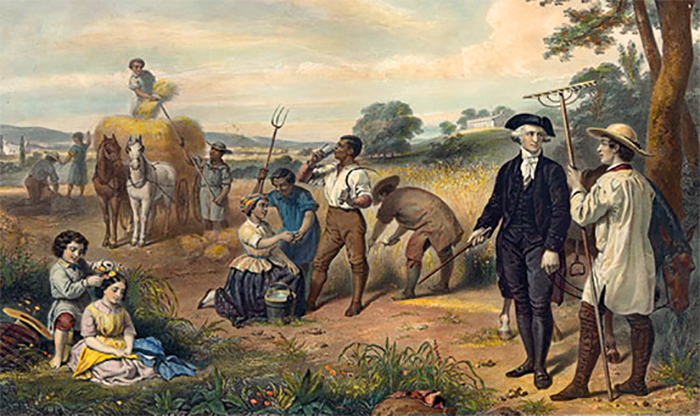
On February 8, 1865, Delaware voters rejected the Thirteenth Amendment to the U.S. Constitution, voting to continue the practice of slavery. Delaware belatedly and symbolically ratified the amendment on February 12, 1901.
Disagreement is manageable. It’s agreement that wreaks havoc. If people disagree, they’ll debate you. If they secretly agree with something, but are furious with you for saying it, then they’ll try to shut you up by any means necessary. As Tom Stoppard puts it, ‘I agree with every word you say, but I will fight to the death against your right to say it.’
The core idea behind the institutions of representative government — state legislatures, city councils, Congress — is that lawmakers, sometimes called “representatives,” endeavor to implement “the will of the people.”
To do so . . . necessarily entails knowing the public’s preferences.
Hmmm. How to find out what people want? Or don’t?
A ballot initiative sponsored by Tim Eyman and Voters Want More Choices offered one method, mandating advisory votes for Washington State’s electorate to approve or disapprove the last 19 tax increases passed by legislators.
These advisory tax questions sometimes garnered more votes than races for superintendent of public instruction and the state supreme court. Results? Mixed. Seven times voters favored the legislators’ tax hikes, while opposing the other 12.
Either way, good info for legislators to know, no?
No . . . apparently. Conceited Washington state politicians don’t want to know what voters think. The core idea behind Senate Bill 5224 is stopping voters from officially expressing their will on taxes by getting rid of these pesky advisory votes.
In testimony last week, Tim Eyman reminded legislators that voters have four times mandated advisory votes on tax increases (2007, 2010, 2012, 2015); have six times voted to require a two-thirds legislative majority to raise taxes, only to have those measures overturned in court; and that legislators have prevented citizens from using the state’s referendum process by attaching phony emergency clauses to tax hikes.
“Give the peasants a couple of crumbs,” Eyman beseeched, “and let them at least express an opinion at the ballot box.”