On November 14, 1918, Czechoslovakia became a republic.
Born on the same date 29 years later — American writer P. J. O’Rourke.

On November 14, 1918, Czechoslovakia became a republic.
Born on the same date 29 years later — American writer P. J. O’Rourke.
The courageous and strong man repulses oppression, defends his life, his liberty, and his property; by his labor he procures himself an abundant subsistence, which he enjoys in tranquillity and peace of mind. If he falls into misfortunes, from which his prudence could not protect him, he supports them with fortitude and resignation; and it is for this reason that the ancient moralists have reckoned strength and courage among the four principal virtues.
C.-F. Volney, The Ruins of Empires (1791).
We don’t see a lot of pro-term-limits writing in our major, “corporate” media outlets — but a New York magazine account of the ouster of Bolivian President Evo Morales is a welcome exception.
“The disgraceful and chaotic manner in which the once-beloved Morales is leaving office is an object lesson in why presidential term limits are important,” writes Jonah Schepp. “Running a country for more than a decade has a tendency to make people more susceptible to authoritarian impulses, whether or not they started their careers as dictators.”
The Atlantic also acknowledges term limits’ vital role. “Evo Morales Finally Went Too Far for Bolivia,” the “too far” being the “authoritarian powers” claimed “in the name of the popular will.” Yascha Mounk explains how Morales’ once-touted support for presidential term limits evaporated in 2016, when he placed before voters a binding referendum to allow him to stay in office indefinitely. Bolivians voted No, only to witness their supreme court set aside term limits using the bizarre rationale “that limits on the length of his tenure in office would violate Morales’s human rights.”
After irregularities in the October 20 presidential vote, Bolivians took to the streets. Morales resigned on Sunday.
“For a socialist president who was until recently hailed as the great success story of the Latin American left,” New York’s Schepp explains, “this unseemly end serves as a cautionary tale of what happens when world leaders remain in office for too long.”
On a 2015 trip, President Obama remonstrated African leaders for their attempts to overturn popular term limits. “I’ll be honest with you,” he said before the African Union, “I’m looking forward to life after being president.”
Mr. Morales, Bolivia’s now-former president, is not so fortunate. Yesterday, he fled the country.
This is Common Sense. I’m Paul Jacob.
See all recent commentary
(simplified and organized)
See recent popular posts
On this day in 1833, Denison Olmsted, was alerted by his neighbors to something truly amazing, a night sky filled with shooting stars.
Not just a one or two or a dozen or a hundred: 72,000 or more per hour. Though recognizing where among the constellations meteors came from was ancient knowledge, it had not been recorded by modern-era scientists, at least in this case. What Olmsted noticed was that the meteors were coming from one point in the sky, the constellation Leo. This regular meteor event is now called the Leonid meteor stream.
In the morning, Olmsted wrote a brief report on the meteor storm for the New Haven Daily Herald newspaper, which elicited correspondence from around the country, thus beginning a social storm, in a sense: crowd-sourced science.
November 13 is World Kindness Day, which has been celebrated in various countries since 1998. It is not an official celebratory day of the U.S.A., or of the United Nations. But individuals are free to be kind this day . . . or any day, for that matter.
Freedom degenerates unless it has to struggle in its own defence.

“While internet advertising is incredibly powerful and very effective for commercial advertisers,” Twitter CEO Jack Dorsey said last month in announcing a complete ban on political advertising for candidates or issues, “that power brings significant risks to politics, where it can be used to influence votes to affect the lives of millions.”
But is it the risk to “the lives of millions” that is at issue here?
Really?
Pressure for social media companies to police “renegade” voices came mainly from the left . . . in Congress and major media. These are the groups with the most to lose by the free flow of political debate, as spurred by paid political advertising, which is what challengers often use to break through the incumbents’ natural advantage.
Congress is filled with incumbents, by definition.
Major media sees itself as gatekeeper for political discourse, and feels threatened by an unregulated online culture.
Accordingly, Twitter’s ban received rave reviews from the political left. “Good call,” progressive Congresswoman Alexandria Ocasio-Cortez responded. A spokesperson for former Vice-President Joe Biden’s campaign called it “encouraging.”*
“Good,” tweeted Montana Gov. Steve Bullock (also sort of a presidential candidate). “Your turn, Facebook.”
But Facebook is thankfully not bending to pressure.
“[I]f Facebook were to cut off political ads, it could end up undercutting the scrappy, first-time candidates . . .,” reports The Washington Post. “Voters are more likely to see Facebook ads than television ads from challengers, according to the findings, published in a working paper whose first author is Erika Franklin Fowler of Wesleyan University.”
“Online advertising lowers the cost and the barriers to entry,” Fowler told The Washington Post.
Which is bad for the political establishment because it is good for challengers, the outsiders.
This is Common Sense. I’m Paul Jacob.
* Perhaps the ban encourages top Democrats for the same reason the president’s campaign manager sounded the alarm: “This is yet another attempt to silence conservatives since Twitter knows President Trump has the most sophisticated online program ever known.”

See all recent commentary
(simplified and organized)
See recent popular posts
C.-F. Volney, The Ruins of Empires (1791).
The courageous and strong man repulses oppression, defends his life, his liberty, and his property; by his labor he procures himself an abundant subsistence, which he enjoys in tranquillity and peace of mind. If he falls into misfortunes, from which his prudence could not protect him, he supports them with fortitude and resignation; and it is for this reason that the ancient moralists have reckoned strength and courage among the four principal virtues.

On November 12, 1905, Norwegians established, by referendum, a monarchy — not a republic. Exactly 14 years later, to the day, Austria became a republic.
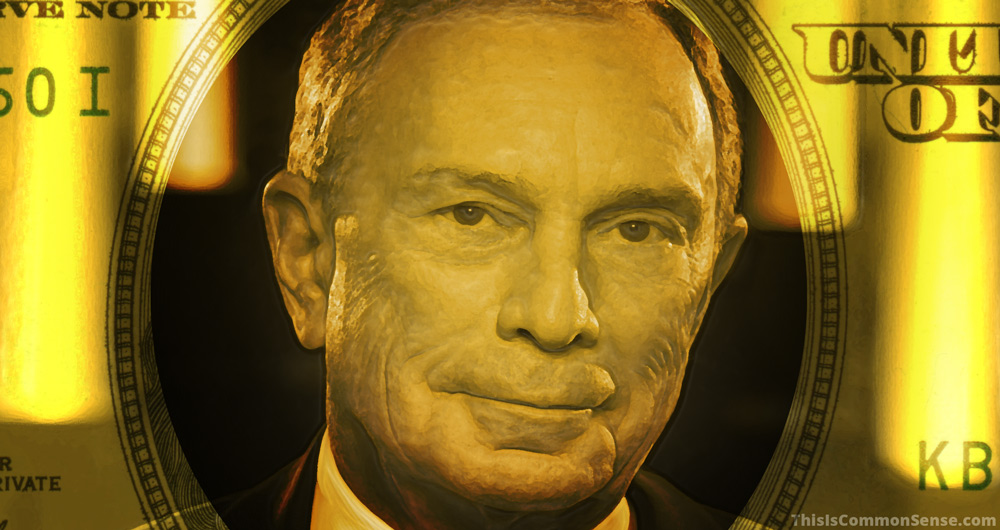
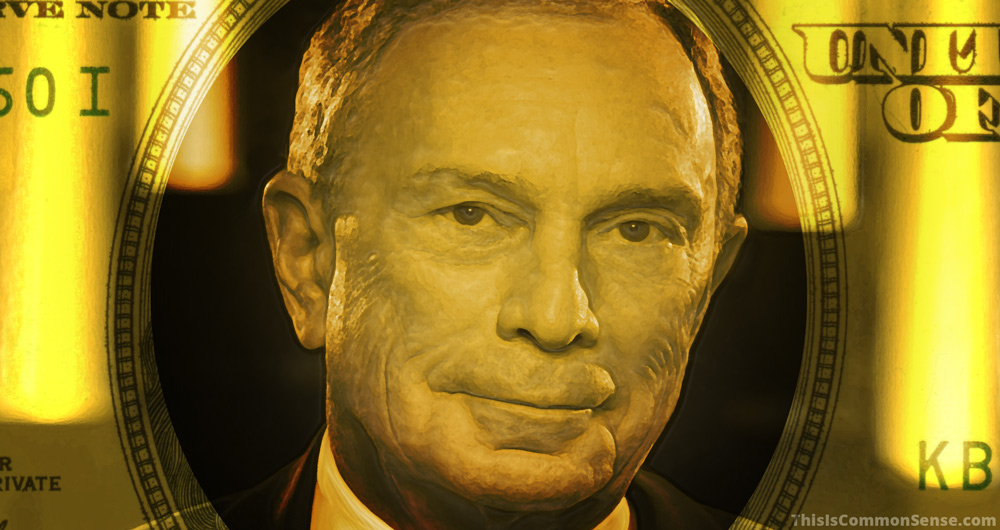
Might Gotham’s gun-and-Big-Gulp-grabber-in-chief catapult to Commander in Chief?
Michael Bloomberg, the former New York City mayor, “is actively preparing to enter the Democratic presidential primary,” writes Alexander Burns in The New York Times.
Bloomberg’s estimated $53 billion could financially pummel even Democratic candidate Tom Steyer, working with a mere $1.6 billion.
“More billionaires seeking more political power surely isn’t the change America needs,” chimed in Faiz Shakir, presidential campaign manager for Vermont socialist and Senator Bernard Sanders.
Billionaires are the really evil ones.
Millionaires? Not so bad anymore.
In 2016, Bernie badmouthed both “millionaires and billionaires” . . . until found to be a millionaire himself — worth $2.5 million to be specific.
Massachusetts Senator Elizabeth Warren, Mr. Sanders’ rail-against-the-rich presidential rival, offered Mayor Bloomberg her “Calculator for Billionaires” — showing how much those sorts of people would have to pay per her Wealth Tax.
No mention of what her own family, worth $12 million would pay.
Bloomberg’s entrance into the race is expected to hurt former Vice-President and multimillionaire Joe Biden the most, both appealing to the more “moderate” wing of the Democratic Party.
Still, Bloomberg is no Democrat messiah, however. He’s not particularly popular. In fact, Bloomberg’s last political campaign for a third term as New York mayor ten years ago was “the most expensive campaign in municipal history.” After double-crossing voters on term limits by supporting a council change allowing him (and them) a third term, Bloomberg had to spend a whopping $183 per vote to win an “unexpectedly close race.”
To garner as many votes for president as Hillary Clinton’s 2016 effort, at that same cost, adds up to $12 billion!
Bloomberg’s good news? He has it.
Bloomberg’s bad news? Hillary lost.
This is Common Sense. I’m Paul Jacob.
See all recent commentary
(simplified and organized)
See recent popular posts
On November 11, 1889, the State of Washington was admitted as the 42nd State of the United States.
In 1918, German officials signed an armistice agreement with the Allies in a railroad car in the forest of Compiègne, France. The fighting officially ended at 11:00 a.m. — the eleventh hour of the eleventh day of the eleventh month. The war officially ended with the signing of the Treaty of Versailles on June 28, 1919.
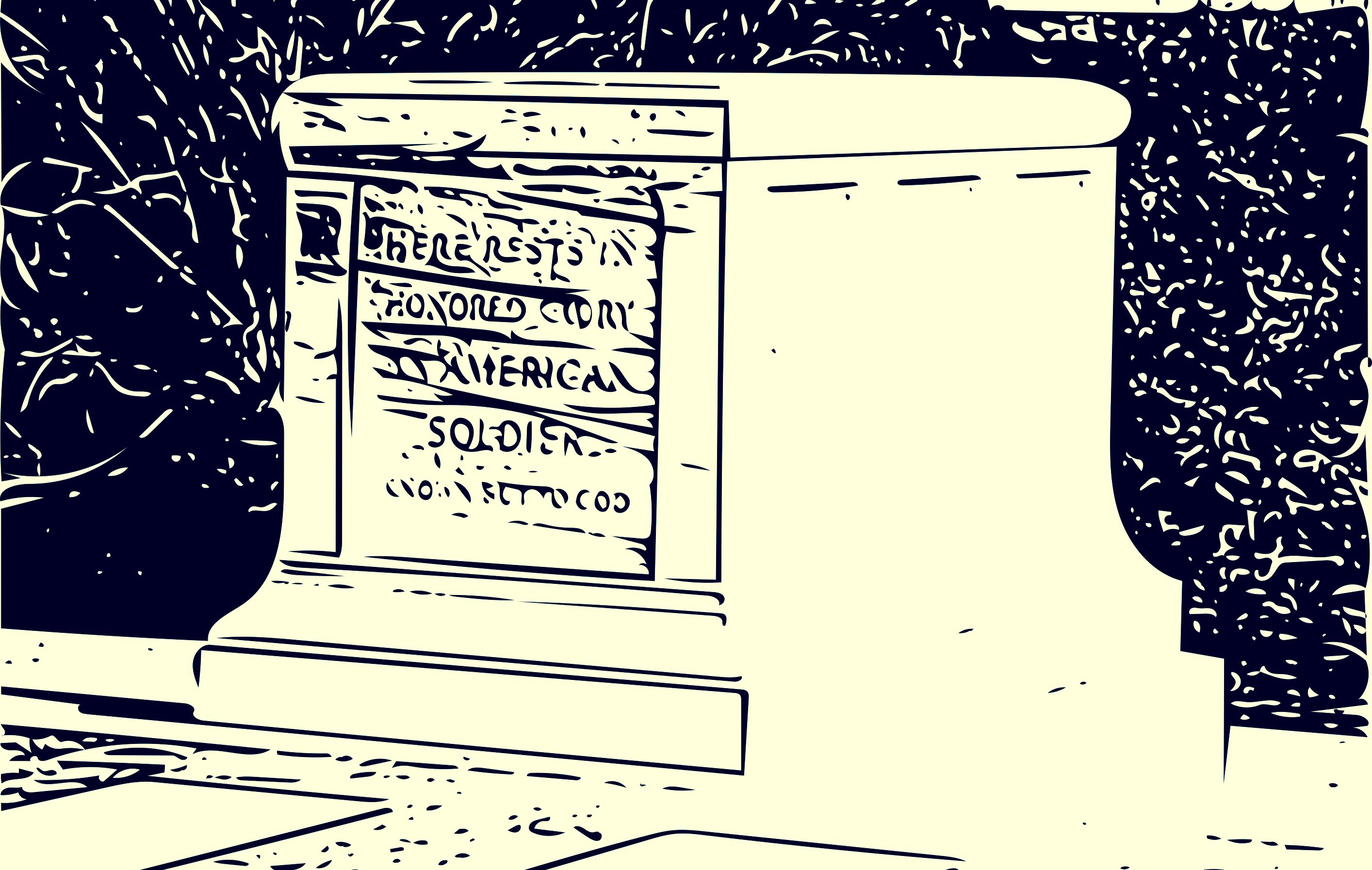
In 1921 on this date, U.S. President Warren G. Harding dedicated the Tomb of the Unknowns at Arlington National Cemetery.