Categories
Thought

Lord Acton

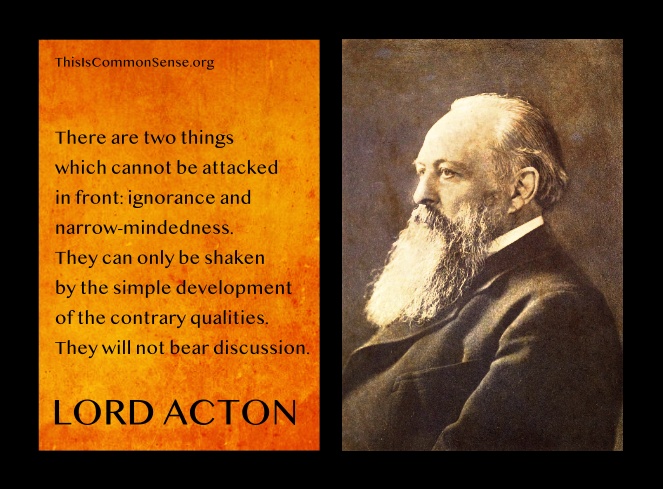
There are two things which cannot be attacked in front: ignorance and narrow-mindedness. They can only be shaken by the simple development of the contrary qualities. They will not bear discussion.

John Emerich Edward Dalberg Acton, 1st Baron Acton (January 10, 1834 – June 19, 1902), Letter (23 January 1861), published in Lord Acton and his Circle (1906), by Abbot Francis Aidan Gasquet, Letter 74.
Categories
Today

Against Slavery

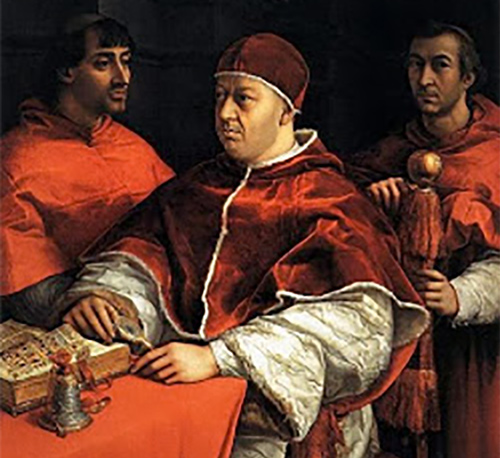
On January 14, 1514, Pope Leo X issued a papal bull against slavery.

On the same date in 1639, the first written constitution to create a government, the “Fundamental Orders,” was adopted in Connecticut.

Categories
Accountability First Amendment rights social media

The Expert De-Platformed

Dr. Robert Malone researched mRNA technology in the 1980s at the Salk Institute for Biological Studies. He helped develop mRNA vaccines. He is a founder of Atheric Pharmaceutical. He’s got plenty of credentials. 

So you might think social media companies would respect his voice in the area of his expertise.

But no: for disputing official government assurances about the super-safeness of the vaccines, he’s been banned by Twitter (and copycat LinkedIn).

What precisely did he say that triggered the social media giants?

Well, Dr. Malone argues that for many youngsters the risks (like myocarditis) of being vaccinated outweigh the benefits of being vaccinated against what is a very low-risk infection for most younger people.

“I may be one of the very few that has this depth of understanding of the technology that doesn’t have a direct financial conflict of interest,” says Dr. Malone, who is himself vaccinated. “If I’m not allowed to speak about my concerns, whether they’re right or wrong . . . who is a valid person to participate in the dialogue?”

Nobody, doc. It’s because you’re so credible that you finally had to be stomped by the likes of Twitter. You’re too credible.

At the strongholds of official government doctrine, it’s not about figuring out the truth, encouraging independent judgment of risks and alternatives, or logical persuasion. Argue all you want, as rationally or irrationally as you want — just as long as you hew to the protean prescribed dogma.

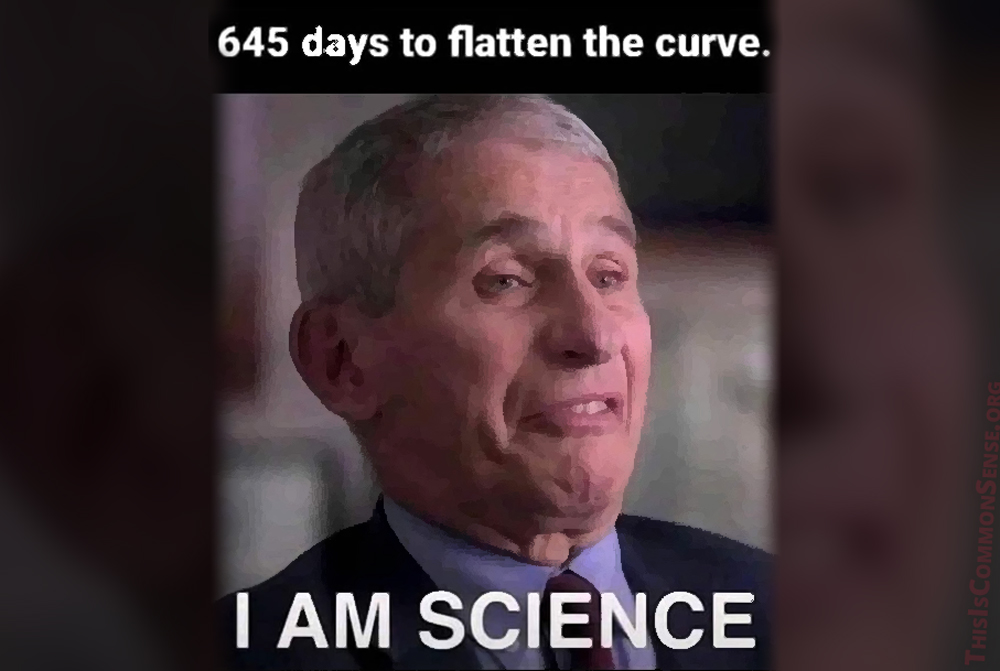
Unsure what the set-in-stone dogma du jour is, precisely, on matters pandemical and vaccinatory? That’s easy. Just look up the very latest utterances of one Anthony Fauci.

This is Common Sense. I’m Paul Jacob.


PDF for printing

See all recent commentary
(simplified and organized)
See recent popular posts
Categories
Thought

James Fenimore Cooper

It is a general law in politics, that the power most to be distrusted, is that which, possessing the greatest force, is the least responsible.

James Fenimore Cooper, The American Democrat (1838).

Categories
Today

Nullification?

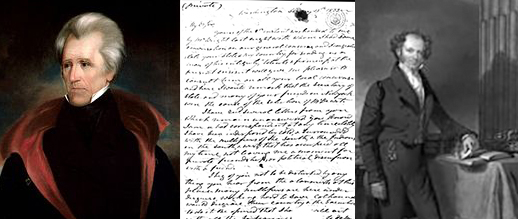
On January 13, 1833, United States President Andrew Jackson (pictured, top left) wrote to Vice President Martin Van Buren (pictured, top right) expressing his opposition to South Carolina’s defiance of federal authority in the Nullification Crisis. Jackson insisted that “the crisis must be now met with firmness” and “the modern doctrine of nullification & succession put down forever.”

South Carolina had blamed protectionist high tariffs for the severity of the economic slump of the time, and Andrew Jackson’s compromise Tariff of 1832 was still too much special-interest “protectionism” for South Carolina, which threatened to nullify the law as unconstitutional. Jackson, a nationalist at heart, had no sympathy for dissidents in the southern states. (The tariffs were designed by northern politicians to encourage the growth of industry. The belief among most economists of that time was that such high “protective” tariffs favored certain businesses at the expense of the general consumer, particularly farmers and agricultural producers.) After the crisis subsided, tariffs were further reduced from the 1832 level, much lower than of 1828’s “Tariff of Abominations,” which had been signed into law by President John Quincy Adams — and written mainly by Martin Van Buren as a way to precipitate the election of Jackson.

Since the somewhat ambiguous end to the Nullification Crisis, the doctrine of state prerogatives — “states’ rights” — has been asserted by opponents of the Fugitive Slave Act of 1850, proponents of California’s Specific Contract Act of 1863 (which nullified the Legal Tender Act of 1862), opponents of Federal acts prohibiting the sale and possession of marijuana in the first decade of the 21st century, and opponents of implementation of laws and regulations pertaining to firearms from the late 1900s up to 2013. State opposition to ObamaCare has also recently conjured up the issue.


On January 13, 1898, Émile Zola’s J’accuse exposed the Dreyfus affair.

Categories
ballot access national politics & policies

The Other Big Lie

“Let me be clear,” President Joe Biden told a Georgia crowd yesterday, addressing changes proposed by the Democrats to election laws nationally, “this is not about me or Vice-President Harris or our party.”

Of course not. Who would even suggest such a thing? 

On this same “voting rights” subject six months ago, Biden called Republicans “bullies and merchants of fear and peddlers of lies” who “are threatening the very foundation of our country.” Though less colorful, yesterday’s address was merely more of the same. 

“Pass the Freedom to Vote Act! Pass it now!” the president shouted, arguing that it “would prevent voter suppression.”  

How? Well, that’s less than clear. 

For years, Democrats slammed laws requiring voters to show photo identification as “racist,” contending the requirement disproportionately suppressed black voters. But then, when polls demonstrated that voters “of color” are even more supportive of Voter ID laws than are whites, Democrats quickly insisted they had always been for such laws.

Now — keep up! — voter ID laws are back to being suppressive. And the very purpose of the Dems’ Freedom to Vote Act is to strike down all such state laws.

When Georgia’s Secretary of State called for photo ID requirements last Sunday on CBS’s Face the Nation, host Margaret Brennan offered, “The Freedom to Vote Act actually does promote a national standard for states that have an ID requirement for in-person voting,” adding, “You could use a bank statement or utility bill.”

Neither of which constitutes a photo ID, as the secretary pointed out.

Democrats battling former President Trump’s so-called Big Lie have concocted one of their very own.

This is Common Sense. I’m Paul Jacob.


PDF for printing

See all recent commentary
(simplified and organized)
See recent popular posts
Categories
Thought

Lord Acton

At all times sincere friends of freedom have been rare, and its triumphs have been due to minorities, that have prevailed by associating themselves with auxiliaries whose objects often differed from their own; and this association, which is always dangerous, has been sometimes disastrous, by giving to opponents just grounds of opposition, and by kindling dispute over the spoils in the hour of success.

John Emerich Edward Dalberg Acton, 1st Baron Acton (January 10, 1834 – June 19, 1902), The History of Freedom in Antiquity (1877).
Categories
Today

Fast Ford

On January 12, 1904, Henry Ford set a land-speed record of 91.37 mph on the frozen surface of Lake St. Clair in Michigan, driving a four-wheel vehicle, dubbed the “999,” with a wooden chassis but no body or hood. Ford’s record was broken within a month, but the publicity from Ford’s achievement was valuable to the auto pioneer, who had incorporated the Ford Motor Company the previous year.

Categories
ballot access partisanship

Sore Losers Lumped

“[R]ight now,” Georgia Secretary of State Brad Raffensperger expressed to Margaret Brennan, host of CBS’s Face the Nation, last Sunday, “we need to restore trust wherever we can.”

Having “stood up to” pressure from President Trump after the 2020 election, and now persona-non-grata in his own party, Raffensperger has become a popular guest on progressives’ legacy media . . . though, not always providing the soundbites they crave.  

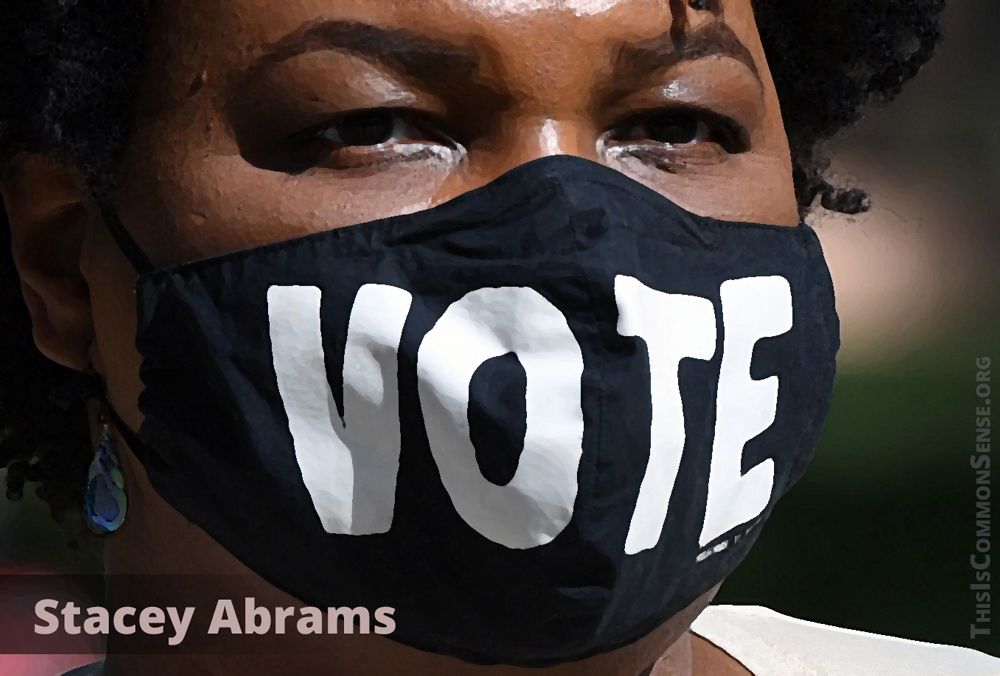
“In Georgia, we’ve been fighting this — this theme of, you know, stolen election claims — from Stacey Abrams about voter suppression [in 2018], and then 2020 it was about voter fraud,” explained the secretary. 

“Both of them undermine voter trust.”

“They may both undermine voter trust,” Brennan quickly countered, “but I’m sure you draw a distinction between someone who doesn’t hold any kind of office and the president of the United States actively putting pressure on you to find and manufacture votes. They’re not equivalent,” she added.

Raffensperger acknowledged that the president’s “positional power is just much higher than a candidate running for governor. But be that as it may,” he continued, “when people lose races, I think the proper thing to do is admit that you lose. And if you want to run again, by all means do so.”

Partisans will debate whether Abrams’ claims of voter suppression are more right or wrong, defensible or incredible, honest or dishonest than Trump’s charges of vote fraud. But both have been blindly accepted not only by their own political side, but by the rah-rah crowd in the respective partisan corners — er, halves — of the media as well.

Leaving other elected officials to grab their midnight trains to somewhere else, the lonely Georgia Secretary of State stands his ground, making a non-partisan, principled point.

This is Common Sense. I’m Paul Jacob. 


PDF for printing

See all recent commentary
(simplified and organized)
See recent popular posts
Categories
Thought

Umberto Eco

A democratic civilization will save itself only if it makes the language of the image into a stimulus for critical reflection — not an invitation for hypnosis.

Umberto Eco, “Can Television Teach?” in Screen Education 31 (1979), p. 12.