On November 28, 1893, women voted for the first time in New Zealand’s parliamentary election.
NZ Women Vote
On November 28, 1893, women voted for the first time in New Zealand’s parliamentary election.
2009: “Paul Jacob says ‘Thank You.’”
2011: “Plymouth’s Great Reform”
2012: “A Rafter of Turkeys”
2013: “Give Thanks for First World Problems”
2016: “Thanksgivings, 1623 A.D.”
2017: “Ingrates of the Fourth Estate”
2018: “My thanksgiving is perpetual.”
2020: “The Saddest Thanksgiving”
2023: “One by One”
2024: “With appreciation, over the years.”
Grandis, et ut ita dicam pudica oratio neque maculosa
est neque turgida, sed naturali pulchritudine exsurgit.
A noble, and so to say chaste, style is not tainted or turgid, but is dignified by its natural beauty.
Petronius, Satyricon, 2. The consul and satirist Gaius Petronius Arbiter was portrayed by Leo Genn in the 1951 film Quo Vadis — a still from which the above image of the author is derived.
On November 27, 1896, Also sprach Zarathustra — a tone poem by the great composer Richard Strauss — was first performed. It is a program work referencing a book by Friedrich W. Nietzsche of the same title. It begins with a fanfare that became the musical signature to Stanley Kubrick’s 1968 film classic 2001: A Space Odyssey.
What did these former military and intelligence agency vets-turned-congressmen tell our current soldiers and spooks?
“You can refuse illegal orders.”
While that’s true, and important . . . what orders are they talking about?
Perhaps the continued bombing of ships in the Caribbean and killing of crews, all on accusations by the White House that these are drug smugglers — without any check or real accountability — is such a case.*
Yet, these powerful senators and representatives are not making it.
Instead, they’ve not even identified one breach. And by refusing to identify any of President Trump’s specific orders, their call devolves into second-guessing the chain of command and encouraging dissension in the ranks, dissuading military personnel from always being “at the ready.”
Further, these wielders of legislative power in Washington have taken no serious action to protect the Constitution nor promoted any legislative action to hold executive action accountable.
Instead, they pass the buck to the soldier (or CIA analyst) to determine the legality of orders on the fly.
As Haley Fuller wrote at Military.com last week, “[A]sking individual service members to make on-the-spot legal judgments without guidance can put them at enormous personal risk.”
Was this Democrat video “SEDITIOUS BEHAVIOR, punishable by DEATH!” as Trump posted on social media? I don’t think so.
It is, however, tragically emblematic of the complete and total abdication of responsibility by these pretend leaders in Congress.
This is Common Sense. I’m Paul Jacob.
* Reminds me of President Obama’s policy of killing American citizens abroad by drone strikes without, as even he acknowledged, any real process of checks and accountability. Thank goodness for Sen. Rand Paul’s 2013 filibuster raising concerns about this unaccountable power to execute.
Illustration created with Nano Banana and Firefly
See all recent commentary
(simplified and organized)
See recent popular posts
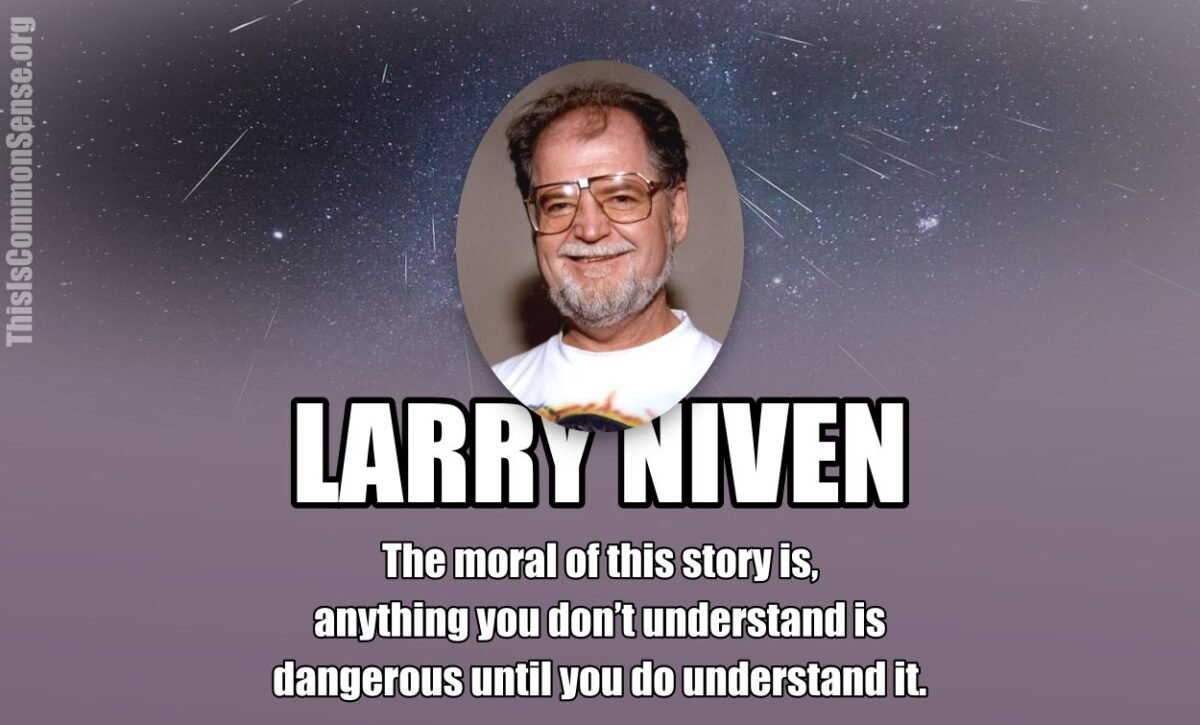
Denis Diderot, as translated by Derek Coleman, in Diderot’s Selected Writings (1966).
Beware of the man who wants to set things in order. Setting things in order always involves acquiring mastery over others — by tying them hand and foot.
On November 26, 1922, Howard Carter and Lord Carnarvon become the first people to enter the tomb of Pharaoh Tutankhamun in over 3,000 years.
King Tut, as he is now popularly known, started life as “Tutankhaten.” The future pharaoh’s name references the 18th Dynasty conception of a deity as represented in the sun disk, the monotheistic worship of which was the point of the Atenism of Akhenaten (Amenhotep IV), who reigned when he was a boy. During the reign of Tut, the religious revolution instigated by Akhenaten was overthrown, and the Amenist cult and its priesthood restored to preëminence. Thus the name change referencing another conception of a sun god, Amun.
Tutankhamun (c. 1341 BC – c. 1323 BC) died before age 20 and his burial appears to have been hastily made in the Valley of the Kings. He was succeeded by Ay, and then a general, Horemheb, who tried to erase from the records the “Amarna Period” pharaohs and any mention of the Atenist monotheistic revolution associated with pharaohs Akhenaten, Smenkhkare, Tutankhamun, and Ay. The tomb designated KV62 had been left intact, its grave good astounding the world, hence the April 19, 1923, issue of Life, reproduced in the image above.
Now, in cases where the connections of the interconnection get disrupted, the electrons (well, “packets”) are routinely diverted to a more stable path. This inherent path redundancy gives the Internet high fault tolerance — an impressive resilience against localized failures.
But not always. Certainly not if we’re talking about a major undersea data cable. Were such a cable accidentally severed — or deliberately severed, by a hostile power practicing for war, say, the People’s Republic of China — transmission of data between affected countries may stop dead until the cable can be fixed.
Declan Ganley wants to cure this particular vulnerability by building an alternative he calls the Outernet, a space-based version of the Internet that bypasses the earthbound network entirely. (Currently, even the satellite-ferried data of Starlink must pass through the terrestrial network.)
To kill Ganley’s vision, the Chinese Communist Party first tried to bribe him with a $7.5 billion offer of partnership; i.e., de facto control of the Outernet by the CCP. The Party’s emissary hinted that if Ganley declined, his company Rivada Networks would be plagued by lawfare.
Ganley declined, and Rivada got hit by the lawfare: “160 legal exchanges” and $36 million in legal fees over three years. Nevertheless, Rivada is on course to launch six hundred satellites in 2026.
Was Declan Ganley ever tempted?
No. “I have a soul to be accountable for,” he explains.
This is Common Sense. I’m Paul Jacob.
Illustration created with Krea and Firefly
See all recent commentary
(simplified and organized)
See recent popular posts

Booker T. Washington, Up from Slavery, Chapter XVI: Europe.
No man who continues to add something to the material, intellectual, and moral well-being of the place in which he lives is long left without proper reward.
November 25, 1975, Suriname gained independence from the Netherlands.
On the same month and date 17 years later, the Federal Assembly of Czechoslovakia voted to split the country into the Czech Republic and Slovakia (officially disjoined as of January 1, 1993). This split has been called “The Velvet Divorce” (following, in style and method, “The Velvet Revolution”). The Czech Republic is now also known as Czechia.