Categories
Thought

Joseph Schumpeter

The opening up of new markets, foreign or domestic, and the organizational development from the craft shop and factory to such concerns as U. S. Steel illustrate the same process of industrial mutation — if I may use that biological term — that incessantly revolutionizes the economic structure from within, incessantly destroying the old one, incessantly creating a new one. This process of Creative Destruction is the essential fact about capitalism.

Joseph A. Schumpeter, Capitalism, Socialism and Democracy (1942), Part II, Chapter VII, pg. 83.
Categories
Today

Kristol

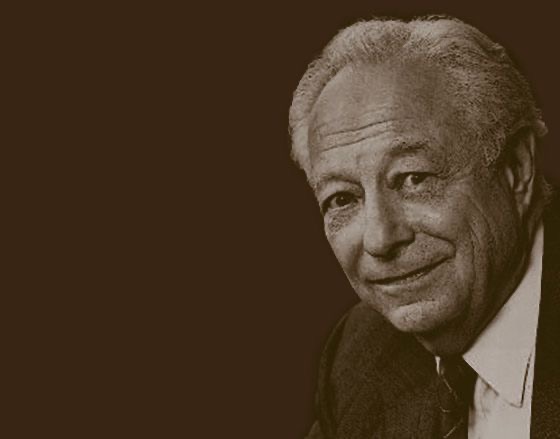
On January 22, 1920, American neoconservative pundit and author Irving Kristol was born.

Categories
audio podcast

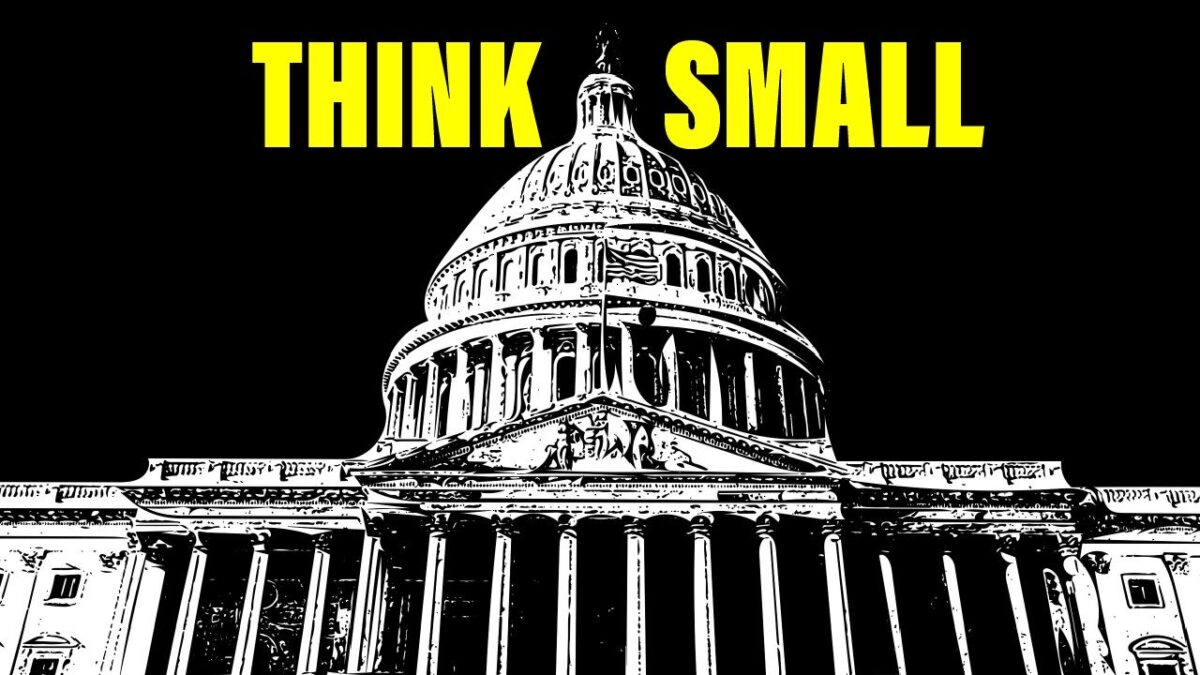
Listen: Think Small

Paul Jacob is joined by Stephen Erickson of Citizens Rising to discuss the most fundamental reform that could revolutionize our broken governments.

Categories
Thought

Principia Discordia

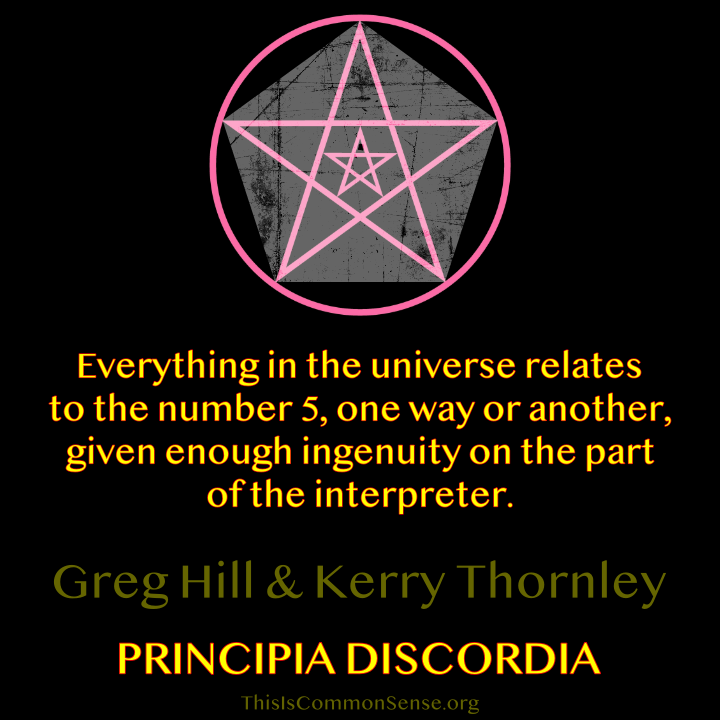
Everything in the universe relates to the number 5, one way or another, given enough ingenuity on the part of the interpreter.

Greg Hill (Malaclypse the Younger) and Kerry Thornley (Omar Khayyam Ravenhurst), Principia Discordia (1965).
Categories
Today

Witness

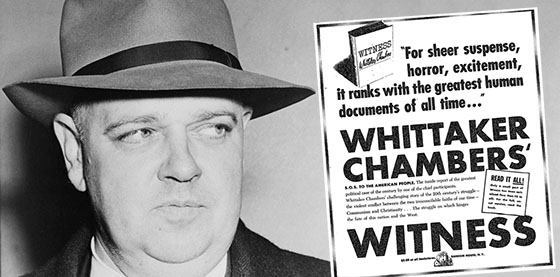
On January 21, 1950, Alger Hiss was convicted of perjury, with Whittaker Chambers being the main witness in Hiss’s prosecution. Chambers confessed to having been a Soviet spy, and accused Hiss as an accomplice, which Hiss denied to his dying day. Chambers gave a fascinating account of all this in his bestselling 1952 memoir, Witness.

Categories
deficits and debt folly national politics & policies

Earmarked Nation

The big secret of the federal government’s budget is that there isn’t one.

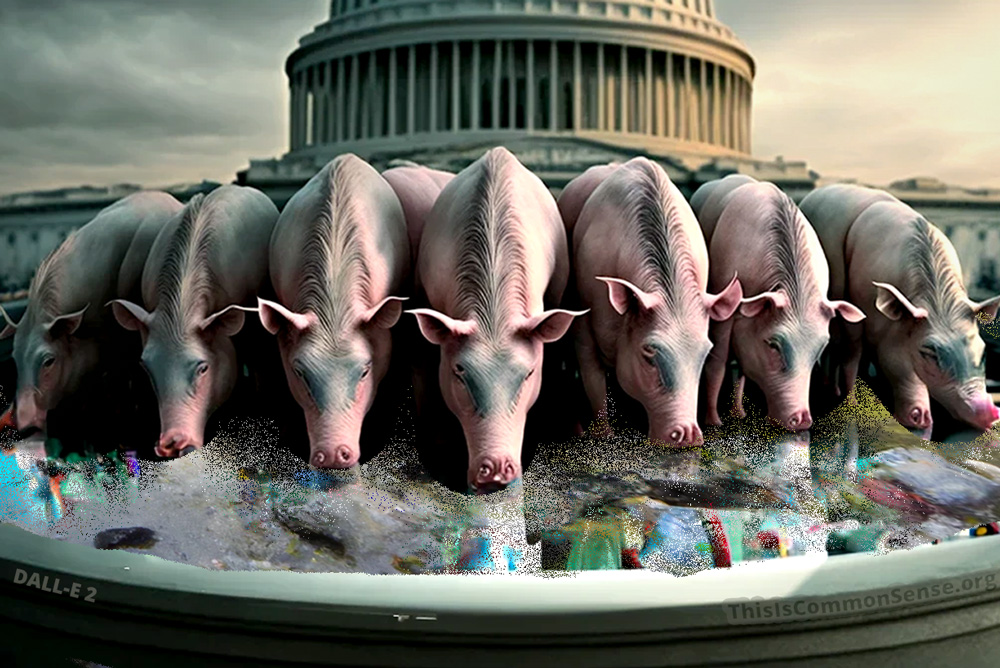
Instead of proposing a rational budget, Congress spends money in huge omnibus bills, which sweep up most of the big items into a bucket which is then poured out into the economy. Since these buckets contain more money than can actually be found in federal coffers, the consequent deficits are covered by debt. 

Which accumulates. 

Looming larger and more ominous every year.

One way these omnibus bills are managed is that almost no one reads them. As former House Speaker Nancy Pelosi said of Obamacare, ya gotta pass it to find out what’s in it.

How to get congressmen to go along with this financial chaos? Bribery. Make the spending binge even bigger with earmarks.

That’s where members of Congress place local boondoggle projects into the omnibus bills and get them through without having to convince anyone but the leadership of the projects’ dubious merits.

I used to talk more about earmarks. But when the Tea Party Republicans entered in 2011, they nixed earmarking “the pork.”

When the Democrats came back into power, the aforementioned Mrs. Pelosi brought them back, which, in the last big omnibus bill, pushed spending up an extra $8 billion or so.

Though Democrats love earmarks as an institutional practice, Republican protests are often merely pro forma. Alabama’s Retiring Republican Senator Richard Shelby, for example, “got $666.4 million down there to Alabama,” explained Tom Temin recently. “Sounds like there’s going to be a lot of Richard Shelby bridges, Richard Shelby schoolhouses, Richard Shelby highways.”

Thankfully, one of the concessions Speaker of the House McCarthy made with the Freedom Caucus (whom the president calls “ultra-MAGA” and “semi-fascist”) was to attack the earmarking practice again — after a failure to decide against earmarks late last year.

We’ll see how that goes. But the real test will be the abandonment of omnibus spending packages.

This is Common Sense. I’m Paul Jacob.


PDF for printing

Illustration created with Midjourney and DALL-E 2

See all recent commentary
(simplified and organized)
See recent popular posts

Categories
Thought

George Stigler

The state — the machinery and power of the state — is a potential resource or threat to every industry in the society. With its power to prohibit or compel, to take or give money, the state can and does selectively help or hurt a vast number of industries.

George Stigler, “The theory of economic regulation,” The Bell Journal of Economics and Management Science (1971).
Categories
Today

ACLU

On January 20, 1920, the American Civil Liberties Union was founded.

Categories
general freedom media and media people national politics & policies

How Congress Works

“Who knew that our time-tested and powerful democracy could not survive a few days of debate and disagreement on our most important questions?” asked journalist Glenn Greenwald weeks ago during the House voting for Speaker.

“To hear establishment mavens all tell the story,” he pointed out, “the failure of Congress to smoothly and swiftly and immediately elect a speaker that’s been preordained — with little debate (as it usually does) — has put the U.S. Government on the verge of collapse.

“Apparently, a healthy democracy requires that everyone march in lockstep, follow orders from on high, and never question anything,” he added sarcastically. 

Greenwald is onto something.

“One of the dirty secrets of how Congress works in the modern era,” he explained, “has been that actual members of Congress, your representatives, have very little power — almost none. They’re more like little, tiny chess pieces moved around for a tiny coterie of party leaders.

“It’s a dynamic that has turned Congress into a profoundly anti-democratic institution,” noted Greenwald. “And it’s one of the main reasons why we get so little reform and so much corruption out of [Congress].

“Many Americans remain convinced that the two parties can’t agree on anything . . . can’t make anything happen, when in fact they’re making a lot happen.” Such as making “tens of trillions of dollars fly out the door.”

Mr. Greenwald blames “a small handful of omnipotent party leaders, from each party, who are willing to play the game, join hands and ensure that totally insulated from election outcomes and public debate, the Washington consensus churns on.”

What to do? Greenwald did not mention term limits. But I just did.

This is Common Sense. I’m Paul Jacob.


PDF for printing

Illustration created with DALL-E2

See all recent commentary
(simplified and organized)
See recent popular posts
Categories
Thought

Montesquieu

The deterioration of a government begins almost always by the decay of its principles.

Charles-Louis de Secondat, Baron de La Brède et de Montesquieu, The Spirit of the Laws, Book VIII, Chapter 1.