Categories
Accountability international affairs media and media people

Collapse of the Coronavirus Consensus

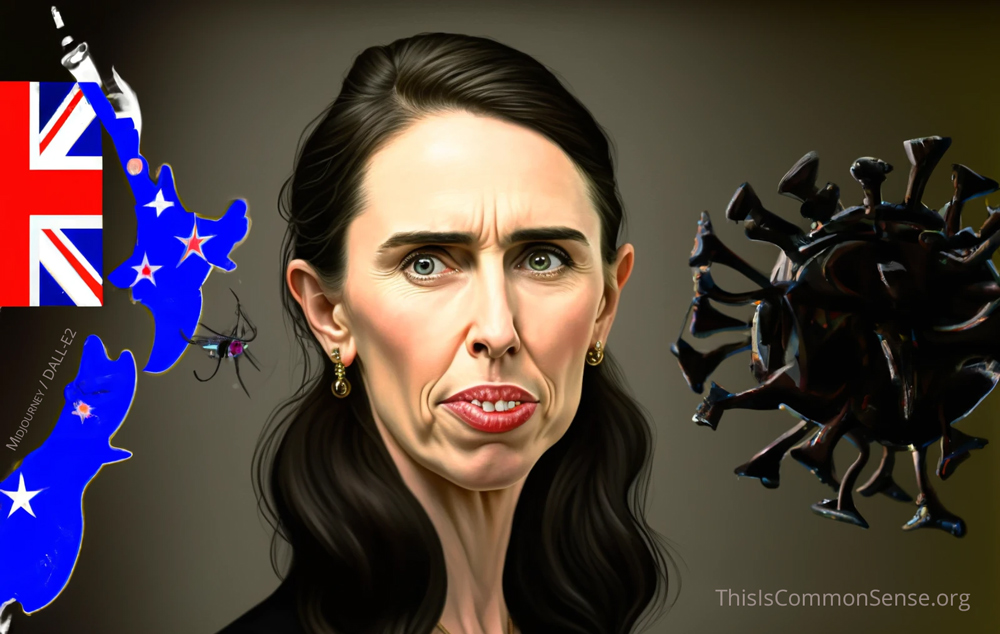
Jacinda Ardern is stepping down as New Zealand’s prime minister. In her teary farewell declaration, she glossed over her main contribution to world history: the policy of “Zero COVID.”

She even gave China a run in that race to medical totalitarianism.

Tellingly, the coverage in the Washington Post went through tens of paragraphs — much of it holding her up as some kind of hero for pushing lockdown and vax mandate policies as if they exemplified her fabled “personal style of consensus-based governance” — before explaining the most likely reason for her resignation: “In recent months, Ardern’s broader popularity had begun to slip” and “her party is widely expected to lose this year’s election.”

My, “consensus” sure evaporated fast.

Top-down commands are of course not consensus, which voters tend to figure out sooner or later. 

The once toothsome, now merely skeletally toothy, politician leaves in ignominy as “the consensus” about COVID shifts worldwide, as people realize they’ve been had: that the lockdowns didn’t save lives (excess deaths now being a big deal around the world) and the vaccines were problematic at best. From the start.

Ardern is not the only politician who rode the wave of the forced pseudo-consensus on coronavirus only to collapse in defeat. New York Governor Cuomo was the first to suffer that disgrace.  There will be many others — not least, perhaps, contenders for the 2024 presidency, Trump and Biden. 

Perhaps more important than the fate of any single politician is what scientists and other “experts” are beginning to admit: that the figures of hospitalizations and deaths that spurred much of the panic constituted demonstrable misinformation. Bad data — which of course we realized here early on.

Unfortunately, the media’s “experts” — like CNN’s and WaPo’s go-to gal Dr. Leana Wen — tend not to leave in infamy, despite their complicity in spreading falsities that allowed politicians to wreak so much damage.

That would require, you see, CNN and WaPo to admit they had spread the dreaded “misinformation and disinformation” which they proclaim only others do.

This is Common Sense. I’m Paul Jacob.


PDF for printing

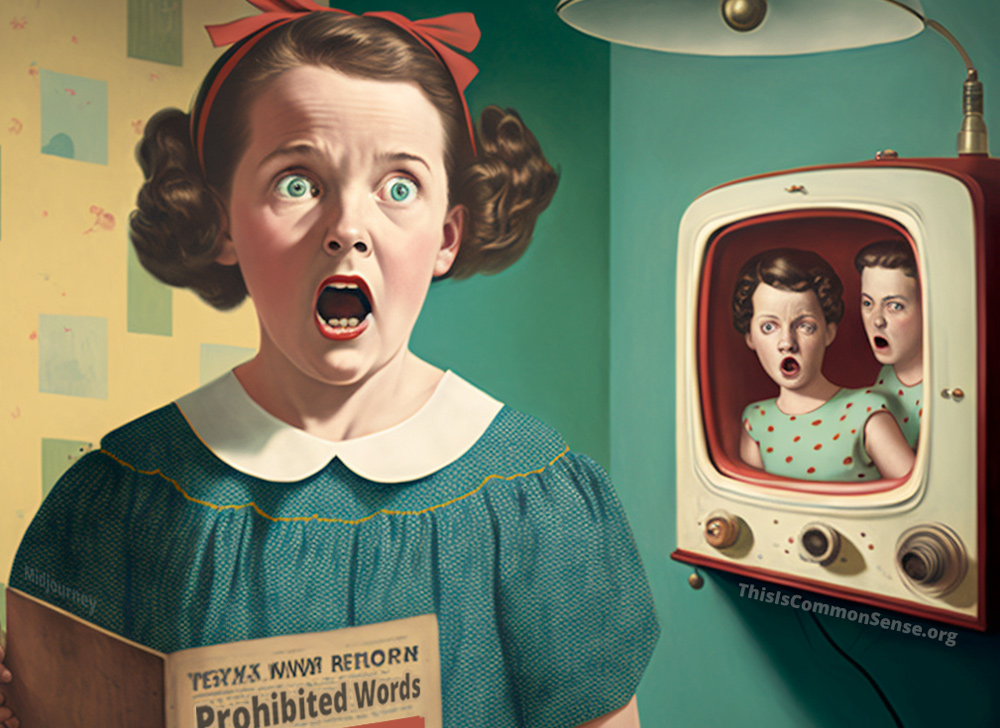
Illustration created with Midjourney and DALL-E2

See all recent commentary
(simplified and organized)
See recent popular posts

Categories
Thought

Diogenes Laërtius

When Thales was asked what was difficult, he said, “To know one’s self.” And what was easy, “To advise another.”

Diogenes Laërtius, The Lives and Opinions of Eminent Philosophers (c. 200 A.D.), Book I: “The Seven Sages.”
Categories
Today

Shays

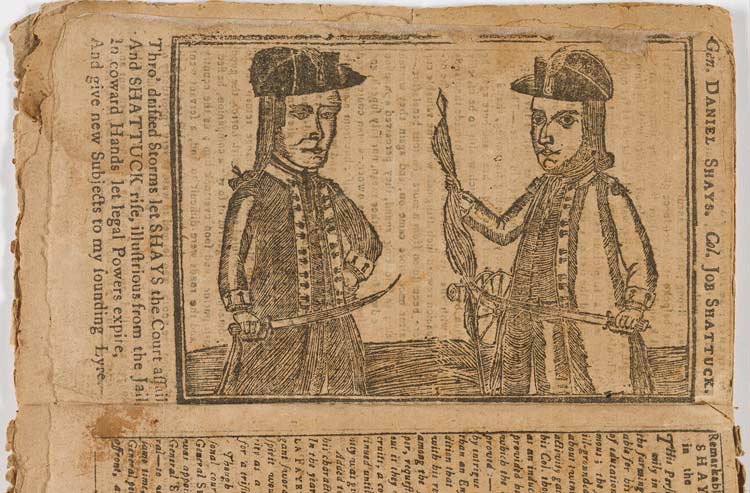
On January 25, 1787, Shays’ Rebellion experienced its largest confrontation, outside the Springfield Armory, with four of the rebels dead, 20 wounded.

The rebellion was a key moment in United States history. Daniel Shays and his followers objected to Massachussetts’s high taxes and rampant cronyism. The revolt, which was completely suppressed, led to the adoption of the U.S. Constitution and drawing George Washington from his retirement.

Categories
crime and punishment First Amendment rights international affairs

Don’t Be China

China is one of the world’s top censors.

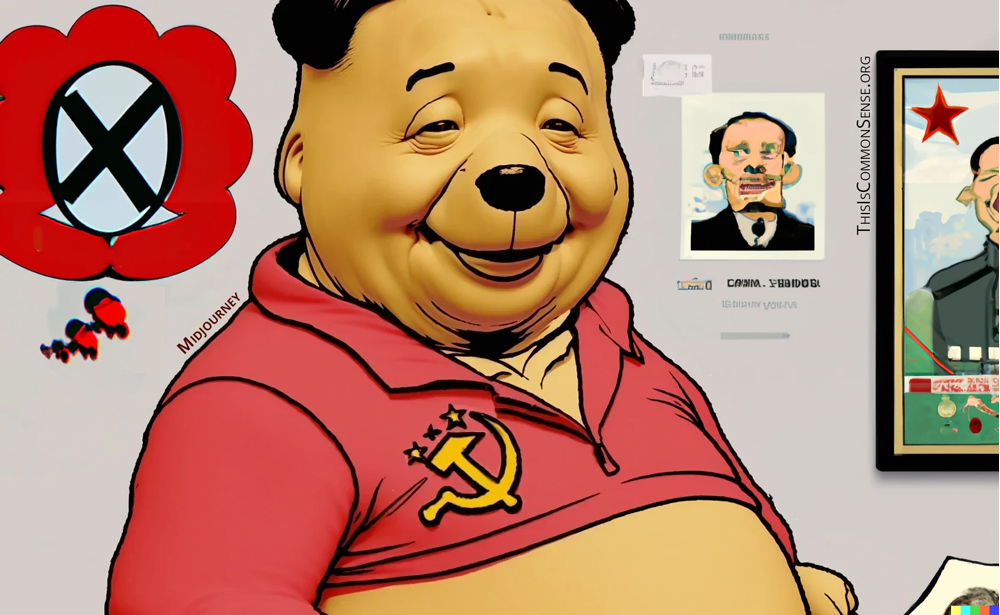
The Chinazi regime bans all kinds of communication, even images of Winnie the Pooh (because of its use as a symbol of chubby Dictator Xi). It has imposed all manner of censorship on the Internet, often with the help of western technology companies. And it has imprisoned many of its critics.

China would like the whole world to be the same way. It would be easier to shut critics up if they had no place to escape to, no place where they could continue publicly rebuking the Chinese government.

And China has a new weapon with which to expand its censorship regime, the globally popular excuse for outlawing disagreement with official doctrines that consists of characterizing all contrary opinion as “misinformation” or “disinformation.”

The Chinese government wants nations to go much further than merely urging social media companies to ban posts or suspend users, the approach that U.S. officials have been following in recent years. At a recent United Nations meeting on cybercrime and in a related document (p. 18), China has urged that disseminating “false information that could result in serious social disorder” be everywhere established as “criminal offenses.”

Reclaim the Net observes that this proposal “is likely to be contested by Western countries, even though many of them have been copying parts of China’s playbook.”

Certainly, the governments of other countries would be in a better position to oppose China’s global censorship agenda if they relinquished their own censorship agendas.

This is Common Sense. I’m Paul Jacob.


PDF for printing

Illustration created with Midjourney and DALL-E2

See all recent commentary
(simplified and organized)
See recent popular posts
Categories
Thought

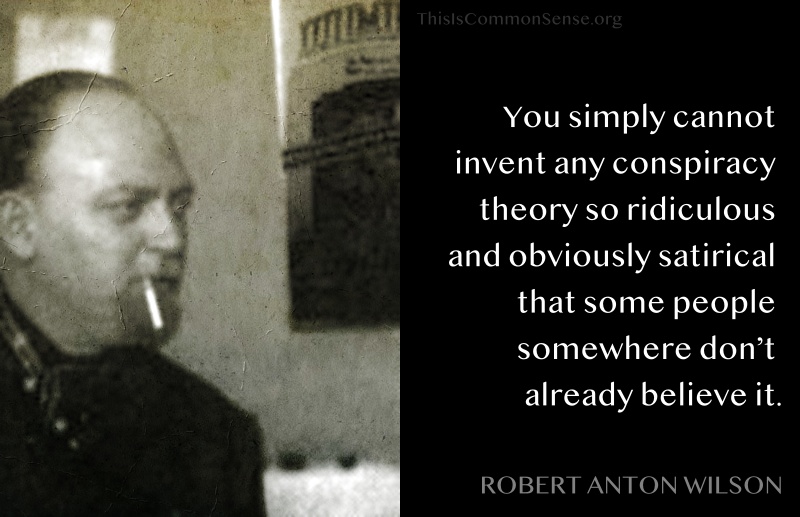
Robert Anton Wilson

You simply cannot invent any conspiracy theory so ridiculous and obviously satirical that some people somewhere don’t already believe it.

Robert Anton Wilson, Everything Is Under Control: Conspiracies, Cults, and Cover-Ups (1998).
Categories
Today

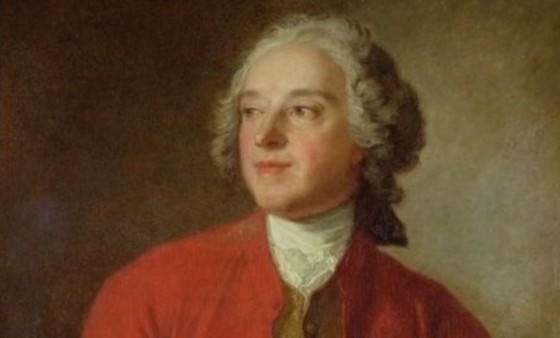
Beaumarchais

On January 24, 1732, French playwright, watchmaker, inventor, musician, diplomat, fugitive, spy, publisher, horticulturalist, arms dealer, satirist, financier, and revolutionary (both French and American) Pierre-Augustin Caron de Beaumarchais was born. He proved instrumental in securing armaments for the America Revolution, but remains best known for his three “Figaro” plays, Le Barbier de Séville, Le Mariage de Figaro and La Mère coupable. The plays remain memorable today chiefly for their operatic settings by Mozart and Rossini.

Beaumarchais died May 18, 1799.

Categories
First Amendment rights general freedom ideological culture

It’s His Party

If you’re a fan of freedom of speech, you’re probably also a fan of the First Amendment of the United States’ Constitution.

Unfortunately, governments keep trying to evade it.

When their censorship can’t itself be evaded, often the only thing to do is go to court. 

Merely showing a copy of the Constitution to the offending officials rarely suffices.

That’s why Kells Hetherington teamed up with the Institute for Free Speech to overturn a Florida statute requiring that “a candidate running for nonpartisan office may not state the candidate’s political party affiliation.” In a 2018 campaign for Escambia County School Board, Kells had been fined for calling himself a “lifelong Republican” as part of his candidate statement on the county’s website. In a later campaign, he kept silent to avoid another fine.

The Institute points out that in violating the First Amendment rights of candidates, Florida’s don’t-say-party law has especially hurt challengers. It has deprived them of a valuable shorthand way of indicating the tenor of their political views, a shorthand that incumbents have many more ways of communicating to voters outside the context of campaign statements.

Kells and IFS have won. Late last year, a district judge in Florida ruled that the First Amendment does indeed protect his right, as a candidate, to mention his political party.

Kells says that “hopefully, this will never happen again to any other candidates.” 

In any case, it’s clear that the Institute for Free Speech will never be out of a job. That First Amendment won’t enforce itself.

This is Common Sense. I’m Paul Jacob.


PDF for printing

Illustration created with Midjourney

See all recent commentary
(simplified and organized)
See recent popular posts
Categories
Thought

Timothy Leary

Think for yourself and question authority.

Timothy Leary’s track on Sound Bites from the Counter Culture (1989).
Categories
Today

Stendhal, Cobden & Chevalier

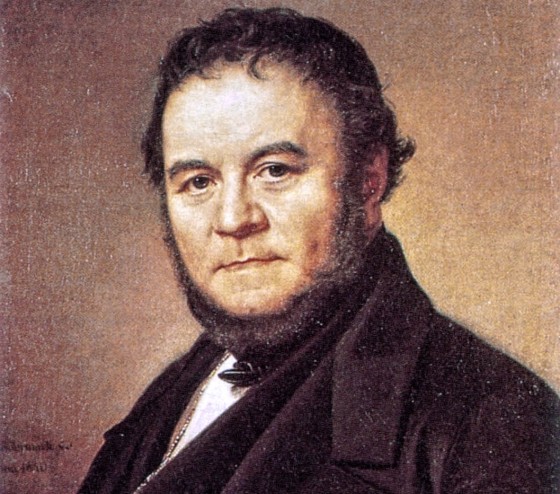
On January 23, 1783, journalist and novelist Marie-Henri Beyle, known by his pen name Stendhal (pictured above), was born. Stendhal was a follower of Destutt de Tracy and an attendant at the count’s salons. His most famous works include the novel The Red and the Black and a treatise on romantic love.

Stendhal died March 22, 1842.

On January 23, 1860, the Cobden–Chevalier Treaty was signed between France and Great Britain. The treaty was named after the two main proponents of the agreement, Richard Cobden (in England) and economist Michel Chevalier (in France). The treaty had been suggested the year earlier, in British Parliament, by Cobden’s colleague John Bright, who saw the measure as a peace measure, and an alternate to a military build-up.

Categories
by Paul Jacob video

Watch: Think Small!

A very special episode of This Week in Common Sense: