Categories
education and schooling ideological culture

Urinals De- and Re-commissioned

Remember when opponents of the Equal Rights Amendment said that we would wind up with unisex bathrooms should the constitutional amendment be ratified? And ERA advocates scoffed?

Well, here we are: no ERA, but unisex bathrooms . . . in public schools.

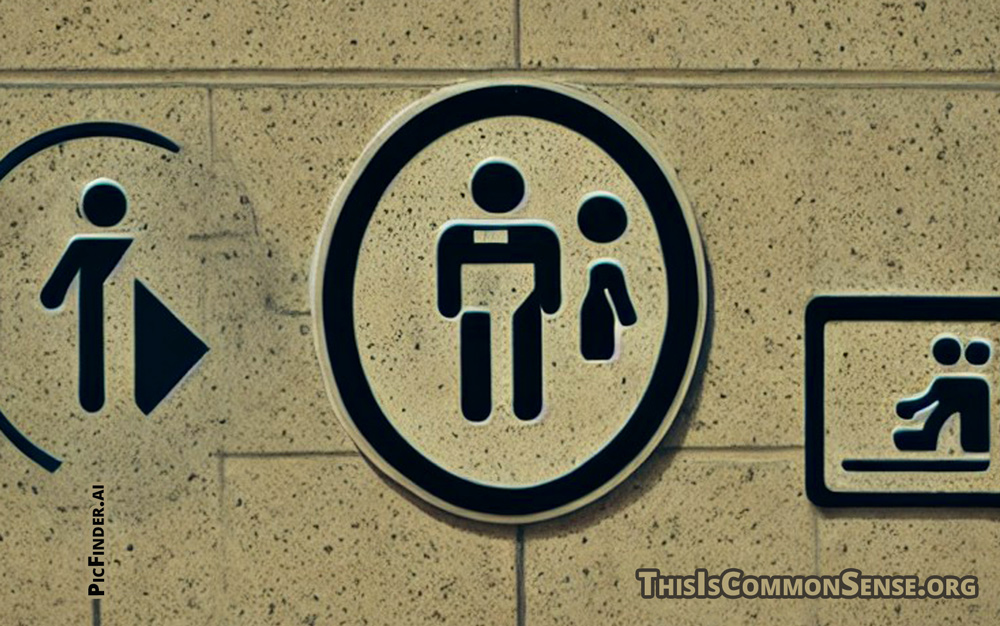
Or, more precisely, two flavors of unisex bathrooms: one room for girls along with those boys who identify as girls, and another for boys and those girls who identify as boys. 

In early February, New Hampshire’s Milford School District school board voted to cover over boys’ room urinals with garbage bags while members investigated the cost of turning all the restrooms into all-stall accommodations.

Why? A few parents of trans students had complained that urinals made their trans boys uncomfortable — their girls “transitioning” to become boys didn’t . . . well, I’ll let you imagine some of this.

Of course, urinals in boys’ rooms allow for faster turnover of users. Getting rid of them makes boys spend more time in a place they, as often as not, would like to minimize.

But it affects actual girls negatively, too.

“As a female,” one girl told a local TV station, “I don’t think it’s safe to have males in our bathroom.”

The board had also ruled that the number of students in each restroom should be limited to the number of stalls — not an efficient way to serve students’ needs, completely ignoring time spent at the sink in front of a mirror. More bizarrely yet, the board had specified that clothing changes for physical ed. be confined to locker room toilet stalls.

Last Friday, students held a walkout. And the school board backpedaled, unbagging the urinals.

Good. But I don’t think anyone can mistake all this “business” for common sense.

This is Common Sense. I’m Paul Jacob.


PDF for printing

Illustration created with PicFinder.ai

See all recent commentary
(simplified and organized)
See recent popular posts

Categories
Thought

J. H. Levy

It is useless to consume our energies in mere verbal disputes. I must, however, caution students that definition is not a matter of indifference. Nine-tenths of the embarrassments which surround most philosophical questions arise from the difficulty of getting a firm hold of them. When this is done, the solution is comparatively easy. Until it is done no solution can be rationally hoped for.

Joseph Hiam Levy, The Outcome of Individualism (1890; Third Edition, 1892), p. 11.
Categories
Today

President Jefferson

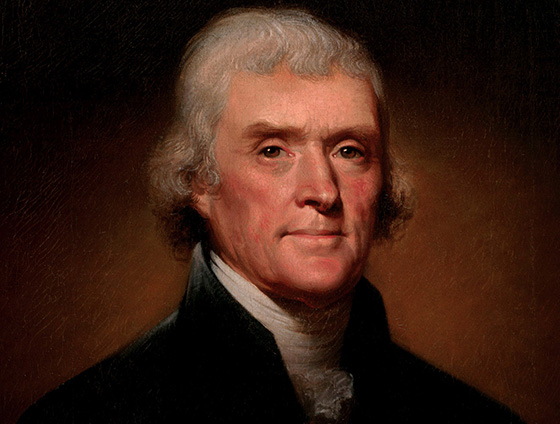
On Feb. 17, 1801, Thomas Jefferson was elected by the U.S. House of Representatives to be the third president of the United States, after an arduous election process that ended only 15 days prior to inauguration.

The fracas included a tie vote in the Electoral College followed by 35 indecisive ballots in the House. At that time, votes were cast for president, with the second place candidate becoming Vice-President. But in the Electoral College, Jefferson tied with his vice-presidential running mate, Aaron Burr. When that sent the balloting to the House of Representatives, the Federalists opposing Jefferson initially threw their support to Burr.


On Feb. 17, 1933, a constitutional amendment to repeal the Eighteenth Amendment to the U.S. Constitution, which had established the national prohibition of alcohol, was passed by the U.S. Senate. Known as the Blaine Act, the prime author was Wisconsin Senator John J. Blaine. By the end of 1933, the repeal of prohibition was adopted as the 21st Amendment to the Constitution.

Categories
crime and punishment First Amendment rights Internet controversy

Court Invokes First Amendment

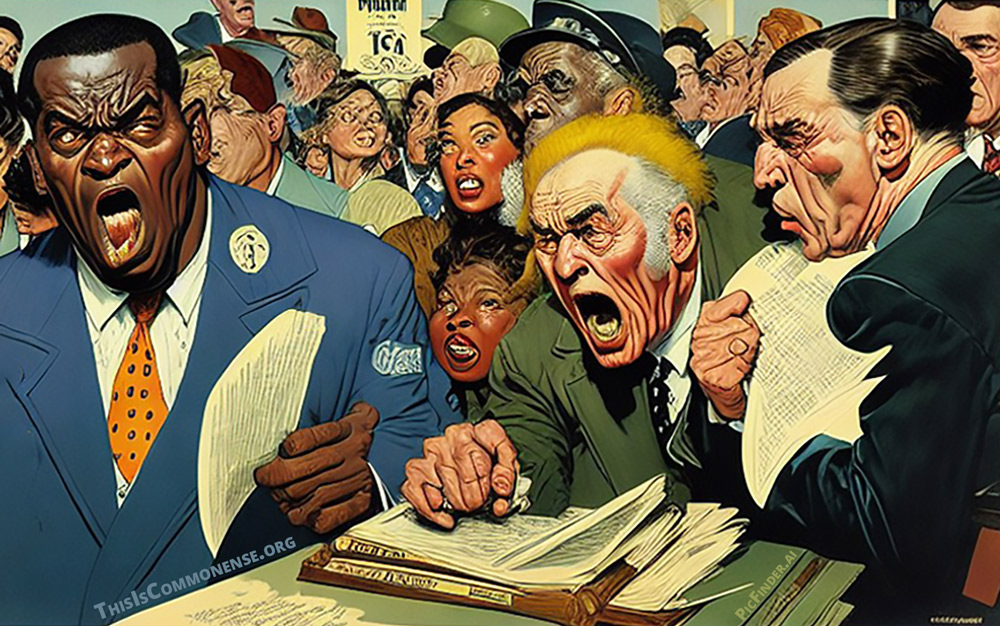
This is where we’re at. We must be in suspense about whether a judge will object when governments act to repress speech in the name of combatting “misinformation,” “disinformation,” or “hate speech.”

Fortunately, Judge Andrew Carter sees the obvious and has blocked a new New York State law to regulate “hateful” online speech. The law was challenged by anti-censorship video platform Rumble and the Foundation for Individual Rights and Expression.

Carter says: “The First Amendment protects from state regulation speech that may be deemed ‘hateful,’ and generally disfavors regulation of speech based on its content unless it is narrowly tailored to serve a compelling governmental interest.”

The alleged “compelling governmental interest” exception is vague and not really consistent with the First Amendment. But the judge otherwise makes sense.

Laws like New York’s constitute a cart blanche for government to repress speech — any speech.

Any controversial words can be labeled hateful, misinformative, disinformative. People have been censored for asseverating that there are only two sexes, that the COVID-19 injections aren’t really vaccines, that the U.S. shouldn’t send more than $100 bazillion to Ukraine, etc.

It’s hatefully misinformative disinformation to proclaim that debates about such questions are impermissible. But people in any case have a right to be wrong; others, the right to refute them.

When the truth is on your side, you have an advantage. But you can’t beam your understanding into the minds of others.

You must be free to speak.

This is Common Sense. I’m Paul Jacob.


PDF for printing

Illustration created with PicFinder.ai

See all recent commentary
(simplified and organized)
See recent popular posts
Categories
Thought

William Lloyd Garrison

The world is too much governed. The race is not to the swift nor the battle to the strong, but to the crafty; and statutes adroitly devised hedge in monopolies as if they were divinities. The resultant misery and inequality, that curse mankind through loss of freedom, are adduced by the State Socialist as a reason for more government. The patient must be cured by a hair of the dog that bit him

William Lloyd Garrison, quoted as an epigraph to J. H. Levy, The Outcome of Individualism (1890; Third Edition, 1892).
Categories
Today

Silver Coinage

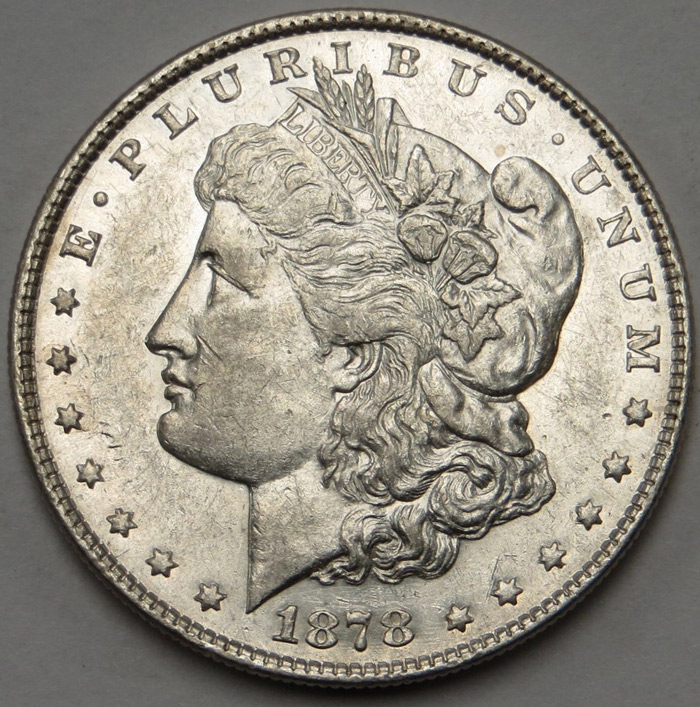
On February 16, 1878, the Bland-Allison Act, which provided for a return to the minting of silver coins, became U.S. law. Today, the value of American money is secured only by public faith in the stability of the government; during the 19th Century, money was backed by actual deposits of silver and gold.

That is, money was silver and gold. But that did not mean that all was right with the monetary system.

Five years earlier, when Congress had stopped buying silver and minting silver coins — following the lead of European nations — a financial panic ensued. Reasons for the suspension lay in the fact that the exchange value of silver and gold had retained an old, out-moded fixed ratio that favored silver producers. Had the United States Treasury let the two standards freely float, making a distinction between silver dollars and gold dollars, none of the political strife over bimetallism would have occurred.

As it was, with silver over-valued, the silver coins increasingly “drove” gold out of circulation, as well as out of the Treasury and into private hands.

In 1893, in the midst of another financial panic, this time as a result of depletion of gold reserves in the U.S. Treasury, President Grover Cleveland called a special session of Congress to repeal the bimetallic standard. He was successful, though agrarian inflationists took over the Democratic Party and offered up, for the next election, William Jennings “Cross of Gold” Bryan as a counter to Cleveland’s old-fashioned fiscal conservative/social liberalism.

Categories
crime and punishment First Amendment rights general freedom

The Last Shall Be First

The Iowa house has acted to make it easier for persons in the state to speak without getting sued into oblivion.

By a 94-1 vote, representatives passed House File 177, an anti-SLAPP bill that provides for prompt dismissal of lawsuits intended to intimidate people into silence rather than to redress wrongdoing. (A SLAPP is a “strategic lawsuit against public participation.”)

The bill seeks to protect “the exercise of the right of freedom of speech and of the press, the right to assemble and petition, and the right of association.”

One lawmaker behind the bill, Republican floor manager Steven Holt, said that he made it a priority after the Carroll Times Herald was litigated into penury for reporting on the case of a local married police officer, Jacob Smith, who had pursued inappropriate relationships with teenage girls.

Just before the paper published its findings, Smith resigned from his job. Then he promptly sued the Herald for libel. The reporting would make things tough for him, he attested.

The suit failed, but not before a year in court that cost the small-town newspaper about $140,000 in legal fees and related expenses. (The paper has launched a GoFundMe campaign to recover this amount.)

David Keating, president of Institute for Free Speech, says that if the anti-SLAPP bill is enacted, “Iowa would leap from last to best in the nation at preventing frivolous lawsuits from threatening free speech.”

Let’s hope that all other states then play catch-up.

This is Common Sense. I’m Paul Jacob.

PDF for printing

Illustration created with PicFinder.ai

See all recent commentary
(simplified and organized)
See recent popular posts
Categories
Thought

Grover Cleveland

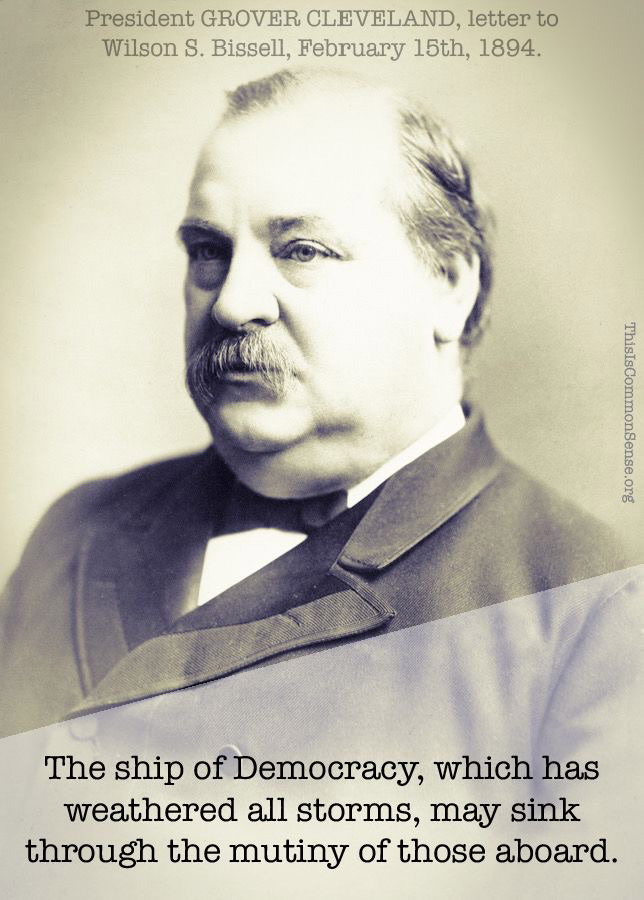
The ship of Democracy, which has weathered all storms, may sink through the mutiny of those aboard.

President Stephen Grover Cleveland’s letter to his law partner, Wilson S. Bissell, February 15th, 1894.
Categories
Today

Remember the Maine

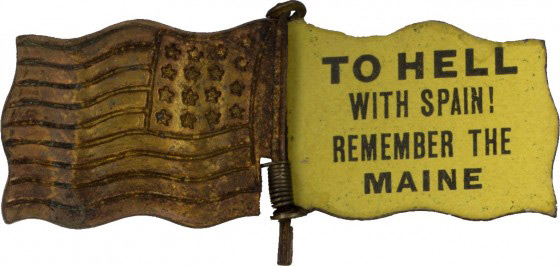
On Feb. 15, 1898, the USS Maine, a battleship, exploded in the Cuba’s Havana harbor, killing 260 American sailors. An official U.S. Naval Court of Inquiry ruled in March 1898 that the ship was blown up by a mine, without directly blaming Spain. Nonetheless, Congress declared war and, within three months, the U.S. had decisively defeated Spanish forces. On December 12, 1898, the Treaty of Paris was signed between the U.S. and Spain, granting the United States its first overseas empire with the ceding of such former Spanish possessions as Puerto Rico, Guam, and the Philippines.

In 1976, a team of American naval investigators concluded that the Maine explosion was likely caused by a fire that ignited its ammunition stocks, not by a Spanish mine or act of sabotage.

Categories
defense & war government transparency international affairs

Why the Balloon Story Ballooned

“Ruling out aliens? Senior U.S. general says not ruling out anything yet,” ran the Reuters headline. This was over the weekend, “after a series of shoot-downs of unidentified objects,” Reuters explained, clarifying that for the real information, General Glen VanHerck would defer “to U.S. intelligence experts.”

You know, the people who start wars under false pretenses and hounded a sitting president with a fake dossier about bed-wetting prostitutes.

While General VanHerck simultaneously up-played and down-played extra-terrestrials, an unnamed source at the Pentagon denied any evidence for the crafts being anything but terrestrial. Sure. But remember the context: last week’s 200-foot-tall balloon episode.

“To be clear — The Chinese Balloon was an authentic UFO until it was identified,” tweeted Neil deGrasse Tyson. “It then became an IFO.”

I riffed off that truism when I covered the balloon story, too. But does that explain how quickly a balloon panic became a UFO panic?

Ever since World War II’s foo fighters we’ve had hints that something was not completely “normal” in our skies. But the military has never before boasted of shooting down UFOs — though ufology lore is full of stories about just such events.

VanHerck offers a possible explanation: after the balloon brouhaha, the radar tracking systems were reset to include things less jet-like and rocket-like than normal. So other things in the skies that seem anomalous — foo-fighter-like? — all of a sudden become serious concerns.

This was one of the reasons given for the founding of modern Pentagon tracking of “UAP”: there may be more than one type of strange “phenomena” flying/floating/darting-about in our skies, and the military should be able to distinguish one from another, especially from novel drone and other surveillance technology.

Especially in time of war.

This is Common Sense. I’m Paul Jacob.


PDF for printing

Illustration created with Midjourney

See all recent commentary
(simplified and organized)
See recent popular posts