A grateful mind
John Milton, Paradise Lost (1667; 1674), Book IV, line 55.
By owing owes not, but still pays, at once
Indebted and discharg’d.
Categories
John Milton
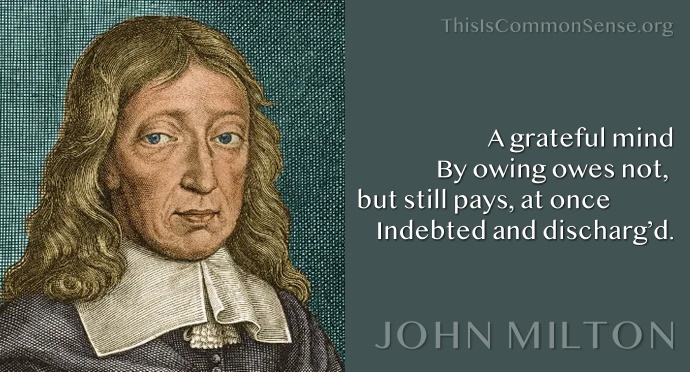
A grateful mind
John Milton, Paradise Lost (1667; 1674), Book IV, line 55.
By owing owes not, but still pays, at once
Indebted and discharg’d.
On November 23, 1644, British poet John Milton published Areopagitica, a pamphlet decrying censorship.
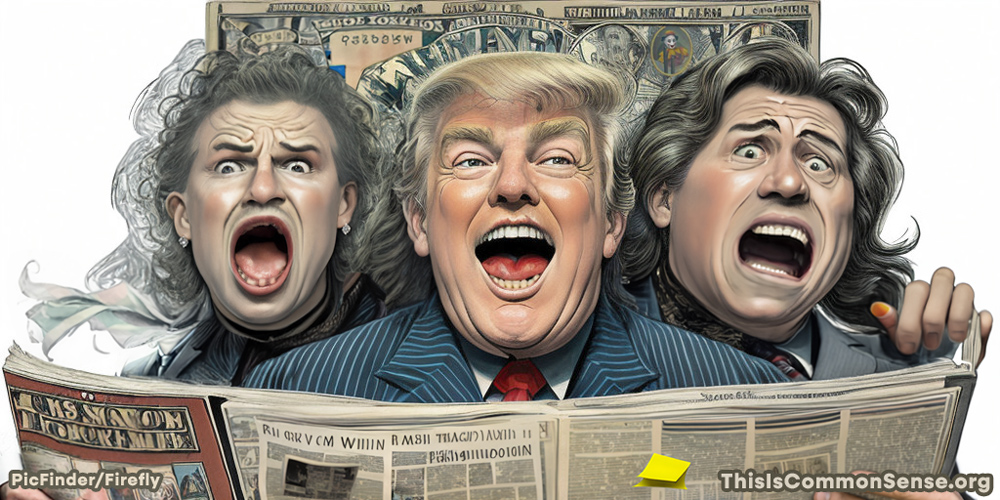
Millett, along with Judges Cornelia T.L. Pillard and Bradley Garcia, serves on the three-judge panel of the federal Court of Appeals for the D.C. Circuit. This week they devoted two hours to the appeal of a federal district judge’s gag order placed on former president Donald Trump.
Under Millett’s questioning, federal prosecutor Cecil VanDevender agreed that under the order Mr. Trump could say that someone testifying against him was “an untruth speaker” but not call that person a “liar.”
“He has to speak ‘Miss Manners’ while everyone else is throwing targets at him?” inquired Judge Millett. “It would be really hard in a debate, when everyone else is going at you full bore.”
She noted that the First Amendment importantly protects inflammatory speech, adding with some exasperation: “Your position doesn’t seem to give much balance at all to the First Amendment’s vigorous protection of political speech.”
Trump’s attorney argued that the current leading Republican presidential candidate has taken advantage of the order’s stay, pending this appeal, by “posting about this case almost incessantly since the day it was filed and they haven’t come forward with a single threat that’s even arguably inspired by any evidence in his social media posts.”
The three-judge panel, at least as The Post reads the hearing’s tea leaves, “indicated it may narrow the order prohibiting the former president from attacking individual prosecutors . . . or from calling potential witnesses against him ‘liars’ in the heat of next year’s campaign.”
It should. Unless the speech is specifically criminal it should be freely allowed. Orange Man should have the same rights we all rightly possess.
This is Common Sense. I’m Paul Jacob.
Illustration created with PicFinder
See all recent commentary
(simplified and organized)
See recent popular posts
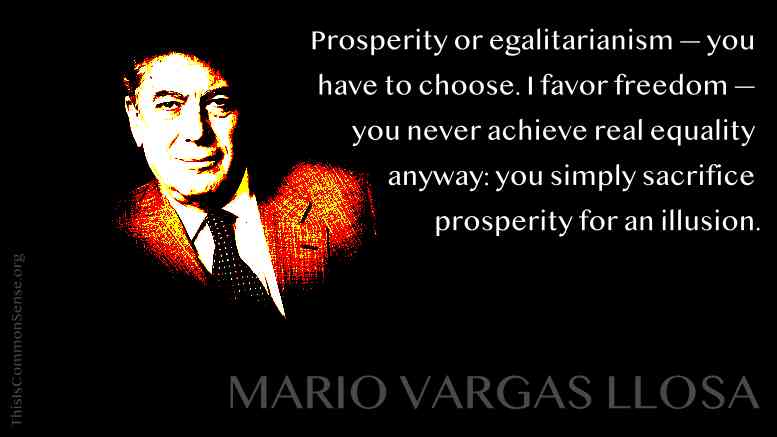
Prosperity or egalitarianism — you have to choose. I favor freedom — you never achieve real equality anyway: you simply sacrifice prosperity for an illusion.
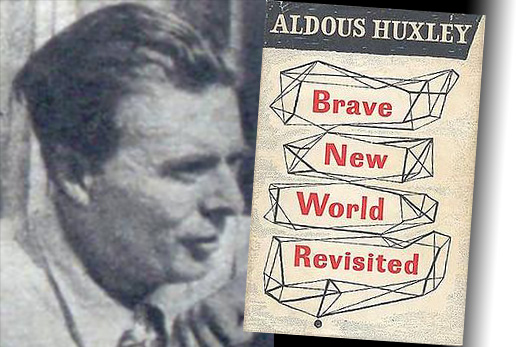
November 22 marks the death dates of a number of eminent writers, including that of English-American novelist and essayist Aldous Huxley and Irish-English novelist, theologian and medieval scholar C.S. Lewis, both of whom died in 1963, the same day as the assassination of American President John F. Kennedy. British novelist Anthony Burgess died exactly 30 years later.
The date also marks the birth of the great British novelist George Eliot (Mary Ann Evans), in 1819.
Recommended reading from these authors include:
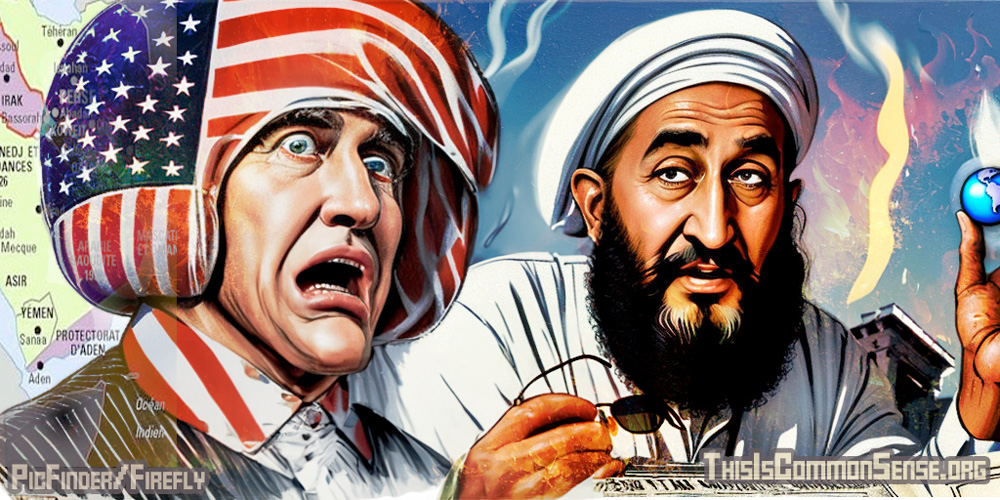
But it has been taken down by The Guardian. This is what it says on the page where it formerly resided:
Removed: document
This page previously displayed a document containing, in translation, the full text of Osama bin Laden’s “letter to the American people”, which was reported on in the Observer on Sunday 24 November 2002. The document, which was published here on the same day, was removed on 15 November 2023.
The transcript published on our website had been widely shared on social media without the full context. Therefore we decided to take it down and direct readers instead to the news article that originally contextualised it.
Just like the news media, claiming their coverage provides full context, but deprecating the primary source document itself!
Orwellian.
In an article on Thursday, “TikTok ‘aggressively’ taking down videos promoting Bin Laden ‘letter to America,’” The Guardian explains some of the background of the current fracas. Youngsters on TikTok and elsewhere had recently discovered Osama bin Laden’s letter — which Representative Ron Paul has often famously referenced — and were expressing their surprise, interest, and judgments on social media. Many of them were awful takes, of course, as is common among the young . . . and others.
But remember the keywords: free speech.
Under pressure from politicians, bureaucrats, Jewish activist groups, and conservative influencers, the free speech of users of Tik Tok and X (to name just two) were abridged, disallowed from expressing their opinions of — or even quoting — the late terrorist.
TikTok explained itself on X: “Content promoting this letter clearly violates our rules on supporting any form of terrorism. We are proactively and aggressively removing this content and investigating how it got onto our platform.”
Discussing the letter is not, of course, “supporting” “terrorism.”
Yet Osama’s letter has been scrubbed from most websites that had published it. It can nevertheless be found, by paying subscribers, at scribd.com — at least it could as of Sunday.
This is Common Sense. I’m Paul Jacob.
Illustration created with PicFinder and Firefly
See all recent commentary
(simplified and organized)
See recent popular posts
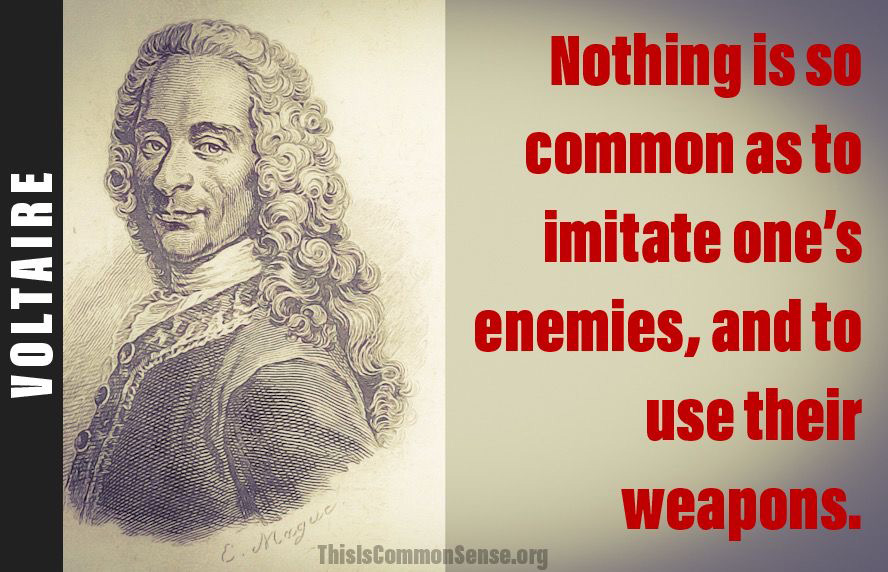
Nothing is so common as to imitate one’s enemies, and to use their weapons.
Voltaire, “Oracles” (1770), Questions sur l’Encyclopédie (1770–1774).
On November 21, 1620, Plymouth Colony settlers signed the Mayflower Compact.
On this day in 1922, Rebecca Latimer Felton of Georgia took the oath of office, becoming the first female United States Senator.
November 21st birthdays include:
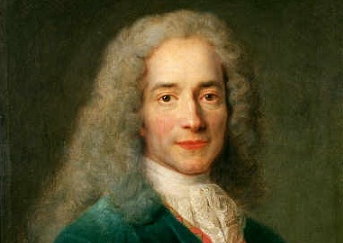
1694 – Voltaire, French philosopher (d. 1778) — portrait above.
1729 – Josiah Bartlett, American signer of the Declaration of Independence (d. 1795).
1870 – Alexander Berkman, anarchist (d. 1936), who shot but did not kill industrialist Henry Clay Frick.
The two pieces deserve careful study of how American media primes its center-left readership to fall in line with its ideological poses. Sad that I cannot provide that careful study, here; but happy for the occasion to probe the issues laid bare in these two less-than-stellar election coverages.
A decent profile of Argentina’s new president would inquire more honestly and deeply into just how badly Peronism and Kirchnerism have wounded the inflation-ridden South American country, and with less prejudice explore the actual beliefs of president-elect Javier Milei. Then, and only then, would they figure out why Milei’s been so successful.*
Against all previously determined odds.
For whatever else one may say about Milei, he’s not only the most thoroughly and vehemently anti-leftist politician in the world, but also the most thoroughly successful libertarian one.
Which is why the Times tries to make him sound “right-wing.” The factuality of the characterization is merely Milei’s fervent anti-socialism. But the comedy of the characterization is that, in previous times, North American leftists have characterized Peronism, which Milei opposed, as right-wing. So how does the “far right” win for defeating “far-right fascism,” as we used to think of Argentine mainstream politics?
This is a dance of misdirection, of course.
Truth is, Milei’s the ultimate outsider, making Trump seem insider-ish by comparison.
Our miseducating media doesn’t want you to consider that!
This is Common Sense. I’m Paul Jacob.
* Javier Milei’s victory margin was “the widest since Argentina’s return to democracy in 1983.”
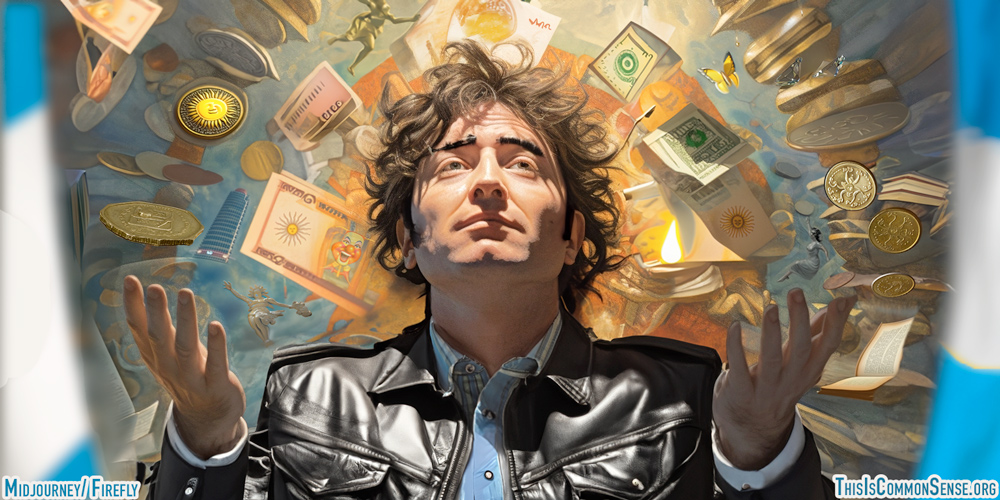
Illustration created with Midjourney and Firefly
See all recent commentary
(simplified and organized)
See recent popular posts
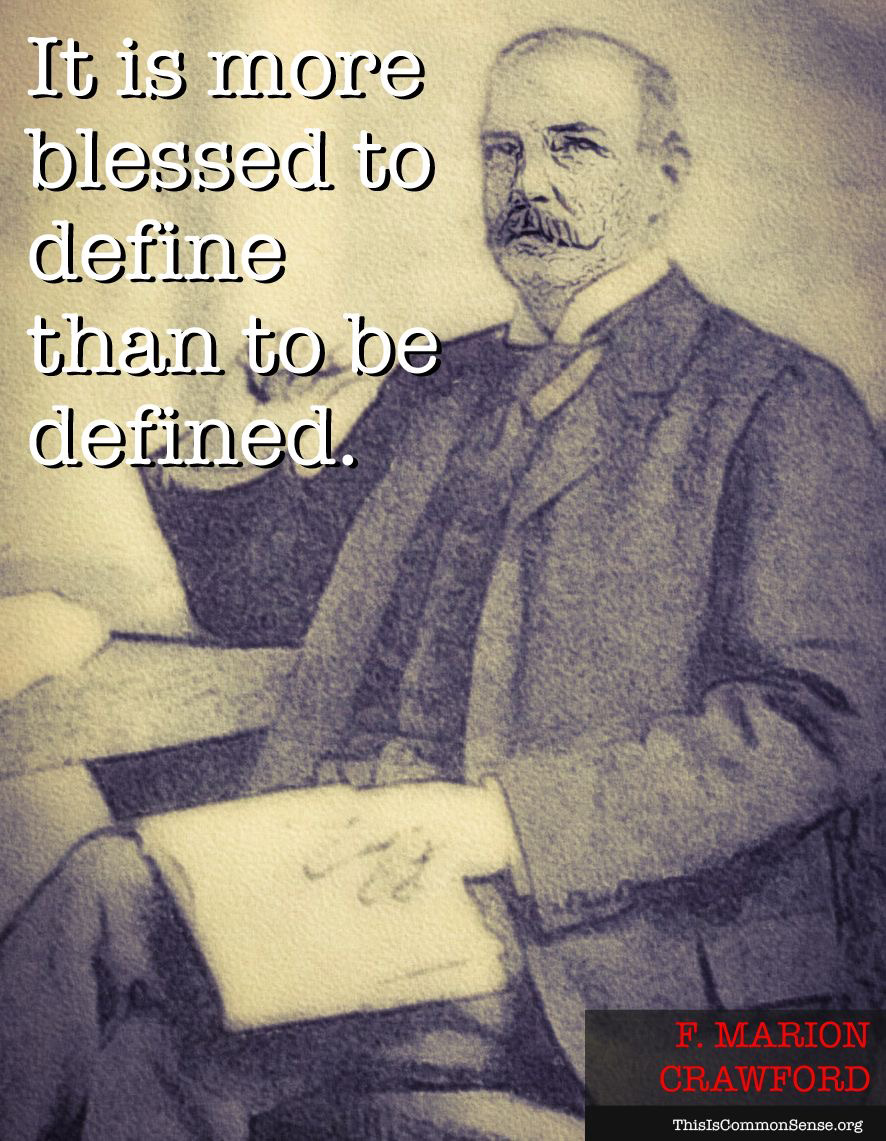
It is more blessed to define than to be defined.
F. Marion Crawford, Don Orsini (1892). See also Thomas Szasz on defining others.