Nothing is so permanent, wrote Milton Friedman, as a temporary government program.
Six years ago, Americans learned that not only vaguely temporary measures go on and on, even precisely marked-out periods with clear starts and stops stated at the outset can be dragged on well past their expiration date.
Last week, Robby Soave “celebrated” the most astounding example of this in an article for Reason titled “This Was the Moment the COVID-19 Experts Betrayed Us,” about how the “two weeks to slow the spread” rationale for the lockdowns was shown to be a lie.
I wonder how many people were like me, at the time, noticing that the lengthening of the lockdown period was almost never justified by hospital numbers — a key point in the initial rationale, since we feared overwhelming the hospital system. The opposite happened almost everywhere, with hospitals becoming ghost towns in most locations, stressing the system in the opposite manner. By extending the duration of the near-universal quarantine, government officials and employees and their hangers-on showed how little interest they had in taking our health seriously.
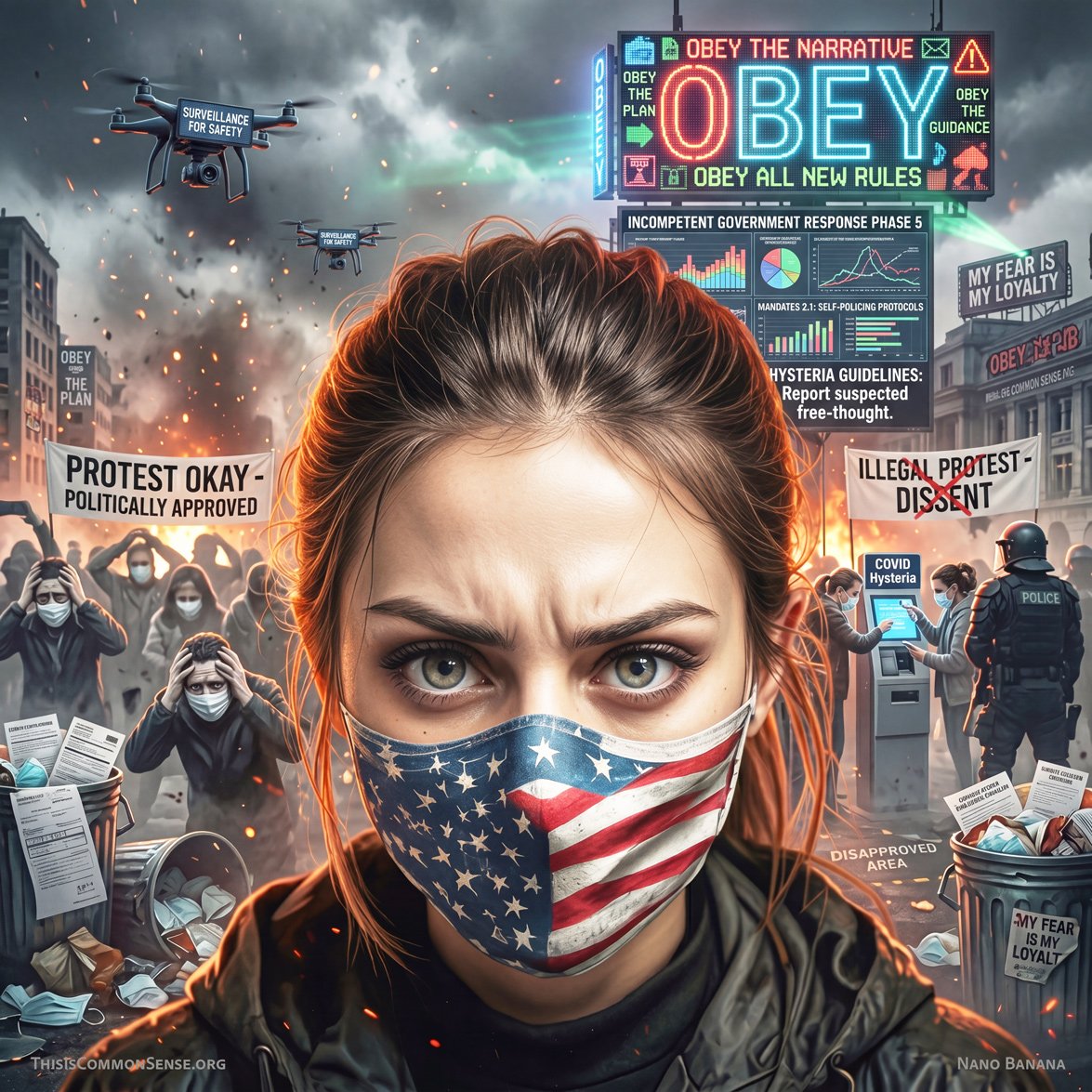
What Soave focuses on is one tweet by National Public Radio, about how all crowds were bad for public health except those marching in protest of the death of George Floyd, a criminal with a long, violent rap sheet. NPR’s post began “by condemning the protests against lockdowns” and then drew “an explicit contrast with the racial justice protests, which are explicitly condoned.”
Soave calls this “junk science.”
But it wasn’t any kind of science at all. It was pure ideological perversity.
Knowledge of that moment must be kept alive. Our expert class betrayed us by prioritizing their riot apologetics over our health.
This is Common Sense. I’m Paul Jacob.
NOTES:
See Milton Friedman, Tyranny of the Status Quo (1980) p. 115.
For a “Timeline of the COVID-19 pandemic in the United States (2020)” see Grokipedia.
The encouragement of the riots was, many hazard, an opportunistic psy-op to unseat President Trump in the 2020 election. It seems to have succeeded.
Illustration created with Nano Banana
See all recent commentary
(simplified and organized)
See recent popular posts