On June 14, 1777, U.S. Congress adopted the Stars and Stripes as the United States Flag.
Categories
Stars & Stripes
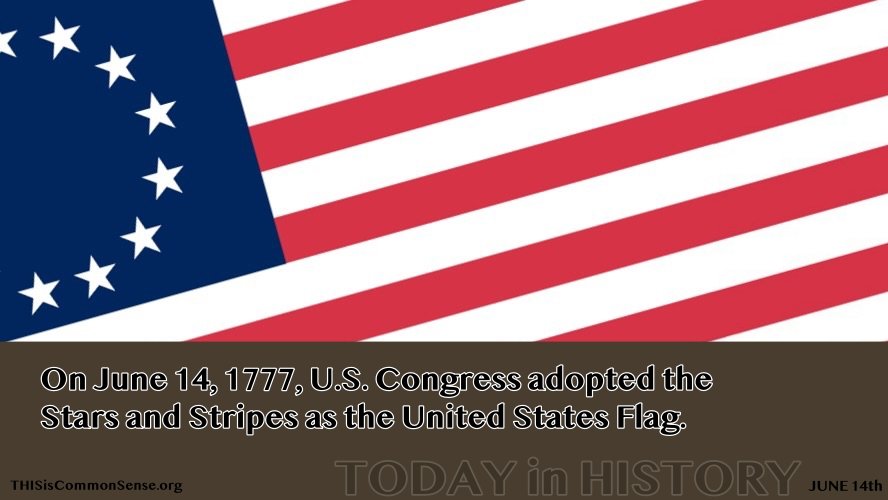
On June 14, 1777, U.S. Congress adopted the Stars and Stripes as the United States Flag.
A third tranche of disclosed UFO material was unleashed upon the world this week. But some of the material was of a more mundane interest. Government As Usual, you might say.
The year was 1949, and the U.S. was in the process of trying to rebuild Europe after the second world war. But things were not going well in Greece, as Robert S. Allen (MBS) explained to his superiors:
Secret Report: From time to time this program has related some shocking facts about the Greek Aid Program. This is costing the American taxpayer hundreds of millions of dollars. Disclosures about the incompetence, graft and obstructionism of the reactionary Greek government, and the incompetence, bungling and waste of U.S. officials in Greece — these disclosures have not set well with certain high authorities in the State Department and the Pentagon Building. There has been a lot of muttering. Tonight, this program can report a complete official confirmation of these shocking disclosures. This official confirmation is contained in the report in the hands of the Joint Congressional Committee on the Marshall Plan.
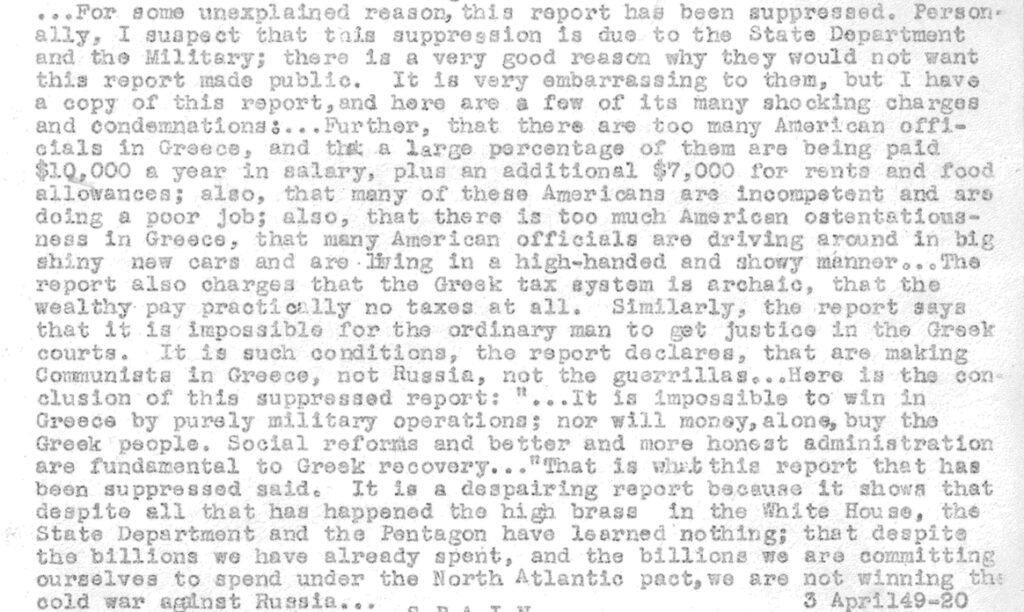
The latest war dot gov slash UFO tranche contains a lot of perfect material for anyone interested in history. And not just about the bizarre unidentified flying object problem. This particular report-within-a-file helps explain why those inhabiting the corridors of power keep secrets: it makes government look bad to tell the truth.
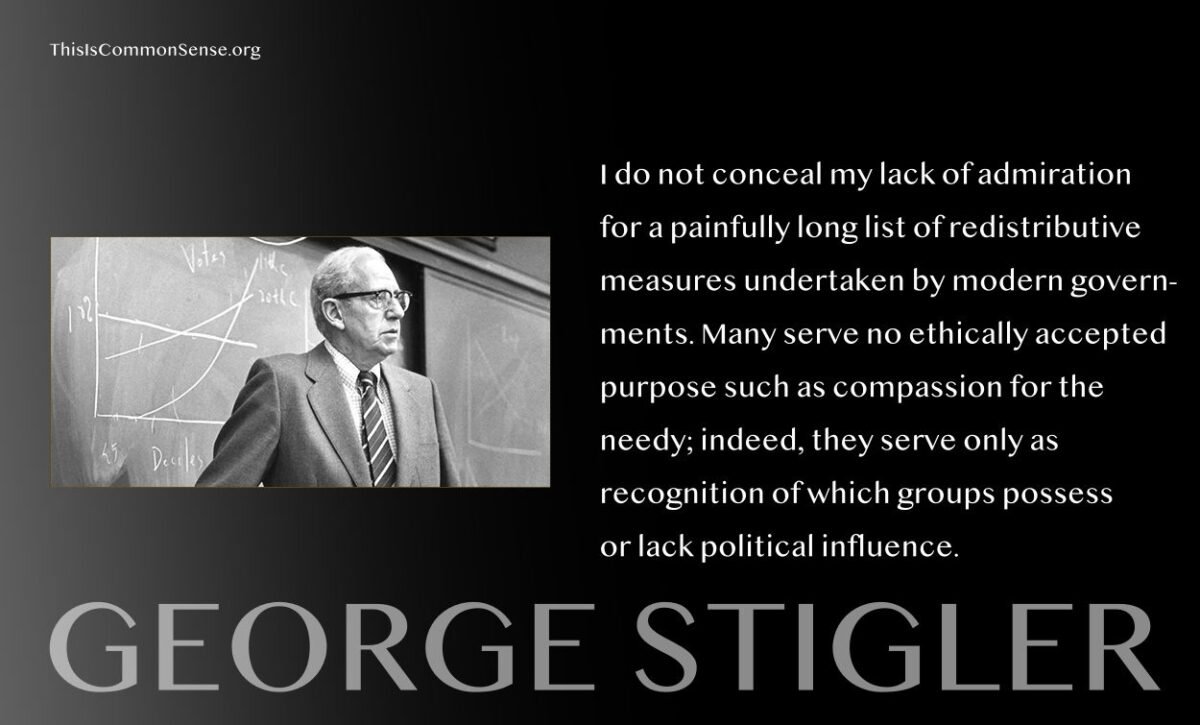
I do not conceal my lack of admiration for a painfully long list of redistributive measures undertaken by modern governments. Many serve no ethically accepted purpose such as compassion for the needy; indeed, they serve only as recognition of which groups possess or lack political influence.
George Stigler, “The Effect of Government on Economic Efficiency,” Business Economics
(1988): 7-13.
On June 13, 1774, Rhode Island became the first British colony in the Americas to prohibit the importation of slaves.
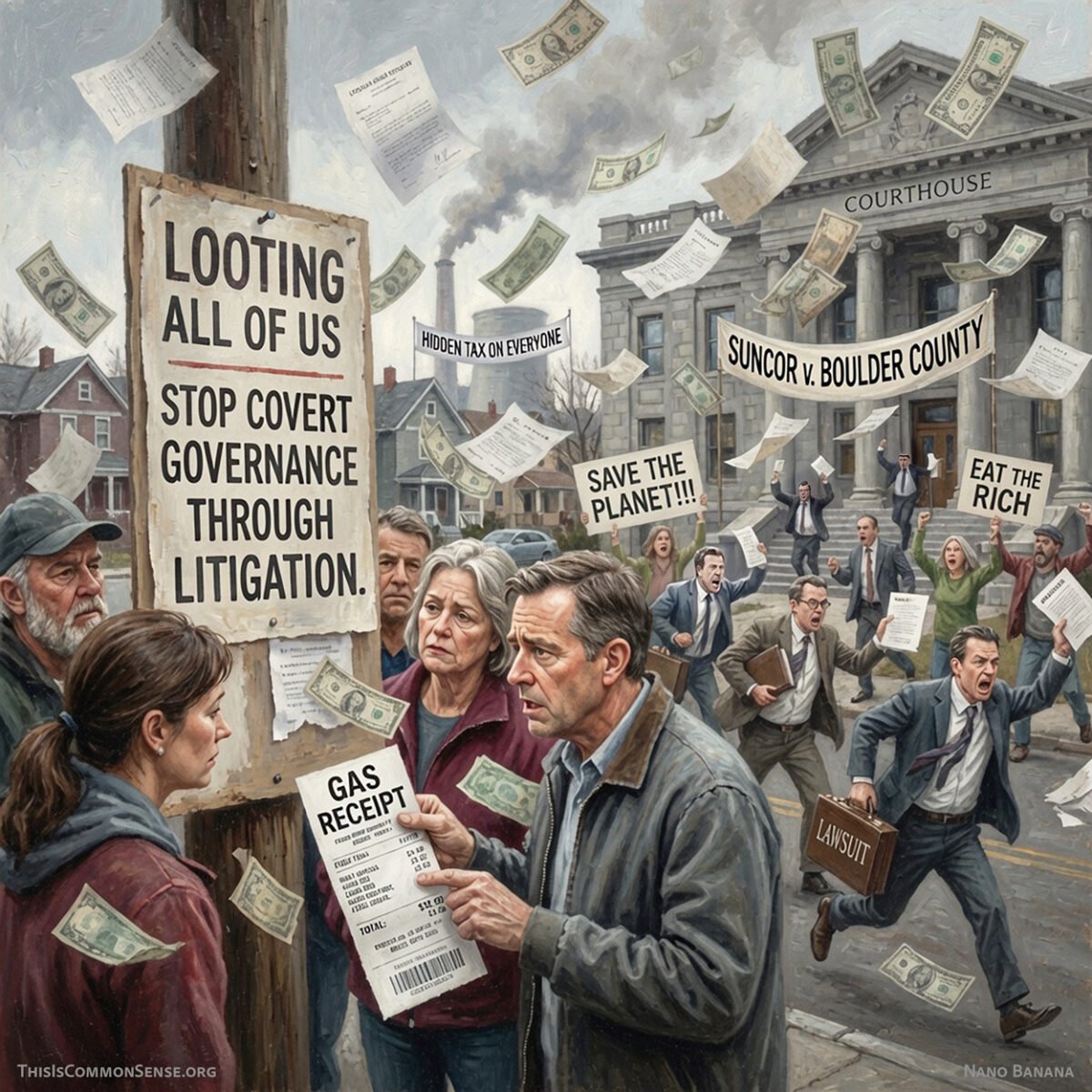
Litigation before the Supreme Court, Suncor v. Boulder County, is “one of the most consequential energy cases in decades,” argue Michael Toth and Sarah Harbison in the New York Post.
Boulder County is just one of many seeking to make oil and gas companies fork over massive damages.
To whom? Entities like Boulder County.
The high court’s response will help determine the viability of future such litigation and “whether the United States remains an energy superpower.”
Energy superpower status is not what people trying to drive their cars and heat their homes at a reasonable cost are worried about. If the court accepts the plaintiffs’ reasoning, the sky’s the limit as far as the liability of the energy industry.
And those new sky-high liability costs for gas and oil providers will result in new sky-high costs for you and me.
Looting all of us is fine with lawsuit supporters like David Bookbinder of Environmental Integrity Project. “This is a rather convoluted way to achieve the goals of a carbon tax,” Toth and Harbison claim. “The people who use the products pay for the damage that they cause.”
The Post’s authors urge the Supreme Court to “shut down” this attempt to circumvent the Constitution. And confirm that U.S. energy policy “can’t be dictated by local lawsuits.”
This is Common Sense. I’m Paul Jacob.
Illustration created with Nano Banana & Grok Imagine
See all recent commentary
(simplified and organized)
See recent popular posts
Hate, hunger, and pride make better levers of propaganda than do love or impartiality.
Jacques Ellul, Propaganda: The Formation of Men’s Attitudes (1962).

In 1776, on June 12, the Fifth Virginia Convention at Williamsburg, Virginia, unanimously adopted a Declaration of Rights, several weeks prior to the adoption of the state’s constitution. George Mason, who drafted the document, stated clearly in the preamble that rights must be “the basis and foundation of Government.”
The first four planks run as follows:
I. That all men are by nature equally free and independent, and have certain inherent rights, of which, when they enter into a state of society, they cannot, by any compact, deprive or divest their posterity; namely, the enjoyment of life and liberty, with the means of acquiring and possessing property, and pursuing and obtaining happiness and safety.
II. That all power is vested in, and consequently derived from, the people; that magistrates are their trustees and servants, and at all times amenable to them.
III. That government is, or ought to be, instituted for the common benefit, protection, and security of the people, nation or community; of all the various modes and forms of government that is best, which is capable of producing the greatest degree of happiness and safety and is most effectually secured against the danger of maladministration; and that, whenever any government shall be found inadequate or contrary to these purposes, a majority of the community hath an indubitable, unalienable, and indefeasible right to reform, alter or abolish it, in such manner as shall be judged most conducive to the public weal.
IV. That no man, or set of men, are entitled to exclusive or separate emoluments or privileges from the community, but in consideration of public services; which, not being descendible, neither ought the offices of magistrate, legislator, or judge be hereditary.
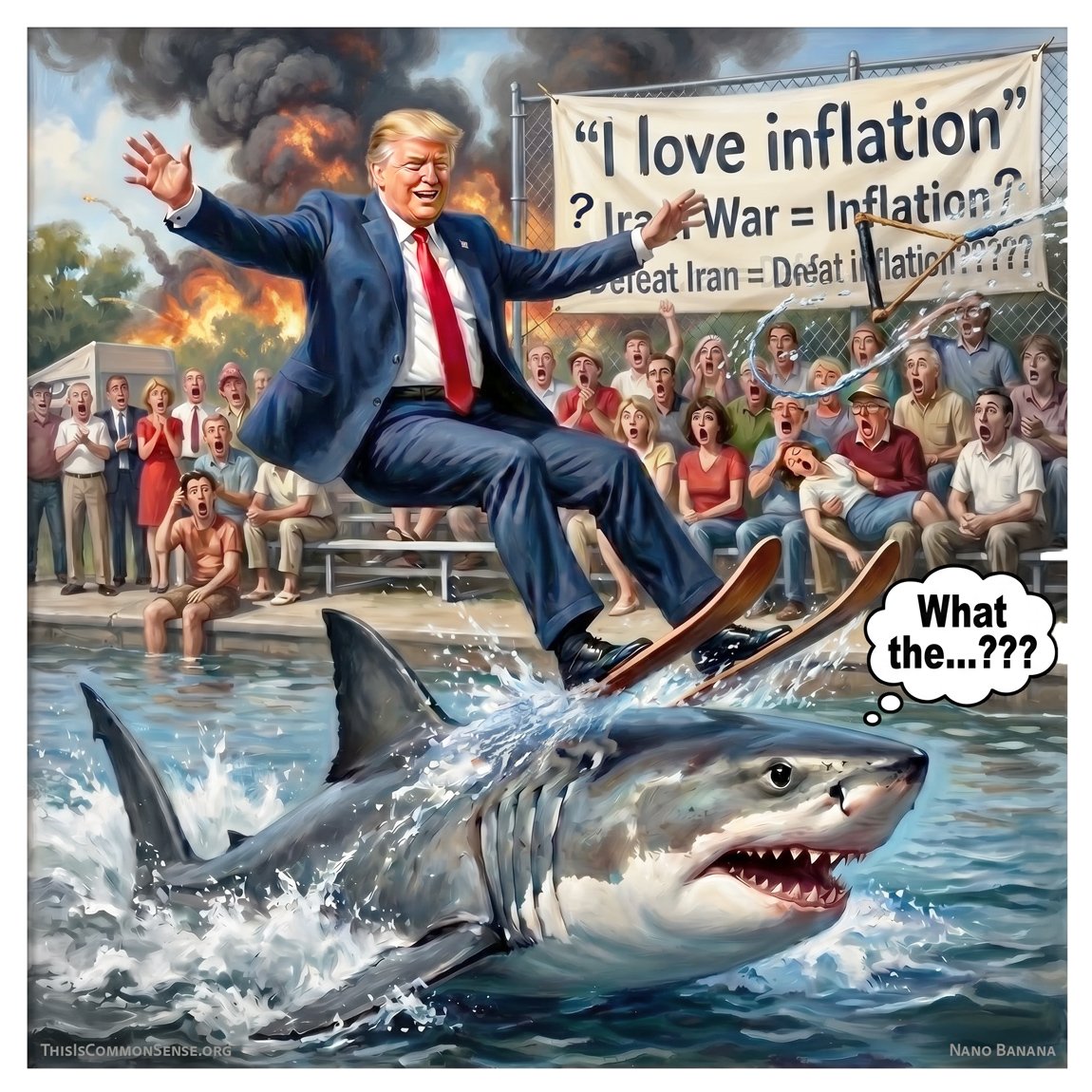
The term refers to the moment in the nostalgic TV show Happy Days when, running out of ideas, the writers cooked up something so out-there and silly that it’s cringe. (To use a more recent faddish term, now also passé.) An episode in the fifth season of the sitcom where the Fonz “jumped a shark” — in water skis.
A spectacle so goofy that it can serve as a marker for any great moment when something really goes into steep decline.
The second Trump Administration has had many such moments, but are any as odd and stupid as the president’s recent remark about the Consumer Price Index?
Asked about the CPI having “jumped 4.2% over the last year,” according to Josh Boak’s June 10 AP article, the president replied, “You know what I really love? I love the inflation.”
The AP article quoted some Democratic politicians making hay of Trump’s quip, but then went on to Rep. Emilia Sykes (D-Ohio) pressing, in a hearing, Energy Secretary Chris Wright “whether he, too, loved inflation.”
‘I love ending Iran’s ability to have a nuclear weapon,’ Wright answered. He only conceded after being pressed: ‘No, I would prefer lower inflation.’”
What is Trump trying to communicate? The idea that when crude oil prices come down, inflation rate increases will level off too. And that’ll be good.
But that all depends on a cessation of the Iran conflict, which keeps dragging on with no end in sight.
Trump’s said dumb things. And funny things. But we who have been living in the Age of Inflation are . . . not amused. This response wasn’t funny and it wasn’t insightful. Or clever. Or worthy of the president’s past hits.
Donald Trump has jumped the shark.
This is Common Sense. I’m Paul Jacob.
Illustration created with Nano Banana
See all recent commentary
(simplified and organized)
See recent popular posts
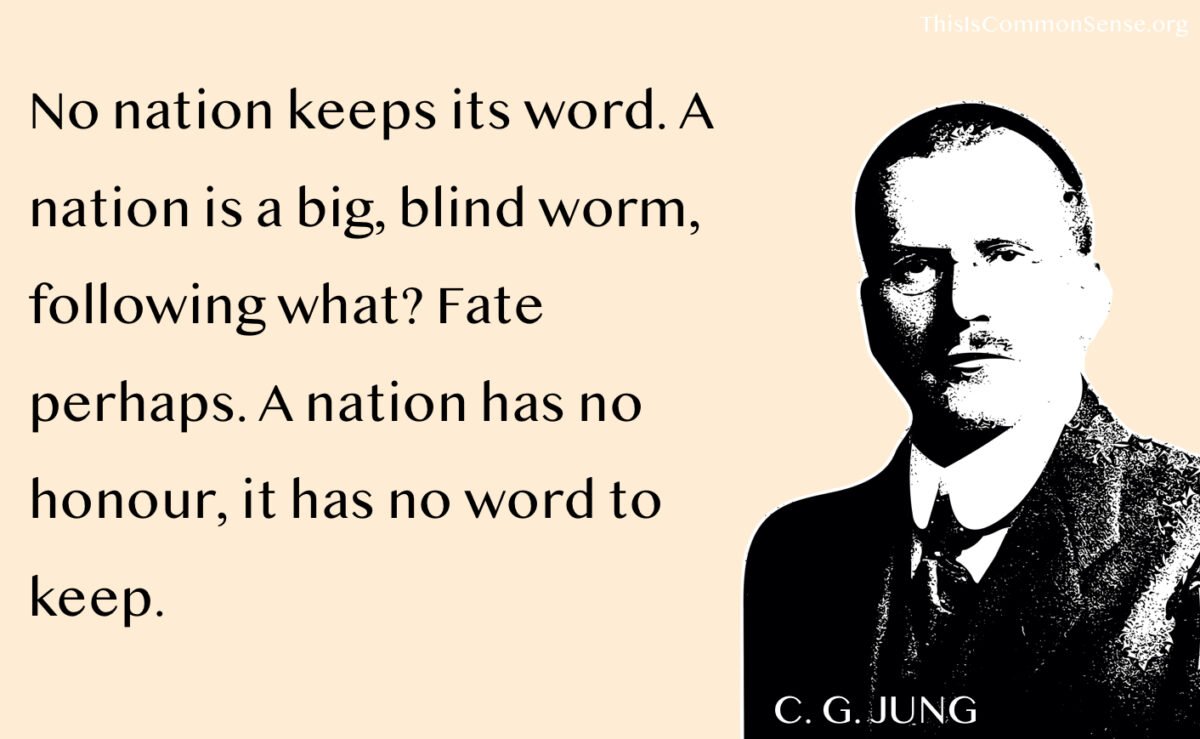
No nation keeps its word. A nation is a big, blind worm, following what? Fate perhaps. A nation has no honour, it has no word to keep.
Carl Gustav Jung, interview with H. R. Knickerbocker (1939), quoted in A Life of Jung (2002) by Ronald Hayman, p. 360.
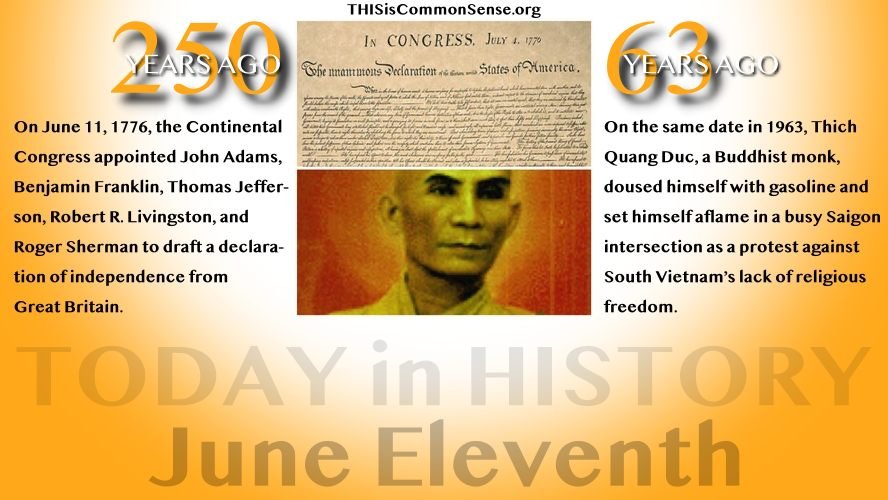
On June 11, 1776, the Continental Congress appointed John Adams, Benjamin Franklin, Thomas Jefferson, Robert R. Livingston, and Roger Sherman to draft a declaration of independence from Great Britain.
On the same date in 1963, Thich Quang Duc, a Buddhist monk, doused himself with gasoline and set himself aflame in a busy Saigon intersection as a protest against South Vietnam’s lack of religious freedom.
This year marks the semisequicentennial year of the United States, and 63 years since 1963’s sad Thich Quang Duc self-immolation.