Categories
Today

Three Johns + the Anarchist Prince

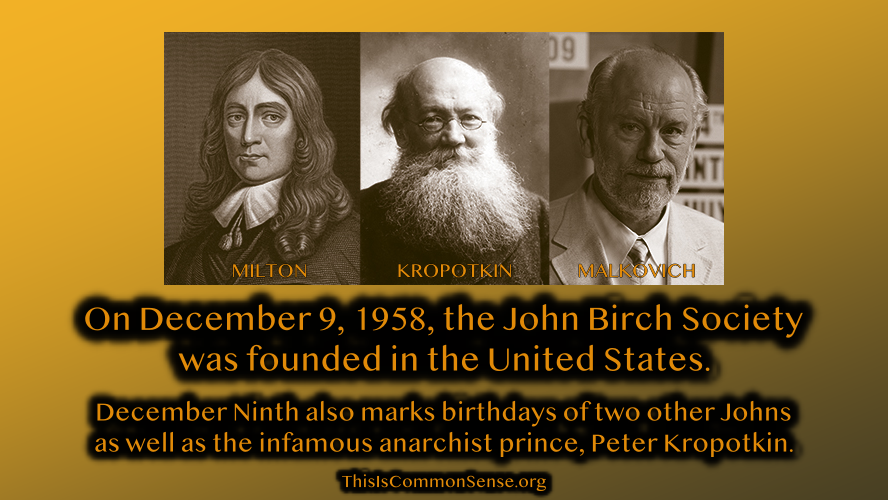
On December 9, 1958, the John Birch Society was founded in the United States. December 9 also marks the birthdays of

  • Poet and anti-censorship advocate John Milton (1608), author of Paradise Lost (1667), the masterpiece of blank verse narrative, and a classic prose defense of free speech and the press, Areopagitica (1644).
  • Russian prince and anarchist theoretician Peter Kropotkin (1842), author of Mutual Aid and other books and pamphlets.
  • Filmmaker John Malkovich (1953), who directed The Dancer Upstairs (2002) and starred in the odd eponymous film Being John Malkovich (1999).
Categories
First Amendment rights international affairs social media

Don’t Pay, Don’t Play

The European Commission is fining the X platform 120 million euros (140 million dollars), for “transparency failures”: not sharing advertising and user data with the EU and not making it easy to censor account holders.

As Reclaim the Net reports, the European Union wants platforms to open themselves to what it calls “independent research.” In practice, this means that “academics and NGOs, often with pro-censorship political affiliations” get special access to the data, “exactly the kind of surveillance the [Digital Services Act] claims to prevent. . . . The EU is angry that X is not policing speech the way it wants.”

My advice to Elon Musk is to shut down X (formerly Twitter) throughout the EU. And refuse to pay the fine.

X’s departure from the EU wouldn’t need to be permanent. For the censors would then have not only X and its uncooperative CEO to contend with; suddenly, a pro-X lobby of millions of Twitterers would be putting pressure on the censors.

The chances of unilateral surrender by the EU? Pretty high. And that’s the only kind of surrender Musk should accept.

If he agrees to even a little EU repression in return for lifting of the fine, that could lead to a total loss for the freedom-of-speech side; the bureaucrats, spies, and busybodies would likely take that seemingly marginal concession and relentlessly work to enlarge it.

Accept only total victory. And be ready to again leave the EU the instant the EU-crats resume their attacks.

This is Common Sense. I’m Paul Jacob.


PDF for printing

Illustration created with NanoBanana and Firefly

See all recent commentary
(simplified and organized)
See recent popular posts

Categories
Thought

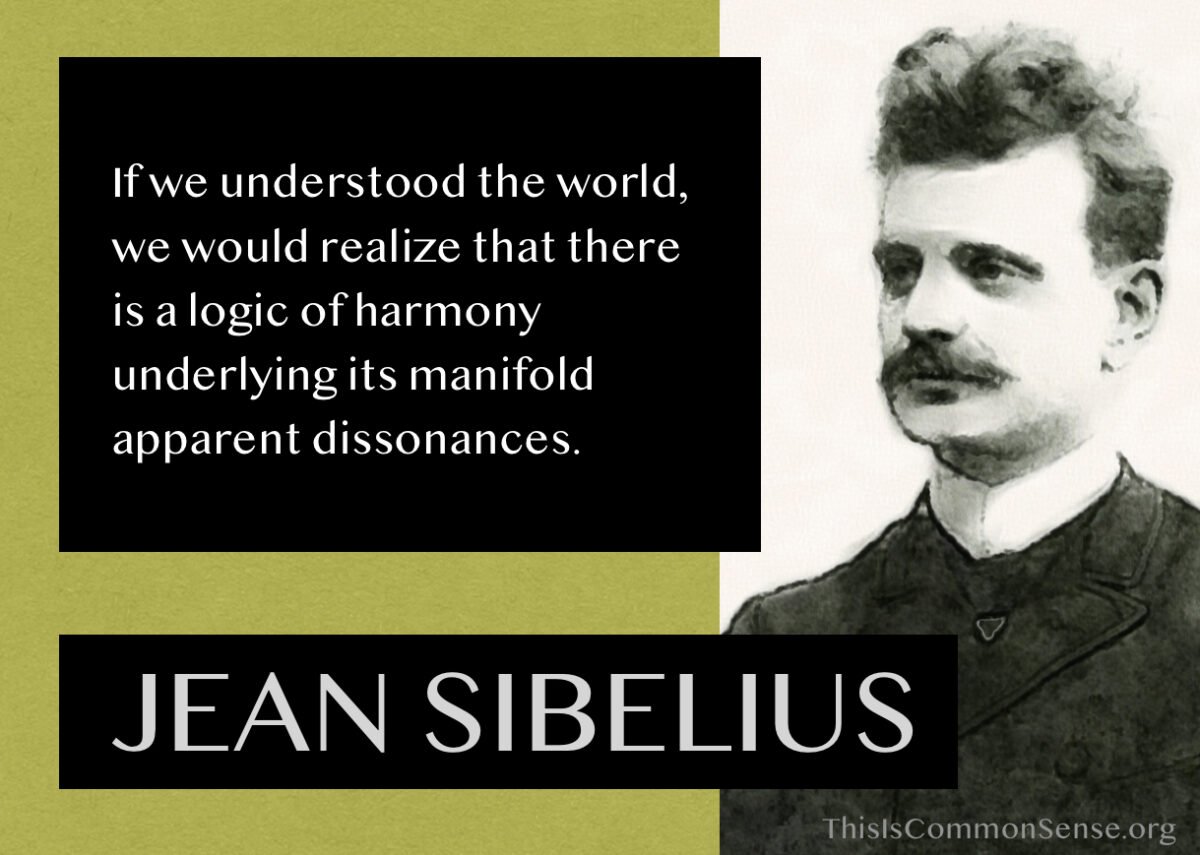
Jean Sibelius

If we understood the world, we would realize that there is a logic of harmony underlying its manifold apparent dissonances.

Jean Sibelius, as quoted in Henry Thomas & Dana Lee Thomas, Living Biographies of Great Composers (1946) p. 309.

Categories
Today

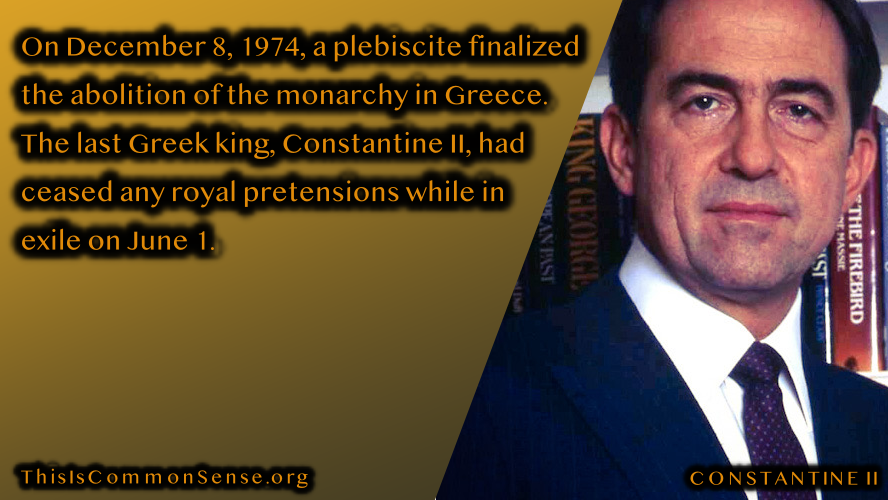
Greek Monarchy Ended

On December 8, 1974, a plebiscite finalized the abolition of the monarchy in Greece. The last Greek king, Constantine II, had ceased any royal pretensions while in exile on June 1. The December referendum was something of a formality.

Categories
Update

Ayn Rand Was Right

Readers of Paul Jacob’s Common Sense are quite aware that he has long targeted the FCC on this site, as can be seen by just a few of his past Common Sense commentaries:

But if you yearn for something more, consult Robby Soave on Ayn Rand:

In 1962, Rand penned a prophetic warning about the public interest standard, which then–FCC Chair Newton N. Minow was citing to justify pressuring television companies to create more educational programming. Minow famously railed against a supposedly “vast wasteland” of shoddy television shows, and he claimed that the FCC’s charter empowered him to push for editorial changes to the medium that would align with his view of the public interest.

“You must provide a wider range of choices, more diversity, more alternatives,” said Minow in his well-remembered 1961 speech. “It is not enough to cater to the nation’s whims; you must also serve the nation’s needs.”

Minow repeatedly claimed that he was not in favor of government censorship and was not trying to tell broadcasters what they could and could not say. Rather, he charged them to make nebulous and ill-defined improvements to the product that he believed would be better appreciated by the American public — i.e., the public interest.

In her March 1962 essay “Have Gun, Will Nudge,” Rand argued that this was censorship by another name. “It is true, as Mr. Minow assures us, that he does not propose to establish censorship; what he proposes is much worse,” she wrote. Unlike explicit bans on speech, Rand warned, the modern method of censorship “neither forbids nor permits anything; it never defines or specifies; it merely delivers men’s lives, fortunes, careers, ambitions into the arbitrary power of a bureaucrat who can reward or punish at whim.”

Robby Soave, “Ayn Rand Denounced the FCC’s ‘Public Interest’ Censorship More Than 60 Years Ago,” Reason (January 2026).

Read the whole magazine piece at Reason’s online site.

Categories
Thought

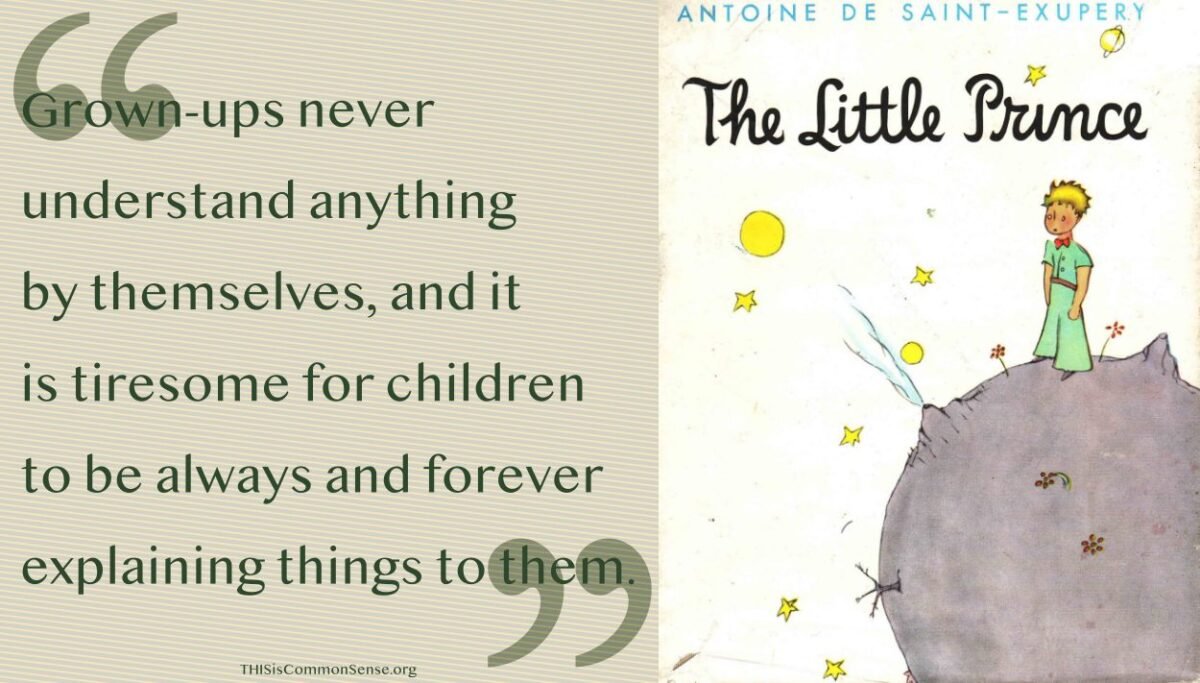
Antoine de Saint Exupéry

Les grandes personnes ne comprennent jamais
rien toutes seules, et c’est fatigant, pour les enfants,
de toujours et toujours leur donner des explications.

Grown-ups never understand anything by themselves, and it is tiresome for children to be always and forever explaining things to them.

Antoine de Saint Exupéry, Le Petit Prince (1943), first chapter.
Categories
Today

Blue Marble

On December 7, 1972, Apollo 17 launched, the last of the Apollo Moon missions. Later that day, one of the astronauts — either Ron Evans or Harrison Schmitt — snapped the photo that would later become famous as “The Blue Marble.”

Categories
Update

Will Trump Be Allowed to Fire Bureaucrats?

When Thomas Jefferson entered the White House, he promptly began firing civil servants, high-level and -low. It was a big house-cleaning effort, a streamlining after Federalist bloat. The new Democratic-Republican president demanded an efficient and minimal government.

Since then, it’s gotten harder for presidents to do such big house-cleaning jobs, as The Epoch Times explains in a new article:

For months, federal judges have been ordering President Donald Trump to reinstate heads of agencies despite his interest in removing them.

Their decisions have been based on a 90-year-old Supreme Court precedent, known as Humphrey’s Executor v. United States, that says Congress can limit the reasons for which presidents remove officials like members of labor boards.

However, that precedent and various legal blocks on Trump’s firings could be removed depending on how the Supreme Court rules in an upcoming case — potentially giving Trump and his successors more flexibility with personnel.

Sam Dorman, “Supreme Court Set to Consider Trump’s Power to Remove High-Level Bureaucrats,” The Epoch Times (December 6, 2025).

The case, Trump v. Slaughter, goes before the union’s highest court on Monday. It regards Trump’s firing of Rebecca Slaughter as a commissioner of the Federal Trade Commission (FTC).

Something to remember about this “balance of powers” case is that it is not about balancing the constitutional “three branches” of the general government. The permanent bureaucracy, insulated from firing by the “Executive,” has, arguably, become a de facto fourth branch, uncontrolled by an inertial Congress as well as the elected president.

Whatever the Supreme Court decides, the effects of its decision are expected to ripple through many other cases — including ones involving Trump.

For example, two fired labor board officials have filedamicus briefs suggesting the outcome of Slaughter’s case could impact their cases as well.

Trump has not only challenged Humphrey’s Executor but said that even if Congress can insulate certain officers from removal, judges shouldn’t be able to reinstate those officers.

Sauer told the court that while fired officers can seek back pay, their reinstatement intruded on executive power and forces the president to “entrust executive power to someone he has removed.”

Slaughter disagreed, arguing “there is no Article II problem with requiring the President to ‘entrust executive power to someone he has removed’ if he has no Article II authority to remove that person in the first place,” her brief added.

The Supreme Court’s recent decisions on its emergency docket indicated it was sympathetic to Trump’s position.

In at least five separate cases, including Slaughter’s, the justices have allowed Trump to temporarily fire officials as litigation unfolded.

The court has repeatedly said that the executive branch “faces greater risk of harm from an order allowing a removed officer to continue exercising the executive power than a wrongfully removed officer faces from being unable to perform her statutory duty.”

Ibid.

The issue is obviously complicated. The Epoch Times article does a pretty good job explaining that complexity.

Categories
Thought

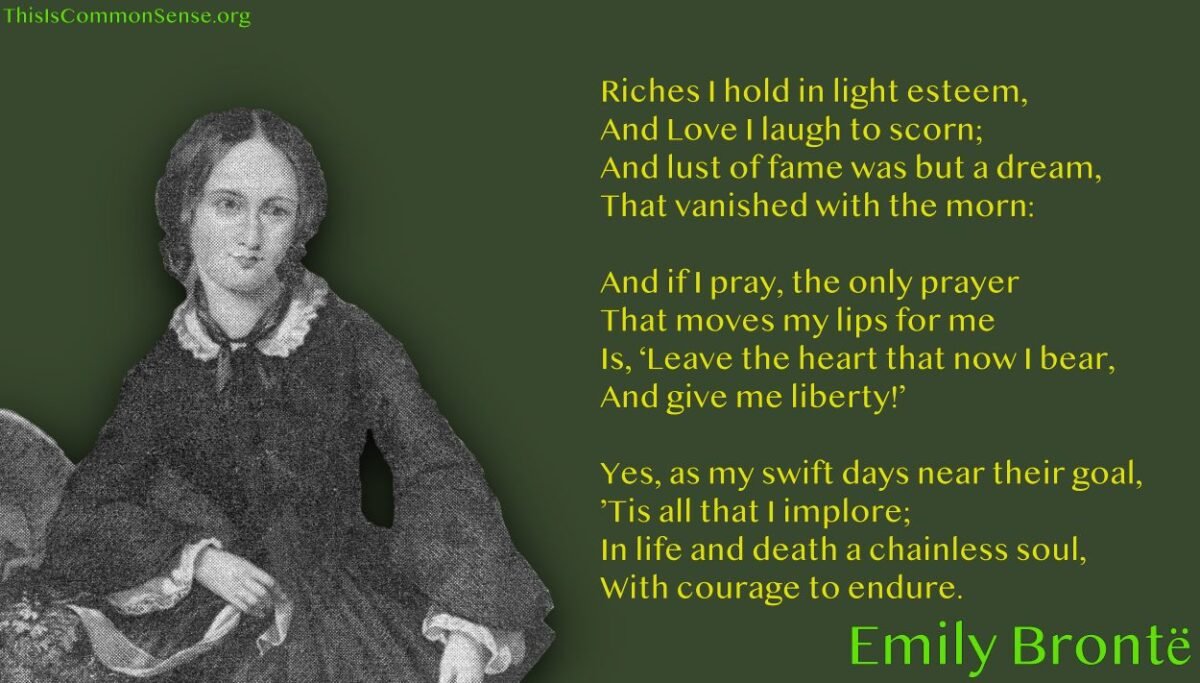
Emily Brontë

Riches I hold in light esteem,
And Love I laugh to scorn;
And lust of fame was but a dream,
That vanished with the morn:

And if I pray, the only prayer
That moves my lips for me
Is, ‘Leave the heart that now I bear,
And give me liberty!’

Yes, as my swift days near their goal,
’Tis all that I implore;
In life and death a chainless soul,
With courage to endure.

Emily Brontë, “The Old Stoic,” from Clement King Shorter, editor, The Complete Poems of Emily Brontë (1908).
Categories
Today

The 13th & Paul Jacob

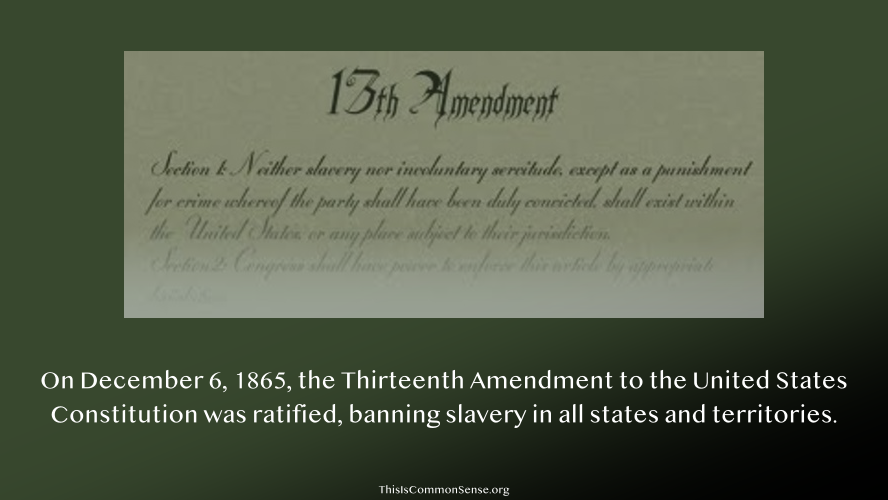
On December 6, 1865, the Thirteenth Amendment to the United States Constitution was ratified, banning slavery in all states and territories.

One-hundred-and-nineteen years later, to the day, in 1984, Paul Jacob (of ThisIsCommonSense.org, LibertyiFund.org, and the Citizens in Charge Foundation) was arrested by the FBI for his refusal to register with Selective Service System (the draft people). The Government was probably not attempting to make a commemorative point about involuntary servitude.