Mary Wollstonecraft, A Vindication of the Rights of Men (1790).
No man chooses evil because it is evil; he only mistakes it for happiness, the good he seeks.
Categories
Mary Wollstonecraft
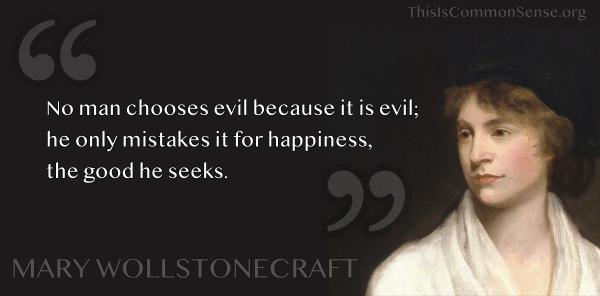
Mary Wollstonecraft, A Vindication of the Rights of Men (1790).
No man chooses evil because it is evil; he only mistakes it for happiness, the good he seeks.
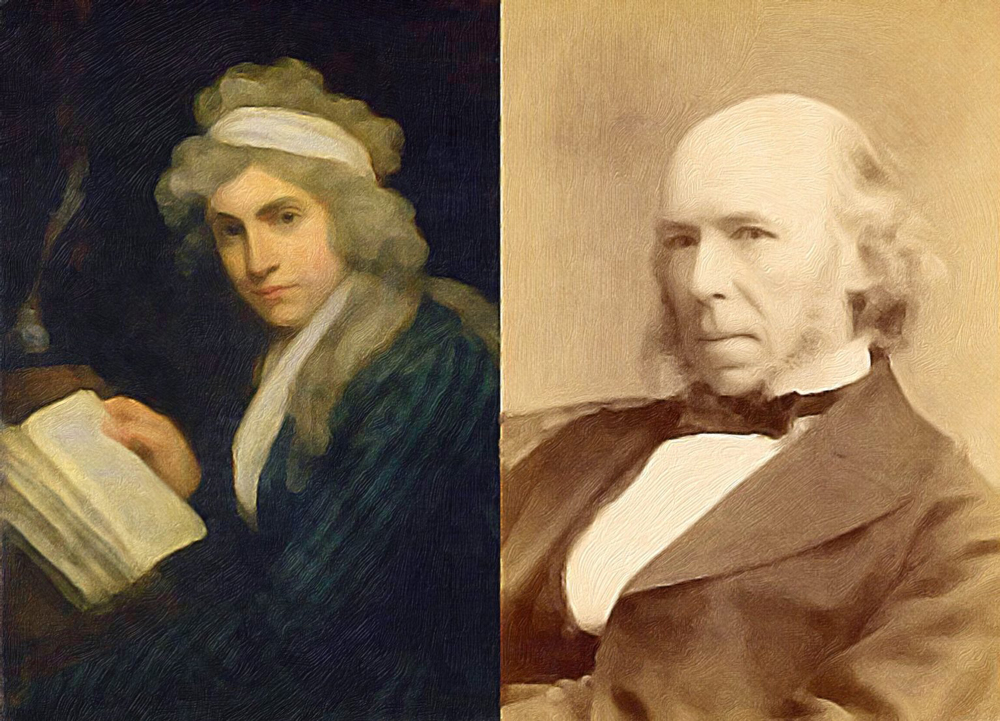
On April 27, 1759, English philosopher and author Mary Wollstonecraft was born. Wollstonecraft married anarchist philosopher William Godwin and the couple begat one daughter, Mary Shelley, author of Frankenstein: or, The Modern Prometheus. Wollstonecraft herself wrote several important political treatises, including her response to Edmund Burke’s Reflections on the Revolution in France (1790), A Vindication of the Rights of Men (1790), and her valiant effort in the emancipation of women, A Vindication of the Rights of Women (1792).
English philosopher, psychologist, sociologist, and political theorist Herbert Spencer was born in Derby, England, on April 27, 1820. Among Spencer’s most famous books are First Principles, Principles of Ethics (chiefly its first part, The Data of Ethics), The Study of Sociology, The Man versus the State, and two editions of Social Statics. Spencer was an evolutionary theorist as well as a religious and political philosopher, and coiner of the phrase “survival of the fittest.” He called the basic principle of a free political order “The Law of Equal Freedom.”

What’s being protected are, presumably, institutions.
According to Judge Andrew Napolitano, Trump told him that “if they showed you what they showed me, you wouldn’t have released it either.” According to Roger Stone, Trump explained that what he saw was “so horrible you wouldn’t believe it” . . . and thus Trump withheld 20 percent of the documents that had been scheduled to be released.
So horrible? Many of us can imagine quite a lot of horror coming from the dark corridors of the federal Leviathan.
But there’s another generational secret that Trump and Biden share, and Tucker mentioned it too: UFOs.
Indeed, he and Rogan started out the podcast in a freewheeling discussion of what our government now calls “the UAP issue,” for “unidentified anomalous phenomena.” But Tucker focused on a “dark” and “spiritual” element to the story, giving little evidence except for the scientist’s name who had contacted him about the study of UFO injuries of
Tucker also mentioned strangely behaving objects that traverse the oceans as if water were no matter. A few days earlier, a Yahoo News “Futurism” article explained that “Tim Gallaudet, an oceanographer and former Naval rear admiral who served as the author of a March white paper about so-called ‘unidentified submerged objects’ or USOs, told Fox News this week that he considers it both ‘scientifically valid’ and critical to national security to study these phenomena.”
A lot of effort has been made in the recent disclosure talk to frame UAPs as potential threats. But what kind of threat? A “spiritual” one — “so horrible”?
All we really know is that regarding assassinations and mysterious airborne and oceanic objects, the government would prefer to keep us guessing.
This is Common Sense. I’m Paul Jacob.
Illustration created with PicFinder and Firefly
See all recent commentary
(simplified and organized)
See recent popular posts
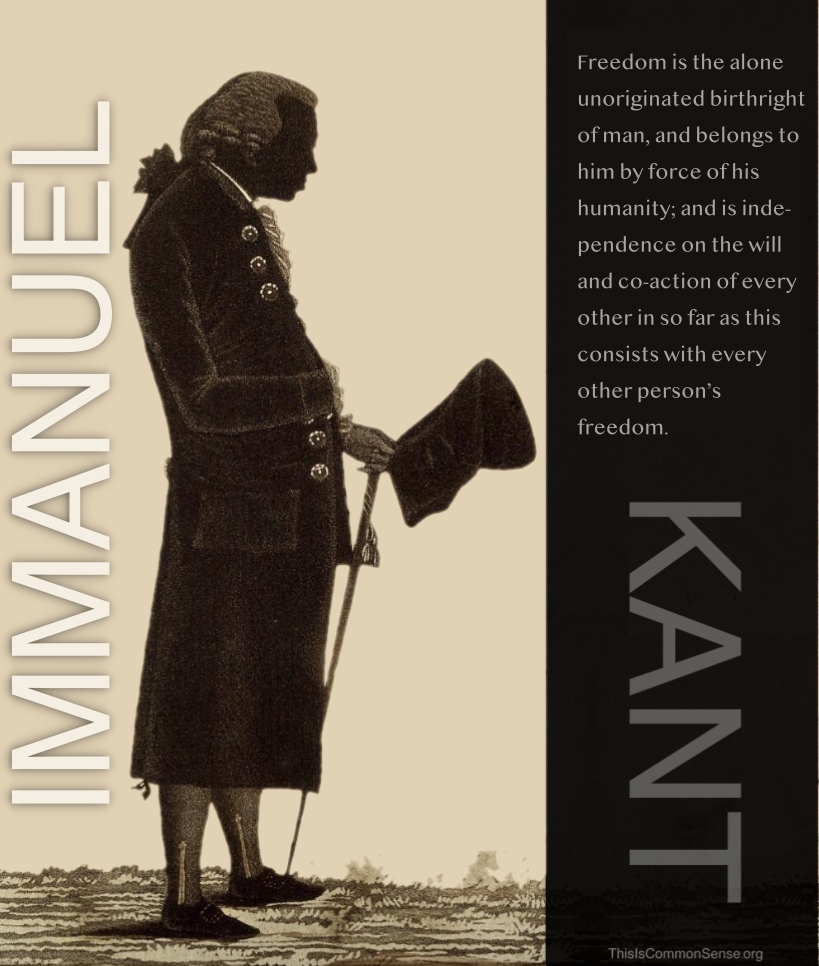
Freedom is the alone unoriginated birthright of man, and belongs to him by force of his humanity; and is independence on the will and co-action of every other in so far as this consists with every other person’s freedom.
Immanuel Kant, The Metaphysics of Ethics, trans. J.W. Semple, ed. with Iintroduction by Rev. Henry Calderwood (Edinburgh: T. & T. Clark, 1886) (3rd edition).
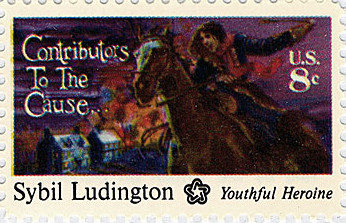
On April 26, 1777, Sibyl Ludington, aged 16, rode 40 miles to alert American colonial forces to the approach of the British. Her ride was over twice as long as Paul Revere’s more famous effort.
On the same day in 1805, United States Marines captured Derne under the command of First Lieutenant Presley O’Bannon, an important event in the First Barbary War.
In April 26, 1865, Union cavalry troopers cornered John Wilkes Booth, assassin of President Lincoln, in Virginia, shooting him to death. There was no interrogation.
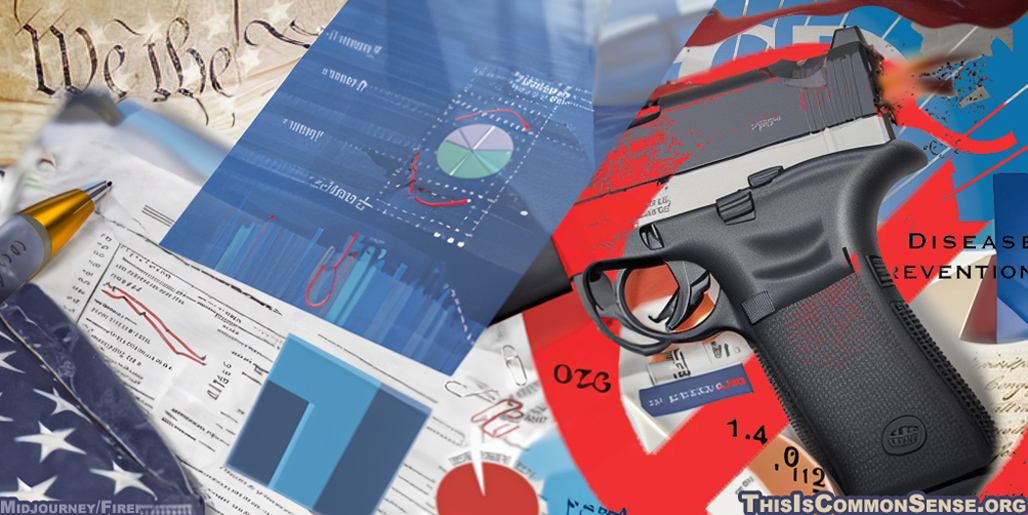
Also this month, a St. Louis apartment dweller shot an intruder who threatened to kill his family.
A Newport Beach homeowner recently shot an intruder as well.
Aside from the obvious, what do such incidents, often in newspapers, have in common? The government is hiding research about them.
In December 2022, Fox News reported that to appease gun control activists, the Centers for Disease Control had deleted reference to a study on how often guns are used in self-defense from its
The CDC-commissioned study by Gary Kleck showed that “instances of defensive gun use occur between 60,000 and 2.5 million times” annually. But in 2021, after being lobbied by the gun control activists, the CDC pretended that Kleck’s study didn’t exist.
Kleck said: “CDC is just aligning itself with the gun-control advocacy groups. . . . ‘We are their tool, and we will do their bidding.’ And that’s not what a government agency should do.”
CDC’s conduct was not new. In 2018, Capital Research had asked why the agency was “Hiding Its Defensive Gun Use Statistics.”
For decades, we’ve had abundant data on how gun owners defend themselves from violent bad guys. CDC, which investigates something or other related to this subject, won’t share all that it knows.
We can’t legally require the media to stop hiding critical information. But we should be able to require our government to stop doing so.
This is Common Sense. I’m Paul Jacob.
Illustration created with PicFinder and Firefly
See all recent commentary
(simplified and organized)
See recent popular posts
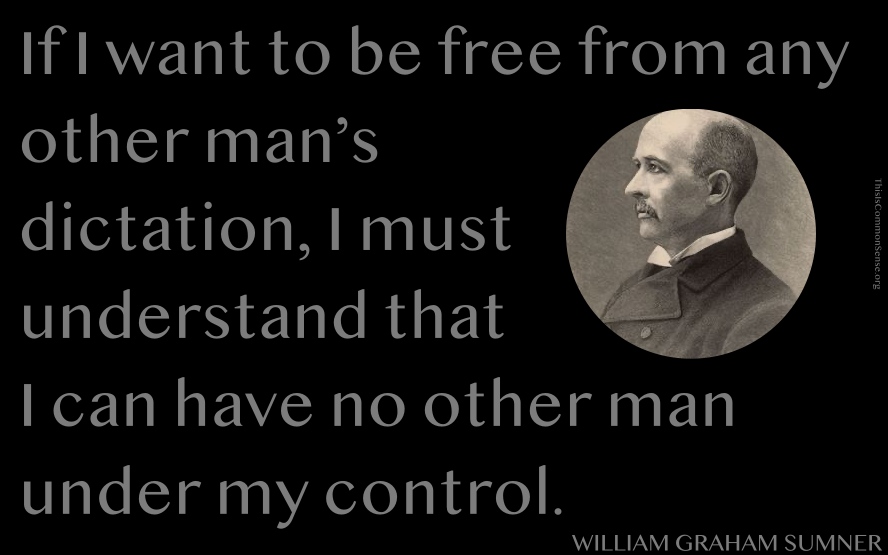
If I want to be free from any other man’s dictation, I must understand that I can have no other man under my control.
William Graham Sumner, “The Forgotten Man” (1883).

April 25 is celebrated as Freedom Day in Portugal.

The State of Idaho has demonstrated one sort of restriction compatible with a free society’s free-trade rules. “As of July 1, it will be illegal in Idaho for health insurers to cover an organ transplant or post-transplant care performed in China or any country known to have participated in forced organ harvesting,” explains Frank Fang in The Epoch Times (No. 508, A5). The legislation had been passed unanimously in both legislative houses earlier in the month and was signed by the governor on
Idaho wasn’t the first state to do this, following Texas last year and Utah this year, with its law going into effect on May 1.
The problem to be addressed? The suspiciously short waiting time for organ transplants in China, especially after the Chinese government cracked down on the Falun Gong decades ago.
“In 2019, the independent China Tribunal in London concluded that the CCP had been forcibly harvesting organs from prisoners of conscience for years ‘on a substantial scale,’ with Falun Gong practitioners being the ‘principal source’ of human organs,” according
This is not protectionism. And it really isn’t any unwarranted regulation on trade. For even in the freest of societies, with 100 percent free trade and freedom of contract, the sale and purchase of stolen goods
Rightly prohibited.
If anything has been taken away unjustly, it’s the internal organs of political prisoners by
This is Common Sense. I’m Paul Jacob.
Illustration created with PicFinder and Firefly
See all recent commentary
(simplified and organized)
See recent popular posts
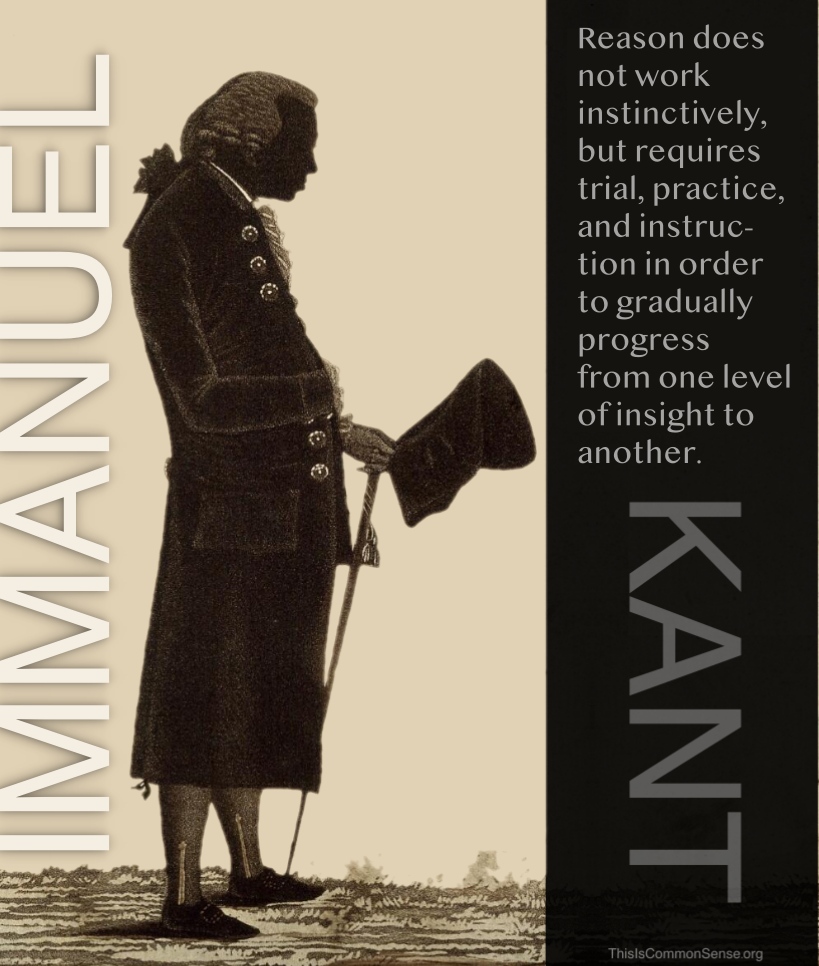
Reason does not work instinctively, but requires trial, practice, and instruction in order to gradually progress from one level of insight to another.
Immanuel Kant, “Idea for a Universal History with a Cosmopolitan Purpose,” 1784.