On April 24, 1792, the French national anthem, “La Marseillaise,” was composed by Capt. Claude Joseph Rouget de Lisle.
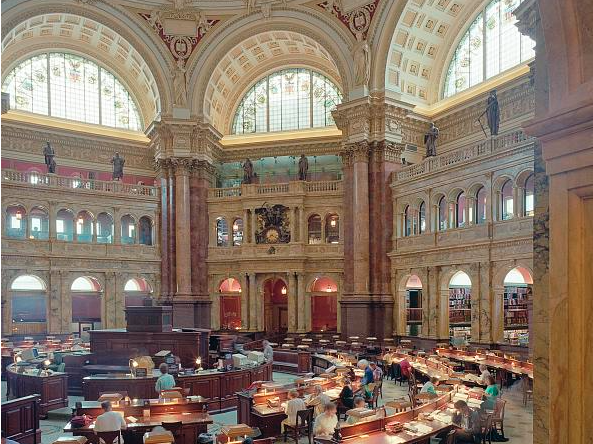
Eight years later to the day, the United States Congress approved a bill establishing the Library of Congress.
On April 24, 1792, the French national anthem, “La Marseillaise,” was composed by Capt. Claude Joseph Rouget de Lisle.
Eight years later to the day, the United States Congress approved a bill establishing the Library of Congress.

OSU will shut down a “bias response team” instituted to harass speech on campus. We can thank a group called Speech First, which sued the school.
“We are excited to announce that OSU will be eliminating their insidious bias reporting system that told students to anonymously report on one another for ‘bias’ and that they will have to rewrite their harassment policy to include important speech protections so that students can no longer be punished for merely expressing their views,” says Cherise Trump, executive director of
“We have also secured a change to their computer policy so that it no longer targets the protected political speech
The settlement also requires the school to pay Speech First $18,000 for legal expenses.
OSU had tried to get the lawsuit dismissed because Speech First protected the names of its plaintiffs,
Speech First’s reason for using pseudonyms is pretty commonsensical: to protect plaintiffs from retaliation. That a university with a policy of punishing students for renegade speech might also punish them for participating in a lawsuit to end this policy doesn’t seem like a farfetched concern.
The resolution of the case hardly means that the fight for freedom of speech on campus is over. But it may help other universities realize that, as Cherise Trump puts it, “there is a high cost to violating students’ constitutional rights.”
This is Common Sense. I’m Paul Jacob.
Illustration created with PicFinder and Firefly
See all recent commentary
(simplified and organized)
See recent popular posts
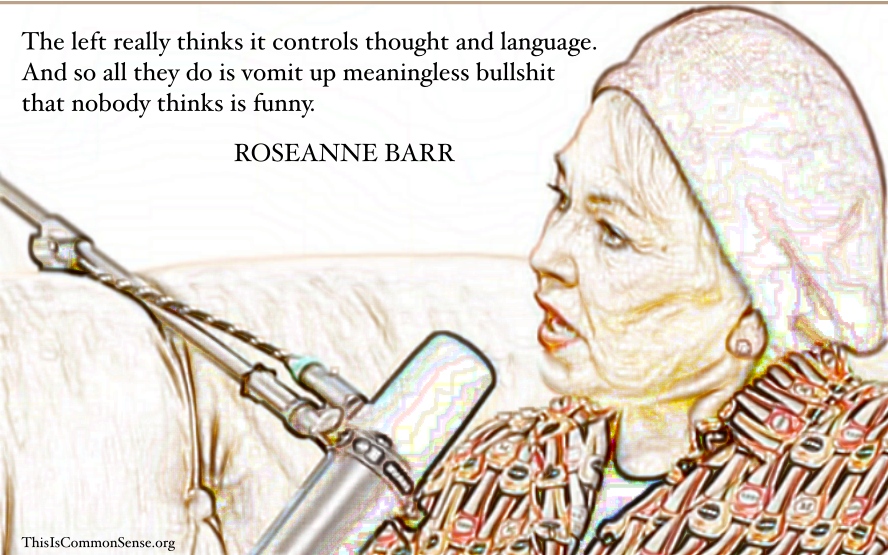
The left really thinks it controls thought and language. And so all they do is vomit up meaningless bullshit that nobody thinks is funny.
Roseanne Barr, on her podcast, explaining to Greg Gutfeld why leftists are no longer the good comedians.
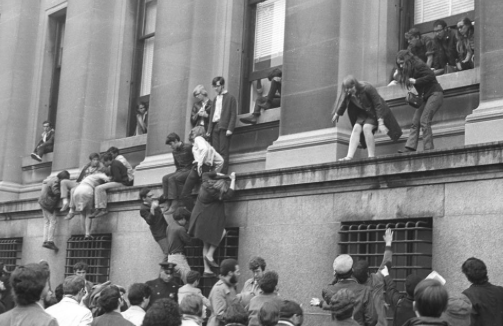
On April 23, 1968, students at New York City’s Columbia University held a demonstration to protest military research and the condemnation of part of the neighboring Morningside Heights section of Harlem to make way for a new student gymnasium. The protest escalated into a week-long occupation of five campus buildings before police moved in. Some 712 students were arrested, and over 100 injured during the forcible eviction. After the university-ordered police response, a student strike shut down the campus for the rest of the semester.
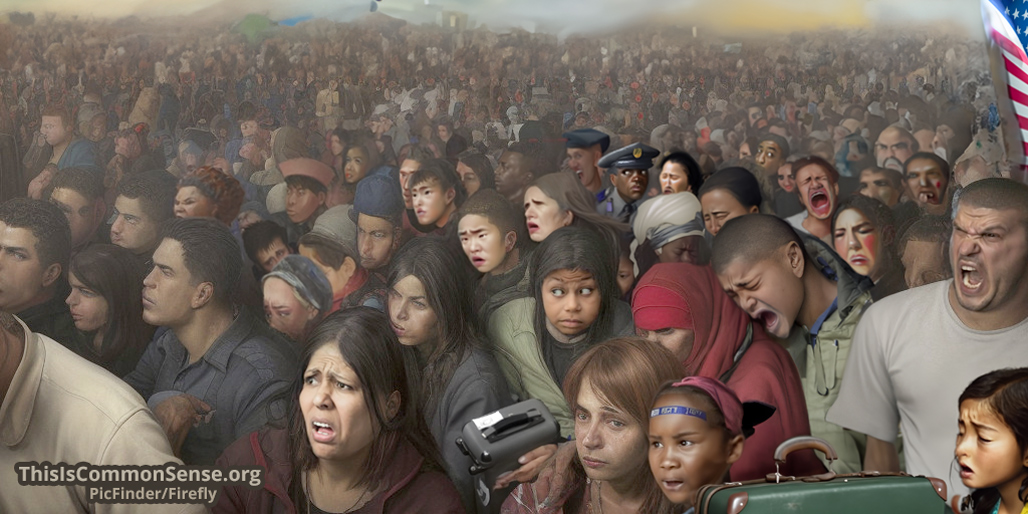
That’s the message Denver’s Newcomer Communications Liaison Andres Carrera delivered to migrants last month, according to the city’s
“You don’t have to walk anywhere, we can buy you a free ticket,” Carrera offered. “You can go to any city,” he said, mentioning New York and Chicago, specifically.
“We can take you up to the Canadian border, wherever!”
Denver is now preparing to spend $90 million on migrant programs this year.
In the last fiscal year, New York City spent $1.5 billion “for asylum seeker shelter and services,” and those expenses are going up. Chicago’s “City Council is set to vote on spending another $70 million in city funds for migrant services,” Block Club Chicago reported last week, “just five months after Mayor Brandon Johnson’s 2024 budget allocated $150 million for new arrivals this year.”
We hear about the costs of the border crisis; these whopping numbers certainly clarify that matter.
Still, something else caught my attention.
Denver is making a 2.5 percent cut to most city agencies, while reducing the police department budget 1.9 percent, an $8.4 million dollar decrease for cops. Some charge that’s de-funding the police.
“The City of Denver’s adjustment to the Denver Police Department’s budget was carefully crafted with safety leaders and Mayor [Mike] Johnston,” a spokesperson explained, “to ensure there would be no impact to the department’s public services,”
Crafted with care. And having precisely zero impact.
Imagine had you or I suggested to politicians and government officials that we slice millions of dollars from their budgets. We’d be accused of gutting education and undermining public safety . . . if not starving the children.
Who knew it could be so easy and painless for them?
This is Common Sense. I’m Paul Jacob.
Illustration created with PicFinder and Firefly
See all recent commentary
(simplified and organized)
See recent popular posts
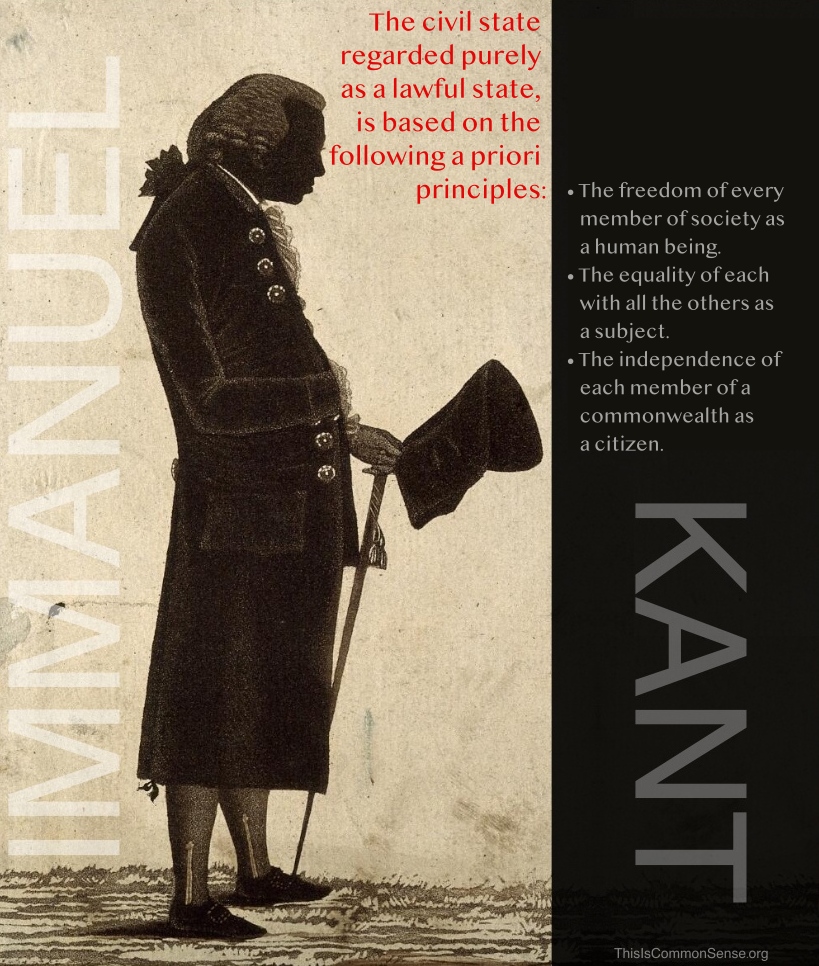
The civil state regarded purely as a lawful state, is based on the following a priori principles:
• The freedom of every member of society as a human being.
• The equality of each with all the others as a subject.
• The independence of each member of a commonwealth as a citizen.These principles are not so much laws given by an already established state, as laws by which a state can alone be established in accordance with pure rational principles of external human right.
Immanuel Kant, Theory and Practice (1791).
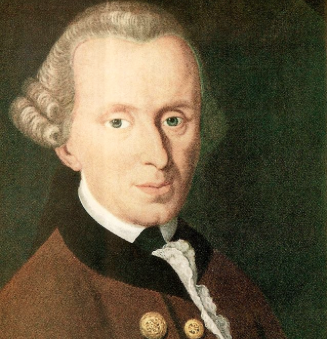
On April 22, 1724, philosopher Immanuel Kant was born.
Aside from being the pre-eminent modern philosopher and originator of transcendental idealism, Kant was also a major figure of Enlightenment thought, a classical liberal, and the originator of the notion of the Categorial Imperative. He was an early and important astronomical theorist in his early career, but produced his greatest works towards the end of his life, including The Critique of Pure Reason and The Groundwork for the Metaphysics of Morals. He was also author of the 1795 essay “Perpetual Peace: A Philosophical Sketch.”
Arthur Schopenhauer is widely known as an admiring and astute critic of Kant’s thought, while philosophical opponents include Friedrich Nietzsche and Ayn Rand. Kant’s approach to ethics continues to excite interest today, with some of the revival a result of the work of John Rawls.
Kant died on February 12, 1804, in Königsberg, Prussia (now Kaliningrad, Russia), where he had lived the bulk of his life.

What did they know and when did they know it?
This classic question, derived from Senator Howard Baker and the Watergate brouhaha of the 1970s, continues to echo as we uncover each new scandal. But no one is calling the pandemic debacle as “COVIDgate” or “WuhanGate” or even “FauciGate,” for the scandal is broad.
How broad? In Britain, a very small minority is getting a handle on it:
In America, keeping track of all the pieces has been an ongoing issue for a number of podcasters, not least of whom is Tom Woods, whose book Diary of a Psychosis (2023) is itself a good indicator of where we are at. A recent podcast of his (“Ep. 2481 Yale’s Harvey Risch: The Corruption of American Medicine”) shows just how daunting a task this endeavor can be.
Nowadays, all sorts of people call their political opponents “fascist,” often on the shakiest of rationales. Well, The Manifesto of Fascist Intellectuals was first published in Il Mondo, then by most Italian newspapers on April 21, 1925 — the national, anniversary-day celebration of the Founding of Rome (ca. April 21, 753 BC).
It might be a good idea to consult this original document, for a good idea what politics’ “f-word” originally meant:
Fascism was . . . a political and moral movement at its origins. It understood and championed politics as a training ground for self-denial and self-sacrifice in the name of an idea, one which would provide the individual with his reason for being, his freedom, and all his rights. The idea in question is that of the fatherland. It is an ideal that is a continuous and inexhaustible process of historical actualization. It represents a distinct and singular embodiment of a civilization’s traditions which, far from withering as a dead memory of the past, assumes the form of a personality focussed on the end towards which it strives. The fatherland is, thus, a mission.
The manifesto was written by Giovanni Gentile, in support of the regime of Benito Mussolini (pictured above).
Less than two weeks later, on May 1, 1925, Il Mondo published philosopher Benedetto Croce’s The Manifesto of the Anti-Fascist Intellectuals.
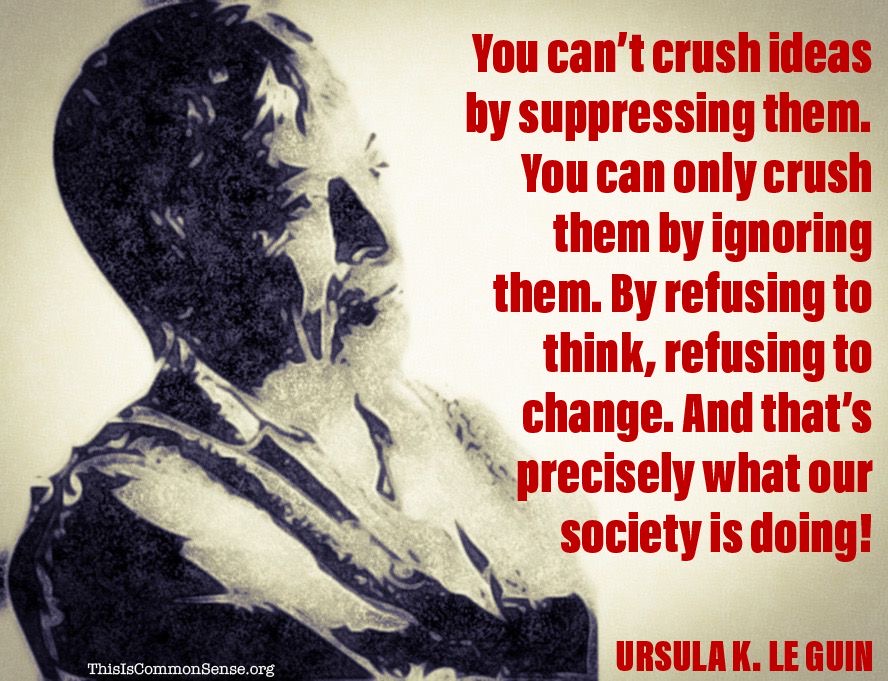
You can’t crush ideas by suppressing them. You can only crush them by ignoring them. By refusing to think, refusing to change. And that’s precisely what our society is doing!
Ursula K. Le Guin, The Dispossessed (1974), Chapter 6.