Categories
Thought

G. K. Chesterton

Journalism possesses in itself the potentiality of becoming one of the most frightful monstrosities and delusions that have ever cursed mankind. This horrible transformation will occur at the exact instant at which journalists realise that they can become an aristocracy.

Gilbert K. Chesterton, “The New Priests” (1901).
Categories
Today

Solzhenitsyn

Aleksandr Isayevich Solzhenitsyn was born on December 11, 1918. Solzhenitsyn became a novelist, philosopher, historian, and dissident who helped bring down the totalitarian Soviet Union. Solzhenitsyn’s novels include One Day in the Life of Ivan Denisovich (1962) and Cancer Ward (1966). His behemoth history of Soviet prison camps, The Gulag Archipelago, was a major event in the cultural eclipse of far left ideology in the West, when it was published in 1973.

Solzhenitsyn died on August 3, 2008.

In the last few years, variants of an aphorism about Soviet life has been making the rounds on the Internet, misattributed to him.

Categories
Thought

Murray Leinster

The secret of getting along with people is that of postponing quarrels.

Murray Leinster, “Exploration Team” (1956), as it appeared in Isaac Asimov, editor, The Hugo Winners, Vol. 1, p. 115.
Categories
Today

Huck, Passy & Dunant

On December 10, 1884, Mark Twain’s Adventures of Huckleberry Finn was first published. This novel, narrated in the first person by the title character, is a dark comedy of the antebellum South and slavery, and has been considered by many American critics and writers to qualify as the “Great American Novel.”

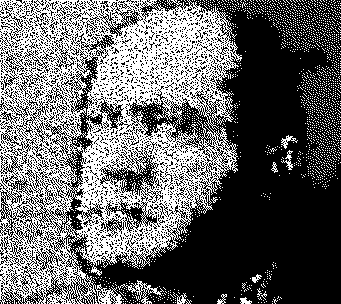
On this date in 1901, the first Nobel Peace Prizes were awarded — to economist Frédéric Passy (pictured above), co-founder of the Inter-Parliamentary Union; and to Henry Dunant the founder of the International Committee of the Red Cross.

Passy was an admirer of Richard Cobden and an active member in the French Liberal School of Political Economy that developed in the tradition of J.B. Say, Destutt de Tracy, and Frédéric Bastiat. His published works include Leçons d’économie politique (1860-61); La Démocratie et l’Instruction (1864); L’Histoire du Travail (1873); Malthus et sa Doctrine (1868); and La Solidarité du Travail et du Capital (1875).

Categories
Thought

Octavia E. Butler

Civilization is to groups what intelligence is to individuals. It is a means of combining the intelligence of many to achieve ongoing group adaptation.

Octavia E. Butler, The Parable of the Sower (1993), Chapter 10.
Categories
Today

Ninth-Day Births

On December 9, 1958, the John Birch Society was founded in the United States. December 9 also marks the birthdays of

  • Poet and anti-censorship advocate John Milton (1608), author of the masterpiece of blank verse narrative, Paradise Lost (1667) and a classic prose defense of free speech and the press, Areopagitica (1644).
  • Russian prince and anarchist theoretician Peter Kropotkin (1842), author of Mutual Aid and other books and pamphlets. His is the photo shown above.
  • John Malkovich (1953), who directed The Dancer Upstairs (2002) and starred in the odd eponymous film Being John Malkovich (1999).
Categories
crime and punishment First Amendment rights judiciary

Court Halts Imprisonment for Speech

Left-wing enemies of right-wing freedom of speech, specifically the freedom of speech of Douglass Mackey, recently got their way when U.S. District Judge Ann Donnelly sentenced him to seven months in prison.

But now, a month after sentencing, another court has said wait a minute.

As I reported in October, Mackey was convicted for actions in 2016 that nobody could have known would later be treated as crimes. The FBI had arrested him shortly after Joe Biden became president in January 2021 — as if waiting for a favorable political climate for an obviously partisan action.

According to selectively prosecuting U.S. Attorney Breon Peace, Mackey threatened democracy and sought to “deprive people of their constitutional right to vote.”

What attempted deprivation of voting rights? Did Mackey lock people in their homes so that they could not go out to vote? Steal ballots? Glare and scream at people walking toward a voting site?

No, all that this obvious opponent of Hillary Clinton did was publish satirical posts telling Hillary voters to vote by text, much easier that way. Obnoxious, maybe; or silly. But the posts had no power to hypnotize or derange anyone or, for that matter, prevent anyone from double-checking with an election office or Google. And prosecutors brought in no voters who claimed to have been fooled by the obvious jest — which arguably was satire, a jape upon Mackey’s political opponents.

There’s no there there. Nevertheless, Mackey’s liberty has been at risk at least since 2018, when his legal name behind his pseudonymous social media presence was revealed.

It’s still at risk. But the Second Circuit Court of Appeals has blocked Mackey’s seven-month imprisonment until his appeal can be decided and the free-speech issues properly adjudicated.

This is Common Sense. I’m Paul Jacob.


PDF for printing

Illustration created with PicFinder and Firefly

See all recent commentary
(simplified and organized)
See recent popular posts
Categories
Thought

[Dystopian Slogan]

Everything not forbidden is compulsory.

The slogan over the entrance to an ant colony in T. H. White’s The Sword in the Stone (1938), chapter 13.
Categories
Today

Greek Monarchy Ended

On December 8, 1974, a plebiscite finalized the abolition of the monarchy in Greece. The last Greek king, Constantine II, had ceased any royal pretensions while in exile on June 1. The December referendum was something of a formality.

Categories
crime and punishment initiative, referendum, and recall international affairs

Sikh Freedom First

If I get gunned down in a hail of bullets . . . well . . . who done it?

The genocidal Chinese Communist Party, furious at my new website, StoptheChinazis.org

Perhaps. But what about the regime of Prime Minister Narendra Modi in India? 

I’m a member of the Punjab Referendum Commission, an international group advising and monitoring the non-governmental referendums being organized among the worldwide Sikh diaspora by U.S.-based Sikhs for Justice. Recently, I stood at the entrance of a Sikh temple in Surrey, British Columbia, outside Vancouver, where Canadian intelligence agencies say agents of Modi’s government assassinated Sikh leader and Canadian citizen Hardeep Singh Nijjar, back in June, spraying him with 30 bullets. 

Then, last week, U.S. prosecutors indicted an Indian national for, according to The Wall Street Journal, “working with an Indian government officer to pay a purported hitman $100,000 . . . to murder a prominent advocate” on U.S. soil.

“The court filing did not name the victim,” The Washington Post reported, “but senior Biden administration officials say the target was Gurpatwant Singh Pannun, general counsel for the New York-based Sikhs for Justice. . . .”

My mouth’s suddenly a bit dry; I’ve been on the same stage as Mr. Pannun several times. 

There’s a long history of political unrest and violence between Sikhs in the Punjab region and the central Indian government . . . leading today to roughly one-fourth of Sikhs living outside of India. 

What can we do? Well, though I take no position on whether — YES or NO — the Punjab region should secede from India, I very much like that Sikhs for Justice is resorting to the opposite of violence — democracy — by asking Sikhs around the world to cast their vote.

If they dare.

This is Common Sense. I’m Paul Jacob.


PDF for printing

Illustration created with Midjourney and Firefly

See all recent commentary
(simplified and organized)
See recent popular posts