Art may make a suit of clothes; but nature must produce a man.
David Hume, “The Epicurean,” in Essays, Moral, Political, and Literary (1741-2; 1748).
Categories
David Hume

Art may make a suit of clothes; but nature must produce a man.
David Hume, “The Epicurean,” in Essays, Moral, Political, and Literary (1741-2; 1748).

On May 10, 1872, Victoria Woodhull became the first woman nominated for President of the United States.
In a landmark Supreme Court decision on May 10, 1893, the tomato was ruled a vegetable, not a fruit.

But Bryan Montiea Wilson did not get even a “sorry” from the Bureau of Alcohol, Tobacco, Firearms and Explosives (ATF) or local
Wilson, who works for a railroad equipment manufacturer, had never been arrested when ATF agents nabbed him in December 2023. Accused of gun and drug sales to local police officers said to be working with the ATF, Wilson could only repeatedly assert his innocence.
His looming punishment included up to 115 years in prison and millions in fines. Then, suddenly, he
How did Wilson wind up being falsely accused? The Truth About Guns site reports that prosecutors realized their blunder after his court-appointed lawyer investigated. But an uninformative request to dismiss the case is all ATF offered.
“Further review . . . reveals that the interests of justice would best be served by a dismissal of the pending charges as opposed to further prosecution. . . . The Government respectfully requests that the Court dismiss the pending charges against defendant Bryan Montiea Wilson.”
I guess we can thank the prosecutors for mentioning “justice.” But there should at least be an accounting in such cases; and this accounting, plus further consequences, should
“Something got messed up and they landed on me,” Wilson says. “I don’t know how this happened, but it can’t happen again. It shouldn’t
Wilson has filed a federal civil
This is Common Sense. I’m
Illustration created with PicFinder and Firefly
See all recent commentary
(simplified and organized)
See recent popular posts
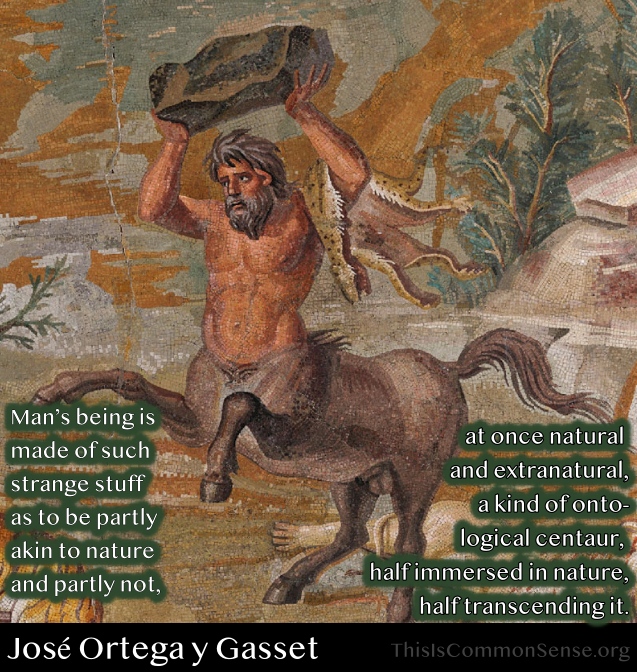
Man’s being is made of such strange stuff as to be partly akin to nature and partly not, at once natural and extranatural, a kind of ontological centaur, half immersed in nature, half transcending it.
José Ortega y Gasset, “Man Has No Nature,” in History as a System (1962).
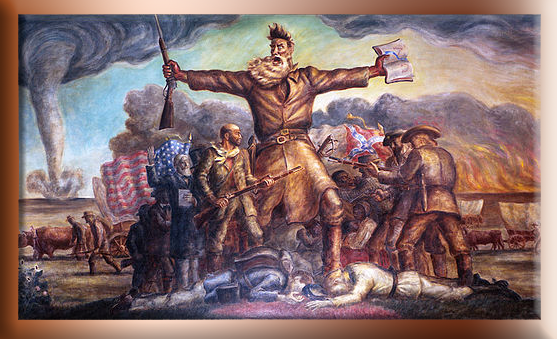
On May 9, 1800, abolitionist and revolutionary (and, depending upon your point of view and certain definitions, insurrectionist and terrorist) John Brown was born.
In 1883 on this date, Spanish philosopher José Ortega y Gasset was born. He is most renowned for his book The Revolt of the Masses.
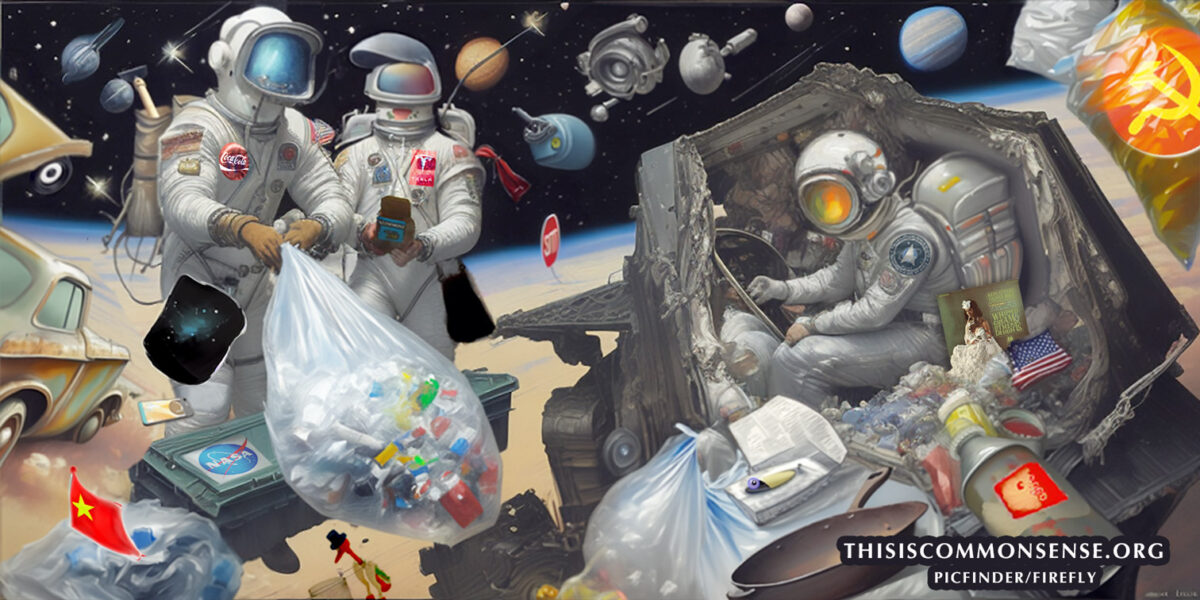
“The Infra-Red Calibration Balloon (S73-7) satellite started its journey into the great unknown after launching on April 10, 1974 through the United States Air Force’s Space Test Program,” writes Meredith Garofalo. “While in orbit, the original plan was for S73-7 to inflate and take on the role as a calibration target for remote sensing equipment. After this failed to be achieved during deployment, the satellite faded away into the abyss and joined the graveyard of unwanted space junk until it was rediscovered
It’s a complicated story; the satellite never really worked properly. Which raises the space junk problem.
The biggest polluter is governments. Space agencies. And the corporations contracting to put up satellites. And the military that puts stuff up we know
“[A]s more and more satellites head into space,” explains Garofalo, “the task will become even greater to know what exactly is out there and what threats that
When Trump boasted of creating the Space Force in 2019, a lot of people scoffed. I didn’t.*Somebody’s got to do the dirty work, and it does look like Space Force personnel see an important role to be filled, that of garbage men in orbital space. Since the more than 20,000 objects in orbit — and their associated random debris — were put there by governments, maybe governments should clean it up.
The future of space industry could be hampered, should the problem continue to grow — though, in the end, it may be industry that will take over the task. After all, space litter’s more dangerous than most
This is Common Sense. I’m Paul Jacob.
* Also, in no small part, because ceding outer space to China and Russia seems like a bad idea.
Illustration created with PicFinder and Firefly
See all recent commentary
(simplified and organized)
See recent popular posts
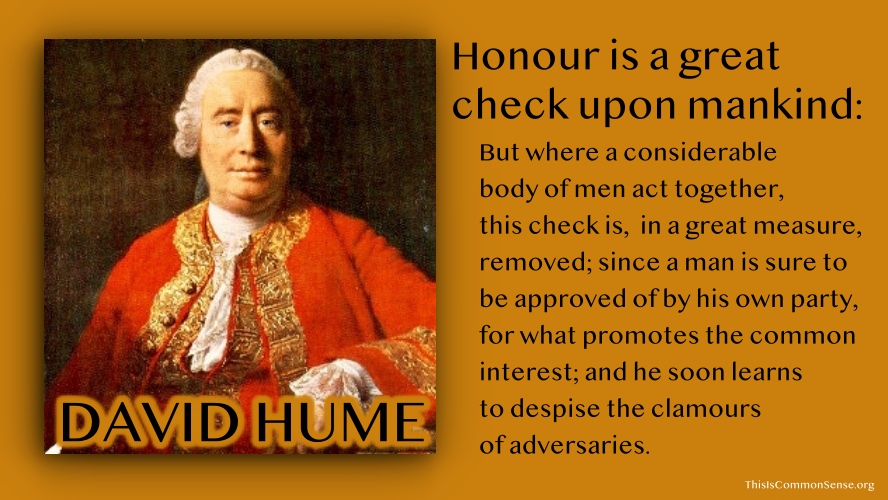
Honour is a great check upon mankind: But where a considerable body of men act together, this check is, in a great measure, removed; since a man is sure to be approved of by his own party, for what promotes the common interest; and he soon learns to despise the clamours of adversaries.
David Hume, “Of The Independency of Parliament,” in Essays, Moral, Political, and Literary (1741-2; 1748).
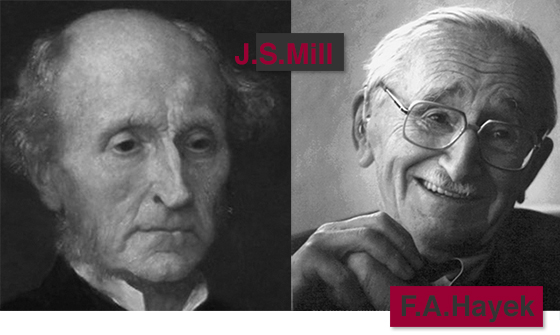
On May 8, 1899, Austrian-English economist and philosopher Friedrich August von Hayek was born. He signed the bulk of his books written in the English language as “F.A. Hayek,” and is best known for The Road to Serfdom, The Constitution of Liberty, The Fatal Conceit, and many essays, several of them widely cited, including “Individualism, True and False” and “The Use of Knowledge in Society.”
Years earlier, on the same date in 1873, English philosopher and economist John Stuart Mill died. Now best known for On Liberty (1859) and Utilitarianism (1861), he was and is considered one of the most important economists and philosophers of the Victorian age, with other classics including A System of Logic (1843) and Principles of Political Economy (1848). Mill’s letters to his wife were edited into book form by Hayek.
On May 8, 1946, two Estonian school girls (Aili Jõgi and Ageeda Paavel) blew up the Soviet memorial which stood in front of the Bronze Soldier in Tallinn.
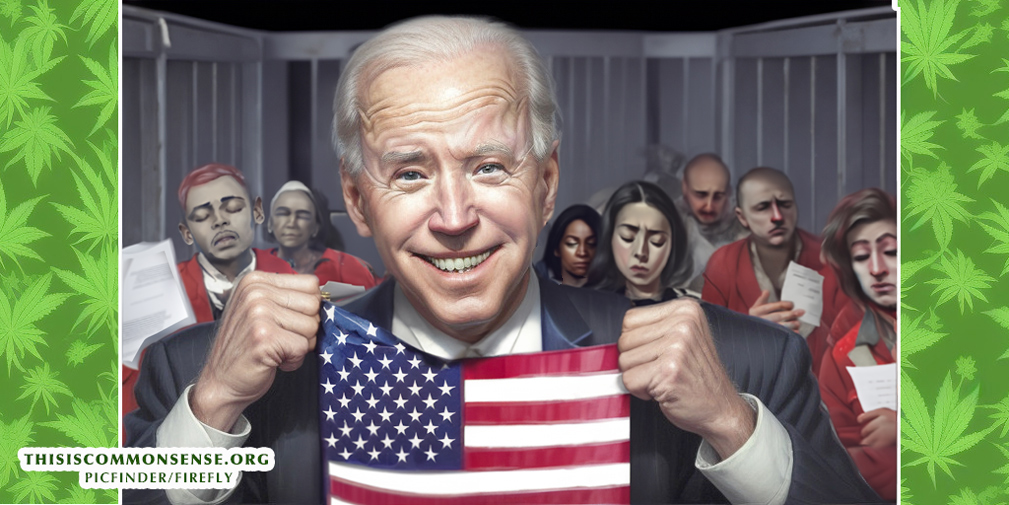
“Neither claim was accurate,” explains Jacob Sullum, in the June issue of Reason. They are exaggerations at best. For their voting bloc.
Remember Biden’s 2020 campaign promise to “decriminalize the use of cannabis” and “expunge all prior cannabis use convictions”?
They were undelivered because these moves would require
Biden’s not a dictator. As much as he tries.
He still needs Congress.
When he announced, last October, to much ballyhoo, a mass pardon for simple marijuana possession convictions, directing a review of the drug’s classification under the Controlled Substances Act, neither move “actually ‘changed federal marijuana policy,’” Sullum insists. Not one prisoner was freed, and — more startling yet — no record was expunged . . . for while the president can pardon, he cannot legally expunge records.
The question to ask ourselves is this: does Biden or anyone now in power really want to do anything more than yammer about drugs?
After all, any substantive reform would require, as Sullum points out, addressing the tension in the union: a federal government claiming powers to regulate and prohibit (not found in the Constitution), and 38 states that have effectively nullified
Confronting that might lead to ceding a whole lot of power back to the states . . . on more matters than
This is Common Sense. I’m Paul Jacob.
Illustration created with PicFinder and Fireflly
See all recent commentary
(simplified and organized)
See recent popular posts
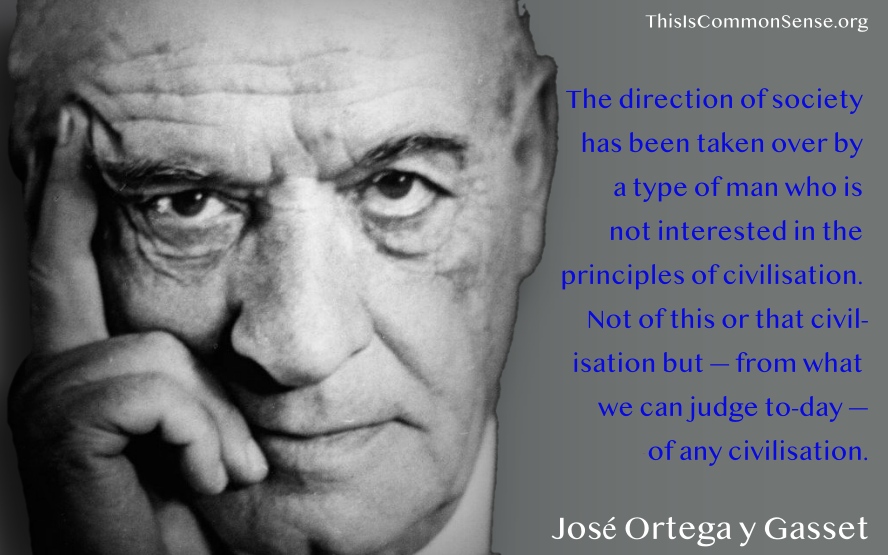
[T]he direction of society has been taken over by a type of man who is not interested in the principles of civilisation. Not of this or that civilisation but — from what we can judge to-day — of any civilisation.
José Ortega y Gasset, The Revolt of the Masses (1929), Chap.IX: “The Primitive and the Technical.”