Categories
Thought

Paul Ricœur

If it is true that there is always more than one way of construing a text, it is not true that all interpretations are equal.

Paul Ricœur, “Interpretation Theory: Discourse and the Surplus of Meaning” (1976), p. 79.
Categories
Today

El Libertador

On May 23, 1788, South Carolina became the 8th state to ratify the U.S. Constitution.

Other May 23 events include:

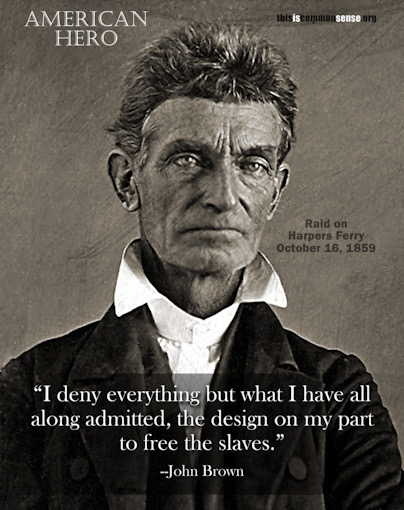
* 1813: South American independence leader Simón Bolívar (portrait, above) entered Mérida, where he was proclaimed El Libertador (“The Liberator”), leading the invasion of Venezuela.

* 1900: Sergeant William Harvey Carney became the first African American to be awarded the Medal of Honor, for his heroism in a Civil War battle fought 37 years prior, in 1863.

* 1958: Birthday of American comedian and game show host Drew Carey.

Categories
national politics & policies political economy

The False Gospel of the Printing Press

It’s been a while since I’ve mentioned “Modern Monetary Theory,” popularly known as MMT.

While MMT is not popular here, it is gaining adherents outside the ranks of Common Sense readers like a new Ponzi scheme taking on suckers.

Modern Monetary Theorists go on and on about the gospel of printing money, like they just discovered that the Fed-and-Treasury act of borrowing within the banking system isn’t the only way to inflate the money supply.

You can indeed “just print money”!

Granted, the MMTers do a lot of fancy footwork, or silver-tongue-work — the closest they get to hard money — to avoid the infamous consequences of monetary inflation, “price inflation” being just one of them. They are so enamored of the money press that they’re like teenagers discovering sex: didn’t you old folks know about this great thing?

It would be comical were it not . . . inflationary.

At the present moment in history, of course, MMT is in a tricky situation: huge increases in the money supply during the COVID period resulted in no small amount of . . . huge price increases.

“Whatever you call it, MMT is printing money,” Matt Taibbi just wrote in a terrific May 18 piece, “and no matter how sure you might think you are that it will work, you aren’t, and can’t be. Sure, our leaders have been doing it, printing $4 trillion through multiple rounds of QE and $5.5 trillion more in the CARES Act, and sure, that last spree only inspired about 20% inflation so far. Still, any economist who says with a straight face he or she is sure this experiment won’t end with your kids using dollars as toilet paper is lying.”

Or just engaging in old-fashioned money-crankism. 

The old get-something-for-nothing racket. MMT’s just the latest form.

This is Common Sense. I’m Paul Jacob.


PDF for printing

Illustration created with PicFinder and Firefly

See all recent commentary
(simplified and organized)
See recent popular posts

Categories
Thought

Iris Murdoch

Happiness is a matter of one’s most ordinary everyday mode of consciousness being busy and lively and unconcerned with self. To be damned is for one’s ordinary everyday mode of consciousness to be unremitting agonising preoccupation with self.

Iris Murdoch, The Nice and the Good (1968).
Categories
Thought

Edward de Bono

There isn’t just one point; it takes time to learn. You don’t have to be intelligent, but I think you have to be open to possibilities and willing to explore. The only stupid people are those who are arrogant and closed off.

Edward de Bono, as interviewed by Angela Balakrishnan in “Edward de Bono: ‘Iraq? They just need to think it through,’” The Guardian (Monday, April 23, 2007).
Categories
Today

U.S. Term Limits v. Thornton

On May 22, 1995, in U.S. Term Limits v. Thornton, the U.S. Supreme Court struck down Arkansas’s congressional term limits law, 5-4, overturning the congressional term limits then the law in 23 states: Arizona, Arkansas, California, Colorado, Florida, Idaho, Louisiana, Maine, Massachusetts, Michigan, Missouri, Montana, Nebraska, Nevada, New Hampshire, North Dakota, Oklahoma, Ohio, Oregon, South Dakota, Utah, Washington and Wyoming.

Other May 22 events include

  • 1856: South Carolina Congressman Preston Brooks savagely beat Massachusetts Senator Charles Sumner in the halls of Congress as tensions rise over the expansion of slavery. Sumner did not return to the Senate for three years while he recovered.
  • 1848: Slavery was abolished in Martinique.
  • 1807: A grand jury indicted former Vice President of the United States Aaron Burr on a charge of treason. Burr (in portrait, above) was later acquitted.
Categories
general freedom ideological culture partisanship

Krauthammer’s Law

It seemed like wisdom in 2002: “To understand the workings of American politics, you have to understand this fundamental law: Conservatives think liberals are stupid. Liberals think conservatives are evil.” The late Charles Krauthammer expounded this “law” in a column entitled “The central axiom of partisan politics.” 

I am no longer sure this was ever correct, and am confident it doesn’t apply to American politics now.

First off, the enemy of conservatives may have been “liberals” 150 years ago. But not now. The proper word is “progressive,” not “liberal,” and to those who follow the to and fro of substantive policies, the most classically liberal people right now are conservatives.

And “conservatives” is not the right word, either, is it? Progressives hate hate hate the dominant strain in the Republican Party, the Trumpians. Well, Trump isn’t now, nor has he ever been, a “conservative,” though some of his actions during his term in office, were more conservative than any other Republican president of our time. What Trump and his followers now oppose is the “insider-ism” of big government, with Democrats constituting the dominant force of the administrative state and, yes, the Deep State. That is the nature of Republican populism.

Another problem with Krauthammer’s Law is that progressives have always looked upon conservatives and decentralist populists in the dread Republican Party as both evil and stupid.

But it’s worse: both sides, today, look upon the other as both stupid and evil. 

The real question then, to anyone who ideologically distances himself from leaders on both sides, is to discern whether both sides are right about each other.

And, it follows, wrong about themselves.

This is Common Sense. I’m Paul Jacob.


PDF for printing

Illustration created with PicFinder and Firefly

See all recent commentary
(simplified and organized)
See recent popular posts

Categories
Thought

C. S. Lewis

You must show that a man is wrong before you start explaining why he is wrong. The modern method is to assume without discussion that he is wrong and then distract his attention from this (the only real issue) by busily explaining how he became so silly.

C. S. Lewis, “Bulverism,” reprinted in God in the Dock (1970).
Categories
Today

Colombian Freedom

On May 21, 1851, slavery was abolished in Colombia, South America.

Categories
education and schooling First Amendment rights general freedom

Letting DEI Die

The good news

The Massachusetts Institute of Technology will no longer require applicants to make DEI statements.

MIT President Sally Kornbluth says the school can “build an inclusive environment in many ways, but compelled statements impinge on freedom of expression, and they don’t work.”

Correct on both counts, but a bit blah as indictments go. And inadequate. Forget “inclusive.” This is merely a pledge to refrain from being arbitrarily exclusionary.

But the new policy is better than the status quo.

DEI (“diversity, equity, and inclusion”) may sound innocuous, at worst pointless. But DEI guidelines have functioned as a particularly odious form of ideological litmus test. The goal has been to force instructors to toe certain leftist (or collectivist) ideological lines as if the ideas imposed were as self-evidently true as declarations that the cloudless sky is cerrulian blue.

For example, if you dare disagree that race-conscious “antiracist” policies making skin color — and maybe also “gender” — more important than quality of work or some reliable leading indicators of productivity, your views may put you on the wrong side of the DEI divide.

So MIT’s dropping of mandatory DEI-fealty statements is a big step in the right direction. By as prestigious an institution of higher learning as any in the world.

The bad news? 

MIT has apparently not fired the “diversity deans” that it hired in 2021 — and hired not on the basis of excellence of qualifications: serious plagiarism complaints have been filed against two of these personnel!

If MIT retains six “diversity deans” in place, able to run around causing trouble for those faculty who reject DEI edicts, it hasn’t purged itself of the poison quite yet.

This is Common Sense. I’m Paul Jacob.


PDF for printing

Illustration created with PicFinder and Firefly

See all recent commentary
(simplified and organized)
See recent popular posts