The Twenty-second Amendment to the United States Constitution, limiting Presidents to two terms, was ratified on February 27, 1951.
February 27 marks the Dominican Republic’s Independence Day.
The Twenty-second Amendment to the United States Constitution, limiting Presidents to two terms, was ratified on February 27, 1951.
February 27 marks the Dominican Republic’s Independence Day.
 The economists do not say that a man may kill, sack, burn, and that society has only to be quiescent — laissez faire. They say that even in the absence of all law, society would resist such acts; and that consequently such resistance is a general law of humanity. They say that civil and penal laws must regulate, and not counteract, those general laws the existence of which they presuppose. There is a wide difference between a social organization founded on the general laws of human nature, and an artificial organization, invented, imagined — that takes no account of these laws, or repudiates and despises them — such an organization, in short, as many modern schools would impose upon us.
Let’s celebrate longevity. But should we specifically cheer one solitary person holding a seat of power for 60 years? Or rejoice over a single family maintaining a vise grip on a political position for a whopping 81 cycles around the Sun?
And . . . should that federal office continue to be filled by hereditary succession via the advantages of incumbency?
For 100 years? More?
Rep. John Dingell (D-Mich.), 87, just announced his retirement after occupying a congressional perch for 59 years, the longest in history. He won a special election back in 1955, when the seat’s previous occupant, his father, passed away.
This “master legislator,” as an always-objective Washington Post news story called him, stated he was leaving because Congress had become “obnoxious.”
Trust me, we feel your pain, Mr. Dingell.
The Natural Resources Defense Council’s David Goldston told the New York Times that the “truly distressing thing” about Dingell and several multi-decade career politicians departing Congress “is that they’re the ones who know how to negotiate, know how to legislate, know how to get things done.”
Really? Then, why didn’t he help prevent the nation from sinking 5,600 percent deeper into debt, from $318 billion to almost $18 trillion during those last six decades?
Deadline Detroit notes that in response to praise from “fellow politicians, friends and media outlets . . . online commentators are having a field day ripping Dingell, his legacy, and even his wife, Debbie, who is widely expected to replace him.”
It turns out that Mrs. Dingell, occupation lobbyist, has indeed officially announced she will run for her husband’s seat, obnoxious as it no doubt is.
Can America survive a century of rule by Dingells?
This is Common Sense. I’m Paul Jacob.
Even as many in mainstream media repeatedly insist that there’s nothing to see here, so let’s move on, cheeky activists like James O’Keefe continue to use new technologies to expose dubious doings (and worse) on the political left.
O’Keefe first earned notoriety by recording employees of Planned Parenthood seeming to endorse a racist agenda, and, later, ACORN workers seeming to endorse a criminal one. Planned Parenthood didn’t suffer much of a cost from the ensuing controversies. But ACORN lost congressional funding and eventually shut its doors.
Not entirely, however. Some elements of the organization continued under different guise. O’Keefe’s Project Veritas recently recorded admissions by a field organizer, Jennifer Longoria, for Battleground Texas (BT), an ACORN successor outfit. According to Longoria, BT routinely scrapes voter information from voter registration rolls on behalf of the gubernatorial campaign of Democrat Wendy Davis.
Longoria confesses the chicanery even though BT staff have been warned not to fall prey to O’Keefe-style inquiries about values and practices.
“[E]very time we register somebody to vote, we keep their name, number. . . .”
“And that’s from the voter registration form?” asks an O’Keefe associate.
“Right, from the form. That data collection is the key.”
The Texas Secretary of State makes clear that voter registrars are prohibited from copying telephone numbers from registration forms. It’s against the law.
A “news gathering” outfit like the Texas Tribune may downplay the revelations, but the cat’s out of the bag. As they say, data collection — and distribution — is the key.
This is Common Sense. I’m Paul Jacob.
In the economy, an act, a habit, an institution, a law, gives birth not only to an effect, but to a series of effects. Of these effects, the first only is immediate; it manifests itself simultaneously with its cause—it is seen. The others unfold in succession—they are not seen: it is well for us if they are foreseen. Between a good and a bad economist this constitutes the whole difference—the one takes account of the visible effect; the other takes account both of the effects which are seen and also of those which it is necessary to foresee.
In Law #46 of February 25, 1947, the Allied Control Council formally proclaimed the dissolution of Prussia.
A professor in the John Hopkins University School of Nursing published, a decade ago, an alleged statistical finding of a rather shocking nature: “the leading cause of death in the United States among African American women aged 15 to 45 years,” she and her colleagues wrote, was “femicide, the homicide of women,” clarified as “intimate partner violence.” Domestic homicide.
Attorney General Eric Holder passed along the statistic. It got a lot of attention. You’ll find the claim on government websites and on YouTube.
Thankfully, it is not true.
Christina Hoff Sommers first blew the lid off the bad statistic in 2011. More recently, writes Wendy McElroy at Reason,
the Washington Post fact checker, Glenn Kessler investigated Holder’s statement and published his results. Kessler wrote that CDC “data show that, for the year 2008 (the year before Holder’s speeches), cancer, heart disease, unintentional injury and HIV/AIDS all topped homicide. Then if you break out intimate-partner homicide, that ends up being seventh or eighth on the list (depending on whether you also include all homicides.)” As a basis of comparison, in 2008, cancer killed 1,871 black females; heart disease, 1,629; all homicides, 326.
You can see the motive to up the numbers. One instance of domestic violence ending in death is horrific, but thousands would carry more political weight.
Wendy McElroy, upon whose reportage I am entirely and confidently reliant, asks if the truth would have the “same media appeal as sensationalized falsehoods.” She concludes, sadly, with “Perhaps the media can be shamed into valuing the truth.”
We depend upon the honesty and good will of our fellow citizens — scientists, journalists, bureaucrats and politicians the most. Inaccuracies are bad; lies are worse. The truth can set us free. But falsehood is mainly useful to hoodwink us.
This is Common Sense. I’m Paul Jacob.
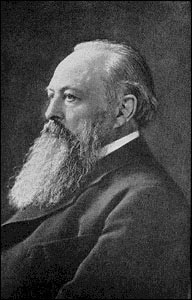 After the fourth century the declarations against slavery are earnest and continual. And in a theological but yet pregnant sense, divines of the second century insist on liberty, and divines of the fourth century on equality. There was one essential and inevitable transformation in politics. Popular governments had existed, and also mixed and federal governments, but there had been no limited government, no State the circumference of whose authority had been defined by a force external to its own.
On February 24 1803, the Supreme Court, in Marbury v. Madison, established the principle of judicial review.
February 14 marks Estonia’s Declaration of Independence, in 1918.
On February 23, 1898, Émile Zola was imprisoned in France after writing “J’accuse,” a letter accusing the French government of anti-Semitism and wrongfully imprisoning Captain Alfred Dreyfus.
Fifty-eight years earlier, Austrian economist Carl Menger was born.
Menger would go on to contribute to the development of the theory of marginal utility, which supplanted cost-of-production theories of value in economics, in his first book, translated into English as “Principles of Economics.” Though expert in mathematics (he served as tutor in economics and statistics to Archduke Rudolf von Habsburg, the Crown Prince of Austria not long after the publication of the Principles), his approach to marginal theory was the least mathematical of his famous “co-discovers” of the principle, William Stanley Jevons and Leon Walras. Rooted in a subjective theory of value, it was the most realistic and least model-based of the marginalist revolutionaries, and he was most interested in price formation, not “price determination,” which focused almost exclusively on equilibrium conditions. He developed an evolutionary theory of money, as well.
Menger’s second book was a defense of a particular kind of general theory in social science, and an explanation of the importance of “invisible hand” processes in the social world. The first theme caused a firestorm of debate in the German-speaking world, where “socialists of the chair” and other opponents of laissez faire went ballistic regarding the possibility of permanence of finding laws in the social world that were not of their own constructing. The second theme developed ideas found in Adam Smith, and extended them.
Menger inspired two major followers, Friedrich Freiherr von Wieser and Eugen von Böhm-Bawerk. The former named “marginal utility” and developed the first rigorous view of cost as opportunities foregone; the second advanced a time-preference theory of interest and theory of the structure of production. Later followers of this “Austrian School” included Ludwig von Mises and F.A. Hayek.