Earlier this week, Jeb Bush, former governor of the State of Florida, announced on Facebook that he is “exploring” a 2016 run for the Republican nomination for the presidency. I have mixed feelings, to say the least.
There’s the whole dynastic problem. Another Bush? Or, is Jeb the cost of finding a candidate to beat Hillary . . . who has her own dynastic baggage?
But the big story, here, is to watch the insiders scramble to keep out the outsiders.
![]()
 The trouble with both Hillary and Jeb is that they are insiders. They represent where the leadership of both parties wants its representatives and front-men (and -women) to go: to the putative “center.”
By which they really mean: don’t disturb the bailout system in American finance or the Pentagon procurement system for the military-industrial complex.
While it might be fun to contemplate Bill Clinton as the First Gentleman, or pick at the two issues over which Gov. Bush seems not very conservative at all, the truth is that both have access to a lot of entrenched power and loose money. Both Jeb Bush and Hillary Clinton enjoy incumbent-like advantages.
If the near future does sport a Clinton-Bush battle for the presidency, we can be sure of only one thing: status quo vs. status quo.
Leaving the real work of reform to those of us at the grassroots, with state and local issues our preoccupation. As long as insiders occupy the White House, our choices will be limited.
This is Common Sense. I’m Paul Jacob.
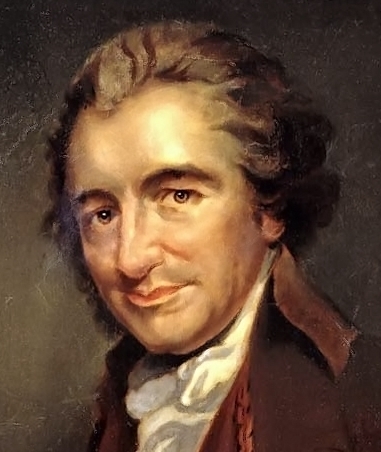 On December 19, 1776, Tom Paine published one of a series of pamphlets in the Pennsylvania Journal titled The American Crisis. Exactly one year later, George Washington’s Continental Army went into winter quarters at Valley Forge, Pennsylvania.
 The flowing tide is with Socialism. But tides ebb as well as flow.
 Pear quickly highlights how “ranchers were spared [from] having to report on pollution from manure,” schools from having to reduce salt or increase whole grain in their lunches, insurance companies from relinquishing tax breaks. These provisions, which incur no new spending, are lumped with one that does involve spending at taxpayer expense, a subsidy for promoting Nevada.
 These thoughts are occasioned by Greg Lukianoff’s new book Freedom from Speech, and the