On December 23, 1783, George Washington resigned as commander-in-chief of the Continental Army, at the Maryland State House in Annapolis, Maryland.
Categories
On December 23, 1783, George Washington resigned as commander-in-chief of the Continental Army, at the Maryland State House in Annapolis, Maryland.
Most ballot measures to enact term limits triumph. According to U.S. Term Limits, 100 percent of such measures did so in last November’s elections. Voters also rebuff most attempts to weaken or repeal term limits.
But not all.
 Politicians who loathe term limits often use all their resources and cunning to assail them. Occasionally they claw out a victory. Thus, last month Arkansas voters narrowly approved a multi-deceptive ballot measure with provisions to weaken the state’s legislative term limits. The measure passed despite everything pro-term-limit activists could do to expose the dirty tricks.
On the other hand, anti-term-limits forces in Prince Georges County, Maryland narrowly failed to flabbify term limits from two four-year terms to three four-year terms despite generous funding of the anti-term-limits campaign (primarily by local developers).
Much of the credit for saving Prince Georges term limits goes to University of Maryland sophomore Shabham Ahmed, creator of nothreeterms.com, who campaigned relentlessly against the measure. Ahmed believes that the vote was close only because some voters misunderstood what the measure would do; voters “do get caught up in the political propaganda.”
“People are tired of politicians in our county as it is,” she says. “Extending term limits would only increase the likelihood of creating a regime in politics, and voters don’t want that.”
No, we don’t.
But the politicians want that. And they’re not done yet.
Fortunately for the residents of Prince Georges County, defenders of term limits like Shabham Ahmed aren’t either.
This is Common Sense. I’m Paul Jacob.
On December 22, 1989, Communist President of Romania Nicolae Ceaușescu was overthrown by Ion Iliescu after days of bloody confrontations. The deposed dictator and his wife fled Bucharest with a helicopter as protesters erupted in cheers.
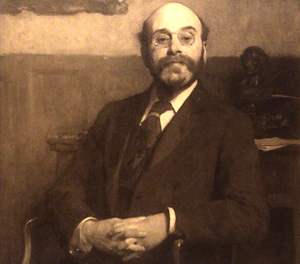
It is useless to consume our energies in mere verbal disputes. I must, however, caution students that definition is not a matter of indifference. Nine-tenths of the embarrassments which surround most philosophical questions arise from the difficulty of getting a firm hold of them. When this is done, the solution is comparatively easy. Until it is done no solution can be rationally hoped for.
This weekend at Townhall, a look at a “favorite son,” the latest “leader” to dip his toe into presidential waters. America doesn’t need that kind of leadership.
Click on over, give it a read, then come back here to make sure you’ve got a grasp on the extent of our mutual “insider” problem in these United States.
And did you see yesterday’s selected video? This is the kind of speech I’d like to hear from a newly elected president. On Thursday, “Another Insider?” covered some of the material in this weekend’s Townhall.com column.
 Taxation must be, potentially at least, co-extensive with government. The way to reduce it is to severely limit the function of government to the maximising of liberty, to abolish privilege, and to exercise due vigilance over the expenditure of the State revenue.
This is, in its own way, quite charming, don’t you think?
What we wish a newly elected president would say.
 On December 20, 1740, Arthur Lee — Revolutionary Era diplomat, spy, and Virginia delegate to the Continental Congress — was born. He practiced law in London from 1770 to 1776, where he wrote polemics against slavery and in defense of the American colonies’ resistance to the Townshend acts and other tyrannical British policies. He was brother to Richard Henry Lee and Francis Lightfoot Lee.
Remember Jimmy McMillan? He’s “the rent is too damn high!” shouting, six-time New York City mayoral candidate with the, er — Rent is Too Damn High Party.
McMillan is at least partly right. It’s no mystery that rents are so high. Government policies are aimed at just that result.
 In New York City, rent control discourages new supply as well as maintaining existing supplies — causing shortages leading to higher prices. In many cities, particularly in Blue political metropolises, zoning has pretty much the same effect.
Meanwhile, pumping subsidies into the demand side of the rental housing market doesn’t exactly decrease prices.
Last weekend, the Tyler Morning Telegraph offered up “Housing Choice Voucher program helps families,” reporting on 65-year-old Brinda Meier’s effort to land one of 500 “popular” Housing Choice Vouchers offered with grants of federal tax dollars distributed through Tyler’s Neighborhood Services Department. The voucher goes to help pay the rent.
That’s nice, of course, and no doubt why the program is popular. But the landlord actually cashes the voucher check. Moreover, to the extent these rent subsidies allow folks to afford higher rents, they in turn keep those rents higher — including for folks whose voucher numbers won’t come up in the “please Uncle Sam help pay my rent” lottery.
We discover that Meier, who lives on Social Security and food stamps, is preparing to move across town. She’s found a new place to rent, $200 cheaper than her current place — and in a better neighborhood. She tells the reporter that she’ll move without regard to whether she wins the rent subsidy.
So taxpayers may subsidize someone who doesn’t need it, serving only to keep rents too darn high.
This is Common Sense. I’m Paul Jacob.
The ethical basis of Individualism is . . . the necessity of such coercion in order that freedom may be at the maximum — in order that personal rights, and the proprietary rights which arise out of them, may be, so far as practicable, sustained.