The trial of Dr. Annette Bosworth has been postponed from next week to May 18. She faces 24 years in a South Dakota prison on 12 felony counts of election fraud and perjury, as well as the loss of her medical license if convicted on even one charge.
Pursuant to her run for the U.S. Senate as a Republican, Dr. Bosworth had gathered petitions, including at her office. When she traveled to the Philippines to care for those injured in a typhoon, folks back at her office continued to sign six petitions — 37 people in all, including her sister.
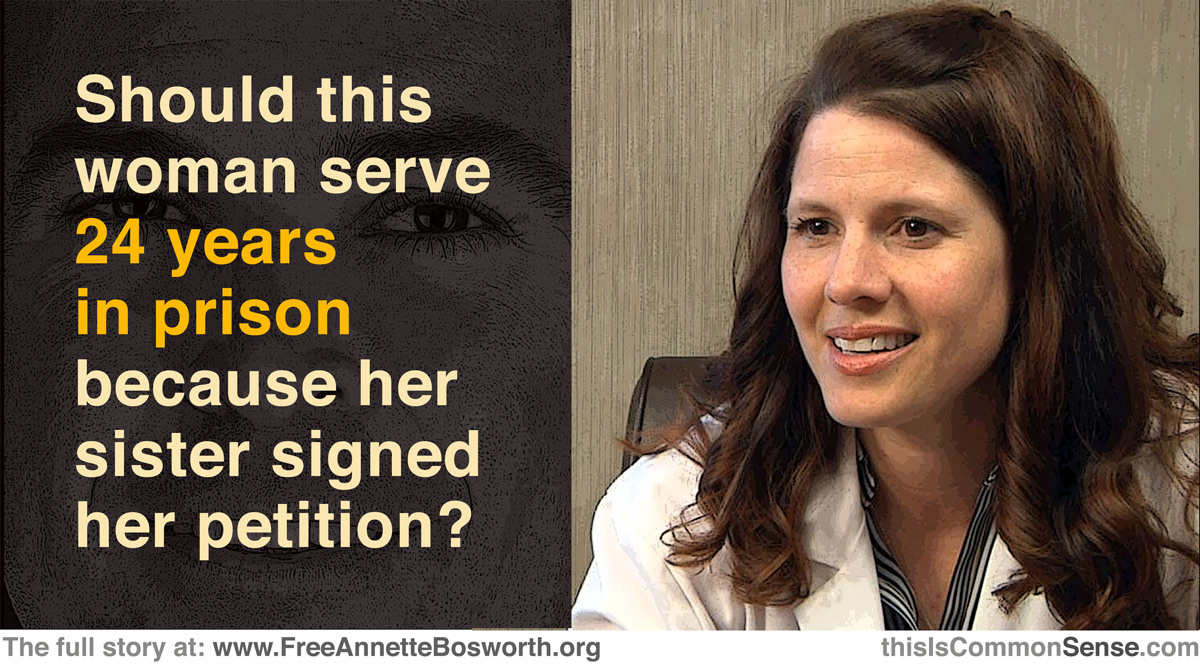 Weeks later, the doctor signed an affidavit as the circulator of those petitions, stating that she witnessed each signature being affixed. Not true, but she did know each signer. Seems more of a mistake than a criminal act. Having garnered more than enough signatures to meet the requirement, she obviously wasn’t someone trying to cheat her way onto the ballot.
Still, South Dakota Attorney General Marty Jackley pursues a case designed to crush not only her future in politics but also her career as a doctor.
For me, this story hits close to home. Seven years ago, a state AG launched a political war against two activists and me, the “Oklahoma 3.” Though eventually vindicated, it was scary.
The worst part? The impact on my wife and three daughters.
I know Annette is going through the same fright with her husband and three boys.
Putting Annette Bosworth, a caring doctor, a loving mother and a good, decent person, in prison — or ruining her medical career — serves only one purpose: to intimidate those people, like the doctor, who might dare step into the political arena against entrenched officials.
Politics in America isn’t supposed to be like this.
Let’s use the time between now and May 18 to help stop this injustice.*
This is Common Sense. I’m Paul Jacob.
Action: Help Dr. Bosworth Today!
 On January 31, 1849, the Corn Laws were abolished in the United Kingdom, one of the most impressive and far-reaching anti-protectionist moves of all time. “Corn” stood for all grains, including wheat, oats, barley, etc., and the free-trade agitation by John Bright and Richard Cobden (pictured) was one of the main impetuses for the reform.
 Patrick Michaels and Paul Knappenberger of the Cato Institute
  They keep telling us that in war truth is the first casualty, which is nonsense since it implies that in times of peace truth stays out of the sick bay or the graveyard.
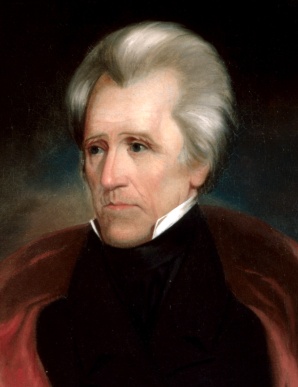 On January 30, 1835, Richard Lawrence attempted to shoot President Andrew Jackson, but failed. He was subdued by a crowd, including several congressmen. That was the first attempt on the life of a sitting U.S. president.
 The motive for the sadism? Critics of the royal family say that if you do anything to possibly undermine the country’s religious establishment, you’re also threatening Saudi Arabia’s ruling family, of which recently deceased King Abdullah (ruler since 2005) was one member. And the government is ruthless about protecting its turf.
 On January 29, 1761, Albert Gallatin was born. Gallatin served as the fourth United States Secretary of the Treasury — a post in which he served longer than any other in American history — advanced the anthropological and linguistic study of native Americans, and became the subject of a biography by Henry Adams. Called the “father of American ethnology,” he has been honored with a 1967 U.S. stamp (pictured) as well as many placenames, including the Gallatin National Forest in Montana.
 The American university system is enormous and it plays an enormous role in making the nation what it is — it is not too much to say, in fact, that it is an equal partner in the military-industrial-academic complex that essentially runs the country.