Categories
Today

ZOla and Menger

On February 23, 1898, Émile Zola was imprisoned in France after writing “J’accuse,” a letter accusing the French government of anti-Semitism and wrongfully imprisoning Captain Alfred Dreyfus.

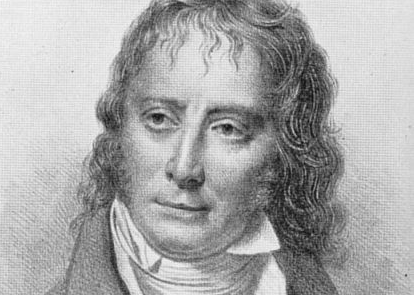
Fifty-eight years earlier, Austrian economist Carl Menger was born.

Menger would go on to contribute to the development of the theory of marginal utility, which supplanted cost-of-production theories of value in economics, in his first book, translated into English as “Principles of Economics.” Though expert in mathematics (he served as tutor in economics and statistics to Archduke Rudolf von Habsburg, the Crown Prince of Austria not long after the publication of the Principles), his approach to marginal theory was the least mathematical of his famous “co-discovers” of the principle, William Stanley Jevons and Leon Walras. Rooted in a subjective theory of value, it was the most realistic and least model-based of the marginalist revolutionaries, and he was most interested in price formation, not “price determination,” which focused almost exclusively on equilibrium conditions. He developed an evolutionary theory of money, as well.

Menger’s second book was a defense of a particular kind of general theory in social science, and an explanation of the importance of “invisible hand” processes in the social world. The first theme caused a firestorm of debate in the German-speaking world, where “socialists of the chair” and other opponents of laissez faire went ballistic regarding the possibility of permanence of finding laws in the social world that were not of their own constructing. The second theme developed ideas found in Adam Smith, and extended them.

Menger inspired two major followers, Friedrich Freiherr von Wieser and Eugen von Böhm-Bawerk. The former named “marginal utility” and developed the first rigorous view of cost as opportunities foregone; the second advanced a time-preference theory of interest and theory of the structure of production. Later followers of this “Austrian School” included Ludwig von Mises and F.A. Hayek.

Categories
meme

Heinlein: Fire and Fusion

“…like fire and fusion, government is a dangerous servant and a terrible master. You now have freedom — if you can keep it. But do remember that you can lose this freedom more quickly to yourselves than to any other tyrant.”

—Robert A. Heinlein,
The Moon Is a Harsh Mistress


Click the thumbnail image above to view at full size, and then “right-click” or “control-click” to download for use as a screensaver or desktop image. And please do feel free to share with your friends!

Categories
links

Townhall: Resistance in Munich

The White Rose dissidents have lessons for you and me, even today.

Click on over to Townhall, for Paul’s latest discussion of the White Rose students and their sacrifices. Then come back here to learn more. And get involved in making the world a better, freer place.

Categories
Today

Hans and Sophie executed

The White Rose

 On Feb. 22, 1943, brother and sister Hans and Sophie Scholl, and their colleague in the White Rose resistance organization, Christoph Probst, stood trial before the Volksgericht — the People’s Court that tried political offenses against the Nazi German state. Found guilty of treason by Roland Freisler, head judge of the court, the three were executed that same day. The method of capital punishment was guillotine.

Categories
Thought

John Hancock

John Hancock[W]e dread nothing but slavery. Death is the creature of a poltroon’s brains; ’tis immortality to sacrifice ourselves for the salvation of our country. We fear not death. That gloomy night, that palefaced moon, and the affrighted starts that hurried through the sky, can witness that we fear not death.

Categories
video

Video: The Last Days of the White Rose

If you have been following the “Today in Freedom” and new visual meme features here at Common Sense, you are aware of The White Rose, the group of German dissidents who in 1942 and 1943 produced pamphlets against the Nazi regime.

There have been several good books and movies produced about these young and now long-gone heroes. One of them is available free on YouTube. It focuses on young Sophie Scholls, and her final days — that is, her and her brother’s direct encounter with the Gestapo and the totalitarian Nazi state. Well worth watching, though prepare yourself — it is not a light, comic romp; anything but:

See the Townhall column of these events, now published on this site.

You owe it to yourself to read the six pamphlets of the White Rose, now available here.

Categories
Today

Marx Manifesto, Battle of Verdun, Malcolm X killed

On Feb. 21, 1848, The Communist Manifesto, written by Karl Marx with help from Friedrich Engels, was published in London by a group of German-born revolutionary socialists known as the Communist League.

On Feb. 21, 1916, the Battle of Verdun began with German bombardment of the city of Verdun, France.  For ten months, the longest single engagement of World War II, German forces attacked the French along a 20-kilometer front crossing the Meuse River. When the battle ended, with no change in the strategic position of either army, the combined death toll was over 300,000 (out of over 700,000 casualties).

On Feb. 21, 1965, Malcolm X was gunned down by rival Black Muslims while addressing his Organization of Afro-American Unity in New York City.

For something a tad more upbeat, on this date in 1952 the British government, under Winston Churchill, abolished identity cards in the UK to “set the people free.”

Categories
insider corruption term limits

Resigned in Disgrace

The political insider’s method of dealing with scandal since President Richard Nixon’s 1974 resignation has evolved. President Bill Clinton marshaled the stonewall defense, and his scandals didn’t quite stick, even as incriminating facts came to light. Nowadays, it seems like politicians can stay in office no matter what the misstep, what the folly, what the crime.

So it’s heartening to see a scandal actually lead to a sitting, elected executive leave office under a cloud, in full Nixonian fashion.

Former Governor John KitzhaberIt happened recently, in Oregon. Democratic Governor John Kithaber had stuck himself in a deep series of fixes, having to do with a girlfriend, green energy, insider advantages, influence peddling, and even the destruction of emails to avoid getting caught. He had hung on in the face of bad press, trying to pull a Clinton, but couldn’t manage that feat.

On Wednesday, Secretary of State Kate Brown, next in line, took the oath of office as governor.

There is no reason to pour salt on the former governor’s wounds, or bring down hasty anathemas against his replacement.

But let’s take the occasion to state the obvious: Kitzhaber was an old hand. He was serving a fourth term. He obviously succumbed to the temptations everyone in power faces.

He might have avoided his current ignominy had Oregon established term limits for the executive position. Though some governors manage criminal corruption in their first term — former Virginia Governor Bob McDonnell comes to mind — one sure way to avoid corruption is to limit one’s exposure to corrupting influences.

This is Common Sense. I’m Paul Jacob.

Categories
meme

Read the White Rose Leaflets

“Nothing is so unworthy of a civilized nation as allowing itself to be ‘governed’ without opposition by an irresponsible clique that has yielded to base instinct.”

Click here to read a complete collection of the White Rose leaflets


White Rose

Click the thumbnail image above to view at full size, and then “right-click” or “control-click” to download. And please do feel free to share with your friends!

Categories
Thought

Hans Scholl

I knew what I took upon myself and I was prepared to lose my life by so doing.

Hans Scholl’s explanation of his and his sister Sophie’s opposition to Germany regime. He and his sister were beheaded by the German government on February 22, 1943, having been found guilty of high treason for writing, producing and distributing political pamphlets.