Categories
Thought

Barbara Jordan

“There is no executive order; there is no law that can require the American people to form a national community. This we must do as individuals and if we do it as individuals, there is no President of the United States who can veto that decision.”


Barbara Jordan, 1976 Democratic National Convention Keynote Address

Categories
video

Video: Learning from an Old Coen Bros. Flick

Milking a 1990s comedy for its economic lessons.

Categories
Thought

Martin Luther King, Jr.

“Like any man, I would like to live a long life. Longevity has its place. But I’m not concerned about that now. I just want to do God’s will. And He’s allowed me to go up to the mountain. And I’ve looked over. And I’ve seen the promised land. I may not get there with you. But I want you to know tonight, that we, as a people will get to the promised land“


Martin Luther King, Jr., a day before his assassination, in a speech delivered at Bishop Charles Mason Temple in Memphis, Tennessee.

Categories
Today

Died in Office

On April 4, 1841, William Henry Harrison died of pneumonia, becoming the first President of the United States to die in office and the one with the shortest term served (he died on his 32nd day as president). Renowned Indian killer, a proponent of the expansion of slavery into Northwest Territories, and a Whig, Harrison won the presidency in part by turning the Democrats’ “log cabin and hard cider” aspersions on his character as the basic symbols of the campaign.

Though hardly a “limited government man,” some limited government history buffs proclaim him the Greatest President, on the ostensibly droll and possibly cynical grounds that he spent so little time in office.

On a sadder note, Martin Luther King, Jr., was assassinated on this day in 1968.

Categories
free trade & free markets general freedom Ninth Amendment rights tax policy

Taxation Rules

It turns out the United States is a tax haven.

Haven? Heavens! I live here. I don’t feel that low-tax feeling when April 15 rolls around.

But the Cato Institute’s Dan Mitchell, an expert on all things tax-policy — a dirty job, but somebody’s gotta do it — says “The U.S. Is a Tax Haven . . . and That’s a Very Good Thing.”

He is a huge fan of international tax competition. He likes it when governments at least marginally decrease the tax burden on prospective producers and investors, so as to lure production and investment from other tax jurisdictions. In his opinion, “we need some way to restrain the greed of the political class.”

Fans of big government disagree. Tax competition hinders their master plans to control and plunder the rest of us.

Mitchell knows that we mere U.S. citizens tend to lug a big tax load. But the United States is in fact “a tax haven. Not for Americans, of course, but . . . we have some good rules for foreigners.” In addition to their ability to exploit the especially robust corporate privacy rules of a state like Delaware, foreign investors can avoid taxes on interest and capital gains on their stateside investments.

Now, Mitchell says, let’s apply those “same good policies to Americans.”

Hear hear! Havens I can access are even more appealing than those I can’t.

This is Common Sense. I’m Paul Jacob.


Printable PDF

Overburdened Pack Mule


Categories
Thought

Martin Luther King, Jr.

“…only when it is dark enough can you see the stars. And I see God working in this period of the twentieth century in a way that men, in some strange way, are responding.

“Something is happening in our world. The masses of people are rising up. And wherever they are assembled today, whether they are in Johannesburg, South Africa; Nairobi, Kenya; Accra, Ghana; New York City; Atlanta, Georgia; Jackson, Mississippi; or Memphis, Tennessee — the cry is always the same: ‘We want to be free.‘“


Martin Luther King, Jr., a day before his assassination, in a speech delivered at Bishop Charles Mason Temple in Memphis, Tennessee.

Categories
Common Sense general freedom ideological culture national politics & policies

Lions and Lambs

“March comes in like a lion, goes out like a lamb.”

Tell that to Indiana Governor Mike Pence, whose signing of the Religious Freedom Restoration Act (RFRA) into law at the end of March created a roaring controversy.

Does the law enable discrimination? Or protect religious freedom? Or both? Neither?

An Associated Press report explains: “Religious freedom laws like the one causing an uproar in Indiana have never been successfully used to defend discrimination against gays — and have rarely been used at all, legal experts say.”

Of course, discrimination continues. In 2014, a Texas restaurateur refused service to a gay couple. As a FindLaw.com article explains, the 1964 Civil rights Act “only prohibits discrimination on the basis of color, race, religion, or national origin, and says nothing about sexual orientation.”

So some states, such as New Mexico and Oregon, added legal protections for sexual orientation. But that’s led to reverse violations of rights — facing a $150,000 fine, a bakery closed its shop after the Oregon Bureau of Labor and Industries ruled it violated a lesbian couple’s civil rights by declining to make a wedding cake; a New Mexico photographer was found guilty of violating the state’s Human Rights law for declining to photograph a gay couple’s commitment ceremony.

In times’ past, both state and private violence enforced invidious racial discrimination. Thankfully, those days are gone — cafes, hotels and stores are open to all.

But the civil rights laws that prohibit discrimination in public accommodations cases are distinct from forcing photographers or florists or flutists to personally participate in a ceremony they choose not to.

This is Common Sense. I’m Paul Jacob.


Printable PDF
LIons and Lambs


Categories
Thought

Jimmy Carter

“Being confident of our own future, we are now free of that inordinate fear of communism which once led us to embrace any dictator who joined us in that fear.”


James Earl Carter, Jr., Commencement Address, Notre Dame University, May 22, 1977

Categories
folly government transparency porkbarrel politics too much government

Lagniappes à la Legislators

Finally, a legislator with the guts to strike directly at the root of the problem: the People.

Well, not all the people. Just the ones who speak out, who show a lack respect for their elected betters.

In recent years, the Arkansas Legislature has heroically tried to control the chaotic and dangerous excesses of freedom and democracy in the Natural State. Legislators have proposed laws clamping down on citizen petitions, requiring employees to friend their employers on Facebook, outlawing photography in public and . . . well, you get the picture.

Last November, legislators convinced voters to amend the state constitution to weaken term limits and establish an independent commission (appointed by legislators) to raise their pay 148 percent. How? By astutely telling voters that the amendment would “set term limits,” while saying nothing about the pay hike.

Legislators also cleverly curtailed the citizen initiative process, regulating paid petitioners in ways the state constitution prohibits. But they got a pass on that; the eminent state supreme court has ruled in their favor. Then, unwilling to rest on their laurels, legislators introduced a new bill requiring petition campaigns to conduct costly criminal background checks on their paid petitioners.

One opponent called this deeply thoughtful measure “mean-spirited” and “unnecessary.”

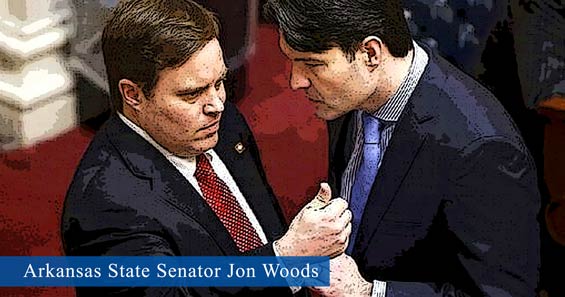
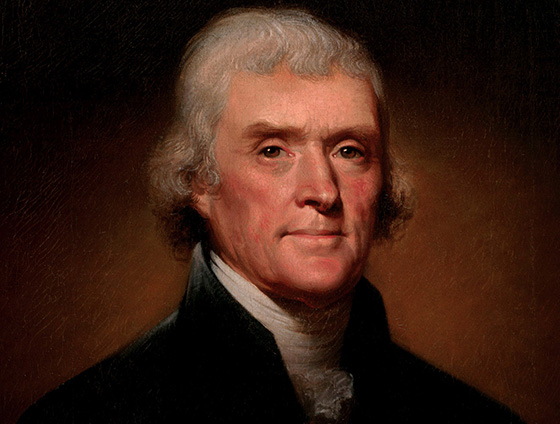
Sen. Jon Woods argued the legislation doesn’t go far enough. He filed Senate Bill 0401, which mandates that any person speaking out in any way not in sync with the legislature must shut up.

“Enough pussy-footing around. Let’s end all this free speech hogwash,” Woods said. “We’re the boss!”

For real?

Unfortunately, everything prior to the previous three paragraphs is 100 percent true. Yup, every day is April Fools’ Day at the Arkansas Legislature.

This is Common Sense. I’m Paul Jacob.


Printable PDF
Arkansas Fools


Categories
Thought

William Shakespeare

The fool doth think he is wise, but the wise man knows himself to be a fool.

William Shakespeare, As You Like It (c.1599-1600), Act V, scene 1, line 34.