Categories
Today

March First Firsts

March 1st Firsts (and a 17th and a 37th):

| The first United States census was authorized, in 1790.

| Ohio was admitted as the 17th U.S. state, in 1803.

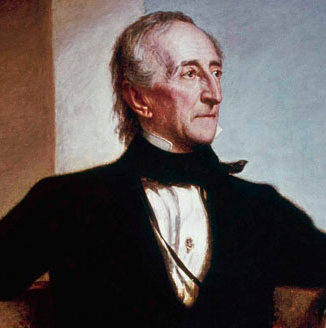
| President John Tyler [pictured above] signed a bill authorizing the United States to annex the Republic of Texas, in 1845.

| The state of Michigan formally abolished capital punishment, 1847.

| Nebraska became the 37th of the United States, in 1867.

| Yellowstone National Park was established as the world’s first national park, 1872.

On March 1, 1781, the Continental Congress of the United States adopted the Articles of Confederation. With this, the governing body became known, officially, as United States of America in Congress Assembled, less officially as the Congress of the Confederation. The first session of this newly styled Confederation Congress took over without a break from the Second Continental Congress, adjourning on November 3. Samuel Huntington and Thomas McKean served as presidents during this first session.

Categories
Thought

Abraham Lincoln

The Union is much older than the Constitution. It was formed, in fact, by the Articles of Association in 1774. It was matured and continued by the Declaration of Independence in 1776. It was further matured, and the faith of all the then thirteen States expressly plighted and engaged that it should be perpetual, by the Articles of Confederation in 1778. And finally, in 1787, one of the declared objects for ordaining and establishing the Constitution was to form a more perfect Union.


Abraham Lincoln, first inaugural address (March 4, 1861).

Categories
Accountability folly government transparency moral hazard national politics & policies responsibility

Unfair Reform?

I am sure we all think it would be great, other things being equal, to try to make many of life’s unfairnesses less . . . problematic. But most grown-ups understand (or used to) that “life isn’t fair” is a truism for a reason.

So when Republican presidential candidate Donald Trump criticized his competing GOP hopefuls for wanting to reform Social Security and other so-called “entitlements,” I was unimpressed.

“Every Republican wants to do a big number on Social Security,” Trump said last year, referencing Medicare and Medicaid as well. “And we can’t do that. And it’s not fair to the people that have been paying in for years and now all of the sudden they want to be cut.”

Not fair.

Well, yeah.

But the unfairness is not in fixing the system by raising retirement ages, etc. The real injustices lie in the past, with previous fixes and . . . “unfixes” — that put us in the fix we are currently in.

And not fixing it now will lead to further, more obvious “unfairness” in the future.

Trump is just avoiding responsibility. By not addressing the problem honestly, we do not make things or keep things fair. We make things worse.

Peter Suderman notes that Chris Christie’s endorsement of Trump, last week, puts the lie to the New Jersey governor’s much-ballyhooed seriousness about entitlement reform.

Well, yeah.

But no major politician wants to handle it. For the problem shows how deep the unfairness runs in the American system.

That would require real leadership.

This is Common Sense. I’m Paul Jacob.


Printable PDF

Donald Trump, Presidential, Social Security, illustration


A healthy democracy depends on the spreading of good ideas. If you found this article useful,  please share it with friends by clicking on any of the social media icons below.

Common Sense Needs Your Help!

Also, please consider showing your appreciation by dropping something in our tip jar  (this link will take you to the Citizens in Charge donation page… and your contribution will go to the support of the Common Sense website). Maintaining this site takes time and money. Your help in spreading the message of common sense and liberty is very much appreciated!

 

Categories
Thought

Barbara Jordan

Do not call for black power or green power. Call for brain power.

Categories
Today

Leap Day

February 29, also known as the leap day of the Gregorian calendar, is a date that occurs in most years that are divisible by four, such as 2012, 2016, 2020, and 2024. Years divisible by 100, but not by 400, do not contain a leap day — 1700, 1800, and 1900 did not contain a leap day.

Years containing a leap day are called leap years.

On Leap Day, 1796, the Jay Treaty between the United States and Great Britain went into force, facilitating ten years of peaceful trade between the two nations.

A “leapling” is a person born on a leap day. Famous leaplings include Italian composer Gioachino Rossini (1792), American poet Howard Nemerov (1920), American fantasy author Tim Powers (1952), and Ukrainian-American lawyer and educator Eugene Volokh (1968).

Categories
links

Townhall: Work and Pay Realism vs Progressive Nonsense

What people get paid in the open market depends upon choices about time and productivity. But not all work takes place in that market. And there’s progress, to boot.

Click on over to Townhall.com, for this weekend’s dose of Common Sense — something rare when it comes to talk about earnings differences between the sexes.

Then come back here for more reading:

Categories
Thought

Barbara Jordan

But this is the great danger America faces. That we will cease to be one nation and become instead a collection of interest groups: city against suburb, region against region, individual against individual. Each seeking to satisfy private wants.

Categories
Today

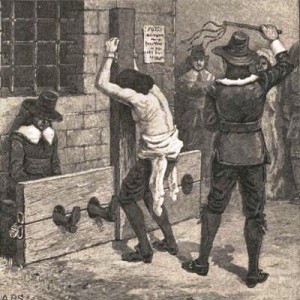
February 28, Roger Scott whipped for sleeping in church

On February 28, 1646, Roger Scott, of Lynn, Massachusetts, was tried for sleeping in church. Awakened in church by a tithingman’s long, knobbed staff hitting him on the head, he struck back at the man, and garnered a whipping as punishment, as well as the dark designation as “a common sleeper at the publick exercise.”

Categories
video

Video: How Today’s Fascists Do It

Squelching the speech of those you disagree with, how it is done — a cultural artifact of the present age:


In this video, the valiant Ben Shapiro gives a scheduled talk, but is harassed by protestors and his talk sabotaged by those seeking to “no-platform” him.

Categories
Today

Arthur Latham Perry

On February 27, 1830, American economist and free trade advocate Arthur Latham Perry was born.


The Twenty-second Amendment (Amendment XXII) of the United States Constitution, which sets a term limit for election and overall time of service to the office of President of the United States, was ratified by the requisite 36 of the then-48 states on February 27, 1951.

Congress had passed the amendment on March 21, 1947.