On May 21, 1851, slavery was abolished in Colombia, South America.

On May 21, 1851, slavery was abolished in Colombia, South America.

A few days ago, the Barna Group released the results of its latest poll, asking “Americans whether capitalism or socialism align better with the teachings of Jesus,” explains The Hollywood Reporter. The results are that “socialism won 24 percent compared to 14 percent, with the rest answering ‘neither’ or ‘not sure.’”
And what about the year’s big race?
“When asked which presidential candidate’s policies aligned closest to the teachings of Jesus, Sanders was on top with 21 percent, compared to 9 percent for Hillary Clinton and 6 percent for Donald Trump.” Ted Cruz, no longer in the race, fared better than Hillary, but below Bernie, at 11 percent.
Now, it is worth mentioning that more significant polling on issues relating religion to politics has been done by Barna. Still, the commentary over at Fox on this poll was . . . interesting.
On Bill O’Reilly’s show, Monica Crowley made the crucial distinction between Jesus’ command to give to the poor and modern socialists’ demands to take from some, through taxation and by force, to give to others.
O’Reilly himself, however, went on a bizarre and joking riff about “buying his way to heaven” by leaving his wealth to charity . . . after he dies.
Looking over these poll numbers, I can only conclude that advocates of a free society have much work to do convincing Americans of the justice and benevolence of free markets, of “capitalism.”
And Christians have their work cut out for them, too . . . at the very least to disencumber themselves from the stench of socialist states and the brutal force those states inevitably rest upon.
This is Common Sense. I’m Paul Jacob.

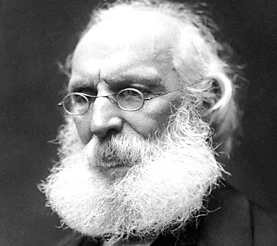
French economist and co-winner of the first (1901) Nobel Prize for Peace, Frédéric Passy, was born on May 20, 1822.
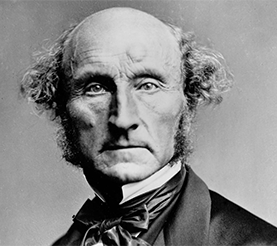
English economist and philosopher John Stuart Mill was born exactly 16 years earlier.

The pioneers of rationalism inveighed against the traditional dogmas, ridiculed popular superstitions, campaigned against priests and sorcerers, and castigated them for fostering and preying upon the ignorance of the masses — hoping that a final victory of science would vanish for ever the evils of unreason and organized deception. Little did they suspect that a Trojan Horse would appear in the camp of enlightenment, full of streamlined sorcerers clad in the latest paraphernalia of science.
Stanislav Andreski, Social Sciences as Sorcery (1972), p. 237-238.

Sometimes politicians have trouble making up their minds. During election years — with the looming prospect of voters having a say — their decision-making process becomes even more perilous.
Take the idea of forcing young women to register for the draft. Young men must, under threat of five years in prison, a $250,000 fine and the loss of government benefits — all the way down to denying a driver’s license to non-registrants in many states. So why not force women to sign up for forced military service?
For equality!
Just days ago, it seemed nearly everyone was for conscripting our daughters — or, at least, registering them for future conscription. Obama’s Secretary of Defense Ash Carter and military leaders enthusiastically endorsed the idea. So did Republican Senate Majority Leader Mitch McConnell.
In recent weeks, legislation beginning mandatory draft registration of women, ages 18-26, passed both the House Armed Services Committee and the Senate Armed Services Committee. Then, all the sudden — poof! — that provision was ripped out of the House bill.
“This is a dead-of-night attempt to take an important issue off the table,” complained the ranking Democrat on House Armed Services, Rep. Adam Smith of Washington.
Timing is everything, in comedy and politics. Congressional leaders don’t want to take any pro-draft action now, not with an election just six short months away.
“We have a choice to make,” Rep. Mike Coffman (R-Colo.) argues, “either we continue with Selective Service and have women be a part of it, or we abolish it altogether.” Coffman advocates the latter, having introduced a bipartisan bill with Rep. Jared Polis (D-Colo.), H.R. 4523, to end draft registration and close the superfluous agency.
That’s Common Sense, especially in an election year. I’m Paul Jacob.

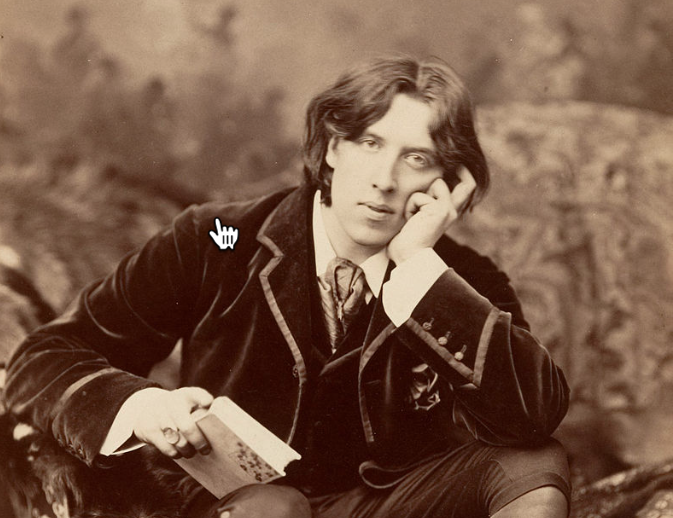
A man who does not think for himself does not think at all.
Oscar Wilde, The Soul of Man Under Socialism, 1895.
On May 19, 1897, Irish author, playwright, and poet Oscar Wilde (October 16, 1854 – November 30, 1900) was released from Reading Prison, where he had finished, in ill health, his hard labor sentence for “gross indecency.” His “Ballad of Reading Gaol,” first published pseudonymously in a periodical with wide circulation amongst criminals, quickly achieved the status of a classic, and one of only two great works following his imprisonment.
He died less than three years later, in exile in Europe. His most famous works include the play The Importance of Being Earnest, the novel The Picture of Dorian Gray, and the fascinating essay “The Soul of Man Under Socialism.”

How does that old, pithy anti-term limits slogan go, again? “We already have term limits, they’re called indictments!”
Wait . . . is that it?
Must be. This election year — the year of the outsider, the year of unbridled contempt for establishment, Washington, D. C., politicians — has seen only one incumbent congressman defeated by the voters.
Just one. It came late last month in the wake of a 29-count felony indictment charging Congressman Chaka Fattah (D-Pa.) with bribery, theft, bank and mail fraud, racketeering, and more.
In all the other congressional primary contests pitting incumbents against challengers across the country so far this year, a solid 100 percent were won by the incumbent — zero won by challengers.
Rep. Fattah, whose corruption trial began in federal court on Monday, has pled not guilty to all charges, proclaiming his innocence. “Chaka Fattah’s lifestyle is not on trial,” his defense attorney told jurors. “Philadelphia politics are not on trial. [Congressional] earmarks, donations, grants to nonprofits are not on trial.”
But Congressman Chaka Fattah certainly is.
The incumbent’s previous re-election had been a breeze — completely unopposed in the all-important Democratic Primary, and then garnering 88 percent of the vote against his sacrificial GOP challenger. That was in 2014, before the felony charges.
Following the indictment, the Washington Post reported that Fattah “found it difficult to raise money after the party establishment all but abandoned him.” So, even in this single instance, the FBI and the party establishment, more than voters, sent this 22-year incumbent packing.
I have a new slogan: “We don’t have term limits, and we need ’em!”
This is Common Sense. I’m Paul Jacob.

Please consider showing your appreciation by dropping something in our tip jar (this link will take you to the Citizens in Charge donation page… and your contribution will go to the support of the Common Sense website). Maintaining this site takes time and money.
Your help in spreading the message of common sense and liberty is very much appreciated!
Selfishness is not living as one wishes to live, it is asking others to live as one wishes to live.
Oscar Wilde, The Soul of Man Under Socialism, 1895.

On May 18, 1593, playwright Thomas Kyd’s accusations of heresy led to an arrest warrant for fellow playwright Christopher Marlowe.
Kyd was the famed author of The Spanish Tragedy, and “Kit” Marlowe [pictured] was known for a number of plays, including The Jew of Malta and The Tragicall History of the Life and Death of Doctor Faustus.
Marlowe died a few weeks later, on May 30, without having been arrested. The circumstances of his death were bizarre, suspicious — as if written by a playwright.
On May 18, 1652, Rhode Island passed the first law in English-speaking North America making slavery illegal.