Experience, the name men give to their mistakes.
Oscar Wilde, Vera, or The Nihilists, 1880.
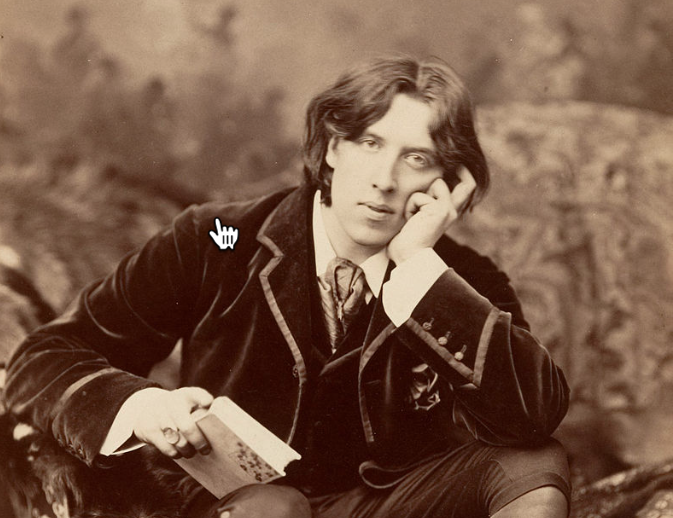
Experience, the name men give to their mistakes.
Oscar Wilde, Vera, or The Nihilists, 1880.
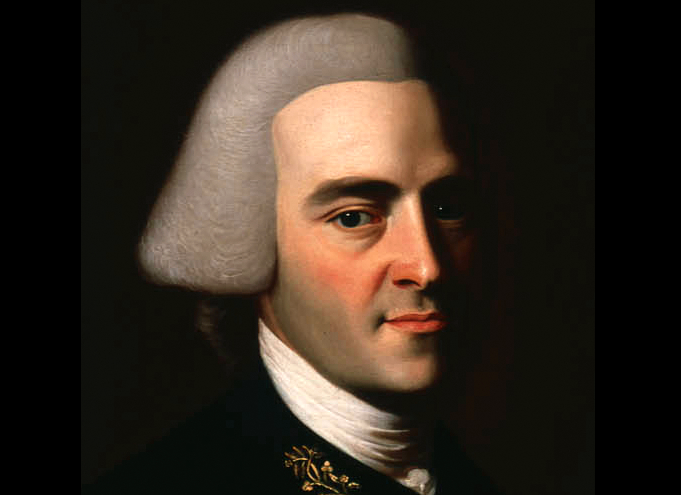
On May 24, 1775, John Hancock was elected president of the Second Continental Congress.
Hancock’s involvement with Samuel Adams and his radical group, the Sons of Liberty, won the wealthy merchant the dubious distinction of being one of only two Patriots (the other being Sam Adams) that the Redcoats marching to Lexington in April 1775 to confiscate Patriot arms were ordered to arrest. When British General Thomas Gage offered amnesty to the colonists holding Boston under siege, he excluded those same two men from his offer.

The fall of Venezuela is an atrocity.
The comic elements are clear enough — the further you remove yourself from the poverty, chaos, and collapse. We can wallow in a bit of Schadenfreude, taking glee as some American leftists squirm to explain why the socialist paradise they ballyhooed a mere three years ago now tail-spins to the grave.
The collapse of this socialist experiment offers an enormous level of tragedy. It’s not pretty.
The country’s leader, President Nicolas Maduro, makes his predictable desperation play. Rather than confront his own errors, and the futility of making socialism work in anything like a rigorous form, he boasts. “Venezuela Leader Says US ‘Dreams’ Of Dividing Loyal Military,” reads yesterday’s Reuters report. While no doubt true, this is one of those cases where whatever we dream to the north, our dreams are better than their current reality.
Of course the Venezuelan military should turn on Maduro, Hugo Chavez’s inheritor, protecting the right of recall, which Maduro is denying. By painting the U. S. as the bad guy, Maduro hopes to unite his people — especially his armed forces — around him. That’s what a desperate demagogic dynast does. Citizens and subjects traditionally abandon skepticism about their leaders when they feel threatened from the outside.
Which is one reason it would be a mistake for the U. S. to intervene.
Reuters poetically reports that the military is still united behind the socialist government, and resists the recall referendum, singing “Fatherland, Socialism, or Death!”
Wrong conjunction. Not “or” but “and” . . . if you insist on socialism.
The government, military pressure or no, should allow the recall vote, and soon.
This is Common Sense. I’m Paul Jacob.


Like many other things, the laudable ideal of combining education and research has its seamy side, in that graduate teaching offers an opportunity to recruit cheap (and in a way forced) labour for the captains of the research industry.
Stanislav Andreski, Social Sciences as Sorcery (1972), p. 187.

On May 23, 1788, South Carolina became the 8th state to ratify the U.S. Constitution.
Other May 23 events include:
* 1813: South American independence leader Simón Bolívar entered Mérida, where he was proclaimed El Libertador (“The Liberator”), leading the invasion of Venezuela.
* 1900: Sergeant William Harvey Carney became the first African American to be awarded the Medal of Honor, for his heroism in a Civil War battle fought 37 years prior, in 1863.
* 1958: Birthday of American comedian and game show host Drew Carey.
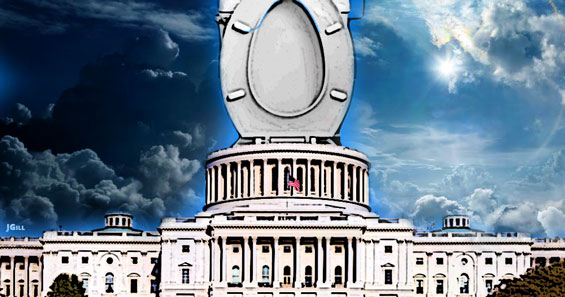
This week at Townhall, an expansion of Monday’s Common Sense outing . . . to the outhouse. But whether the question is what is in and what is out, the reality is, WHERE and WHO must decide WHAT goes WHERE and WHY.
Click on over. Then come back here for an advanced education.
On the hundredth day of 1998, the Northern Ireland peace talks ended with an historic agreement, dubbed the Belfast, or Good Friday Agreement. The accord was reached after nearly two years of talks and 30 years of conflict. A little more than a month later, on May 22, 1998, this Agreement was approved by voters across the island of Ireland in two referendums.
In Northern Ireland, voters were asked whether they supported the multi-party agreement.
In the Republic of Ireland, voters were asked whether they would allow the state to sign the agreement and allow necessary constitutional changes to facilitate it. The people of both jurisdictions needed to approve the Agreement in order to give effect to it.
The British-Irish Agreement came into force on December 2, 1999
On May 22, 1995, in the case U.S. Term Limits v. Thornton, the U.S. Supreme Court struck down Arkansas’s congressional term limits law, 5-4, overturning the congressional term limits then the law in 23 states: Arizona, Arkansas, California, Colorado, Florida, Idaho, Louisiana, Maine, Massachusetts, Michigan, Missouri, Montana, Nebraska, Nevada, New Hampshire, North Dakota, Oklahoma, Ohio, Oregon, South Dakota, Utah, Washington and Wyoming.
Other May 22 events include
* 1856: South Carolina Congressman Preston Brooks savagely beat Massachusetts Senator Charles Sumner in the halls of Congress as tensions rise over the expansion of slavery. Sumner did not return to the Senate for three years while he recovered.
* 1848: Slavery was abolished in Martinique.
* 1807: A grand jury indicted former Vice President of the United States Aaron Burr on a charge of treason. Burr (in portrait, above) was later acquitted.
And, after all, what is a fashion? From the artistic point of view, it is usually a form of ugliness so intolerable that we have to alter it every six months.
Oscar Wilde, “The Philosophy of Dress,” The New York Tribune, 1885.

The comedy of the “settled science” of nutrition has really been improved by federal support: