Categories
education and schooling folly ideological culture responsibility

Anti-Lynch Lynch Mob

America’s worst racial and sexual injustices were institutionally addressed years ago, in the Sixties and soon after — by folks in the Civil Rights movement, everyday citizens, and their representatives.

So what do today’s earnest, Johnny-and-Jilly Come Lately “Social Justice Warriors” have left to complain about?

Why, building names, of course!

The local college in Annville, Pennsylvania, has been embroiled in a bizarre civil rights complaint about their Lynch Memorial Hall. Named after one Dr. Clyde A. Lynch, a Depression Era benefactor, some SJW students are demanding that it be changed, because of, get this, “associated racial connotations.”

“Lynch,” you see. It triggers them.

I kid you not.

Colin Deppen, writing last week on pennlive.com, explained how Dr. Lynch had nothing to do with the lynching of African-Americans in Jim Crow days. The extra-legal hanging tradition began much earlier, in the Revolutionary War, “with a Captain William Lynch of Pittsville, Virginia.” This fellow “headed a self-constituted court with no legal authority that persecuted suspected British loyalists.”

Lynching’s origins? White-on-white violence, not white-on-black.

SJW students, mostly ignorant and incurious, prefer coming off as whiners or moral scolds than learn something.

Or let a coincidence go.

The problem is this: the closer some people get to reaching their goals, they have less and less to do. Yet many “late adopters” covet the moral authority of their predecessors. So they pack all their frustration and passion into making more and more unreasonable demands.

But this may be self-correcting. They look like idiots. And they have obtained our attention. This Lynch Mob nonsense could be the sign of their end times.

This is Common Sense. I’m Paul Jacob.


Printable PDF

racism, political correctness, progressivism illustration, common sense, trigger warning, micro-aggression,


Categories
Today

Official Recognition

On December 17, 1777, France formally recognized the United States of America.

The 17th of December, 1819, was the day Simon Bolivar declared the independence of the Republic of Gran Colombia in Angostura.

Categories
Thought

Arthur Latham Perry

Contrary to a common conception in the premises, the sacred books of both Jews and Christians display no bias at all against buying and selling, but rather extol such action as praiseworthy, and also those qualities of mind and habits of life that lead up to it and tend too to increase its amount, and they constantly illustrate by means of language derived from traffic the higher truths and more spiritual life, which are the main object of these inspired writers.

Arthur Latham Perry, Principles of Political Economy, 1891.
Categories
Accountability general freedom ideological culture national politics & policies responsibility

Finland on 800-Euros-a-Month

Some folks think the world owes them a living.

Must we appease them?

Should government hand every man, woman and child a check each month to make sure we’re all taken care of?

Finland is embracing this basic idea with a pilot program, providing everyone an “unconditional basic income” (UBI). Treating citizens equally is enshrined in Finland’s constitution, so every Finn will receive the same 800-euros a month without regard to income or lack thereof.

It sounds like Democrat George McGovern’s “guaranteed annual income,” which was mocked and ridiculed during the 1972 presidential campaign.

But you might be surprised who has supported the UBI: free-market economist Milton Friedman advanced the similar “negative income tax” back in 1962; Martin Luther King liked it; Austrian economist F. A. Hayek endorsed the concept; Charles Murray, author of Losing Ground, has developed a version of the proposal.

The rationale? Save money by consolidating duplicative welfare programs. After all, the U.S. government runs 79 means-tested benefit programs, each with its costly, redundant bureaucracy.

Counter-intuitively, perhaps, Finland’s social engineers think the move will increase employment. Why? Because welfare benefits currently can be withdrawn when Finns gain employment and the attendant income, which discourages folks from risking their secure base benefits.

That’s the case here, too.

The government passing out money — our money — stinks. Folks should take care of themselves, or depend on charity — not confiscatory taxation. Yet, if this version of a safety net does indeed encourage industry, employment, and good old-fashioned money-making amongst the poor . . . it may very well be a step in the right direction.

This is Common Sense. I’m Paul Jacob.


Printable PDF

Finland, Guaranteed Income, UBI, welfare, income, Common Sense, illustration


Categories
Thought

Henry David Thoreau

“If we were left solely to the wordy wit of legislators in Congress for our guidance, uncorrected by the seasonable experience and the effectual complaints of the people, America would not long retain her rank among the nations.”

Henry David Thoreau, “Resistance to Civil Government,” Aesthetic Papers, 1849 (republished in a variety of titles, including On the Duty of Civil Disobedience).

Categories
Today

The Convention Parliament

On December 16, 1689, the Convention Parliament began, not only transferring power from one king to another, but establishing procedures and rights into the British Constitution, both of which were copied in the United States of America a century later, with the Constitution’s Bill of Rights.

Categories
free trade & free markets general freedom ideological culture media and media people national politics & policies

Historic Paris Pact?

The climate change pact just completed at the United Nations conference in Paris is, the Washington Post informs us, “historic.”

The New York Times, LA Times, Chicago Tribune, and just about every other paper uses that very word in their headlines, too.

“The 12th of December, 2015, will remain a great date for the planet,” declared French President Francois Hollande, dubbing it “the most beautiful and the most peaceful revolution that has just been accomplished.”

“History will remember this day,” U.N. Secretary-General Ban Ki-moon predicted. President Obama called it a “turning point for the world.”

Chris Mooney, in a deeper analysis for the Washington Post, agreed that all the hoopla was “more than warranted.”

But Mooney also acknowledged that, “this document, by its very nature, depends on . . . Countries, companies and individuals all across the planet [doing] the right things — and very hard things, at that.”

How hard?

Essentially ending any emission of greenhouse gases in the next half-century.

“Achieving such a reduction in emissions would involve a complete transformation of how people get energy,” the New York Times reported, “and many activists worry that despite the pledges, countries are not ready to make such profound, costly changes.”

As the negotiator for the Federated States of Micronesia put it: “We’ve agreed to what we ought to be doing, but no one yet has agreed to go do it. It’s a whole lot of pomp, given the circumstances.”

“What’s more,” adds Mooney, “even if everyone plays by the rules, the standards and goals set out by the Paris agreement may not be enough to prevent the catastrophic effects of climate change.”

Historic? History will determine that.

This is Common Sense. I’m Paul Jacob.

Printable PDF

climate change, global warming, Paris, accord, Common Sense


Categories
Thought

Arthur Latham Perry

“No government is wise enough, or ever will be, to say how much of the results of my labor I shall contribute to my neighbor to remunerate his labor.

“Congress has nothing to say about that. Congress is bound to give us both the benefit of equal laws, and then to leave us both to take care of ourselves. It is no part of the duty of Congress to see that any set of men whatever are making money.”

Arthur Latham Perry, Elements of Political Economy, 1865.

Categories
Today

Bill of Rights

On December 15, 1791, the United States Bill of Rights became federal law when ratified by the Virginia General Assembly.

On December 15 in 1933, the Twenty-first Amendment to the United States Constitution officially became effective, repealing the Eighteenth Amendment (which had enabled the Volstead Act) that had prohibited the sale, manufacture, and transportation of alcohol.

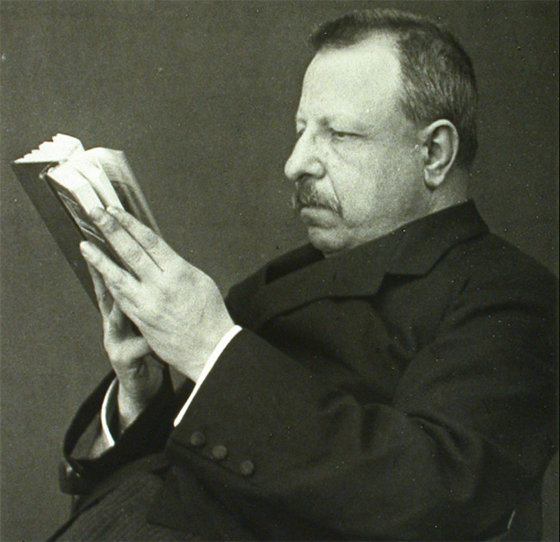
December 15 birthdays include that of Pehr Evind Svinhufvud af Qvalstad [pictured above], 1861, first Head of State of independent Finland, by heading first the Senate and then serving as Protector, or Regent. He was strongly anti-Communist and a time-leftist.

Svinhufvud later served as Finland’s third President. He died in 1944.

Categories
Accountability ideological culture national politics & policies responsibility

Pollsters Are Political Players, Too

Is Trump electable? Can Carson nab the GOP presidential nomination? Does Rand Paul have a chance? Is Chris Christie finished — before a voter has voted?

It’s still pre-primary season, and it is worth remembering that — even as we judge candidates on  various capacities, including their ability to “handle the media” — one arm of the media possesses potentially the most influence along with too little scrutiny: the pollsters.

They are allegedly the most scientific and objective folks in the industry, with closest ties to actual intellectual disciplines, statistics and political science.

But they are also, willy nilly, political players, not just observers.

Though tasked to provide data on public opinion about matters of importance, they also influence public opinion in several crucial ways:

  1. By how they phrase poll questions. This is an art, and can be extremely propagandistic. Pollsters can often “get” the information they want — if they want something in particular, perhaps for partisan reasons — by wording those questions carefully.
  2. By ordering questions in particular ways. The first question sets up a context. The second is then interpreted by those polled in that context. Pollsters can nudge people to reverse their usual opinions by providing an alien context.
  3. By presenting the results, skewed or not. People are influenced by others. Voting for candidates, especially, partly depends on second-guessing other voters. Few people wish to vote for someone who “cannot win.” Therefore, a published poll result that shows popularity can increase popularity, in a sort of multiplier effect.

Polls and poll results can provide useful information. Hey, I’ve used professional pollsters. But we all have to be cautious . . . remembering that voting one’s conscience is a high-percentage play.

This is Common Sense. I’m Paul Jacob.

Printable PDF

polling, polls, pollster, democracy, influence, elections, Common Sense, Bias, illustration