Categories
Today

Stroke?

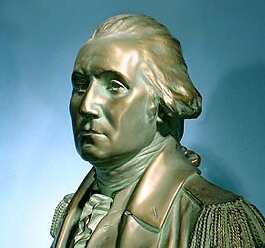
On October 2, 1789, George Washington sent the proposed Constitutional amendments (the United States Bill of Rights) to the States for ratification.

On the same date in 1919, U.S. President Woodrow Wilson suffered a massive stroke, leaving him partially paralyzed, preventing him from reacting to the economic downturn following the Great War in a Progressive fashion, making his response de facto laissez faire. One insider, and skeptic of Progressive hubris, cattily referred to Wilson’s incapacitation as “a stroke of luck.”

His successor in office, President Warren G. Harding, would go on to massively cut spending as well as taxes, and take on regulation as well. He also released Woodrow Wilson’s domestic war prisoners — ranging from journalists, ordinary folk to Eugene V. Debs — who had dissented from Wilson’s involvement in the war.

The Depression of the early 1920s, though as deep as the early 1930s’, proved remarkably brief, thanks to Harding . . . and Wilson’s “stroke of luck.”
Categories
Thought

Robert A. Heinlein

I also think there are prices too high to pay to save the United States. Conscription is one of them. Conscription is slavery, and I don’t think that any people or nation has a right to save itself at the price of slavery for anyone, no matter what name it is called. We have had the draft for twenty years now; I think this is shameful. If a country can’t save itself through the volunteer service of its own free people, then I say: Let the damned thing go down the drain!


Robert A. Heinlein, Guest of Honor Speech at the 29th World Science Fiction Convention, Seattle, Washington (1961)

Categories
video

Video: Richard Winger on Ballot Access Tyranny

No one knows more about how the major parties prevent competition than Richard Winger, the editor of Ballot Access News. Early on, in this interview, he relays an interesting fact: America did not have government-printed ballots until 1889.

Categories
Thought

John Fiske

It is not true that “moral truths” have received no additions. It is not true, as Mr. Buckle says, that “the sole essentials of morals have been known for thousands of years, and not one jot or tittle has been added to them by all the sermons, homilies, and text-books which moralists have been able to produce.” It is not true, as Sir James Mackintosh says, that “morality admits of no discoveries.” It is not true, as Condorcet says, that “la morale du toutes les nations a été la même.” It is not true, as Kant says, that “in der Moralphilosophie sind wir nicht weiter gekommon als die Alten.” For what is Moral Philosophy but the science which is to determine the laws to which our conduct should conform? And if this is the case, we need only to look into Mr. Buckle’s work itself, to find a system of morality containing truths which only two centuries ago were not even dreamed of. Take, for example, the moral law that governments shall not interfere with trade. This is as much a moral law as that which forbids stealing; but we find Mr. Buckle reckoning it among the merits of Voltaire, that he was one of the first to perceive the justice of a free system of trade. Its justice is even now denied by opponents of reforms. This, then, is a case of “moral truth” which has not been known for thousands of years.


John Fiske, “Mr. Buckle’s Fallacies,” Darwinism and Other Essays (1879; 1902), p. 162.

Categories
Today

Model T

On October 1, 1908, Ford produced the first Model T at a plant in Detroit. The auto could travel 40 miles per hour and ran on gasoline or hemp-based fuel. (As oil prices fell, Ford phased out the hemp option.) The Model T was the first car designed for a mass market, rather than as a luxury item. By 1927, Ford had built 15 million Model T cars – the longest production run of any car model until the Volkswagen Beetle surpassed it in 1972.

On October 1, 1918, Lawrence of Arabia (T.E. Lawrence) helped lead a combined Arab and British force that captured Damascus from the Turks during World War I.

Categories
general freedom individual achievement

Crybaby

I’m not a crybaby. “Believe me” . . . as one fellow running for president is fond of saying.

Yesterday, however, at the San Francisco Freedom Forum, I was admittedly glad that the ballroom was dimly lit. Listening to speakers from across the globe tell their stories of struggling for freedom, I became . . . well, verklempt.

The event, organized by the Human Rights Foundation, is an expansion of the long-running Oslo Freedom Forum. It featured speakers such as:

  • Hyeonseo Lee, who not only escaped from North Korea, the world’s most totalitarian regime, but later returned to help her family get out as well.
  • Yulia Marushevska, the Ukrainian anti-corruption crusader, whose powerful YouTube video, entitled “I Am a Ukrainian,” helped the world see the Euromaidan protests.
  • Anjan Sundaram, the journalist with chilling tales of the totalitarian regime of Rwanda’s President Kagame, who recently overcame term limits through a referendum wherein 98 percent of the country supposedly voted to allow him to stay in power until 2034. Embarrassingly, Kagame spoke at Harvard and Yale on democracy and human rights. Sundaram recalled a Rwandan who explained, “We don’t know where the state ends and we begin.”
  • Zineb El Rhazoui, who co-authored the comic book The Life of Mohamed with slain Charlie Hebdo editor Stéphane Charbonnier, and now lives facing an ISIS death sentence.

And many more.

For me, Rosa María Payá, with the Cuba Decides campaign, was the biggest tear-jerker. She spoke about the murder of her activist father, Oswaldo Payá, at the bloody hands of the Castro regime.

As a father, it made me . . . (give me a moment) . . . think about how important freedom is.

This is Common Sense. I’m Paul Jacob.


Printable PDF

San Francisco Freedom Forum, Paul Jacob, Common Sense, Illustration


Categories
Today

Blasphemy? Independence?

September 30 has served as Blasphemy Rights Day since 2009, when it was initiated by the Center for Inquiry.

Botswanans celebrate their independence from Great Britain with an official day on September 30.

Categories
Thought

Robert A. Heinlein

Man is not a rational animal; he is a rationalizing animal.


Robert A. Heinlein, Assignment in Eternity (1953)

Categories
general freedom moral hazard nannyism national politics & policies Regulating Protest responsibility too much government

Undefeated

It’s over . . . but it’s not.

A conscientious Show-Me state activist has won his case, but . . .

A year ago, the unethical Missouri Ethics Commission fined Ron Calzone $1,000 for not paying a silly $10 fee. To register as a lobbyist. They also ordered him to stop talking to legislators until he complied.

Citizen Calzone didn’t register.

He didn’t pay.

And he didn’t shut up.

On principle.

Instead, he contacted the Freedom Center of Missouri and the Center for Competitive Politics, a national outfit that defends our rights to participate in our supposedly participatory and representative democratic republic.

On Monday, a judge ruled in Ron’s favor, tossing out the “ethics complaint” against him. On a technicality, actually.

Winning is better than losing. But even if someone bothers to try again against Calzone, filing the suit properly*, Calzone would win.

You see, we have rights . . . including the freedom to talk to those pretending to represent us. It is not at all certain that government has any constitutional authority to regulate paid lobbyists.

But Ron is not a paid lobbyist. He volunteers for Missouri First, a citizen group.

So why did the speech police’s long arm reach out to grab him?

He’s effective.

More than a forthright advocate for what he believes, he has proven smart enough to find ways to allow fellow freedom-lovers to weigh in on bills they favor or oppose.

This has endeared him neither to legislators nor the lobbying “community” — professionals paid handsomely to lose to Calzone’s grassroots network. They will strike back. You can count on it.

But as long as there are citizens like him, the people will not be defeated.

This is Common Sense. I’m Paul Jacob.


* The charges weren’t filed by a “natural person,” as the law requires, but by the attorney for the Missouri Society of Governmental Consultants, the state lobbyist guild.


Printable PDF

Missouri Ethics Commission, lobbyist, lobbying, Ron Calzone, Missouri First


Categories
Thought

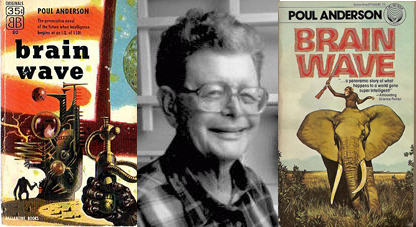
Poul Anderson

Keep on thinking. Keep your thinking close to the ground, where it belongs. Don’t ever trade your liberty for another man’s offer to do your thinking and make your mistakes for you.

Poul Anderson, Brain Wave (1954), Chapter 3 (p. 25).