Categories
Today

Judiciary Act

On September 24, 1789, the United States Congress passed the Judiciary Act, creating the office of the United States Attorney General and the federal judiciary system, and ordered the composition of the Supreme Court of the United States.

On the same day that President George Washington signed the bill into law, he officially nominated John Jay to the new position of Chief Justice of the Supreme Court. Jay (pictured in his official portrait, above) served in that position until 1795, when he resigned to take up his elected position as second governor of the State of New York. The Supreme Court heard only four cases during Jay’s Chief Justiceship; Jay refused to consult, officially, on legislation written by Alexander Hamilton, establishing the precedent that the Supreme Court has followed to this day: the Court would only rule on cases tried before it.

Categories
Thought

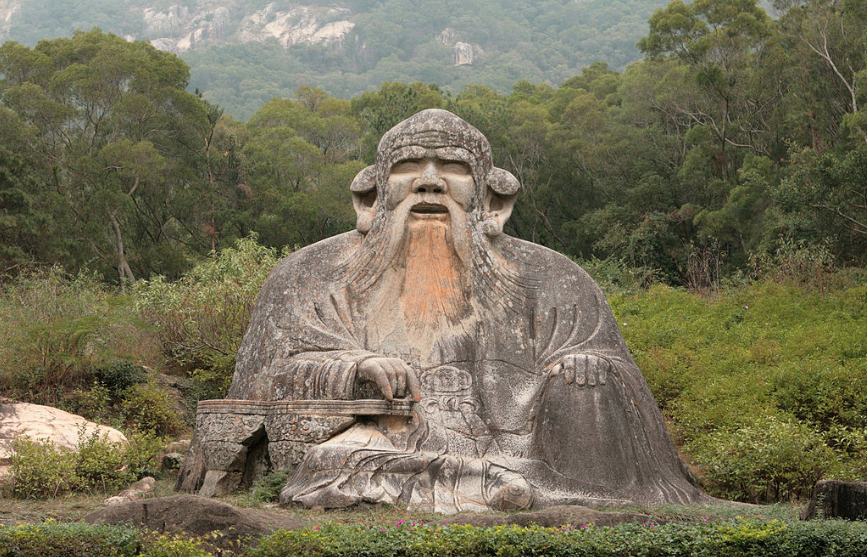
Sun Tzu

All warfare is based on deception. Hence, when we are able to attack, we must seem unable; when using our forces, we must appear inactive; when we are near, we must make the enemy believe we are far away; when far away, we must make him believe we are near.


Sun Tzu, The Art of War (c. 6th century BCE), from Chapter One.

Categories
initiative, referendum, and recall

Who Rules Colorado?

Colorado is a really nice place — and not just for the weather and scenery. I mean politically.

It’s arguably the only state in the union where the politicians, lobbyists and special interests are much more politically frustrated than are the people.
By way of the initiative and referendum process, Rocky Mountain State voters gained the upper hand. Coloradans term-limited their legislators and passed a constitutional amendment called the Taxpayer Bill of Rights, which disallows legislators from raising taxes or hiking spending without voter approval.

Legislators, lobbyists and special interests are not amused.

That’s why an insider group called Raise the Bar is pushing Amendment 71, which would block citizens from using the initiative to amend the constitution. The group has already raised $2.7 million — more than any other ballot measure committee. That big money is coming from powerful lobbies and special interests and being spent on a misleading television ad barrage about “protecting” the constitution.

From the people.

Amendment 71 blocks initiative amendments, making only statutory initiatives available to citizens seeking reform. As campaign finance reformers learned when the legislature gutted their voter-approved statutory measure, it is essential that voters be able to amend
the constitution.

Otherwise, legislators have the upper hand.

Sen. Pat Steadman, a spokesperson for 71, admitted as much in a recent debate, stating that “things like campaign finance regulation, or marijuana, or hunting season . . . are not things that should be enshrined in our constitution. These are policy issues . . . that the legislature should have the ability to weigh in and to update the laws as needed.”

In other words, support Amendment 71 so that legislators can be the boss again, updating the laws as they wish and overruling the voters at will.

This is Common Sense. I’m Paul Jacob.


Printable PDF

Colorado, Yes on 71, No on 71, Raise the Bar, Amendment 71


Categories
Thought

Clausewitz

[S]trength of character does not consist solely in having powerful feelings, but in maintaining one’s balance in spite of them. Even with the violence of emotion, judgment and principle must still function like a ship’s compass, which records the slightest variations however rough the sea.


Carl von Clausewitz, On War (1832), Book I, Chapter Three.

Categories
Today

Sweden minus Norway

On September 23, 1905, Norway and Sweden signed the “Karlstad treaty,” peacefully dissolving the union between the two countries.

Categories
Accountability crime and punishment folly general freedom media and media people

Crime and Terror and Panic

Many people think crime is going up. But it’s going down.

Similarly, many people think terrorism is “an existential threat” to our very civilization.

Could the latter folks be wrong for the same reason the former folks are?

Because news reporting concentrates on crime, covering it intensely, incessantly — if it bleeds, it leads — we get the wrong perspective on crime. The long-term trend-line shows crime going down since the early 1990s. Though we’re now seeing upticks in certain big cities, it’s simply not all getting worse.

This is not a reason to slack off. It is a reason not to panic.

How is terrorism different?

In 15 years, there has been no repeat of 9/11/01, or anything close to it. Granted, there have been horrific homegrown terror incidents. That threat remains. Though, thankfully, last weekend’s terrorist spree wasn’t more effective: One bomb fizzled, another killed no one, and the mad jihadist knifer was himself put down before anyone was killed.

Some might note that the number of deaths as a result of automobile crashes* is far, far higher than from terrorism. Why worry more about the very small number of terrorist outbreaks in a huge country like ours?

Here’s why: the terrorism is intentional, and could become worse for whatever reasons flip normal Muslim men and women into jihadist radicals. So our vigilance must not abate.

But there’s another difference. Terrorists, unlike normal criminals, want to be noticed. The more we panic, the more they are tempted to seek to cause us to panic.

Terrorism, whether going up or down, requires, along with vigilance, a certain resolute calmness.

This is Common Sense. I’m Paul Jacob.


* Deaths from automobile accidents have been decreasing for decades, a 35 percent drop from 1979 to 2005. However, last year the U.S. had the “highest one-year percentage increase in traffic deaths in half a century.”


Printable PDF

panic, terror, terrorism, media, keep calm, illustration


Categories
Today

Emancipation proclaimed

On September 22, 1862, U.S. President Abraham Lincoln issued a preliminary proclamation that he would order the emancipation of all slaves in any state of the Confederate States of America that did not return to Union control by January 1, 1863. None returned, and the subsequent order, signed and issued January 1, 1863, took effect except in locations where the Union had already mostly regained control.

Categories
Thought

Algernon Blackwood

The Wise are silent, the Foolish speak, and children are thus led astray.

Categories
Accountability media and media people national politics & policies political challengers

The Crooked News Network

A recent Gallup poll found Americans’ trust in their news media has fallen to the lowest level ever recorded. Only 32 percent expressed either “a great deal” or “a fair amount” of confidence in the press “to report the news fully, accurately and fairly.”

Trust among Republican is down to a mere 14 percent.

Sad statistics . . . but not surprising. Remember Rathergate in 2004?

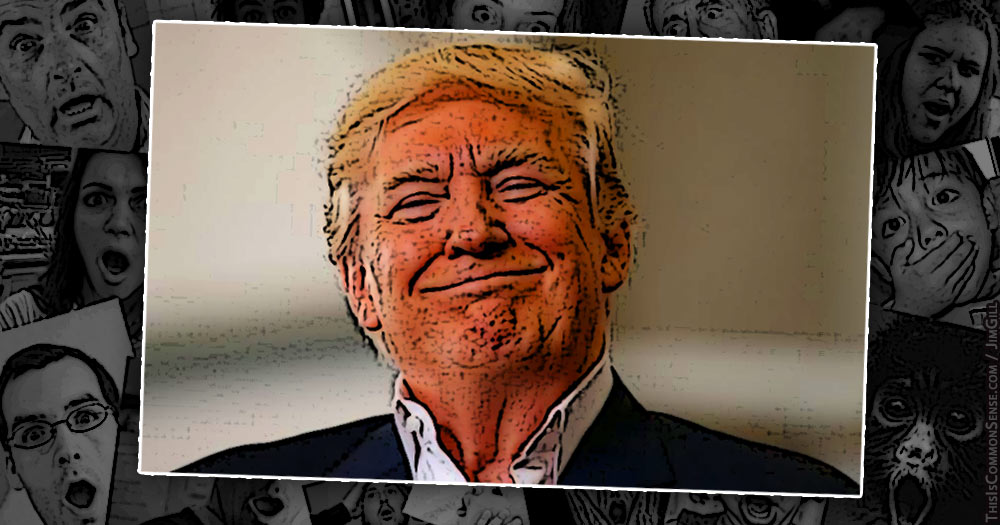
Over the weekend, CNN earned its “Clinton News Network” nickname by blatantly misreporting Hillary Clinton’s and Donald Trump’s responses to the terrorist bombings in New York and New Jersey.

Both candidates initially called these incidents “bombings” — even before government officials had definitively confirmed the obvious. But in its reports, CNN edited out Mrs. Clinton’s remarks to that effect and ran with the angle that Mr. Trump was irresponsible for saying . . . well, what she said.

“The press has since largely slammed Trump for referring to the explosion as a ‘bomb’ too soon,” reported The Hill, adding that major media outlets have somehow “also failed to mention Clinton in focusing on Trump.”

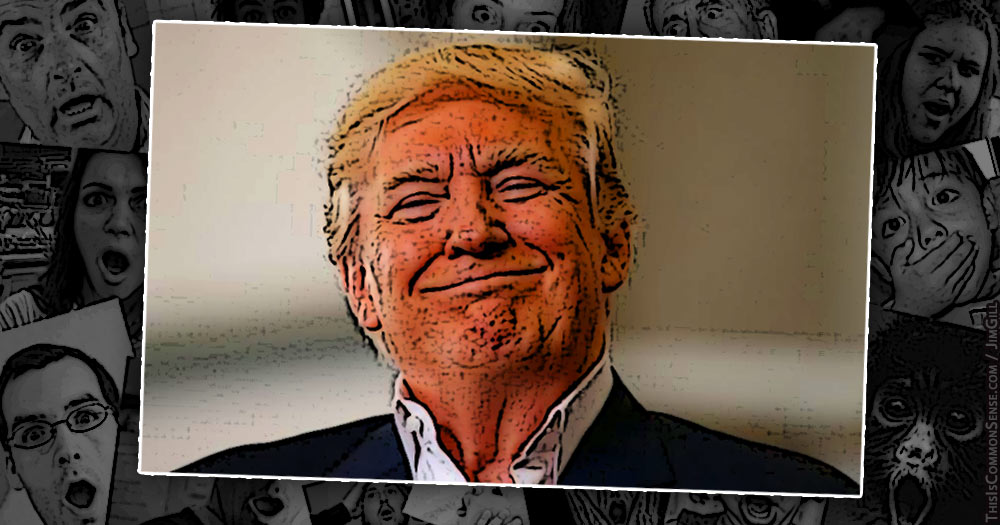
Some blame the public’s low esteem for the media on Mr. Trump’s scathing attacks. The Donald dubbed CNN, for example, “disgusting and disgraceful” over this latest controversy.

He’s right.

Enough. CNN’s desire to propagate stories favorable to one candidate and unfavorable to another has spiraled down to the withholding of relevant information, for no better reason than to mislead the public. As a news junkie with an itchy trigger finger on my TV remote, I’ve stopped clicking over to CNN.

Now, Anthony Bourdain’s Parts Unknown will be even more so.

This is Common Sense. I’m Paul Jacob.


Printable PDF

HIllary Clinton, CNN, bomb, bombing, bias, illustration


Categories
Thought

Saki

When one’s friends and enemies agree on any particular point they are usually wrong.


Saki, The Unbearable Bassington, first page (1912).