It is not enough to be industrious; so are the ants. What are you industrious about?
Henry David Thoreau, Letter to Harrison Blake (November 16, 1857).
It is not enough to be industrious; so are the ants. What are you industrious about?
Henry David Thoreau, Letter to Harrison Blake (November 16, 1857).
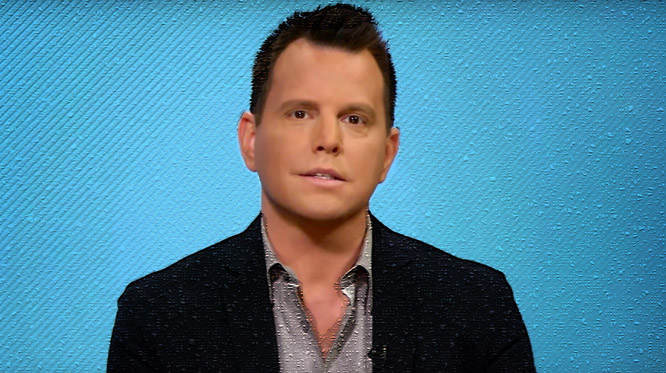
Dave Rubin explains his odyssey:
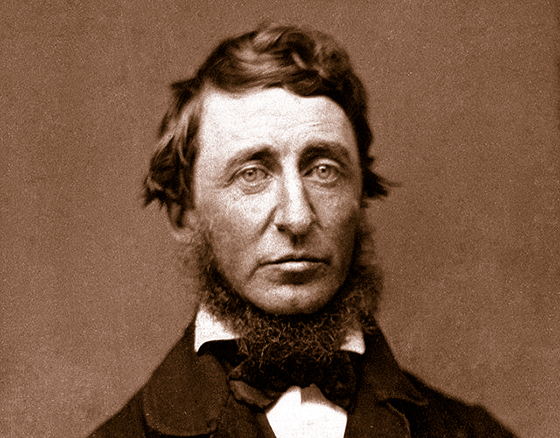
[T]he message of Thoreau, though his fervency may be inconstant and his human appeal not always direct, is, both in thought and spirit, as universal as that of any man who ever wrote or sang — as universal as it is nontemporaneous — as universal as it is free from the measure of history, as ‘solitude is free from the measure of the miles of space that intervene between man and his fellows.’ In spite of the fact that Henry James (who knows almost everything) says that ‘Thoreau is more than provincial — that he is parochial,’ let us repeat that Henry Thoreau, in respect to thought, sentiment, imagination, and soul, in respect to every element except that of place of physical being — a thing that means so much to some — is as universal as any personality in literature. That he said upon being shown a specimen grass from Iceland that the same species could be found in Concord is evidence of his universality, not of his parochialism. He was so universal that he did not need to travel around the world to prove it.
Charles Ives, on Henry David Thoreau [pictured], Essays Before a Sonata (1920).

On Feb. 18, 1943, Hans and Sophie Scholl, a brother and sister, were arrested at the University of Munich for secretly (or not so secretly) putting out leaflets calling on Germans to revolt against Adolf Hitler and the Nazi regime.
In the previous year Hans had founded a group of students, who called themselves “The White Rose.” The group wrote and distributed six leaflets aimed at educated Germans. The leaflets made their way across Germany and to several other occupied countries. The Allies later dropped them all over the Third Reich.
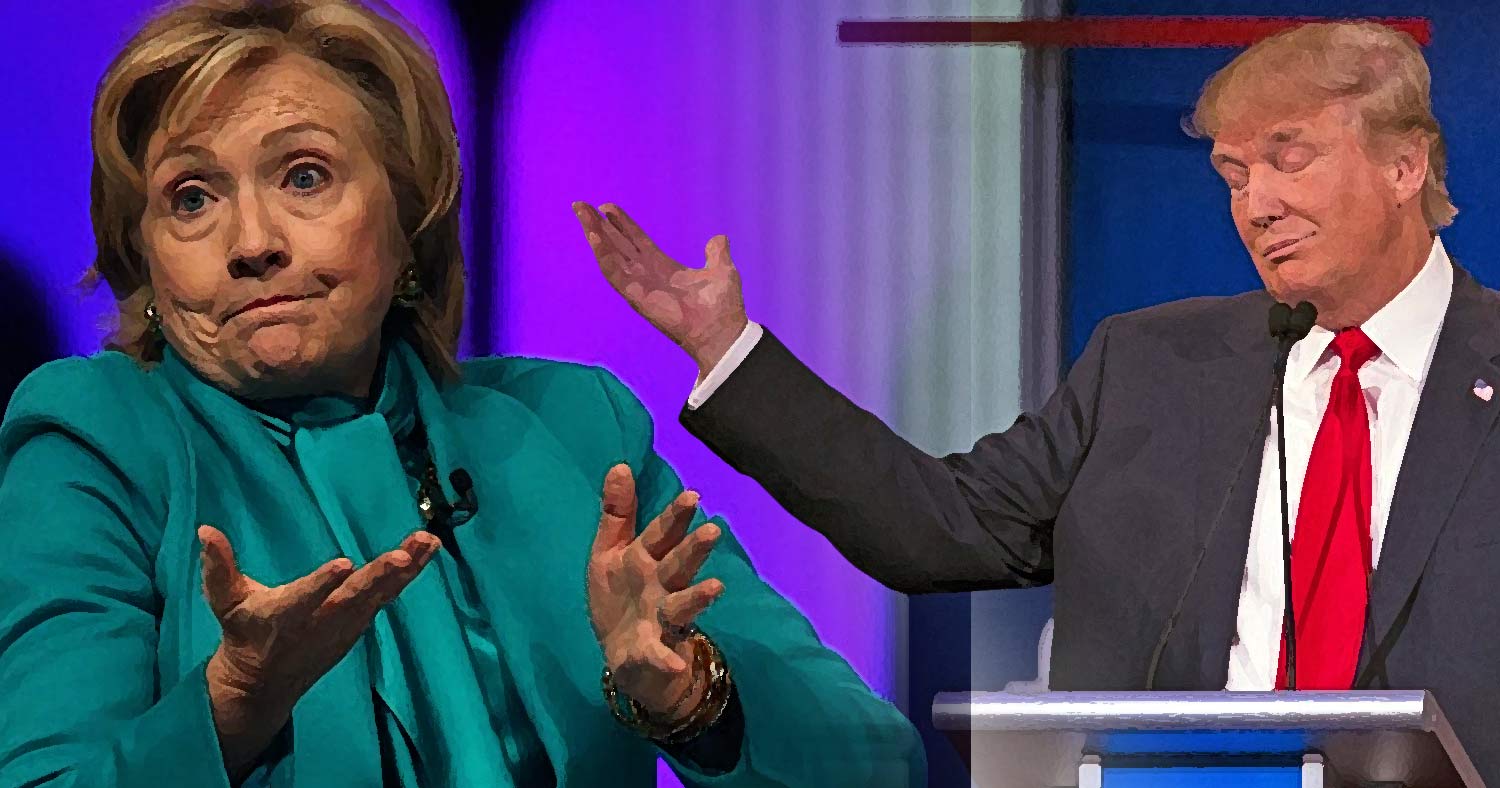
Remember the 2016 presidential election?
You know, the contest that still bedevils us? The one allegedly rigged by the Russians and fake news? The one the outcome of which Michael Moore (and others) suggested, even this week, should be overturned by “the courts” simply by installing Hillary Clinton as president?
Turns out one major element of the election process was rigged: the debates run by the Commission on Presidential Debates.*
At least, U.S. District Judge Tanya Chutkan has ruled** that, “In sum, with respect to Plaintiffs’ allegation that the FEC acted arbitrarily and capriciously and contrary to law when it dismissed their two administrative complaints, this court agrees. . . .”
The plaintiffs*** are Level the Playing Field (LPF), the Green Party, the Libertarian National Committee, and Dr. Peter Ackerman. They sued the Federal Election Commission because the FEC, as the judge wrote, “stuck its head in the sand and ignored the evidence.” Prior to the lawsuit, LPF and others had filed complaints and asked the FEC to establish fair rules. They were told to go play in — er, far away from — traffic.
“The FEC was the defendant in the case,” explained IVN News, “but the real villain in the story is the Commission on Presidential Debates (CPD), a private organization . . . dominated by Democratic and Republican party stalwarts.”
Under federal law, the FEC, itself organized along bipartisan lines, is charged with ensuring that the CPD is using “objective” criteria, which doesn’t arbitrarily exclude independent and minor party candidates.
Now, thankfully, the court has ordered the FEC to come back, by April 3, with new thinking on how to ensure fair and open presidential debates.
This is Common Sense. I’m Paul Jacob.
* The problems with the presidential debate rules and the CPD itself were covered extensively last year in these four commentaries: “Smash the Duopoly,” “The Media’s Job,” “The Stupidity of 15,” and “The Two-Product Economic System.”
** Tellingly, there’s been scant news coverage of the court decision except by IVN News, the Independent Voter Network website, and . . . RT, the Russian government’s TV channel.
*** The case is Level the Playing Field, et al v. Federal Election Commission.
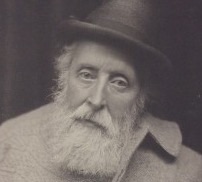
[A] man’s consent as regards his own actions is the most sacred thing in the world, and the one foundation on which all human relations must be built.
Auberon Herbert (1912).
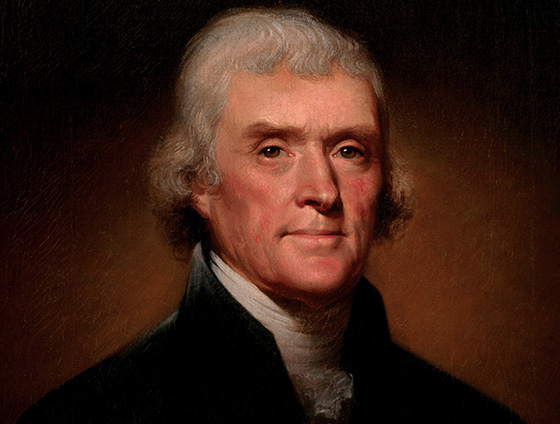
On Feb. 17, 1801, Thomas Jefferson was elected by the U.S. House of Representatives to be the third president of the United States, after an arduous election process that ended only 15 days prior to inauguration.
The fracas included a tie vote in the Electoral College followed by 35 indecisive ballots in the House. At that time, votes were cast for president, with the second place candidate becoming Vice-President. But in the Electoral College, Jefferson tied with his vice-presidential running mate, Aaron Burr. When that sent the balloting to the House of Representatives, the Federalists opposing Jefferson initially threw their support to Burr.
On Feb. 17, 1933, a constitutional amendment to repeal the Eighteenth Amendment to the U.S. Constitution, which had established the national prohibition of alcohol, was passed by the U.S. Senate. Known as the Blaine Act, the prime author was Wisconsin Senator John J. Blaine. By the end of 1933, the repeal of prohibition was adopted as the 21st Amendment to the Constitution.

Advertised as a big deal ahead of time, the debate didn’t get much play afterwards.
Especially from the Left blogosphere.
Why?
Billed as about the “future of ObamaCare,” it was really about what should replace ObamaCare.
The CNN debate pitted Sen. Ted Cruz, well-known Republican opponent of the Affordable Care Act*, against Sen. Bernie Sanders, well-known “independent” proponent of what he likes to call the “Medicare for All single-payer program.”
Upshot? While either Bernie or Ted may possibly be construed to have won, there was indeed one certain loser, ObamaCare itself.
Sen. Sanders conceded nearly every charge Sen. Cruz lobbed at the program. He merely countered with his support for treating health care “as a right, not a privilege” (a leftist farrago from days of yore) and moving on to single-payer medicine.
That’s how bad ObamaCare really is. Its chosen champion refused to champion it.
The basic tension was best summed up between “town hall” questioners Carol, suffering from multiple sclerosis, who asked Cruz to promise continued coverage for cases like hers, and LaRonda, a woman with a chain of hair care shops who cannot afford insurance for herself or her employees and also cannot expand her company because at 50 employees the ACA would force her to provide insurance.
Cruz expressed his sympathy for Carol, but seemed to meander around her request for a guarantee. He also evaded** a straightforward answer re: “healthcare as a right.”
Sanders was a tad more honest, in effect giving the “tough luck” answer that the entrepreneur just “should” pay*** for her employees’ medical insurance.
Well, we sure are all “paying” for ObamaCare, one way or another.
This is Common Sense. I’m Paul Jacob.
* Which is the same thing as ObamaCare. Some folks purportedly hate ObamaCare but love the ACA. No reader of Common Sense, of course.
** Cruz concluded the debate better, alluding to an old SNL skit about a recording session wherein the cowbell ringer always wanted “more cowbell” in every take. “It was government control that messed this all up. And Bernie and the Democrats’ solution is more cow bell, more cow bell.”
*** “[I]f you have more than 50 people, you know what, I think — I’m afraid to tell you — I think you will have to provide health insurance.”

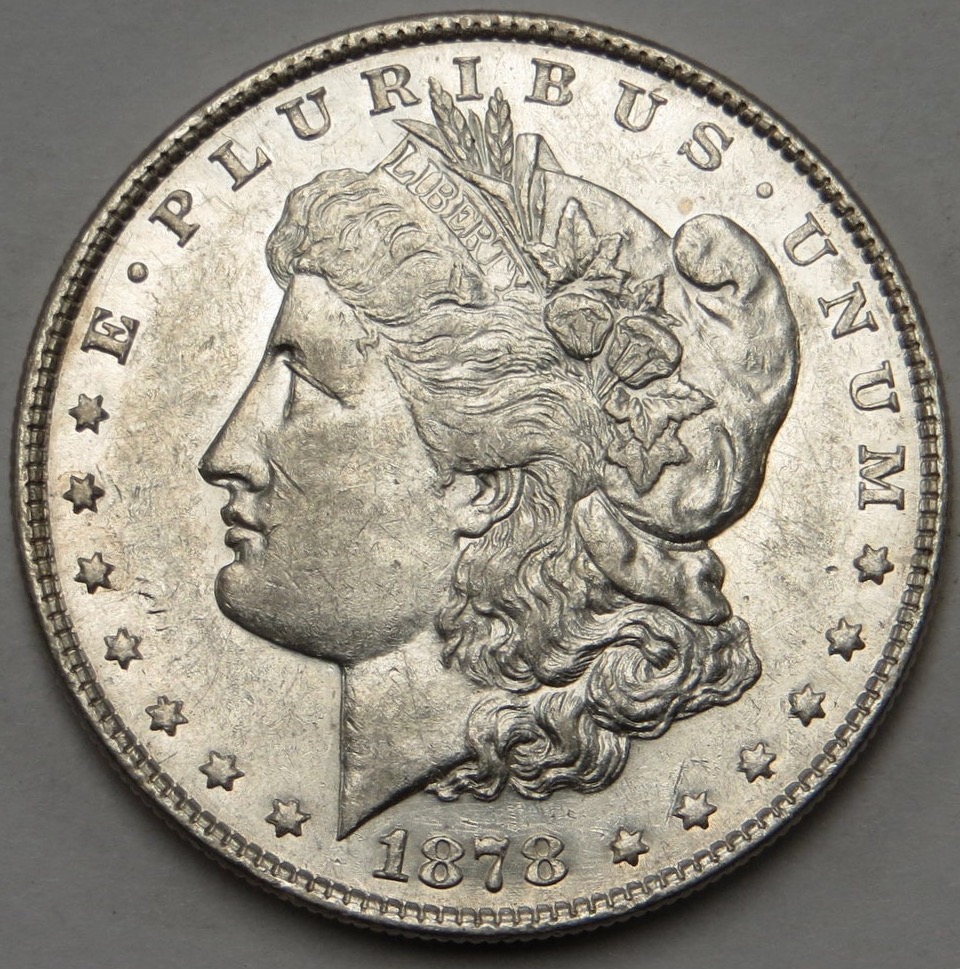
On Feb. 16, 1878, the Bland-Allison Act, which provided for a return to the minting of silver coins, became U.S. law. Today, the value of American money is secured only by public faith in the stability of the government, but during the 19th Century, money was backed by actual deposits of silver and gold.
That is, money was silver and gold. But that did not mean that all was right with the monetary system.
Five years earlier, when Congress had stopped buying silver and minting silver coins — following the lead of European nations — a financial panic ensued. Reasons for the suspension lay in the fact that the exchange value of silver and gold had retained an old, out-moded fixed ratio that favored silver producers. Had the United States Treasury let the two standards freely float, making a distinction between silver dollars and gold dollars, none of the political strife over bimetallism would have occurred.
As it was, with silver over-valued, the silver coins increasingly “drove” gold out of circulation, as well as out of the Treasury and into private hands.
In 1893, in the midst of another financial panic, this time as a result of depletion of gold reserves in the U.S. Treasury, President Grover Cleveland called a special session of Congress to repeal the bimetallic standard. He was successful, though agrarian inflationists took over the Democratic Party and offered up, for the next election, William Jennings “Cross of Gold” Bryan as a counter to Cleveland’s old-fashioned fiscal conservative/social liberalism.
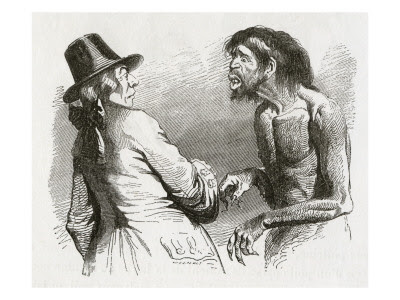
Man is not a Yahoo, but he is rather like a Yahoo and needs to be reminded of it from time to time.