Categories
Thought

Joseph Warren

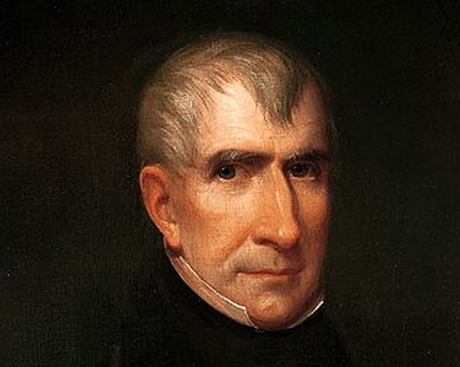
May our land be a land of liberty, the seat of virtue, the asylum of the oppressed, a name and a praise in the whole Earth, until the last shock of time shall bury the empires of the whole world in one common undistinguished ruin!


Joseph Warren, “Boston Massacre” oration, March 5, 1772. Image: detail of portrait by John Singleton Copley, c. 1765.

Categories
Common Sense free trade & free markets general freedom initiative, referendum, and recall local leaders nannyism national politics & policies political challengers Regulating Protest too much government U.S. Constitution

Don’t Kill Colorado!

America has lots of problems. Colorado isn’t one of them.

Search the Internet and confirm that the Rocky Mountain State is the fourth best state “to make a living”; sixth best for homeowners; third on CNBC’s “Top States for Business”; and even holds a coveted first place in “arts engagement.”

What’s not to like?

I know Colorado, fondly, as the only state with a Taxpayer Bill of Rights (TABOR), a constitutional amendment requiring state legislators who want to hike spending or taxes to first ask citizens for approval. It was passed by voters in 1992, by citizens’ initiative.

Imagine that! Citizens in charge. In real life.

In Colorado.

Unsurprisingly, TABOR has long been No. 1 on Big Government’s hit list; for politicians, lobbyists, university presidents and political insiders, it’s the bane of their existence.

Along with the citizen initiative process, from which it came.

That’s why Colorado’s political establishment spent a million dollars to put Amendment 71 on next Tuesday’s ballot. They aim to kill both TABOR and the citizen initiative.

The amendment allows any partial or total repeal of TABOR — or other current parts of the state constitution — with a simple majority vote of 50-percent-plus-one. But it demands that any new enactment of taxpayer protection (or other reform) leap over a 55 percent supermajority hurdle.

Fair?

It means that a court decision, which “reinterprets” any provision of the Taxpayer Bill of Rights, could only be corrected by citizens with a supermajority vote. And citizens would face an avalanche of big spending from big labor and big business. That’s not a bug, but a feature for the powerful forces behind 71.

Still, Amendment 71’s murderous intent goes deeper. The measure also destroys the ability of regular people and grassroots groups to petition constitutional amendments onto the ballot. Instead of one statewide petition drive, Amendment 71 adds 35 additional onerous petition requirements — in every single senate district in the state.

The next question is obvious: Did the political big-shots behind Amendment 71, who blew a cool million dollars to gather their signatures, manage to meet their own mandate for future initiatives by qualifying in all 35 senate districts? Not even close.

While the lobbyists and politicians behind 71 have spent many additional millions claiming Colorado is the easiest state to amend the constitution, a real expert — Dane Waters, chairman of the Initiative & Referendum Institute — concludes just the opposite. His analysis indicates that Colorado’s process is actually “one of the most difficult in the country.” And should 71 pass, Colorado would have “the most strict distribution requirement anywhere in the world,” he said.

Waters fears that by blocking initiative constitutional amendments “on top of the fact that the legislature [in Colorado] has the authority to overturn any statutory initiative, [Amendment 71] will basically shut down the initiative process in Colorado.”

And that is how voters would be silenced and the investments powerful interests have made in the Centennial State’s legislature would be protected.

So there is no reason to be shocked when a bevy of special interests — most notably oil and gas interests, but also gambling interests and other major lobbies — raise and spend over $20 million dollars carpet-bombing the state’s electorate with TV and radio ads, slick mailings, and robo calls to support Amendment 71. They’re trying to convince voters to restrict their own power and increase the legislature’s leverage, since those special interests feel much more “comfortable” with politicians making all the decisions.

And voters making exactly none.

The politicians and lobbyists behind 71 have pulled out all the stops. Big money dominates the airwaves; all four living former state governors are on board; and their TV spots even feature the beloved Hall of Fame Denver Broncos QB John Elway.

But in the end, the beautiful thing about a ballot initiative is that voters have the final say.

And that’s why grassroots groups from throughout the state and all across the leftright spectrum, from the state’s free-market Independence Institute to progressive Common Cause, from pro-TABOR taxpayer groups to more liberal anti-fracking activists, from Colorado NARAL to Colorado Right to Life — those who care about citizens having a say in government — are standing up to the big money establishment barrage, joining the coalition to Stop71.org.

Weeks ago, to kick off the campaign, Citizens in Charge Foundation provided the Vote No on 71 Committee a 10-foot tall, carved, wooden Trojan Horse. The float has been wheeled across the state on a trailer, dramatizing that Amendment 71 is a Trojan Horse from big money interests, who pretend they’re protecting the constitution when they’re actually seeking to restrict citizen power. Providing this focal point has allowed dozens of Colorado citizens to speak out to fellow voters, garnering tons of media attention in the process.

The Trojan Horse continues to reach voters, but like stone soup, the Vote No on 71 campaign has grown in many diverse ways:

  • The head of Common Cause, Elena Nunez, and the head of the Independence Institute, Jon Caldara, have bridged ideological divide to reach out to editorial boards across the state, resulting in the Denver Post and most other major papers editorializing against 71.
  • The Colorado League of Responsible Voters raised several hundred thousand dollars and is running a TV spot countering the millions spent by proponents.
  • The Greenpeace blimp floats over the state, sending the Vote No on 71 message airborne.
  • The coalition has grown to more than 76 groups, each contacting its membership and urging folks to spread the word against 71.
  • A number of groups are advertising against 71 on Facebook.
  • A volunteer phone bank has been set up making thousands of calls to likely voters.

As this election winds down, we know we’re underdogs against the big-shots and their big money. But we also know we cannot let them kill the initiative without a fight. And we know that if we can reach enough Colorado voters with our message against Amendment 71, we can defeat it.

Help us reach more Colorado voters. The best way you can help is to make a financial gift right now. Today. The hour is very late, some voters have already cast their ballots, more are voting every day up until Nov. 8.

Please don’t let them kill Colorado. Help now:

  • Your $50 giftcovers gas for the Trojan Horse to reach another town
  • Your $100 giftpays to put 1,000 flyers on voters’ doorknobs.
  • Your $500 gift – launches Facebook ads reaching 5,000 voters or more.
  • Your $1,000 giftpays for robo phone calls to 10,000 folks who haven’t voted yet, reminding them to vote NO on Amendment 71.

Please give what you can. And take action now.

Can’t afford to give? How about giving your time?

Join our volunteer phone bank and dedicate a few hours one night this week or over the weekend to call likely Colorado voters between 4 pm and 8 pm Mountain Time. You can sign up here for two or four hour shifts and we’ll walk you through how it works.

You do NOT have to live in Colorado to pick up the phone and educate Rocky Mountain State voters about Amendment 71.
Those pushing Amendment 71 claim they want to protect the state constitution from “too many” amendments. But where’s the problem? They won’t say what amendments they believe don’t belong in the constitution.

No, they aren’t seeking to protect Colorado’s constitution, but rather Colorado’s political establishment.

The good guys, Colorado citizens, have taken aim to shoot down Amendment 71. They’ll save the initiative and good government . . . if you’ll pass the ammunition.

This is Common Sense. Thanks for your serious consideration. I’m Paul Jacob.


Printable PDF

TABOR, Amendment 71, Colorado, Raise the Bar, initiative, voter rights, Taxpayer Bill of Rights,


Categories
Thought

Ubi libertas

Where liberty dwells, there is my country.


H.L. Mencken attributed this popular statement to Benjamin Franklin, written in a March 14, 1783 letter to Benjamin Vaughan. That letter, however, has not been located. Bartlett’s Familiar Quotations notes this was the motto of James Otis (Latin: Ubi libertas, ibi patria; the 1780 A Complete Book of Heraldry marks it as the motto of Daniel Huger, Esq. Many early biographies of Thomas Paine portray Ben Franklin mystically speaking these words to Paine. The slogan has also been attributed to Algernon Sidney, the forgotten founding father. In “Defining Liberty: An Analysis of Its Three Elements” (ABA Journal, April 1965), Wendell J. Brown identified John Milton as its author. Which is why we picture the great poet, above. Help in correctly citing priority for this great quotation would be greatly appreciated.

Categories
Today

The French Revolution

On November 1, 1790, Edmund Burke published his Reflections on the Revolution in France, predicting that the French Revolution would end in disaster. Though many have disputed his premises, few dispute his prophecy, which proved spot on.

Categories
folly government transparency ideological culture media and media people nannyism national politics & policies

The Problem with Ruth Marcus

Channeling The Sound of Music’s Mother Superior, Washington Post columnist Ruth Marcus asks, “How do you solve a problem like Bill Clinton?”

Marcus means Bill’s problematic possible return to the White House, the scene of his crimes, as First Dude in a new Clinton Administration — specifically his difficulties with “the twin minefields of sex and money.”

Starting with sex, Marcus argues that, “Trump’s misbehavior with women is a far more important topic than Clinton’s” because “Trump is on the ballot; Bill Clinton is not.”

True, except that Mrs. Clinton has promised to place Mr. Clinton “in charge of revitalizing the economy,” which Mrs. Marcus called “crazy.” Maybe, but it wasn’t Trump’s idea to ballyhoo the old two-for-one Clinton couple “advantage.”

“There is no condoning a record that reflects not just serial adultery, but abuse of power,” writes Marcus. Yet, she does precisely that by adding, “Clinton was a successful president who deserved the two terms for which he was elected, but his misbehavior would disqualify him from a third term even if the Constitution allowed it.”

What?! Quite a convenient drawing of the line, eh?

Of course, the problem isn’t merely Bill, as the columnist admits: “[I]t has become clear that they cannot be trusted to appropriately navigate ethical boundaries between their private interests and public responsibilities.”

Complaining about the “incessant schnorring for private jets, luxury vacation lodging, expensive trifles” by the Clintons, Marcus warns that, “It cannot happen in a new Clinton White House, especially with a Republican Party already drooling over the prospect of congressional investigations.”

But, Ruth, how will electing Hillary Clinton the next president cause Bill & Hill to change their ways?

This is Common Sense. I’m Paul Jacob.


Printable PDF

Bill Clinton, First Gentleman


Categories
Today

Halloween

Ireland, Canada, United Kingdom, United States and other nations celebrate Halloween on October 31.

The word Halloween or Hallowe’en dates to about 1745 and is of Christian origin, meaning “hallowed evening” or “holy evening.” It comes from a Scottish term for All Hallows’ Eve (the evening before All Hallows’ Day). In Scots, the word “eve” is “even,” and this is contracted to “e’en” or “een.” Over time, (All) Hallow(s) E(v)en shortened into Halloween.

It is one of those darker-themed celebrations, often conjuring up images of death and horror. As if in keeping with this theme, Josef Stalin’s body was removed from Lenin’s Tomb on October 31, 1961.

To acknowledge a horrifying possibility, Common Sense marks the occasion with images of the two major-party candidates for the presidency, both seeking votes in early November. One of these will (likely) become president!

Categories
Thought

Rep. Bill Pascrell

He [Anthony Weiner] might run in Alaska.* I don’t think it’s a good idea that he think about it in the next five years, but who’s to say what’s going to happen in five years.**


Rep. Bill Pascrell (D-N.J.), in “The backstory: Weiner’s final undoing,” Jonathan Allen and Maggie Haberman, Politico, June 16, 2011 07:23 PM EDT, as forwarded in an email to Hillary Clinton from Cheryl Mills, 2011-06-16 02:23, courtesy WikiLeaks.

*  Allen and Haberman characterize the first sentence as a joke, and the next sentence as said seriously.

**  This past June marked five years from Pascrell’s utterance. We may be now witnessing Weiner’s FINAL “Final Undoing.”


pictured, above: Anthony Weiner

Categories
links

Townhall: Hillary, You Have Mail

Well, with Election Day nearly a mere week away, the scandals just keep coming in. One doesn’t know whether to laugh or cry. Instead, click on over to Townhall and maintain some perspective.

Then come back here for even more:

Categories
Today

Martha and Rose

Martha Wayles Skelton Jefferson, Thomas Jefferson’s wife, was born on October 30, 1748. On the same date in 1968, American journalist, novelist and author Rose Wilder Lane died. Lane is perhaps best known, today, for her editorial work — some say “ghost writing” — of her mother’s Little House on the Prairie books for children. Her non-fiction The Discovery of Freedom was published in 1943, the same year as a similarly themed book, The God of the Machine, was published by her friend Isabel Paterson.

Categories
Thought

Maria Edgeworth

We cannot judge either of the feelings or of the characters of men with perfect accuracy from their actions or their appearance in public; it is from their careless conversations, their half-finished sentences, that we may hope with the greatest probability of success to discover their real characters.


Maria Edgeworth, “Preface” to Castle Rackrent (1800) in Tales and Novels, vol. 1, p. 9.