Categories
ideological culture local leaders national politics & policies responsibility

From Brexit to Calexit

When last we touched upon the strangely over-the-top Californian reaction to the Trump presidency, the secession movement, I took the occasion to bring up the rather less radical separatists in the north. “Already 21 of the 23 northernmost counties,” I wrote, “have made declarations to form the State of Jefferson.”

But now there is a new wrinkle.

“Former UKip leader Nigel Farage and Leave backer Arron Banks recently helped raise $1 million for Calexit, which would split California into eastern and western regions,” we learn from the Daily Mail and the World Tribune. Banks, citing the high disapproval ratings Californians give their government, said that “he and Farage wanted to show people in California ‘how to light a fire and win’ the Calexit referendum.”

Their proposal is distinct from complete secession. It would amount to a California split, with the west coast (Los Angeles and north to the border) splitting off from the rest of the state. This would form an East California and a West California.

Politically, this might appease the conservatives and moderates who live in more rural east and Southern California, especially since they are coming to increasingly despise Left Coast “liberals” (read: progressives). Whom they not implausibly blame for ruining the state.

But it leaves some Jefferson secessionists stuck with those “liberals.” This, if an oversight, is a big one. Would this not doom the scheme?

While the failed initiative effort of 2014 to split the state into six separate states was far too complicated to wrap one’s head around, the new Calexit effort seems too . . . simple.

This is Common Sense. I’m Paul Jacob.


Printable PDF


Categories
Thought

Aristotle

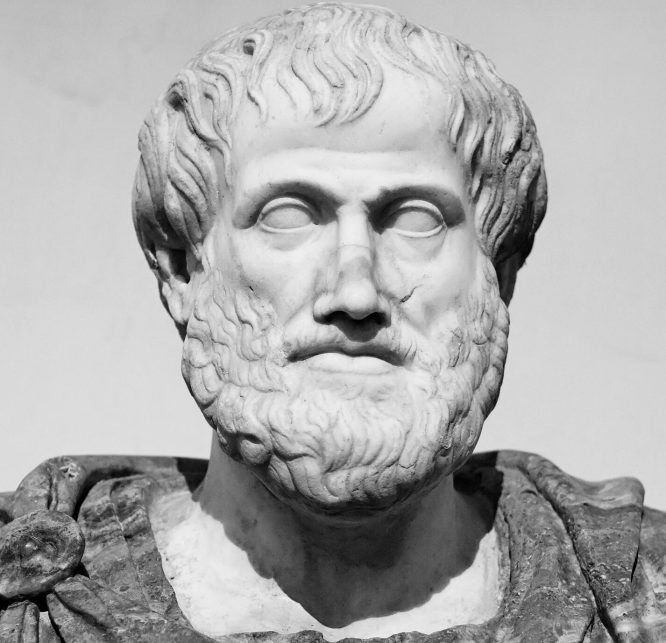
Both oligarch and tyrant mistrust the people, and therefore deprive them of their arms.

Categories
Today

Bangorian Controversy

On March 31, 1717, a sermon on “The Nature of the Kingdom of Christ,” by Benjamin Hoadly, the Bishop of Bangor, provoked the Bangorian Controversy.

The sermon’s text was John 18:36, “My kingdom is not of this world,” and from that Hoadly deduced — supposedly at the request of King George I himself, who was present in the assembly — that there was no Biblical justification for any church government. Hoadly identified the church with the kingdom of Heaven, noting that Christ had not delegated His authority to any representative.

King George’s preference for the Whig Party, and for latitudinarianism in ecclesiastical policy, is widely thought to have been a strategic maneuver to degrade church power in political government.

Categories
Accountability government transparency initiative, referendum, and recall local leaders moral hazard term limits too much government

Regnat Tyrannis

Arkansas’s motto is Regnat Populus — “The People Rule.” Unfortunately, the people’s so-called representatives are demanding that this motto be made more fitting: Regnat Tyrannis.

I jest. The Natural State’s legislators aren’t nearly so honest. Just devious.

A few years back, the fine people of Arkansas (where I grew up) had arguably the nation’s most accessible-to-the-people petition process. With it, they enacted issues that legislators despise: term limits, for instance.

But in 2013, legislators passed several bills upping the difficulty and cost of the citizen initiative process.

They’re back.

Yesterday, Senate Bill 698 was passed and now goes to the governor.

Today, the Senate votes on House Joint Resolution 1003, a constitutional amendment for the 2018 ballot. It increases the petition requirement and raises the vote threshold to 60 percent to pass an initiative amendment.*

SB 698 is straightforwardly sinister. When groups gather the voter signatures to place a measure on the ballot, the Secretary of State is required to publish the wording in the legal notice section of newspapers throughout the state. Despite low readership. This bill would make the petitioners pay.

According to a report in the Arkansas Democrat-Gazette, the state spent nearly $2 million publishing the language of these measures in 2016. The old requirement should be repealed, but the new one would be disastrous: Only citizens with deep, deep pockets could pursue ballot initiatives.

A veto is needed from Governor Asa Hutchinson — call him at (501) 682-2345.

As for HJR 1003, Arkansans can find their state senator here. Call early.

My adopted state’s motto is also Latin: Sic Semper Tyrannis.** The good people of Arkansas are welcome to it, until theirs is once again operative.

This is Common Sense. I’m Paul Jacob.
 

* At least, voters can defeat this measure at the ballot box.

** The precise English translation of Virginia’s motto is “Thus always with tyrants.” The common translation is “Death to all tyrants.”


Printable PDF


Categories
Today

Economic vs. Political Means

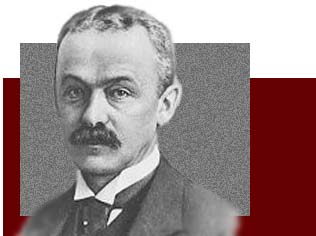
On March 30, 1864, German sociologist and economist Franz Oppenheimer was born. This sociologist is most famous for his 1908 book The State, in which he elaborated some consequences of two means for acquiring wealth, the “economic means,” by which he meant private production or by trade, and the “political means,” by which he meant forcible extraction from one group or person by another person or group. Oppenheimer taught in Palestine in the mid-1930s, and fled the Nazis to the United States, via Japan in 1938. In 1941 he became a founder of The American Journal of Economics and Sociology, and died two years later.

Categories
Thought

Brion McClanahan

“America is full of politicians but few statesmen. If you think this is a recent problem, think again. It has been discussed since the founding.

“Americans have also grown fond of political dynasties: Clinton, Bush, Gore, etc. Even if the last election appeared to repudiate that trend, don’t get too comfortable. Modern politicians are like cockroaches. You can exterminate a few, but there will always be more.”


Brion McClanahan, daily email letter of The Brion McClanahan Show, March 29, 2017.

Categories
Accountability crime and punishment free trade & free markets general freedom initiative, referendum, and recall moral hazard nannyism national politics & policies property rights

Good and Bad News

On the issue of “civil asset forfeiture” — police seizing property from folks merely on suspicion, without a criminal conviction — there is good news.

In Idaho, House Bill 202a just passed both legislative chambers overwhelmingly. “Among other changes, HB 202a would no longer allow civil forfeiture of the vehicle of a person who merely possessed a controlled substance,” explained a Spokesman Review report, “without using the vehicle in connection with trafficking offenses or obtaining it with drug-trafficking proceeds. . . .” It also puts off the table “property that’s merely in proximity to illegal drugs” and the mere possession of cash.*

Legislation is moving forward in Arizona, too. House Bill 2477 passed to the Senate Judiciary Committee last week — which unanimously cleared it despite what the Arizona Republic called “strong opposition from . . . primarily people representing law-enforcement and prosecutors’ groups that benefit from the funds.”

The bill heightens the standard of proof required for making seizures stick from “preponderance of the evidence” to “clear and convincing evidence.” HB 2477 also increases reporting requirements, and creates a process police must follow to spend seized funds.

Unfortunately, there is also bad news.

Even with the new Idaho law and the enaction of the Arizona legislation, police in both states will continue to take people’s stuff without a criminal conviction. The level of abuse would be diminished, but not ended.

Citizens in both states can and should use the ballot initiative process to end this injustice. In total.

We must restore the bedrock principle of innocent-until-proven-guilty.

This is Common Sense. I’m Paul Jacob.

 

* Other provisions include a court determination on “whether a property seizure is proportionate to the crime alleged,” absolving “innocent owners from having to pay the state’s costs associated with an attempted seizure,” and some required record-keeping.


Printable PDF


Categories
Today

Hyphen War

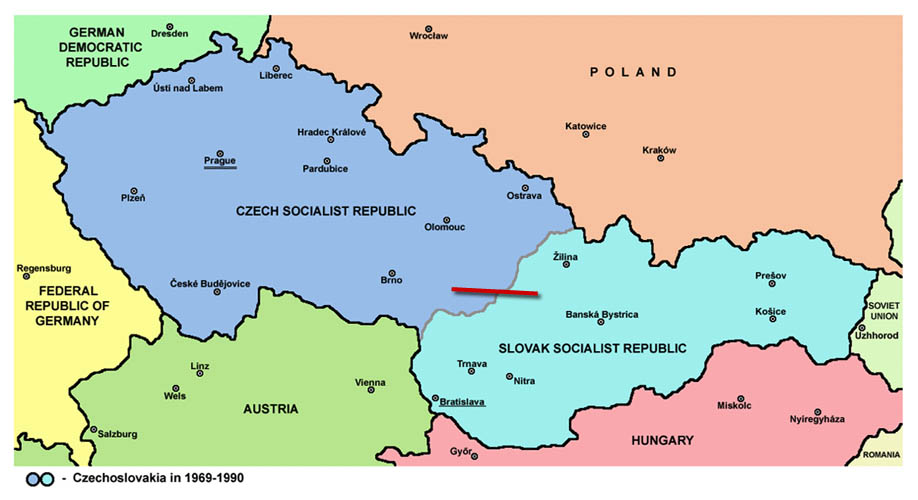
On March 29, 1990, the Czechoslovak parliament proved unable to reach an agreement on what to call the country after the “Velvet Revolution” — in which the Communist Party was booted from sole power. This sparked the “Hyphen War,” a tongue-in-cheek moniker for the dispute between Czechs and Slovaks about official recognition of the two nations’ equal status. (The Slovak representatives wanted to insert a hyphen into the name, to make the Slovak part stand out.) Eventually, the dispute was resolved with the “Velvet Divorce,” in which the two countries split up, on New Year’s Day, 1993.

Categories
Thought

Greg Gutfeld

It pisses me off that nearly every major talking head advocates gun control, arrogant in their belief that most Americans can’t be trusted to arm and protect themselves without hurting others. Meanwhile, it’s these same talking heads who never have to worry about being shot at by a crazed lunatic, because the lunatic and the talking head are separate from each other by five layers of security.


Greg Gutfeld, “Katie Couric’s Life Is More Important Than the Average College Freshman’s (Even If She Looks Remarkably Like an Elf),” The Bible of Unspeakable Truths (2010), p. 4. Photographs, above, depict: journalist Juan Williams, who has nothing to do with this snippet of Gutfeldiana; a sidearm, which does; and Greg Gutfeld himself. Gutfeld is the one that is not black. Or gun-metal gray.

Categories
Accountability government transparency ideological culture moral hazard nannyism national politics & policies political challengers porkbarrel politics responsibility too much government

Legislating in the Real World

Rolling back Big Government is not easy, especially when you are not that into it.

Robert Draper, profiling Steve Bannon in the New York Times, gives us a view into the mind of Trump’s right-hand man, who appears to think GOP insiders are obsessed with principles. “[I]t’s all this theoretical Cato Institute, Austrian economics, limited government — which just doesn’t have any depth to it. They’re not living in the real world.”

At best, this only fits the Freedom Caucus members, who killed RyanCare. But who is avoiding reality, here?

“Bannon clearly is not as familiar with the mindset of congressional Republicans as he imagines,” counters Jeff Deist, head of the “Austrian” Mises Institute. “They are primarily concerned with how the whole ‘repeal and replace’ debacle plays back home.”

Like Deist, I see the spectacular fizzle of RyanCare as evidence of the increasing irrelevance of Republican compromising. “The GOP is the party of trillion dollar military budgets,” Deist insists, noting that it “won’t even kill an openly cronyist program like the Export-Import Bank.”

If keeping Big Government secure is all Republicans can do, what use are they?

“All around us are the almost unimaginable benefits of markets, cooperation, and technology,” Deist explains, “yet somehow we’re naïve if we don’t want to funnel human activity through government cattle chutes.”

Bannon will not secure solid GOP support if he keeps pushing the usual establishment compromises while pretending they are either realistic or revolutionary. Freedom Caucus Republicans seem bent on doing something Republicans usually avoid: change “the real world” for the better by practically limiting government.

Not just in theory.

Bannon seems to have other goals.

This is Common Sense. I’m Paul Jacob.


Printable PDF