Partisans across the opinion spectrum are vulnerable to occasional bouts of ideologically induced insanity.
Philip Tetlock, in Stewart Brand, The SALT Summaries (Long Now Press, 2011), p. 128.

Partisans across the opinion spectrum are vulnerable to occasional bouts of ideologically induced insanity.
Philip Tetlock, in Stewart Brand, The SALT Summaries (Long Now Press, 2011), p. 128.
On June 21, 1915, the U.S. Supreme Court struck down an Oklahoma law denying the right to vote to some citizens. In Guinn v. United States, the Supreme Court found “grandfather clauses” in effect in several formerly slave states to be little more than sneaky ways of allowing illiterate white folks to vote while disallowing illiterate black folks.
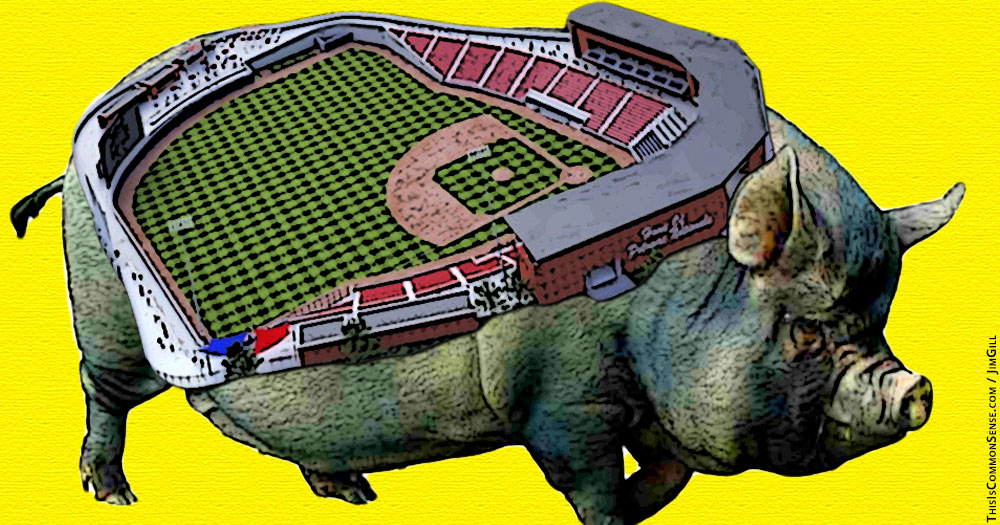
Just a few miles away from where I live sits the stadium of the Potomac Nationals. I’m a fan. I’d hate to see the team we call the P-Nats leave.
But . . . Hasta la vista.
The owner of this minor league affiliate of Major League Baseball’s Washington Nationals is demanding a new stadium. He threatens to move out of Prince William County, Virginia, if he does not get it.
The Prince William County board of supervisors has already expressed interest in floating bonds to raise the $35 million the fancy new stadium would require — with the privately owned team paying the money back, with interest, over the next 30 years.
Compared to other crony-ish deals around the country, not such a terrible taxpayer swindle. Still, zillions of wrongs don’t make this right. County taxpayers would be on the hook in case of default. And if the marketplace believed the team could actually make such payments, a bank or other investors would come to the rescue.
Thankfully, a monkey wrench has been thrown into the deal. A county supervisor has proposed that voters should get a chance to decide, via a November referendum. The board of supervisors will consider the referendum tonight.
Voters should get the final say. But if there is a referendum, as much as I love having the team here, I will vote NO. I don’t cotton to forcing others to pay for my preferred entertainment.
Government has certain legitimate roles. Subsidizing sports is not one.
Even if the new stadium would be closer to my home than the old one.
This is Common Sense. I’m Paul Jacob.

The cry of equality pulls everyone down.
Iris Murdoch, as quoted in The Observer, September 13, 1987
On the 20th of June in 1787, at the Constitutional Convention in Philadelphia, Oliver Ellsworth moved to confine legislative powers to two distinct branches, and to strike the word “national” from the document. Edmund Randolph of Virginia had previously moved successfully to call the government the National Government of United States. Ellsworth moved that the government should continue to be called the United States of America.
The final wording eventually became “All legislative powers herein granted shall be vested in a Congress of the United States, which shall consist of a Senate and House of Representatives.”
And, yes, the word “national” does not occur anywhere in the Constitution.
A “conundrum” is “an intricate and difficult problem” or “a question or problem having only a conjectural answer.”*
In his June 8 article, “The Jobs Conundrum,” economist Gerald P. O’Driscoll focuses on a very big problem that we do not have sure answers to, yet.
Unemployment figures are down, but the number of non-working adults in the prime of their lives is up. O’Driscoll explains: “Unemployment” is a term of art and does not mean simply the number of people not working. It comprises the number of people not working and who are looking for a job.” Many aren’t “unemployed” for the simple reason that they are not trying to be employed.
They are, I suppose you could say, in early retirement, mostly a kind of poverty retirement.
Economists call it a drop in “labor force participation.” It used to be that men in the prime of life not looking for work constituted a mere 6 percent of the population. Now it’s 15 percent.
O’Driscoll, I notice, doesn’t engage in much conjecture to explain why. He merely insists, instead, that the trend is big, unemployment figures don’t track it, and that it has huge consequences.
I’ve heard some interesting (and puzzling) theories about the whys, of course. Blame feminism; blame the welfare state; blame the Chinese!
But even before we settle on a definitive answer, many movers and shakers now contemplate establishing — and are even experimenting with — a universal basic income as a way to alleviate this problem.
My conjecture? It would make the problem worse.
This is Common Sense. I’m Paul Jacob.
* The original, primary meaning of “conundrum” — “a riddle whose answer is or involves a pun” — is not relevant to this pun-free column.
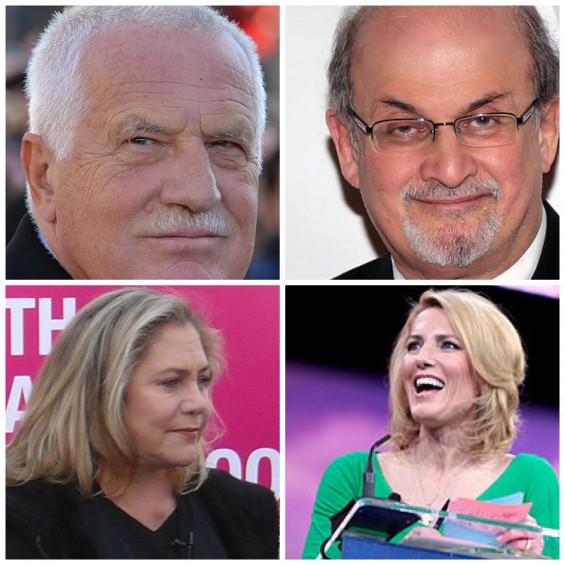
In 1941, Czech economist and politician Václav Klaus was born; other June 19 births include Salman Rushdie in 1947, Kathleen Turner in 1954, and Laura Ingraham in 1964.
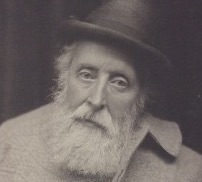
“A man can only learn when he is free to act.”
Auberon Herbert, The Right and Wrong of Compulsion by the State (1885)
It is time to get serious about equal rights under the law. And republican policing.
Click on over to Townhall for the timely assessment. Then click back here for full-spectrum perspective.
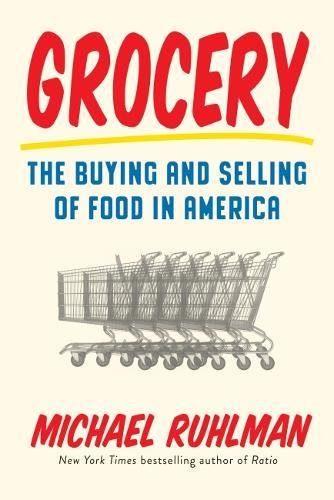
[W]e don’t really have stores that sell only groceries, shelf-stable products, anymore. Most stores sell a variety of shelf-stable and perishable goods. So most stores should be considered, technically, supermarkets. But there is a warmth to the term grocery store that encourages one to embrace it and hold on to it. In large part this is because it sill does connote — in this era of fragmentation and impersonal service and a food world that grows ever more confusing — a place that can be depended upon, day in and day out, where you can get everything you need to nourish your family. We like to think that our grocery store is run by a grocer (not a supermarketer). And we want to believe that there are capable people in charge of our food, people who care for it and ensure that the products are good.
Michael Ruhlman, Grocery: The Buying and Selling of Food in America (New York: Abrams Press, May 16, 2017)