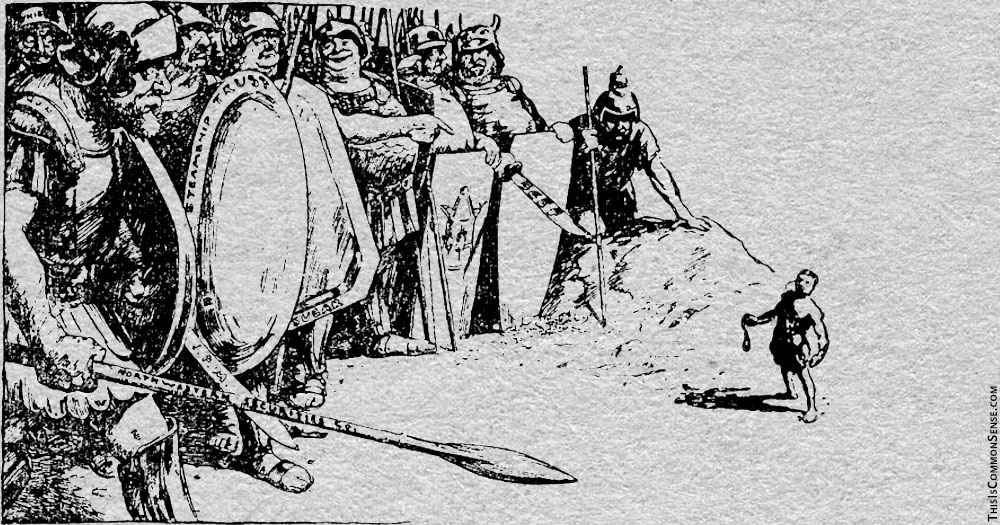
The ongoing ObamaCare Repeal fiasco, Dr. Rand Paul explaining:
Categories
Legalize Cheap Health Care?
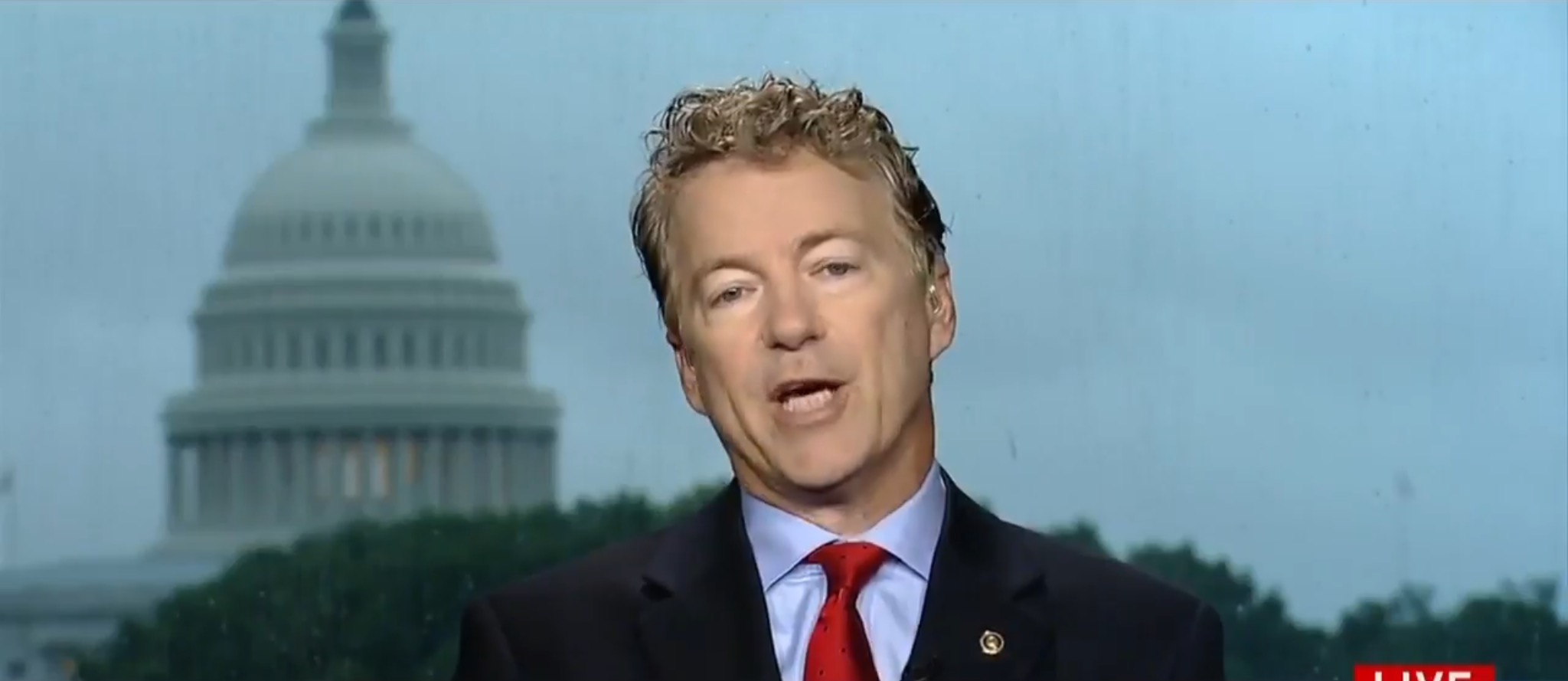
The ongoing ObamaCare Repeal fiasco, Dr. Rand Paul explaining:
That is what learning is. You suddenly understand something you’ve understood all your life, but in a new way.
Doris Lessing, The Four-Gated City (1969)
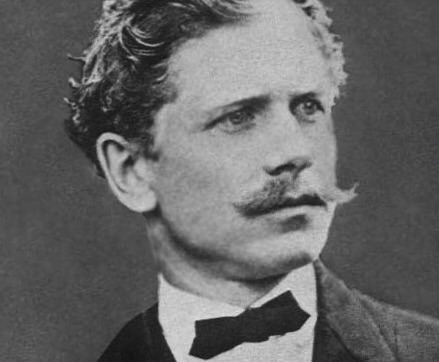
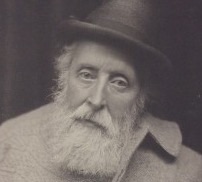
June 24 birthdays include Henry Ward Beecher, clergyman and reformer (1813); Ambrose Bierce [pictured], author of “An Occurrence at Owl Creek Bridge” and The Devil’s Dictionary — his dark, cynical wit earned him the epithet “Bitter Bierce” (1842); Karin Pilsäter, Swedish politician of the Liberal People’s Party (1960).
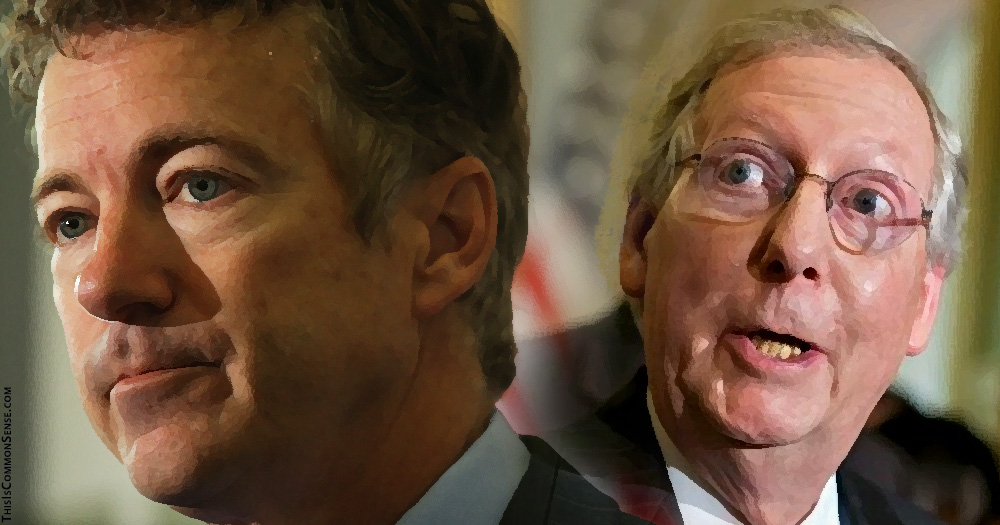
Senate Majority Leader Mitch McConnell (R-Ky) has introduced a bill to compromise between the House’s recent Affordable Health Care Act and the current “ObamaCare” Affordable Care Act. Though there seems to be some “what the heck, go with it” enthusiasm for it on Capitol Hill, it’s not coming from Senators Rand Paul of Kentucky, Ted Cruz of Texas, Ron Johnson of Wisconsin and Mike Lee of Utah.
‘‘Currently, for a variety of reasons, we are not ready to vote for this bill,” their joint statement from yesterday reads.
Their objections? Well, they agree that there are “provisions in this draft that represent an improvement to our current healthcare system but. . .”
“it does not appear this draft as written will accomplish the most important promise that we made to Americans: to repeal Obamacare and lower their healthcare costs.’’ Their opposition, the Boston Globe tells us, puts the TrumpCare wannabe in jeopardy.
Dr. Rand Paul is the key figure in the opposition. One of Capitol Hill’s ongoing amusements has been to watch the junior Kentucky senator repeatedly pit himself against his state’s senior member — who, the Globe tells us, now threatens “to bring the bill to a vote next week even if he doesn’t have the necessary votes.”
Pressure tactics.
Which you need to put an obviously bad bill through Congress.
Too many mainstream Republican congressmen lack the courage of their constituents’ convictions. They apparently do not really believe that a freed-up health care system and insurance market can work to the general good.
At least, not in time for the next election.
This is Common Sense. I’m Paul Jacob.

Iris Murdoch, Sartre: Romantic Rationalist (1953), Ch. 10, p. 148 (concluding sentence).
We know that the real lesson to be taught is that the human person is precious and unique; but we seem unable to set it forth except in terms of ideology and abstraction

Today is Estonia’s Victory Day, which has been celebrated on June 23 every year since 1934. The date recalls the victory in the 1919 Battle of Vonnu of the Estonian military forces (and Latvian North brigade) and their allies over German forces (Baltische Landeswehr) who sought to re-assert Baltic-German control over the region. The battle was part of the 1918-1920 Estonian War of Independence, where the main adversary of the newly independent Estonia was Communist Russia.
Today, Victory Day also marks the contributions of all Estonians in their fight to regain and retain their independence. Estonian celebration of June 23 is ceremonially tied to the following Midsummer Day celebrations on June 24.
According to Estonian laws, the state flags are not to be lowered during the night between days.
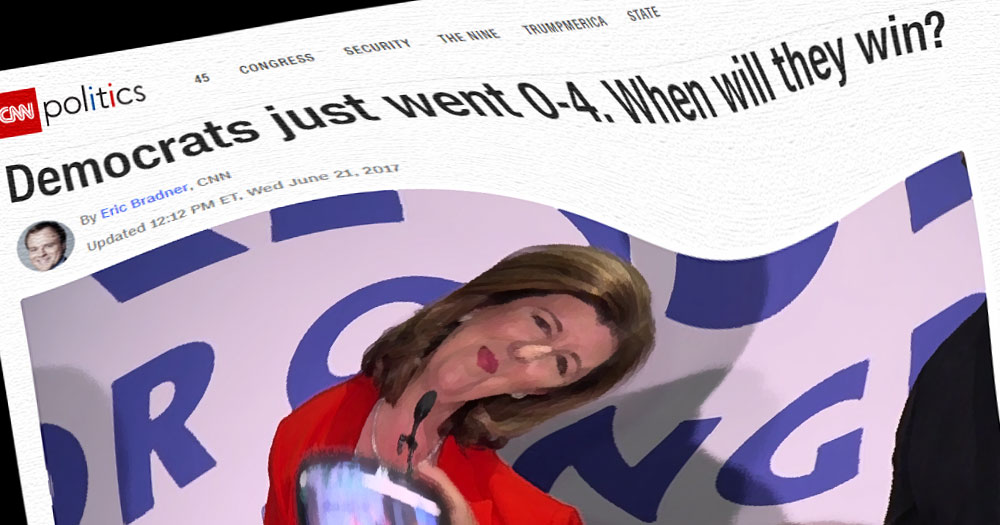
Democrats had high hopes. Their come-back after the 2016 defeats seemed near at hand. After all, Trump is proving increasingly erratic and incompetent, and the Republican mis-handling of the ObamaCare repeal appears to be a disaster of ginormous proportions.
How could they not start taking seats in Congress back?
There were four open seats requiring new votes this late Spring. “Democrats tried an inoffensive moderate message in Georgia,” CNN’s Eric Bradner informs us. “They ran a banjo-strumming populist in Montana. They called in the cavalry in South Carolina and tried to catch their foe sleeping through a long-shot in Kansas.”
Democrats failed, 0-4.
Why? Well, the congressional vacancies were made by the new president’s appointments, and he may have targeted those districts that were especially safe. Nevertheless, CNN notes, “[t]he party got closer than it has in decades to winning some of the four seats — a sign they’ve closed their gaps with Republicans in both suburban and rural areas. . . .”
But there is a lesson here that CNN did not draw from the debacle. The much-lamented Georgia race, in which Jon Ossoff lost to Republican Karen Handel, was a race in which Ossoff out-spent Handel six to one in what is called “the most expensive House race in history.” And yet, somewhat oddly and perhaps hypocritically, Ossoff, the bigger spender, went on air complaining about money in politics.
All that moolah did not push him over the top. Ossoff and the Democrats — as well as the feckless Republican majority — might look for fewer excuses and stand for something voters actually want.
This is Common Sense. I’m Paul Jacob.
“The nature of man is indivisible; you cannot cut him across, and give one share of him to the state and leave the other for himself.”
Auberon Herbert, The Right and Wrong of Compulsion by the State (1885)

On June 22, 1633, astronomer Galileo Galilei recanted his belief in heliocentrism, the idea that the Earth revolves around the sun. He didn’t do this based on scientific research, but under pressure from the Holy Office in Rome.
Three hundred forty-five years later, to the date, American astronomer James W. Christy discovered Charon, a moon for what was then called “the ninth planet,” Pluto. This put Christy in an august company of satellite discovers, including Galileo, who had discovered four of Jupiter’s moons in 1610.
When Pluto was later “demoted” to “dwarf planet” status, in 2006, no one was put under house arrest for objecting, or for not changing his or her mind, as had Galileo been centuries before.
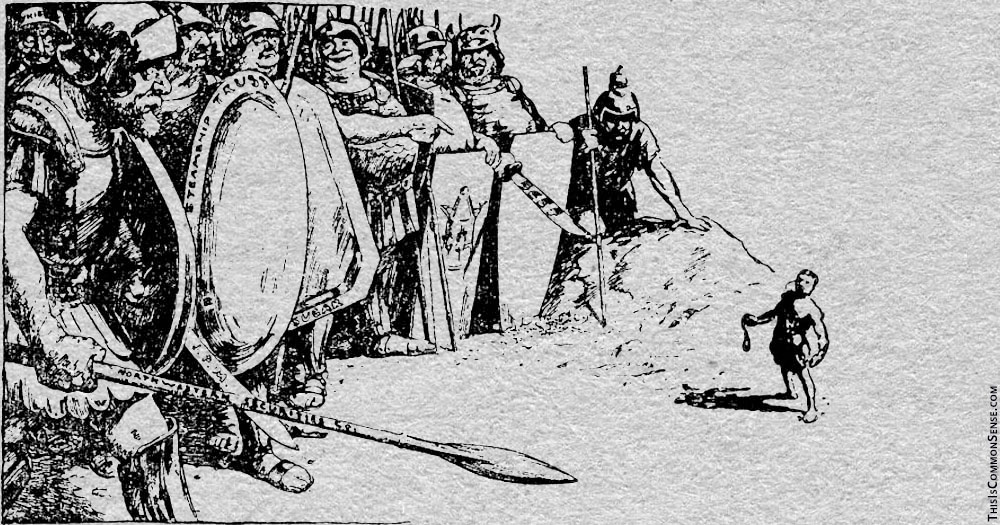
New media ballyhooer Douglas Rushkoff made waves this week. Citing an un-named friend who went hysterical about Amazon.com’s purchase of Whole Foods, he asserted that such “unease is widespread, and has raised new calls for breaking up Jeff Bezos’s impending monopoly by force.”*
The company has “surely,” he claimed, “reached too far.”
Apparently, serving customers exceptionally well is bad for business.
Yes, he almost totally ignored the pro-consumer benefits of Amazon. Had to — his case makes no sense when you factor in us consumers. He focused, instead, on Amazon’s success in terms of its recent “online and offline retail sales growth” and its control of 40 percent of cloud storage and streaming services.
He went on to spin a bizarre fantasy about how disruptive bigness is in business. His economically illiterate farrago reminds me of the sad case made against pre-antitrust Standard Oil, a company which, during the whole time of its growth prior to break-up, kept on producing more fuel at ever-decreasing prices.** Broken up because of . . . fears about how businesses change. And of bigness itself.
As long as consumers are being served, this reaction strikes me as paranoid. When businesses get big (and even near-monopolistic) and then cease to serve customers, they fail. While serving customers, there is no call for fretting over businesses that move from one success to another — which is what Rushkoff has the gall to worry about.
The call for Amazon’s break-up over-sells government and necessarily under-serves consumers.
This is Common Sense. I’m Paul Jacob.
* Rushkoff’s piece in Fast Company was the first I heard of such a “call.” Rushkoff is the coiner of the term “media virus” and a sort of populist pusher of market skepticism.
** For the bizarre story of the Standard Oil case, and how it made no economic sense whatsoever, see Dominick T. Armentano, Antitrust: The Case for Repeal (Ludwig von Mises Institute, 1999), p. 41-43, and Antitrust and Monopoly (Independent Institute, 1990), pp. 57-60.