Categories
Today

Shays

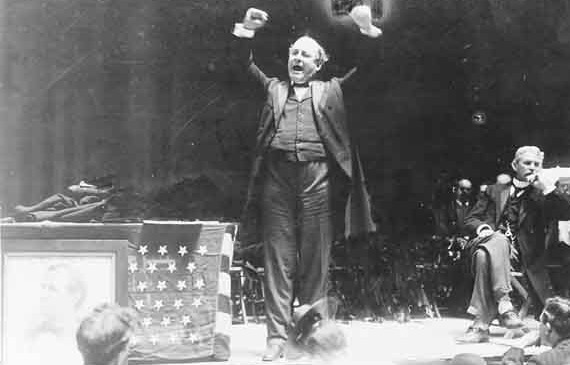
On January 25, 1787, Shays’s Rebellion experienced its largest confrontation, outside the Springfield Armory, with four of the rebels dead, 20 wounded.

The rebellion was a key moment in United States history. Daniel Shays and his followers objected to Massachussetts’s high taxes and rampant cronyism. The revolt, which was completely suppressed, led to the adoption of the U.S. Constitution and drawing George Washington from his retirement.

Categories
Thought

Gustave de Molinari

Citizens of constitutional States have obtained a right of consent to public expenditure, and to the taxes which furnish it, but the right has proved sterile. Their representatives have never checked the progressive rise in taxation and expenditure which has occurred in every State, those advances — as may be proved beyond any dispute — having been no less, but often much more rapid, in the States which do possess constitutions. And this process must continue indefinitely for just so long as governments, charged with guaranteeing national security, maintain their right of unlimited requisition upon the life, liberty, and property of the individual.

Gustave de Molinari, The Society of To-morrow: A Forecast of Its Political and Economic Organisation (1899; 1904), II.7.6.
Categories
Accountability folly general freedom ideological culture media and media people moral hazard national politics & policies too much government

Bring Back the Eunuchs?

“Everybody knows that ordinary Americans are a bunch of idiots,” a Health and Human Services official told Benjamin Ginsberg. “Why do you need to do a survey to find that out?”

Actually, he was not surveying Americans for their IQs and knowledge levels. He was surveying Washington insiders. Like her.

She hadn’t been listening.

Ginsberg and co-author Jennifer Bachner have a new book out, What Washington Gets Wrong (2016). “We found that public officials,” Ginsberg told C-SPAN’s Brian Lamb last month, “the people who really govern this country . . . don’t think much of ordinary Americans.”

Surprise, surprise. This has been an “open secret” for some time. Washington insiders “are wealthier,” “better educated,” and “think ordinary Americans don’t really know very much.” More alarmingly, they think that the government should “not pay too much attention to what ordinary folks think.”

According to Ginsberg and Bachner, this has been a long time coming. Progressive Era reformers transformed government in an effort to make it less partisan.

They succeeded — only to make it less accountable and less . . . American.

In ancient times, great administrative states were run by eunuchs, men gelded to curb their appetites the better to serve their sovereigns (pharaohs; emperors; kings). Not their own interests.

Is it time to bring back the practice?

Just joking. Instead, Congress can tame the bureaucratic leviathan it has created by trimming its ranks and pulling back on pay and benefits until they’re more in line with the private sector.

Let’s hope the House’s recent passage* of the REINS Act, requiring congressional approval of major regulations, is a sign that Congress’s lackadaisical attitude about the bureaucracy is changing.

This is Common Sense. I’m Paul Jacob.


* Let’s hope the Senate follows suit.


Printable PDF


Categories
Thought

Thomas E. Woods, Jr.

[I]f we are to make sense of American history, the Constitution, and the options before us as we confront Jefferson’s nightmare — namely, a government that acknowledges no fixed limits to its power — we have an obligation to understand it.


Thomas E. Woods, Jr., Nullification: How to Resist Federal Tyranny in the 21st Century (Regnery, 2010), p. 113.

Categories
Today

Beaumarchais

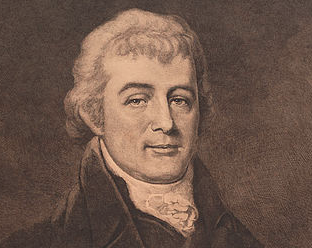
On January 24, 1732, French playwright, watchmaker, inventor, musician, diplomat, fugitive, spy, publisher, horticulturalist, arms dealer, satirist, financier, and revolutionary (both French and American) Pierre-Augustin Caron de Beaumarchais was born. He proved instrumental in securing armaments for the America Revolution, but remains best known for his three “Figaro” plays, Le Barbier de Séville, Le Mariage de Figaro and La Mère coupable.

Beaumarchais died May 18, 1799.

Categories
Accountability government transparency term limits

Promises & Limits

Last year, Americans — everywhere from Montgomery County, Maryland, bordering the nation’s capital on the east coast, to sunny Santa Clara, California, on the west coast — voted to impose term limits on their elected officials.

There were 40 separate local votes to enact term limits or, conversely, measures put up by politicians to weaken or abolish those limits. In every single case — that’s 100 percent — voters came down on the side of strong term limits. And by a whopping average vote of 74 percent.

Not. Even. Close.

Back in 2014, term limits admittedly did not fare quite as well. In that election year, a mere 97 percent of local term limits ballot measures prevailed. You can’t win them all.

Most folks I know believe we most desperately need term limits on Congress.

Even in these days of division, with our nation racked by partisan rancor and recrimination, a constitutional amendment to term-limit Congress has better than two-to-one support by folks across the spectrum — favored by 77 percent of Republicans, 67 percent of Democrats and 79 percent of independents.

President Donald Trump pledged in the campaign’s homestretch that, as his first order of business in “draining the swamp,” he would push Congress to propose an amendment limiting House members to three terms, six years, and Senators to two terms, 12 years. Those are the limits in the term limits amendment already introduced by Sen. Ted Cruz (R-Tex.) and Rep. Ron DeSantis (R-Fla.).

Speaker Paul Ryan has promised to bring it to the floor for a vote. Senate Majority Leader Mitch McConnell has refused. McConnell’s office number is (202) 224-2541.*

This is Common Sense. I’m Paul Jacob.


* His Facebook page is here.


Printable PDF


Categories
Thought

Gustave de Molinari

A community of interests and needs is the foundation of human friendship, while the opposition of needs and interests is not only capable of provoking antipathy, but it is notorious that nothing on earth has the same power of moving a man to violent and implacable hatred as a member of his own species.

Gustave de Molinari, The Society of To-morrow: A Forecast of Its Political and Economic Organisation (1899-1904), I.1.1.
Categories
Today

Stendhal

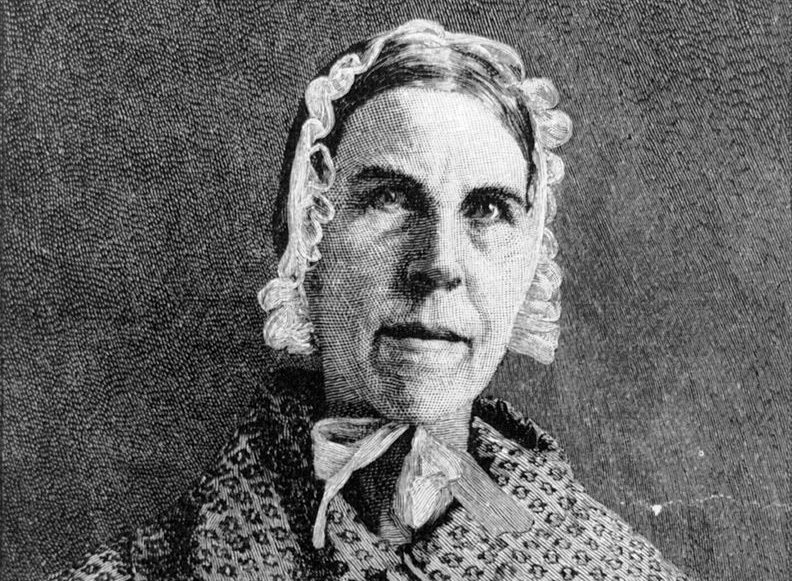
On January 23, 1783, novelist Marie-Henri Beyle, known by his pen name Stendhal (pictured above), was born. Stendahl was an avid student of the French liberal philosophical tradition, a follower of Destutt de Tracy and an attendant at the count’s salons. His most famous works include the novel The Red and the Black and a treatise on romantic love.

Stendhal died March 22, 1842.

On January 23, 1860, the Cobden–Chevalier Treaty was signed between France and Great Britain. The treaty was named after the two main proponents of the agreement, Richard Cobden (in England) and economist Michel Chevalier (in France). The treaty had been suggested the year earlier, in British Parliament, by Cobden’s colleague John Bright, who saw the measure as a peace measure, and an alternate to a military build-up.

Categories
links

Townhall: Get Over It

Partiers party, protestors protest, rioters riot, and reasoners . . . go to Townhall and read the latest Common Sense column from Paul Jacob. Particularly impassioned reasoners might wish to return for more perspective:


YouTube: San Jose videos

https://youtu.be/KpQD3wEDfdg

https://youtu.be/w7OV10q0fa0

https://youtu.be/my6-YfX7ApM

Categories
Thought

Ernest Bramah

Two resolute men, acting in concord, may transform an Empire, but an ordinary resourceful duck can escape from a dissentient rabble.

Ernest Bramah, as quoted by Lin Carter, Kai Lung Unrolls His Mat, introduction (Ballantine Books, 1974).