Categories
ballot access initiative, referendum, and recall Voting

Worms for Early Bird Voting?

Election Day is six weeks away. Yet, in my home state of Virginia, voting began last week.

Is it responsible to cast a ballot so early? 

You may know with metaphysical certainty how you’re voting for president — even in the event of some major cataclysm — but have all the state rep and city council and ballot measure campaigns also played out fully enough for you?

Here in Virginia, we get few candidate races in our split-up state and federal elections, much less ballot issues to decide. I could have made all my (very few) choices months ago. But I trust that in a more competitive and healthy representative democracy we would more want to hear out the candidates.

A lot can happen in six weeks. And you cannot change your vote once it’s cast.*

The new Democratic-controlled Legislature — in reaction to the pandemic, to prevent crowding at the polls — expanded the early voting period this year. It started September 18 and ends October 31.** 

There are costs to expanding early voting — including making campaigns more expensive to run and win. Disabled from marshaling advertising into a two-or-three-week period before the vote, campaigns are forced to sustain publicity for a month. Or longer. 

While better-funded incumbents have little difficulty with the added cost, it cripples challengers. It especially handicaps grassroots ballot initiative proponents battling public employee unions or the Chamber of Commerce. 

Make the voting process comfortable and easy for citizens. But let’s be certain not to make it comfortable and easy for incumbents and special interests.

This is Common Sense. I’m Paul Jacob.


* In Sweden, you can change your early vote, informs my friend Bruno Kaufmann, a journalist and direct democracy advocate. They call it “second voting.” 

** Though several other states routinely allow more than six weeks of early voting.

PDF for printing

See all recent commentary
(simplified and organized)
See recent popular posts

Categories
Accountability insider corruption local leaders national politics & policies Voting

Bring the Bozos Home

“Sen. Rand Paul (R-Ky.) announced Sunday he has covid-19,” The Washington Post reports, “and four other GOP senators are quarantined. Sen. Amy Klobuchar (D-Minn.) disclosed Monday that her husband, too, is infected with the virus.”

Social media was not uniformly brimming with support for the Kentucky senator, of course, and some folks noted, in earnest horror, that the Republican who had been shot at by a Bernie Bro and blindsided by his deranged Democrat neighbor had dared work six days in the Senate after being tested but before receiving his diagnosis.

He should have been sequestered!

To let the big “stimulus” packages sail through Congress?

But there are work-arounds.

“We should not be physically present on this floor at this moment,” argued Sen. Richard Durbin (D-Ill.) yesterday, urging the Senate to facilitate social distancing by allowing remote voting. Asked about it at his Sunday news conference, President Trump gave thumbs up: “I would be totally in favor of it on a temporary basis.”

I say, let’s take this a step further: do it permanently

Remote voting makes sense in an emergency. Sure. But it also makes sense all the time, because legislators voting from their home states and districts rather than within the Washington swamp would hear more from constituents than special interest lobbyists and, therefore, likely represent us better. 

Plus, not tethered to life in Washington, or the confines of the capitol, we might reduce the size of congressional districts from over 700,000 people to more like 70,000 and see real representation return to our land. 

This is Common Sense. I’m Paul Jacob.


PDF for printing

telecommute, Rand Paul, Congress, Senate, Coronavirus, Corona Virus,

Original photo by Manuel Bahamondez H

See all recent commentary
(simplified and organized)
See recent popular posts


Categories
election law incumbents partisanship Voting

Is the Election Over?

The election is weeks away, but a new report from the non-partisan Center for Voting & Democracy picks the winners in every congressional race. In the past, their accuracy has been astounding.

In 1997, 18 months prior to the ’98 elections, leaders of the Center predicted 340 congressional races with incumbents and 21 open seats where there was no incumbent. The results? They were right in 339 out of the 340 incumbent races, or 99.7 percent. In open seats it wasn’t quite as easy, but they were right in 19 out of 21, or 90 percent.

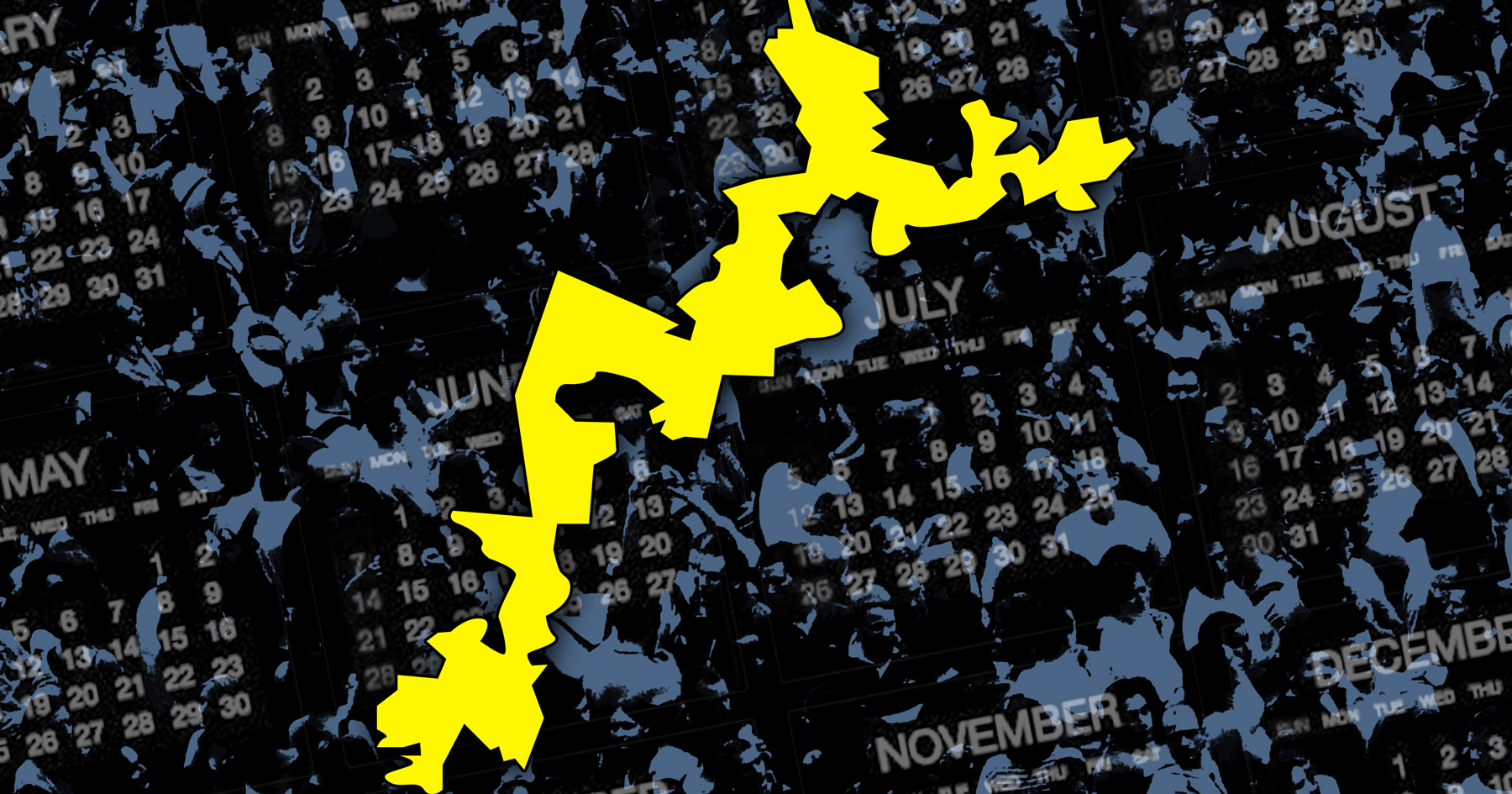
How do they do it? They look at the breakdown of voters by party affiliation. You see, one of the most serious problems we face in creating a competitive electoral system is gerrymandering. This is the process whereby state legislatures draw the political boundaries. It allows politicians to pick their voters before voters can choose them. Add to that the awesome power of incumbency, which scares off competition, and you can see this is not exactly crystal-ball gazing.

The courts have struck down districts drawn to get a certain racial outcome, but have turned a blind eye to districts that arbitrarily favor one party over another. The solution to incumbents monopolizing our elections is term limits. But another key factor in promoting democracy is to stop the politicians from drawing rigged districts that squelch competition.

This is Common Sense. I’m Paul Jacob.