Categories
government transparency ideological culture national politics & policies U.S. Constitution

A Funny Thing Happened on the Way to a Reform

Going into the presidential race, last year, Donald Trump was far from a typical Republican.

His rich man braggadocio, his prior support for abortion, and much else, put him culturally at odds with the social conservative wing of the GOP. He dared heap scorn on neoconservative foreign policy strategy, sacrosanct since Reagan on the right. He has supported many Democratic programs, not the least of which is the Gephardtian protectionism that pulled in so many moderate Democrats.

Besides, as he has famously stated, Democrats loved him, asked him for money, and (not coincidentally) gave him praise . . . right up until he started his campaign under the Republican banner. Then he was excoriated as sexist, racist, xenophobic, Ugly Americanist. Ivanka, his eldest daughter — extraordinarily close to him — was a registered as a Democrat recently enough that she couldn’t even vote for him in the primary.

Ideologically, he has been all over the map.

So one might reasonably think he would govern as a centrist. A non-humble Jimmy Carter retread, perhaps.

But he has assembled the most conservative cabinet in our lifetime. Far more conservative than Ronald Reagan’s. Predictably, Democrats are freaking out.

Why the move “rightward”?

Well, if all the Democratic leadership plus most of the moderate Republican leadership have come out strongly against you — in high moral dudgeon — what point is there to appease them?

The cost of the Trump anathematization strategy may become all too clear in Trump’s first Hundred Days.

This is Common Sense. I’m Paul Jacob.


Printable PDF

Trump, protest, conservative, centrist, right, illustration


Categories
crime and punishment general freedom moral hazard national politics & policies Regulating Protest responsibility The Draft too much government U.S. Constitution

For Genderless Freedom

When President Obama announced last week that he wants my daughter to register for the draft — as a symbol of the nation’s commitment to gender equality and a “ritual of adulthood” — believe me, I noticed.

Sure, the symbolism rings hollow, I wrote at Townhall. The president is on his way out and Congress just agreed on a defense authorization bill blocking any Christmas-time sign-up of women by the festive folks at Selective Service.

Still, President O’s symbolism is all wrong.

Free societies don’t require the involuntary service of men and/or women for their defense, much less celebrate conscription as a secular rite. Our All-Volunteer Force is the most effective military in the world. Its leaders neither need nor desire to swell its ranks with draftees — even if, heaven forbid, a major war bubbles forth from all the foreign conflicts and interventions in which we’re currently engaged.

As for the “it’s just registration” argument, and promises by politicians that they don’t support a draft. Well, it’s registration for the draft. Per politicians’ promises, I rest my case.

Yet, this comment at Townhall called me back into service: “Has this author been against draft registration for the last 30+ years or is it just because his little princess might have to register? If men have to do it, so should women.”

With slight edits, I replied: “I oppose the draft on principle . . .  As Daniel Webster pointed out, government has no constitutional authorization to conscript citizens. The draft further violates the 13th Amendment. Conscription has been the hallmark of dictators and totalitarian regimes, not America. We’ve had a draft rarely in our history.

“In 1980, I refused to register for the draft when Jimmy Carter brought it back. Candidate Ronald Reagan said, ‘The draft or draft registration destroys the very values that our society is committed to defending,’ and pledged to end registration as president. But Reagan reversed himself and prosecuted 13 of us who had spoken out against the policy and refused to register. I served six months in a Federal Correctional Institution (without being corrected) — the longest of anyone post-Vietnam.

“Here are the reasons I resisted at the time (1985) and a more recent reflection (2010).

“My daughter will make her own decision, and I’ll be supportive. But it is a terrible policy that will diminish our military defense, while also violating . . . ‘the very values our society is committed to defending.’

This is Common Sense. I’m Paul Jacob.


* Today, Tuesday, Dec. 6, 2016, marks the 32rd anniversary of my arrest by the FBI for violating the Military Selective Service Act by refusing to sign a draft registration form.


Additional Information

Common Sense: Needless List

Townhall: Draft the Congress and Leave My Kid Alone (2003)

Townhall: Americans Gung-Ho to Draft Congress (2004)


Printable PDF

draft, register, registration, woman, Paul Jacob, resistance,


Categories
ideological culture media and media people moral hazard nannyism national politics & policies porkbarrel politics responsibility too much government U.S. Constitution

Diversity, Identity, and the Liberal Implosion

“To paraphrase Bernie Sanders, America is sick and tired of hearing about liberals’ damn bathrooms.”

Finally. Some sense from the New York Times.

Mark Lilla, in “The End of Identity Liberalism,” delivers a valuable lesson about political correctness — without once mentioning the term “political correctness.”

Now this is a lesson we can get behind.

The problem is “diversity.” The center-left became so obsessed with it that it helped sink the last election for Hillary Clinton, Democrats at large, and the coherence and legacy of President Barack Obama.

“However interesting it may be to read, say, about the fate of transgender people in Egypt,” Lilla wrote in the Friday think piece, “it contributes nothing to educating Americans about the powerful political and religious currents that will determine Egypt’s future, and indirectly, our own.”

Fixating on diversity of gender identity and racial make-up in business and government has scuttled the rights-oriented approach of the older liberalism.

Alas, Lilla is not talking about the liberalism of J.S. Mill or Lord Acton. He is talking about FDR.

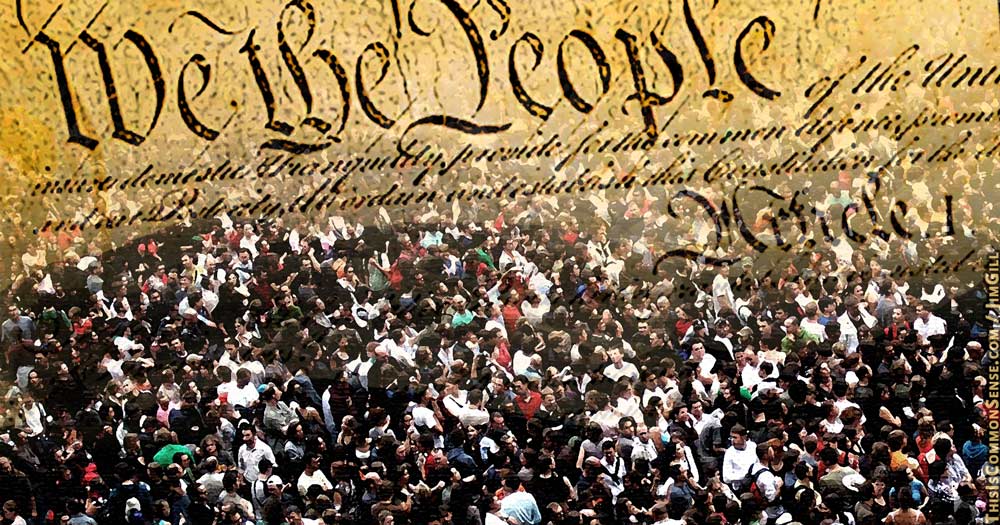
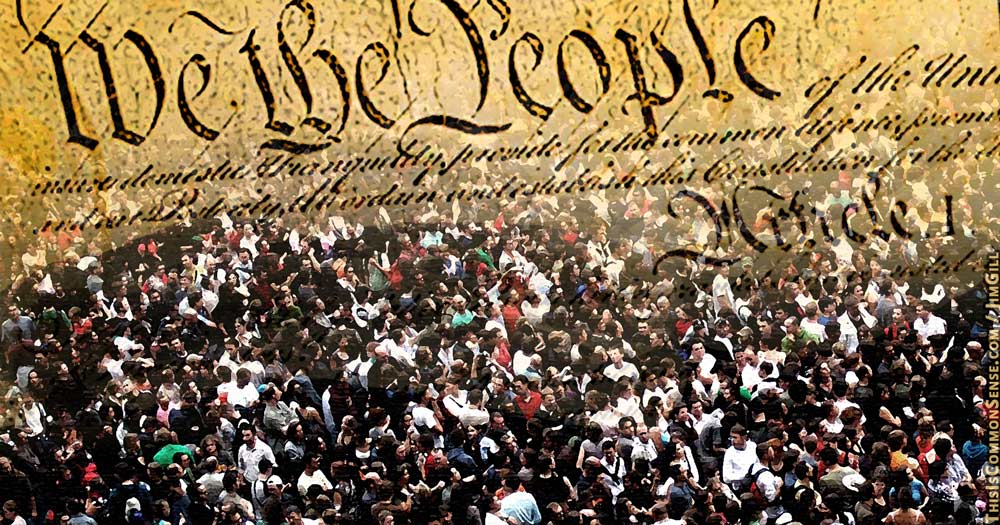
But compared to today’s “identity liberalism,” FDR’s burdensome promises look like sheer genius. And Lilla understands at least one thing about diversity: “National politics in healthy periods is not about ‘difference,’ it is about commonality. And it will be dominated by whoever best captures Americans’ imaginations about our shared destiny.”

He does not bring up the real liberal message: that the way to find commonality is to avoid making government all things to all people. It is to limit its scope, instead, so the president of the United States isn’t every school’s bathroom monitor.

Perhaps an essay on The End to Hubristic Liberalism is required?

Another day. And probably another paper.

This is Common Sense. I’m Paul Jacob.


Printable PDF

identity, diversity, politics, individualism, rights, individual, illustration, crowd


Original (cc) photo by James Cridland on Flickr

Categories
general freedom ideological culture nannyism national politics & policies Popular too much government U.S. Constitution

The Venezuela Chaos

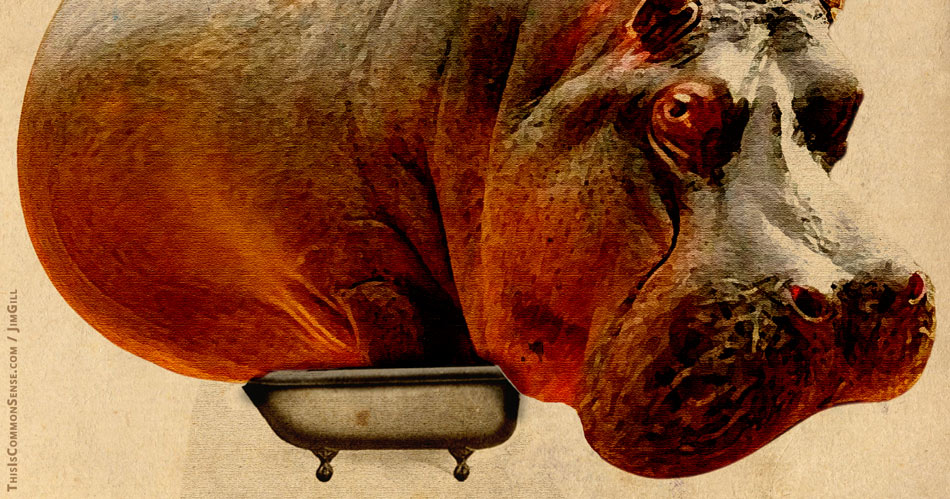
I have friends who call themselves anarchists. Their theory? Government is always merely an open conspiracy of some to live at the expense of others.

Republicanism, on the other hand, proposes that if we limit government, we can hone it down to the level where there is no conspiracy, and everything the government does can plausibly help everybody.

Not just a few insiders.

Socialism is the opposite notion. Socialists seek to grow government so far that it “naturally” serves everybody, not only the few. It’s all about “equality,” you see.

Here’s what we know for sure: socialism, when really tried, is so awful that it makes anarchy-as-chaos sound good.

The latest socialist horror is Venezuela, which is getting worse every day. Now hospitals place newborns in cardboard boxes. There are no other supplies.

But that’s not all. The special program for feeding everybody? It’s now mainly for feeding just those close to the government — precisely as my anarchist friends say all government is:

Six months after the creation of the Local Committees of Supply and Production (Clap) that is designed to “distribute food directly to the people,” the government has decided to change its approach by threatening those using the program.

The Venezuelan government announced that it will suspend delivery of food packages to those who criticize its policies.

Are socialist out to prove anarchists right?

I bet most of my readers still put some hope in limiting government to serve all. Venezuelan socialism demonstrates how badly the opposite idea is, showing us that serving everybody by total government just decays into the folks allied closely with government warring against everybody else . . . who starve in plain sight.

This is Common Sense. I’m Paul Jacob.


Ask the next question.

Questions Answered:

What is the difference between a republic and a socialist state?

What do anarchists think of government?

What happens when government tries to do everything for everybody?

The Next Question:

How do we convince well-meaning socialists that total government cannot work for the benefit of everybody? (Since the examples of the USSR, Communist China, and Venezuela haven’t worked so far.)


Printable PDF

government, bathtub, Venezuela, illustration


Categories
Accountability general freedom initiative, referendum, and recall moral hazard national politics & policies political challengers term limits too much government U.S. Constitution

Fear and Freedom

“If Libertarian Gary Johnson doesn’t win the presidency,” I posted to Facebook last Monday, “I’m leaving the country.”

Well, Johnson didn’t win. And I wasn’t kidding. I’m writing this from a Parisian café.

Of course, I was also tongue-in-cheek, since — spoiler alert! — I am coming home next week.

This week, I’m speaking at the Global Forum on Modern Direct Democracy in San Sebastián, Spain — a gathering of pro-initiative folks from all over the world. We want people’s votes to count, even if we disagree with their candidate or issue.

Which brings us back to Donald J. Trump’s surprise victory. Protests have broken out in several cities — some violent. And some folks say they’re scared of what Trump may do as president. Sure, one can snicker at these fearful responses as liberal whining. And to the extent they’re talking about university professors canceling tests and coddling “traumatized” students . . . well, no argument here.

Still, I don’t just sympathize when I hear people fear a politician with power, I empathize.

For a long time, I’ve been worried by out-of-control presidential power — from unconstitutionally making laws through executive orders to making war without any real check on that power. Scary. Whether that president is George W or Obama or Hillary or Trump.

Government is a monopoly on force. Therefore, by definition, government is frightening.

Democracy is often an antidote to tyranny, a check on power, but not always. That’s why folks who truly appreciate democracy believe in individual rights that transcend any vote-getting public decision mechanism.

Scared by President-Elect Donald Trump? Protect yourself: enact greater limits on government.

This is Common Sense. I’m Paul Jacob.


Ask the next question.

Questions Answered:

Is fear a natural byproduct of government?

Which presidential powers lack sufficient checks and balances?

What is more important: individual freedom or democratic decision-making?

Is democracy a check on power or an enhancement?

The Next Question:

How do we go about creating greater limits on political power?


Printable PDF

Protect Yourself, limited government, meme


Categories
Accountability ballot access general freedom incumbents initiative, referendum, and recall national politics & policies political challengers responsibility too much government U.S. Constitution

Votes Without Poison

Strange election. So . . . round up the usual suspects!

Immediately after Hillary dried her tears and conceded, out came the Tweets, then the analyses: the “third parties” are to blame!

Over the weekend, I focused* on one such election post-mortem. The basic idea is not altogether wrong: minor party efforts together may have cost the Democrat her Electoral College advantage this time around, just as Nader’s Green Party run spoiled Al Gore’s bid in 2000 and several past congressional races have been spoiled for the GOP by Libertarians.

Is there a problem here? Yes. But do not blame the minor party voters. It’s the way we count their votes that is “problematic.” The current ballot-and-count system turn voters most loyal to particular policy ideas into enemies of those very same ideas.

When we minor party voters turn away from a major party — usually because said party tends to corrupt or betray our ideas, or make only small steps toward our goals — our votes aren’t so much wasted as made poisonous.

Because the candidate least preferred may prevail.

But there’s a way out: On election day, voters in Maine showed how to cut through the Gordian Knot. Voting in approval for Question 5, Maine now establishes “ranked choice voting.”

Under this system, you don’t “waste” your vote when expressing a preference for a minor party candidate. You rank your choices and, if your first choice proves unpopular, your second choice (or maybe your third) gets counted. So you don’t “poison” your cause.

Republicans and Democrats have more than enough reason, now, to adopt ranked choice voting across the country.

This is Common Sense. I’m Paul Jacob.


* See yesterday’s links page to my weekend Townhall column for the basic references. But there were many, many articles on the Minor Party Effect, including a skeptical one by Sasha Volokh’s.


Ask the next question.

Questions Answered:

What is the effect of minor parties on major party outcomes?

What causes those effects, voter intent or something else?

Is there a way to prevent this, short of further sewing up the ballot access system to minor parties?

The Next Question:

What might our elections look like if people spent more time discussing issues and ideas … and less about class, culture wars, and sex crimes?


Printable PDF

ranked choice, vote, voting, democracy, clown, illustration


Categories
Accountability moral hazard nannyism national politics & policies political challengers too much government U.S. Constitution

Term Limits Trump

Entering his campaign’s homestretch, underdog Donald J. Trump gave an important speech at Gettysburg, Pennsylvania. He emphasized his support for term limits in what he called his “100-day action plan to Make America Great Again.”

“[R]estoring honesty, accountability and change to Washington” is the top item on Trump’s agenda, along with a pledge to begin the drive for “a Constitutional Amendment to impose term limits on all members of Congress” on his very first day in the Oval Office.

Public disgust with the corrupt status quo in Washington — and the hope that he will shake things up — drove Trump’s victory.

Yet, today, the Elections Committee of Michigan’s House of Representatives hears testimony on several bills to weaken or repeal term limits. Have the limits lost public support? Not on your life.

Politicians simply want to stay ensconced in power, reaping the many benefits they’ve bestowed upon themselves. They want to stay in power longer.

Just look to California. Back in 2012, a dishonest ballot explanation tricked voters into thinking they were tightening their term limits law. But what they were actually doing was voting to weaken it.

Now, Golden State legislators can stay in the same seat for a dozen years. And special interests have noticed. They’re “investing” more heavily than ever before.

The Los Angeles Times summarized the result in its headline: “Longer terms for California’s Legislature mean a flood of cash from interest groups . . .”

Here’s for enacting real term limits at every level of government. And if the politicians and special interests don’t like it — good!

This is Common Sense. I’m Paul Jacob.


Printable PDF

Donald Trump, term limits, president, first, illustration


Categories
Accountability general freedom ideological culture moral hazard national politics & policies political challengers responsibility too much government U.S. Constitution

The Wisdom of the Founders

“At a certain point, you have to let go for the democracy to work,” President Barack Obama told HBO’s Bill Maher last week, praising “the wisdom of the founders.”

“There has to be fresh legs,” he continued. “There have to be new people. And you have to have the humility to recognize that you’re a citizen and you go back to being a citizen after this office is over.”

Maher failed to ask Mr. Obama how this “fresh” viewpoint squared with his support for Mrs. Clinton. Nevertheless, let’s applaud the president’s endorsement of term limits.

Speaking of the founders, and limits on power, and this being Election Day, I’m reminded of a commentary in Forbes, back on Election Day four years ago, written by Ed Crane, the man who built the Cato Institute into one of the nation’s preeminent think tanks. Bemoaning the “interminable presidential race,” Crane wished for “a nation in which it really didn’t matter who was elected President, senator or congressman.”

“Don’t get me wrong, because I’m not saying it doesn’t,” explained Crane, “only that it shouldn’t.” He added, “I believe the Founders had a similar view.”

His point is simple: Getting to vote for your next president and senator and congressman is swell, but it’s important to have a Constitution that restrains those elected, so they “don’t have a heck of a lot of power over you or your neighbors.”

“We are a republic of limited governmental ­powers,” or should be, argued Crane. “Such a nation allows for sleep on election night.”

Instead of gnashing of teeth.

This is Common Sense. I’m Paul Jacob.


Printable PDF

Constitution, voting, democracy, Ed Crane, fear


Categories
Common Sense free trade & free markets general freedom initiative, referendum, and recall local leaders nannyism national politics & policies political challengers Regulating Protest too much government U.S. Constitution

Don’t Kill Colorado!

America has lots of problems. Colorado isn’t one of them.

Search the Internet and confirm that the Rocky Mountain State is the fourth best state “to make a living”; sixth best for homeowners; third on CNBC’s “Top States for Business”; and even holds a coveted first place in “arts engagement.”

What’s not to like?

I know Colorado, fondly, as the only state with a Taxpayer Bill of Rights (TABOR), a constitutional amendment requiring state legislators who want to hike spending or taxes to first ask citizens for approval. It was passed by voters in 1992, by citizens’ initiative.

Imagine that! Citizens in charge. In real life.

In Colorado.

Unsurprisingly, TABOR has long been No. 1 on Big Government’s hit list; for politicians, lobbyists, university presidents and political insiders, it’s the bane of their existence.

Along with the citizen initiative process, from which it came.

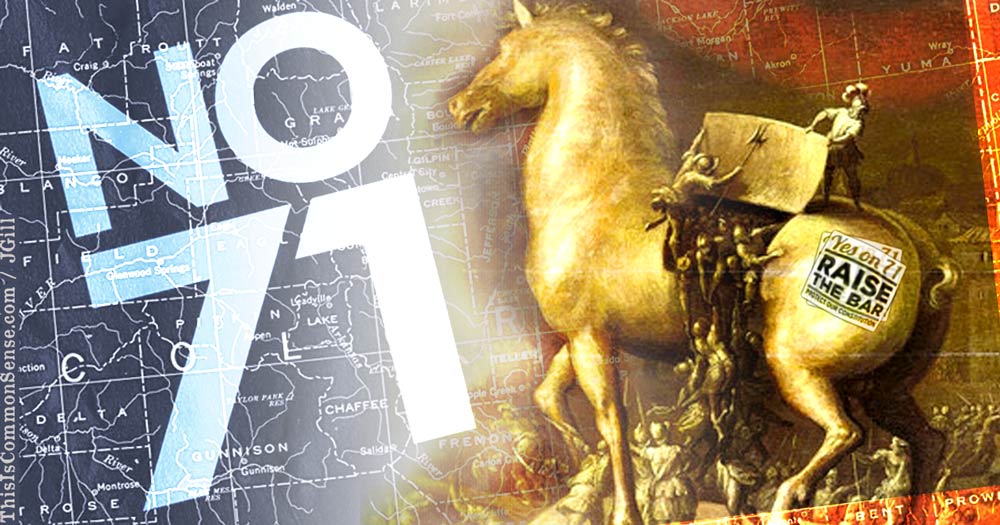
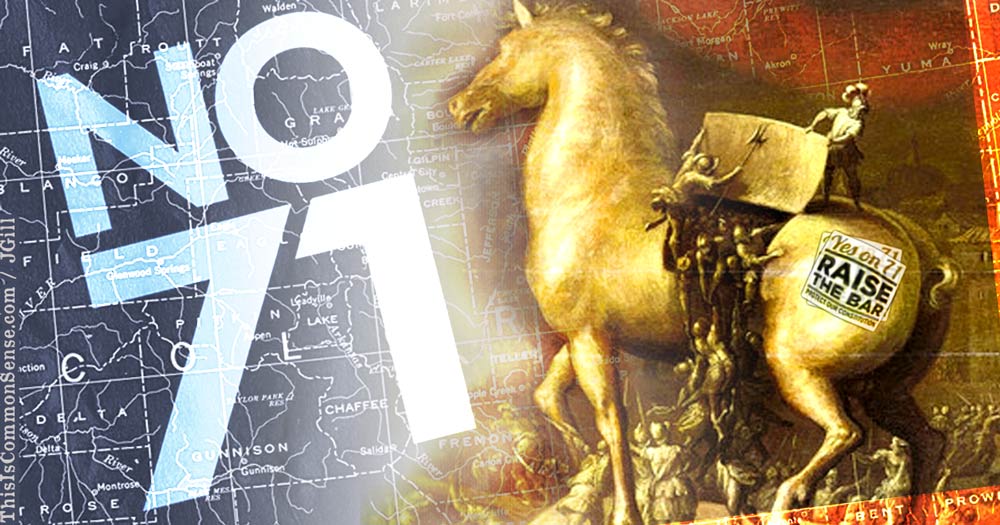
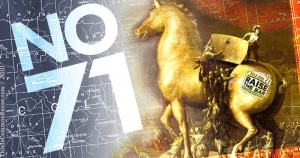
That’s why Colorado’s political establishment spent a million dollars to put Amendment 71 on next Tuesday’s ballot. They aim to kill both TABOR and the citizen initiative.

The amendment allows any partial or total repeal of TABOR — or other current parts of the state constitution — with a simple majority vote of 50-percent-plus-one. But it demands that any new enactment of taxpayer protection (or other reform) leap over a 55 percent supermajority hurdle.

Fair?

It means that a court decision, which “reinterprets” any provision of the Taxpayer Bill of Rights, could only be corrected by citizens with a supermajority vote. And citizens would face an avalanche of big spending from big labor and big business. That’s not a bug, but a feature for the powerful forces behind 71.

Still, Amendment 71’s murderous intent goes deeper. The measure also destroys the ability of regular people and grassroots groups to petition constitutional amendments onto the ballot. Instead of one statewide petition drive, Amendment 71 adds 35 additional onerous petition requirements — in every single senate district in the state.

The next question is obvious: Did the political big-shots behind Amendment 71, who blew a cool million dollars to gather their signatures, manage to meet their own mandate for future initiatives by qualifying in all 35 senate districts? Not even close.

While the lobbyists and politicians behind 71 have spent many additional millions claiming Colorado is the easiest state to amend the constitution, a real expert — Dane Waters, chairman of the Initiative & Referendum Institute — concludes just the opposite. His analysis indicates that Colorado’s process is actually “one of the most difficult in the country.” And should 71 pass, Colorado would have “the most strict distribution requirement anywhere in the world,” he said.

Waters fears that by blocking initiative constitutional amendments “on top of the fact that the legislature [in Colorado] has the authority to overturn any statutory initiative, [Amendment 71] will basically shut down the initiative process in Colorado.”
And that is how voters would be silenced and the investments powerful interests have made in the Centennial State’s legislature would be protected.

So there is no reason to be shocked when a bevy of special interests — most notably oil and gas interests, but also gambling interests and other major lobbies — raise and spend over $20 million dollars carpet-bombing the state’s electorate with TV and radio ads, slick mailings, and robo calls to support Amendment 71. They’re trying to convince voters to restrict their own power and increase the legislature’s leverage, since those special interests feel much more “comfortable” with politicians making all the decisions.

And voters making exactly none.

The politicians and lobbyists behind 71 have pulled out all the stops. Big money dominates the airwaves; all four living former state governors are on board; and their TV spots even feature the beloved Hall of Fame Denver Broncos QB John Elway.

But in the end, the beautiful thing about a ballot initiative is that voters have the final say.
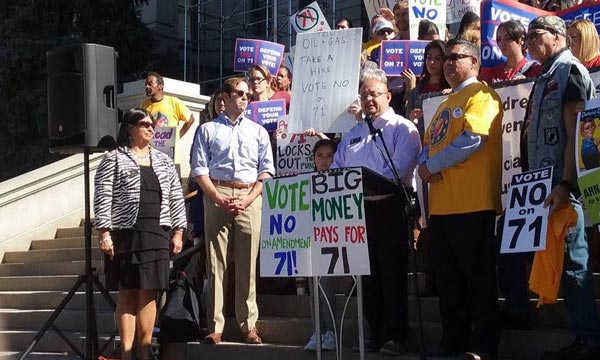
And that’s why grassroots groups from throughout the state and all across the leftright spectrum, from the state’s free-market Independence Institute to progressive Common Cause, from pro-TABOR taxpayer groups to more liberal anti-fracking activists, from Colorado NARAL to Colorado Right to Life — those who care about citizens having a say in government — are standing up to the big money establishment barrage, joining the coalition to Stop71.org.

Weeks ago, to kick off the campaign, Citizens in Charge Foundation provided the Vote No on 71 Committee a 10-foot tall, carved, wooden Trojan Horse. The float has been wheeled across the state on a trailer, dramatizing that Amendment 71 is a Trojan Horse from big money interests, who pretend they’re protecting the constitution when they’re actually seeking to restrict citizen power. Providing this focal point has allowed dozens of Colorado citizens to speak out to fellow voters, garnering tons of media attention in the process.

The Trojan Horse continues to reach voters, but like stone soup, the Vote No on 71 campaign has grown in many diverse ways:

  • The head of Common Cause, Elena Nunez, and the head of the Independence Institute, Jon Caldara, have bridged ideological divide to reach out to editorial boards across the state, resulting in the Denver Post and most other major papers editorializing against 71.
  • The Colorado League of Responsible Voters raised several hundred thousand dollars and is running a TV spot countering the millions spent by proponents.
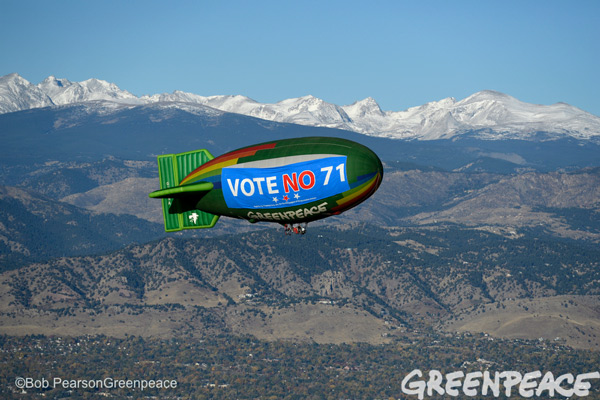
  • The Greenpeace blimp floats over the state, sending the Vote No on 71 message airborne.
  • The coalition has grown to more than 76 groups, each contacting its membership and urging folks to spread the word against 71.
  • A number of groups are advertising against 71 on Facebook.
  • A volunteer phone bank has been set up making thousands of calls to likely voters.

As this election winds down, we know we’re underdogs against the big-shots and their big money. But we also know we cannot let them kill the initiative without a fight. And we know that if we can reach enough Colorado voters with our message against Amendment 71, we can defeat it.

Help us reach more Colorado voters. The best way you can help is to make a financial gift right now. Today. The hour is very late, some voters have already cast their ballots, more are voting every day up until Nov. 8.

Please don’t let them kill Colorado. Help now:
  • Your $50 giftcovers gas for the Trojan Horse to reach another town
  • Your $100 giftpays to put 1,000 flyers on voters’ doorknobs.
  • Your $500 gift – launches Facebook ads reaching 5,000 voters or more.
  • Your $1,000 giftpays for robo phone calls to 10,000 folks who haven’t voted yet, reminding them to vote NO on Amendment 71.

Please give what you can. And take action now.

Can’t afford to give? How about giving your time?

Join our volunteer phone bank and dedicate a few hours one night this week or over the weekend to call likely Colorado voters between 4 pm and 8 pm Mountain Time. You can sign up here for two or four hour shifts and we’ll walk you through how it works.

You do NOT have to live in Colorado to pick up the phone and educate Rocky Mountain State voters about Amendment 71.
Those pushing Amendment 71 claim they want to protect the state constitution from “too many” amendments. But where’s the problem? They won’t say what amendments they believe don’t belong in the constitution.

No, they aren’t seeking to protect Colorado’s constitution, but rather Colorado’s political establishment.

The good guys, Colorado citizens, have taken aim to shoot down Amendment 71. They’ll save the initiative and good government . . . if you’ll pass the ammunition.

This is Common Sense. Thanks for your serious consideration. I’m Paul Jacob.

 

Printable PDF
TABOR, Amendment 71, Colorado, Raise the Bar, initiative, voter rights, Taxpayer Bill of Rights,


Categories
ideological culture media and media people moral hazard national politics & policies responsibility too much government U.S. Constitution

Pigs in Pokes

On Tuesday, Former Massachusetts Governor William Weld exhorted Americans to stop Donald Trump at all cost.

The Donald, he asserted, is dangerous because too touchy, too childish in his egoism, to withstand the pressures of the presidency of these United States. “In the statement, Weld made no mention of Clinton,” writes the AP. He focused on Trump and the GOP, instead.

Both progressive and conservative outlets interpreted this as a de facto endorsement of voting for Democrat Hillary Clinton — an uncomfortable conclusion, considering that Weld is Libertarian Party presidential nominee Gov. Gary Johnson’s VP running mate.

Looking at the statement itself, it is apparent that Gov. Weld prefers The Devil We Know to The Devil He Fears.

Which is where he loses me.

One need not like Trump to understand his appeal. Trump is a smoking sack of Who Knows What placed upon the doorstep of the Establishment, the insider classes running the federal government and the Fourth Estate. By taking offense at Trump but not Clinton, Weld sides with the insiders. My longtime respect for Weld aside, how can one plausibly do that?

We know what the Establishment wants most: perpetual war, permanent debt, and secure power.

Meanwhile, the ostensible Republican has been awfully vague on policy. Voting for Trump is buying a pig in a poke.*

The Democratic poke is fairly well known. But Hillary, the war-monger who accuses Trump of being Putin’s “puppet” and repeatedly plays chicken with the world’s other great nuclear power, puts her own policies in a poke by proclaiming her personal prerogative of telling the voters one thing and her insider crowd another.

Neither sack of . . .  uh, please.

This is Common Sense. I’m Paul Jacob.


* Old idiom: synonym for swine in a sack.


Printable PDF

Hillary Clinton, Donald Trump, war, danger, president, illustration


Questions Answered:
Who is Gov. William Weld most fearful of this election year?
How plausible is a preference of Hillary over The Donald?
What can we make of Hillary’s and Donald’s foreign policies?

Ask the next question. --Theodore SturgeonThe Next Question:
If pigs could fly, which one would you vote for?