The big news this past week has been the info dump — over a million files! — regarding the Jeffrey Epstein case. The story is mainly chaos right now. But Matt Kibbe’s interview of Rep. Thomas Massie (R-Ky.), who is chiefly responsible for this ungainly disclosure, offers an interesting perspective on the mess. He makes a good case that blackmail was not the chief method of Mr. Epstein:
For a deeper dive, consider Tucker Carlson’s discussion of “pizza and grape juice” (and other oddities found in the release of data) with the notorious Ian Carroll:
Kim Iverson quotes the original Pizzagate researcher, Ben Swann:
It is quite a story, unfolding before our eyes. Sort of. And it reviving the Pizzagate story isn’t outré enough, why not reconsider the question of whether Jeffrey Epstein is really dead?
But what do the files say? The above appraisal does not analyze all the purported postmortem photos available:
“I have instructed Secretary of Homeland Security, Kristi Noem, that under no circumstances,” Trump posted on Truth Social, “are we going to participate in various poorly run Democrat Cities with regard to their Protests and/or Riots unless, and until, they ask us for help.”
“Later Saturday night, Trump said to reporters as he flew to Florida for the weekend,” explains the Associated Press, “that he felt Democratic cities are ‘always complaining.’
“‘If they want help, they have to ask for it. Because if we go in, all they do is complain,’ Trump said.”
But that doesn’t mean federal property won’t be protected. “We will, however, guard, and very powerfully so, any and all Federal Buildings that are being attacked by these highly paid Lunatics, Agitators, and Insurrectionists.”
But does that include vehicles? A video of a man who looked like Alex Pretti — who was shot on the 24th of January by Border Patrol agents — surfaced last week, showing the protester kicking the right-rear lights of an ICE vehicle. Though many suspected the video to be AI, it has been confirmed by Pretti’s parents as of their son. The video-recorded event took place on the 13th, according to The Epoch Times.
Trump addressed this video directly in a Truth Social post, where he claimed that Pretti’s “stock has gone way down” due to the footage of him “screaming and spitting in the face of a very calm and under control ICE Officer, and then crazily kicking in a new and very expensive government vehicle, so hard and violent, in fact, that the taillight broke off in pieces.” Trump called Pretti an “agitator and, perhaps, insurrectionist.”
The post has been widely reported in major legacy media stories.
It is well known that the several states cannot be commandeered to carry out federal law.
So however much President Trump and his followers may demand aid from the state of Minnesota in the business of carrying out federal immigration law — which has long been held constitutional from multiple rulings as a federal, not a state, matter — the federal government may not compel such aid.
Everyone should know this. It is a firmly established principle.
This would mean Governor Tim Walz and the State of Minnesota are under no legal obligation to cooperate with the federal government’s U.S. Immigration and Customs Enforcement (ICE) agents in removing criminal aliens (or alien criminals) from within the state’s borders.
But must the state protect the agents as they go about their duties?
Probably not. Remember that the police are under no obligation to come to the aid of any citizen in any or all moments of crisis. This was firmly established in the District of Columbia District Court of Appeals ruling in Warren v. the District of Columbia. There does not appear to be case law that indicates a duty of states to protect federal agents as if they were body guards, for example.
Federal agents are protected under statutes like 18 U.S.C. § 111, which criminalizes assaulting, resisting, or impeding federal officers in their duties. If citizens (including protesters or rioters) harass agents — through physical obstruction or threats — agents may use reasonable force in response.
This is why U.S. Border Patrol agents (part of U.S. Customs and Border Protection, or CBP) were called in to protect ICE from Minnesota mobs. It was not ICE agents who shot and killed Alex Pretti on January 24, 2026. It was U.S. Border Patrol agents.
Joe Rogan has described the activities of the mobbing “protesters” as a coordinated “color revolution”; his guest Andrew Wilson insists that the mobs are being directed and supported in part by Minnesota state officials. If this proves true, an insurrection may technically be in progress.
And then the legality of federal crackdown in Minneapolis and St. Paul would become quite clear.
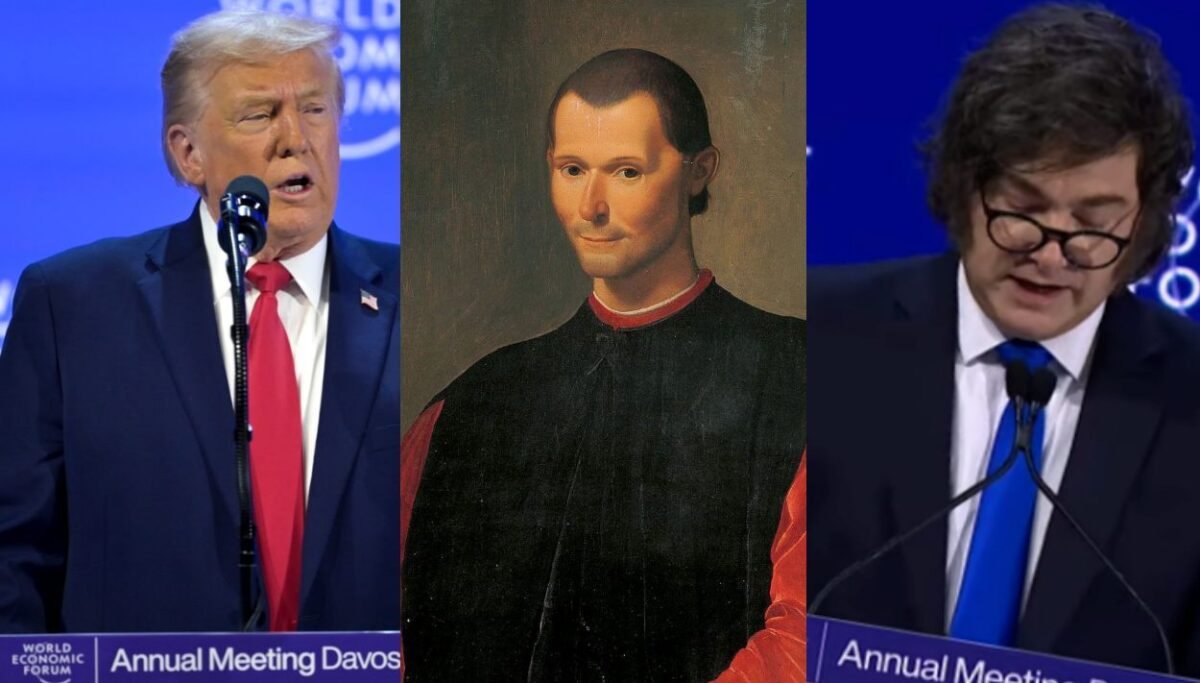
Javier Milei, the President of Argentina, delivered a special address at the World Economic Forum’s annual meeting in Davos on January 21, 2026:
President Milei began by proclaiming that “Machiavelli is dead,” and in general championed free-enterprise capitalism as not only the most productive economic system but also the only morally just one. He structured his speech around themes of justice, efficiency, and ethics, arguing that capitalism aligns with natural law, Judeo-Christian values, Greek philosophy, and Roman law. Milei drew on economists like Adam Smith, Murray Rothbard, Thomas Sowell, Israel Kirzner, Hans-Herman Hoppe and Jesús Huerta de Soto to support his points, emphasizing that free markets foster entrepreneurial creativity, dynamic efficiency through innovation and coordination, and increasing returns without government intervention. He rejected the idea of market failures justifying regulation, claiming interventions violate property rights and the non-aggression principle, leading to lower growth and injustice.
He also referenced the Bible, according to The Jerusalem Post, in an article titled “Milei says Bible shows ‘where woke-ism leads’ in Davos, urges return to Judeo-Christian roots”:
In the closing section of his speech, Milei referenced Moses’s confrontation with Pharaoh and the final three plagues described in Parshat Bo: locusts, darkness, and the death of the firstborn.
The Argentinian President cast Pharaoh as “the symbol of the oppressive power of the state,” and argued that the sequence of plagues illustrated how societies slide from economic ruin to moral confusion and, ultimately, collapse when they deny freedom.
In comparison, U.S. President Donald Trump boasted about America’s “fastest and most dramatic economic turnaround in history” under his second term, citing 5.4% Q4 growth, core inflation at 1.6%, 52 stock market highs adding $9 trillion in value, over $18 trillion in secured investments, and lifting 1.2 million off food stamps. He attributed this to policies like massive tax cuts (no taxes on tips, overtime, or Social Security for seniors; 100% expensing), slashing regulations at a 129:1 ratio, firing 270,000 federal bureaucrats, cutting the deficit by 27%, and imposing tariffs that reduced the trade deficit by 77% without inflation. Trump criticized Biden-era “stagflation” and Europe’s “Green New Scam” as a hoax, praising U.S. record energy production (oil, gas, nuclear) that dropped gasoline below $2.50 per gallon and positioned America to lead in AI.
Both leaders’ appearances underscored pro-capitalist stances, with Milei hailing Trump’s U.S. as a “beacon of light,” echoing Trump’s MAGA with “Make Argentina Great Again” rhetoric, aligning on deregulation, free markets, and socialism critiques. But Milei’s speech was, on the whole, an example of politic ideological libertarianism, while Trump’s was far more about deal-making and nationalism.
The attitude of Somalian refugees to their United States hosts does not usually, these days, seem like one of gratitude. But then, we cannot expect them to be thrilled with the federales (ICE, actually) arresting, systematically, those Somalians in the country illegally.
Most are legal, considering the mountains moved by politicians to bring them here (starting with the Refugee Act of 1980), but taking sides has largely been a matter of taking sides against, well, “the U.S. ‘god-damned’ States.” A colorful phrasing by Representative to the United States Congress, Ilhan Omar (D-Minn.)
Of course, much of this is about the fraud — about which the Duck.ai search assistant urges caution:
The Somali-American community, particularly in Minnesota, has expressed fear and frustration over recent fraud accusations, feeling that the allegations have led to increased xenophobia and discrimination against them. Community leaders urge individuals to conduct their own research rather than rely on social media narratives that generalize the actions of a few to the entire community.
Immigration raids prompt volunteers to share leaflets, accompany elders in Somali community
Trump invokes fraud scandal to send immigration agents to Minnesota
Some Somali Americans say they fear immigration raids are bid to suppress future voter turnout
A jaded person might say that these reactions are odd, but human. There is nothing shocking about a refugee crackdown after uncovering what has been reported to be billions of welfare fraud within a refugee community: Many Somali-American immigrants “feared they were being singled out, a worry that revived memories of the state surveillance and arbitrary authority they thought they had left behind when they resettled in the United States.”
This latter point must be at least somewhat dissonant to the meme-obsessed from a decade ago, where Somalia was said to be anarchic, not state-totalitarian. It shows that Somalians have had to weather all sorts of changes. Now, within the U.S., too.
The Reuters article focuses on Kowsar Mohamad, who states that his people, now understandably alarmed by raids and demands for identification, had “just believed the Constitution was going to protect us from this level of interrogation.”
One thing the article does not mention is that the community and its current activists did not think to police their own against illegality, whether that of illegal entry or mass fraud.
In early January, Paul Jacob discussed the Maduro capture story, noting its unconstitutionality and the likely political irrelevance of that unconstitutionality.
What has happened since then?
Well, a lot; or not much at all — depending on how you look at it!
The capture and removal of the dictator led to an interim government, prisoner releases (hundreds since December, including at least 56 political prisoners and some U.S. citizens recently), and U.S. demands for further releases. [New York Times]
The U.S. Senate (with Vice President J.D. Vance’s tie-breaking vote on January 14) blocked a resolution requiring congressional approval for further military actions in Venezuela. [CNN]
A Department of Justice memo affirming the president’s constitutional authority for the operation. [TimesOp. cit.]
Opposition leader María Corina Machado met President Trump at the White House around January 16, presenting her Nobel Peace Prize medal to the American leader. [The Guardian]
“President Donald Trump on Jan. 15 released his administration’s new health care affordability plan, which aims,” saysThe Epoch Times, “to lower prices through marketplace reforms that include price negotiation, increased competition, and greater price transparency.”
The White House has provided an announcement and a fact sheet as well as a PDF of the plan itself. It’s called The Great Health Care Plan, and the White House urges Congress to make it a key piece of legislation, to make up for the lapse in the failing ObamaCare scheme. Touted features include:
Codifying the Trump Administration’s Most-Favored-Nation deals to match U.S. prices with those in other countries, expanding access to over-the-counter drugs to boost competition and reduce doctor visit costs, and building on prior actions like affordable insulin and voluntary negotiations. Goal: reduce drug prices.
Redirecting taxpayer subsidies from insurance companies directly to eligible Americans to choose their own plans, funding a cost-sharing reduction program that saves taxpayers at least $36 billion and cuts Obamacare premiums by over 10%, and ending kickbacks from pharmacy benefit managers to brokerage middlemen. Goal: Reducing insurance premiums.
Establishing a “Plain English” standard, requiring clear, jargon-free publication of rates, coverage comparisons, revenue breakdowns (e.g., claims paid vs. overhead/profits), claim rejection rates, and average wait times for care. Goal: Holding insurance companies accountable.
Mandating healthcare providers and insurers that accept Medicare or Medicaid to post prices and fees prominently in their facilities. Goal: Maximizing price transparency.
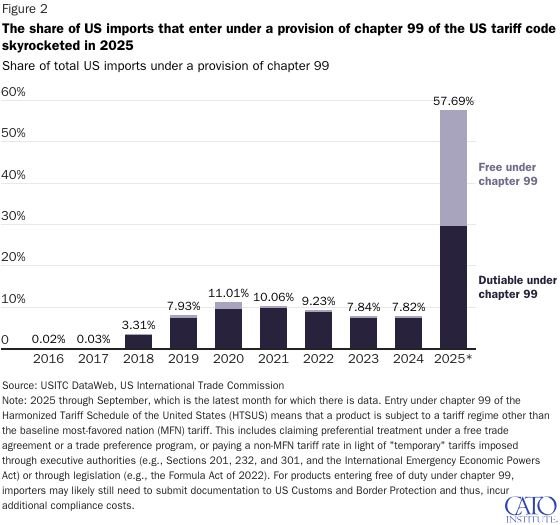
As of September, Scott Lincicome and Alfredo Carrillo Obregon write, “more than half of all US imports (by value) were subject to one or more special tariff measures (i.e., classified in Chapter 99 of the Harmonized Tariff Schedule of the United States) and to the associated bureaucracy.”
Though there has been legal action against Donald Trump’s diktat-approach to tariff policy, the Cato authors don’t put much hope in these challenges. “Regardless of what the Supreme Court does with Trump’s ‘emergency’ tariffs, moreover, US tariff red tape will likely grow more this year, burdening US companies and the economy in the process.”
And growing red tape is a drag on economic growth. It is a prime strangler of growth.
But there is more than one challenge to Trump’s tariff mania. They’re not all equally feckless, are they?
The Supreme Court’s forthcoming decision in the Learning Resources Inc. et al. v. Trumpcase could significantly reduce the complexity of the US tariff system if the Court invalidates the Trump administration’s IEEPA tariffs. Such reprieve, however, would likely be temporary because the Trump administration has pledged to replicate the IEEPA regime through other executive tariff authorities, including through both Sections 232 and 301 measures, and previously unused statutes such as Section 122 of the Trade Act of 1934 and Section 338 of the Tariff Act of 1930. (Though, such authorities arguably have more built-in procedural and/or substantive checks than IEEPA does.) This system, in fact, might be even more complex than what we have right now.
It will therefore remain the case that a true reduction in tariff red tape will only be accomplished through congressional action to revise various US trade laws and reclaim the legislative branch’s constitutional authority over tariffs.
This needless complexity all comes back to Congress, which could fix it, but chooses not to. A familiar problem.
Also all-too-familiar is fundamental confusion about tariffs. For some reason, Americans don’t think of tariffs as taxes. But tariffs are just another form of taxation, of course, no matter what is popularly believed. And can anything show how far from the Reagan Revolution the Trumpian movement is than seeing Republicans rally around an enthusiastic taxer?
Is it the worst initialism ever? “Operation Parris — Post-Admission Refugee Reverification and Integrity Strengthening — will focus first on Minnesota’s 5,600 refugees who have not yet been given lawful status,” explainsThe Epoch Times in a Friday article.
“The operation will conduct thorough background checks, reinterview applicants for green cards, and explore merit reviews of the current refugee claims,” the article by Savannah Hulsey Pointer continues.
What’s at stake are billions in fraud. “Last month, a federal prosecutor suggested that more than half of the roughly $18 billion in federal funds supporting 14 programs in Minnesota since 2018 may have been stolen.”
Meanwhile, President Donald Trump is expanding the scope of investigation into subsidies to individuals and families, saying “on Jan. 6 that California would be the next target. . . . The president alleged on social media that the Golden State could have more fraud than Minnesota.”
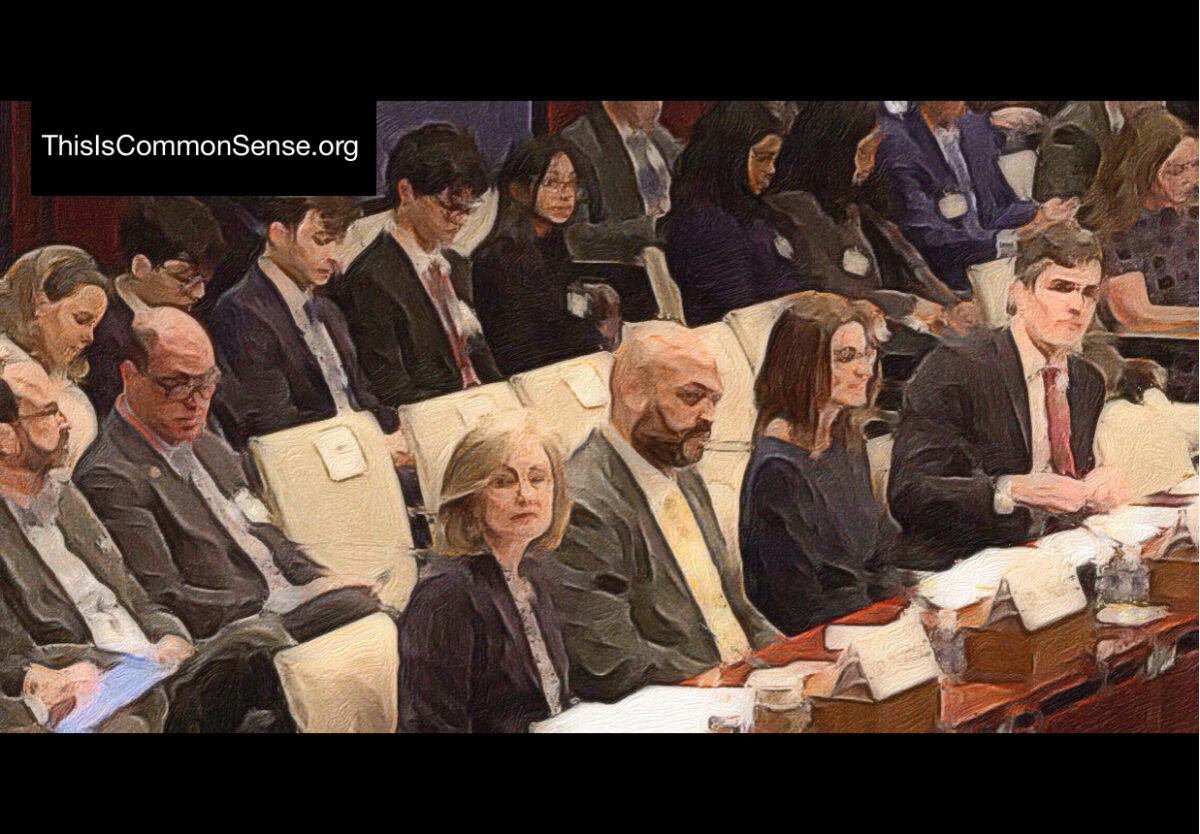
And in Congress, at Wednesday’s House Oversight Committee hearing on the subject, Rep. Brandon Gill (R-TX) grilled Democrats’ witness Brendan Ballou, former Special Counsel at the DOJ, beginning with the ideologically based challenge, “does large-scale Somali immigration make Minnesota stronger or weaker?” The answer was “yes,” but further questions and answers didn’t make Mr. Ballou look so good. It’s mainly been shared for yucks.
The Minnesota fraud story did not just emerge in the last few weeks or months. It appears that before it became a predominantly Somali story it was dominated by one white woman.
Concerns about fraud in the federal child nutrition programs (tied to Feeding Our Future, a nonprofit sponsoring meal reimbursements for daycares and other sites) began emerging in late 2020, with formal flags and audits in early 2021. It became public knowledge through FBI raids in January 2022.
Aimee Bock, founder and executive director of Feeding Our Future, was indicted in September 2022; her trial occurred in early 2025, resulting in a guilty verdict on March 19. She’s awaiting sentencing as of January 2026, with recent asset forfeitures approved in December 2025.
(Notice that this was what civil asset forfeiture was originslly designed for: to confiscate goods used in crimes from convicted criminals. Not grabbing property from people not convicted of anything, as has been happening in these United States for far too long.)
Ms. Bock’s fraud scheme, often called the Minnesota daycare scandal due to involvement of daycares and child nutrition funds misused during COVID-19 (totaling about $250 million in fraud as counted up from court judgments). It’s described as one of the largest pandemic-era fraud cases in the U.S., involving fake meal claims, shell companies, and kickbacks. Over 90 people have been charged across related schemes, with dozens convicted.
Here is a timeline of developments in the story:
2015–2016: Aimee Bock and Kara Lomen form Partners in Quality Care (later Partners in Nutrition) and Feeding Our Future as nonprofits to distribute federal Child Nutrition Program funds (administered by the USDA via states) to smaller organizations, daycares, and programs feeding underprivileged children.
2018: Bock and Lomen part ways amid disputes; Bock takes full control of Feeding Our Future, expanding it as a sponsor for meal reimbursements.
March 2020: COVID-19 pandemic leads to USDA relaxing rules for child nutrition funds, allowing easier reimbursements without on-site verifications. Feeding Our Future’s vendors (including daycares and restaurants) rapidly increase, claiming millions in federal aid distributed through the Minnesota Department of Education (MDE).
July 2020: MDE expresses concerns to Feeding Our Future about its explosive growth in vendors and meal claims (e.g., Safari Restaurant claiming 5,000 meals/day).
October 2020: Lomen (now at Partners in Nutrition) sends a letter to MDE alleging a “fraud ring” involving child care centers and sponsors. MDE escalates concerns to USDA.
November 2020: Feeding Our Future sues MDE for delaying vendor applications, claiming discrimination against sites serving children of color.
December 2020: MDE denies several Feeding Our Future vendor applications amid fraud suspicions. By year’s end, Feeding Our Future receives $43 million in federal funds.
March 2021: Feeding Our Future reports extreme meal counts (e.g., Safari Restaurant claiming 185,903 meals for March, netting $1 million). MDE pauses funding to 26 associated nonprofits, citing “serious deficiencies” by Bock and board president Benjamin Stayberg.
April 2021: A state judge rules MDE acted too hastily; funding resumes. MDE, still suspecting fraud, refers the case to the FBI.
May 2021: FBI officially begins its investigation into potential fraud in the programs.
December 2021: Feeding Our Future receives $198 million in federal funds for the year amid ongoing concerns.
January 2022: FBI raids 15+ properties, including Feeding Our Future’s office and Bock’s home. Search warrants allege misuse of funds for luxury items and properties. The case goes public.
February 2022: Feeding Our Future begins dissolving as an organization. Political figures return donations from implicated individuals.
April–May 2022: First arrests occur (e.g., for passport fraud to flee). State Senate hearings probe MDE’s oversight.
September 2022: Federal prosecutors indict 48 suspects, including Aimee Bock, in a $250 million fraud scheme involving fake attendance rosters, shell companies, and laundered funds. Bock is charged with wire fraud, conspiracy, and money laundering.
2023–2024: Multiple trials and pleas for co-defendants are held, with over 60 convictions or guilty pleas across the scheme. Bock’s case proceeds to trial amid delays.
March 19, 2025: After a five-week trial, a federal jury convicts Aimee Bock on all seven counts (including wire fraud and conspiracy). Co-defendant Salim Said is also convicted. Bock is jailed pending sentencing, cited as a flight risk.
December 30, 2025: A federal judge approves preliminary forfeiture of $5.2 million in assets from Bock (including $3.7 million in cash/banks, a Porsche, and luxury items), with final order at sentencing.
January 2026 (Ongoing): Broader Minnesota fraud probes continue, with 92 charged and 62 convicted across related schemes. Bock’s sentencing is pending; no date set.
To check up on all this, consult The Sahan Journaltimeline for pre-2022 details.
So who is Aimee Bock? A 2022 Star Tribune article noting that Bock filed for bankruptcy with her ex-husband in 2013 suggests she was previously married and divorced before the Feeding Our Future scandal emerged. Her ex’s name is not mentioned in any reports.
Ms. Bock is described as white/Caucasian in appearance and background. Reporting on the scandal frequently contrasts her with the majority of co-defendants, who were members of Minnesota’s Somali-American community (many first- or second-generation immigrants). Bock herself accused state agencies of discrimination against Somali-owned sites in pre-indictment statements.
Aimee Bock earned a Bachelor of Science in elementary education from the University of Minnesota Duluth in 2003. Public records and biographies list her residences in various Minnesota locations, including Duluth, Rochester, Burnsville, Cottage Grove, Rosemount, and Apple Valley.
She built her entire professional career in Minnesota, starting in early childhood education roles (e.g., daycare instructor, center director) and founding Feeding Our Future there in 2016.
As of 2025 reports she is 44- or 45-years old is consistently described as Minnesota-based, with at least 20–25 years of residence in the state.